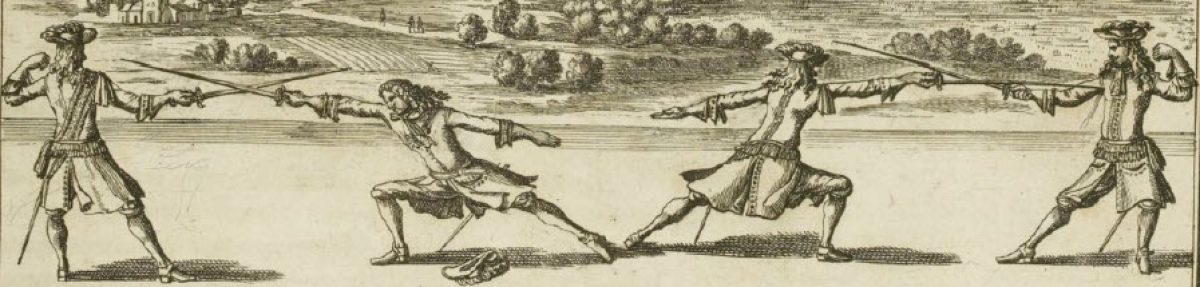
[I’m not a fan of “trigger-warnings,” but as most folks who read this page read it for fencing, this post has a fair amount of politics as they relate to sport, etc. Unless you’re up for reading a beat-down of right-wing idiocy, don’t read this]
This summer’s Olympics have witnessed considerable controversy, from artistic choices in the opening ceremonies to some truly strange debates over sex and gender. I won’t waste anyone’s time with my views on artistic expression, but I’d like to address the vitriol a few man-boys have made about female athletes, gender, and athletics. As a coach, as a human being, and especially as one who works with a diverse clientele, I have a responsibility to do right by them.

Predictably, the men whinging most are the least fit intellectually or physically to attack a world champion like Simone Biles or Imane Khelif. I have no idea what made them so intimidated by women, but regardless of cause there’s zero justification for it. These idiots make the rest of us look bad, and I resent that. Having been raised by a single-mother; having only a sister as sibling; having had mostly female teachers and bosses; and having been fortunate to marry a woman who deserves better than me, it’s possible that I’ve just been super lucky to see how empty any notion of female inability is. Whatever the reason, it’s important to show my colors, not just to reassure my students, but because one cannot sit on fence when it comes to bigotry.
I am not female and will not dare speak for women. [1] Women are perfectly capable and happy to put morons in their place, and I don’t wish to be lumped in with the morons (not any more than I might be already). With that caveat, I have some perspective on sex, gender, and sports, and think it is important to offer some real-life examples for the simple men who likely have not worked closely with women. Moreover, at the moment, most of my students are, or identify as, female. Most are young, between the ages of 11 and 15, so there is an added impetus to be a good role model and influence.
As a middle-aged, cis, white chap there is an important responsibility on me not to be part of the problem. It seems like common decency to me to support, advocate, and build-up my students, especially as there are so many men who look like me spouting horseshit. Often, these same clowns are vocal, loud, and quick to say things that can hurt regardless of the fact there is no truth to them.
Persistent Perils
I don’t follow the news much, because with treatment resistant depression the news does little to lift my mood, but I follow enough to know that athletics, across the board, continues to be plagued by horrors that should never happen anywhere. From coaches molesting their young charges, to sexual harassment of colleagues, to downright dismissal as serious competitors, women face a disproportionate amount of abuse. It’s utterly shameful.
We are making some progress, but we clearly have a long, long way yet to go. Organizations like Safe Sport have done much to increase awareness of the issues, and importantly, educate coaches about better, more professional and appropriate interactions. This, of course, won’t fix creeps, but it can reduce both unintended line-crossing and foster both better awareness and behavior.
Real change begins with us, each of us, in our homes, at work, with friends and family. Not to wax hippie, but we have to be the change we want to see. It won’t convince everyone, but it will convince someone.
Sex, Gender, and Fencing
Historical fencing falls under the general heading of “combat sports,” and traditionally such pursuits are a “male” arena. Despite historical precedent, science, and good sense, there are still men quick to say that while women might play sportsball, they have no business boxing, or wrestling, or using hand-to-hand weapons. Claptrap.
Absolutely women should be able to pursue these arts. There’s no reason why they shouldn’t. This is especially true where weapons are concerned.
The truth was summed up beautifully by Francesco Marcelli in 1686:
Vis enim vinictur Arte
“For strength is conquered by Art.” [2] The use of weapons changes whatever physical advantages one was born with—it does not level the field automatically, but it can, and, regardless of whatever one has in the way of genitalia. In many martial arts, size and strength play a greater role, and so weight-classes, age brackets, division by skill level, all characterize competition. This is sensible. A 5’ 9,” 140lb woman might be plenty strong and skilled, but in grappling arts she will be at a disadvantage against a man 6’ 5” and 350lbs. Put a weapon in her hand, though, the math changes.
Sad as it is to say, I remember when women were finally allowed to fence epee and sabre. It’s not that women didn’t dabble in these weapons, but that they could not compete. It was not until 1996 that we saw women’s epee in the Olympics. Women’s sabre did not appear in the Olympics until 2004! Up until then, the only weapon women were allowed to compete in was foil. It seems ludicrous now, and it should, but these changes only happened twenty to thirty years ago.
You are a Mask
Outside of severe physical or mental limitations, anyone can and should be allowed to fence, box, or wrestle. One advantage to fencing is that the addition of a weapon can—again can—mitigate size and strength differences.
In my classes, in my lessons, everyone is a MASK: their sex, gender, sexual orientation, all of that is largely irrelevant. Not unimportant, but in the context of what we do—fencing—irrelevant. Identity makes no difference. In the HBO series “Game of Thrones,” Aria’s sword-master, Syrio Forel, shares a similar view. When his new student remarks that she is a girl, he replies “Boy, girl… You are a sword. That is all.” [3] Though fiction, the author, George R. R. Martin, shares a truth most serious martial artists know–skill is skill.
For me, the acquisition of skill is challenging enough without adding additional hurdles—as a mask, one has only one task, one focus. In the salle/sala, the only concern is growth.

In truth, there are still some considerations; anatomy, for example, sometimes dictates decisions about safety-gear. Women with larger chests, for example, often struggle to find suitable protection. Most of the off-the-shelf stuff is one-size-fits-all, and I’m told uncomfortable to wear. There is a major opportunity for an enterprising person to devise better solutions for chest coverage.
Every body is different, regardless of sex or gender, and so my job as a coach is to help each person find a way to stand and move that takes into account their unique shape. If one’s hips are a little wider, fine, then try standing a bit more square versus in profile. Likewise, if one’s chest is broader, one may have to turn at the hips to make an inside parry. If one is recovering from injury, has balance issues, whatever, there are ways to make it work most of the time.
Mask & Culture
Happily, the culture I’ve worked hard to create has tended both to minimize problems in class and scare away people who don’t share the same values. Advertising one’s stance on key issues, as I do on this site (go to “About Us” and scroll all the way down), does much to send bigots packing. It’s rare, but on occasion I have had to reeducate young men who “didn’t want to fight a girl” or had something outdated to say about either the ability or suitability of women in combat sports.
As I’ve remarked here before, I’ve fought alongside female martial artists all my life. When my formal training began, so did my sister’s. In college I fought alongside female fencers. I know women in a variety of martial arts, from fencing to BJJ, and a lot of female coaches and club-heads. They are my colleagues, peers, and friends. Their identity as female, again, doesn’t weigh into things for me because what matters is their ability and outlook. If we share the same values and they’re good at their job, then great.
There is only one place where I feel I need to pay more attention to their identity—as an ally. This is true as colleague, coach, or student, in any role I assume. This is to say that men should advocate for their colleagues regardless of sex or gender, and, regardless of where that man is in a hierarchy.
At my age, I have seen a diverse range of behaviors towards women in sports, some great, some bad. Current politics in the United States has reached a point where it’s no longer enough merely to support—one must act. What one does may not be national or international in scale; it may be local. As an obscure coach in a small city next to miles of vineyards and hop-fields, I see firsthand, every day, the very same problems we see on a national scale. My focus, thus, is here, helping where I can, as I can. I do my best to model a better way for my students, and, I do my best to create an inclusive, safe atmosphere in which to learn.
I don’t talk about any of this much, because being an ally is something one does, and in a day where “virtue-signaling” is as ugly as a running mate plugging a book arguing that “progressives” are “subhuman,” I’d just rather not contribute to useless, ego-driven posturing. [4] Ideally, advocacy comes out in all that we say and do. I’m talking about it here because the comments about Ms. Khelif, the addition of a new student in my sabre class, and the observations one of my 12-year-old female fencers shared last Sunday highlight the importance of the issues. Each example highlights either the problem with attitudes toward women, as was the case with Khelif, or, gives the lie to ideas that women might be less skilled or knowledgable.
From the Mouth of Babes (NB: “babes” in the age sense)
To give the lie to the idea that women have no place in sports, I submit the following, recent examples. First, there is a 15-year-old female fencer who just started attending my Sunday sabre class. She has worked with me for several years via the parks and rec class, but she caught the bug—she loves this stuff, wants to do more, and is keen to improve. In consultation with her parents, I invited her, and them, to the class. [5] When I told the existing students we would have a new fencer, they were excited as it’s been a while since a new person started.
To my delight, they greeted her with open arms, and couldn’t wait to work with her. She soundly defeated the three boys who were there. I am not one to crow, but if I may, I was so proud of all of them. She acquitted herself super well, and was gracious in victory. For the boys—they were thrilled to meet so good an opponent. They complimented her fencing and told her that she would love fencing G., my longest attending student.
This past week, when he returned, everyone had trouble focusing on drills because of the anticipation of what all expected to be a high-level bout. My most experienced student found a serious challenge in the newcomer, and at the end extended his hand and complimented her. She is one of them now, as if she had always been, and for me if I have done nothing else right, I have at least created a safe, healthy culture for these kids however they might identify. They’re mutually supportive, humble, eager to learn, and enjoy a good challenge. If they don’t fence later in life, hopefully the environment in which they did fence, and the implicit lessons they’re learning, will stay with them.
As a second example, in an earlier class that day, the youth foil/smallsword class, one of my 13-year-olds wanted to talk about the Olympic fencing she had seen on tele. Her first question was why everyone was hopping about like rabbits and failing to extend the arm on the attack. I nearly cried with joy. We then discussed why what we do seems so different from what they’re seeing in Paris. Since the mid-1990s I have tried, largely in vain, to argue with other adults for the time-honored wisdom of extending the weapon first, and here was a room of young middle-schoolers who not only understand it, but also can call out the very same issues when they see footage of modern fencing bouts.
Sports, Identity, and a Healthy Society
Within that discussion, we discussed the issue of people gravitating to what is easy versus what is hard. In explaining why modern fencing allows silly things like not extending the arm we discussed how hard it can be to change large organizations, to change what people find comfortable, and what benefits those in control. Change, all change, begins with an individual. Working together we can do more. This rounded back to why we look at things the way we do in our club. I have always reminded them that what we do is super difficult and takes a long time to learn and do well. They know that one is never finished learning. Our way is harder, but richer.
There is a real-world parallel. Bigotry is generally born of ignorance and fear. It’s lazy, comfortable, easy. It takes zero strength or courage. It is harder to rid oneself of bigotry if one benefits from it. These are the reasons it is so entrenched in American culture, and, one reason many people are so afraid. It takes courage to face something or someone new. It takes courage, strength, an open mind, and a willingness to change one’s stance given new data. Much as I don’t want a bunch of bigots at my sala door, I would honor the chance to introduce them to people that terrify them and let them learn for themselves that regardless of gender, sex, race, or sexual orientation, they’re all just people.

Traditionally, fencing is male dominated, and a “white” sport, but it hasn’t been that for a long time if ever. History recounts a number of female fencers, fencers of color, not to mention some pretty fluid gender identities. Whether we’re talking about one of my favorites, Julie d’Aubigny—better known as “La Maupin”(d. 1707), or the Chevalier Saint-Georges (d. 1799), who was of color, or the Chevalier d’Eon (d. 1810), who wore women’s clothing, fencing has never been exclusively male or white. More recent history indicates just how much it has all changed– Peter Westbrook, Ibtihaj Muhammad, and Sada Jacobson are just a few examples.

after William Ward, after Mather Brown
reproduction of mezzotint, original published 1788, National Portrait Gallery, London
The Person in the Mask is a Person
Despite my being an old white dude, over the past few years more young women have enrolled in my classes as have many LGBTQIA+ fencers. Not all stay, but some do, and that is significant. There is no magic involved—retaining anyone comes down to one simple factor: how we treat them. Honor another human being as a human being, as a person. It has proved important for several reasons.
First, I have been told by several LGBTQIA+ fencers of the relief they have felt in knowing they are free to be themselves, and safe, at my school. Locally, the past few years have seen increased hostility towards any student that is not white and straight. The effort by alt-right school board members in my city, for example, to ban any symbol but the American flag was a clumsy attempt to ban both Pride and BLM flags. [6] I got involved with this as parent, educator, and coach, and like others ended up the blacklist of one alt-right supporter. No one shares a list like this on the internet to send one cake…
TWO of my students at the time were directly affected by this. One, who bravely spoke up during one of the virtual board meetings, told me his heart about sank when he saw me on screen, a wall of books and a giant American flag behind me—it’s our flag too, and, propaganda works both ways. He was relieved when he realized that I was sharing the same message of inclusion he did. Another student ended up moving when one of his parents, at the time involved in education, received death threats. I could not let these students down, I didn’t want to let any child down.
Second, I have no illusions or fantasies about my role. I’m a recreational coach in a small, rural city, and while I have had the great fortune to work outside it, even in other countries, what will matter most in the end is the impact I have here. Each generation, if it’s on its game, does what it can to help and prepare the one to follow. I want these kids to grow up and inhabit a world where we see less of the idiocy around sex, gender, and sexual orientation. It causes so many people so much pain, and for the lamest of reasons. We can do better, but only if we ourselves actually do better, and, give these kids a map for social interaction that emphasizes their common humanity. My hope is that what little I can do will help, at least enough so that when they leave the salle each week, they will carry some of the lessons with them they learned while in their masks.
NOTES:
[1] Someone like me can support, can advocate for, and stand with women, but as a male I have no business speaking for them. That has always been part of the problem–witness the idiocy of men determining national and state policy with regard to women’s reproductive issues and rights.
NB: in using the term “women” I mean those born so or who discover that they are. Each person has the task of determining what their identity is, and yes, in some cases it may change or defy easy definition. So what? Regardless of how they identify they’re a fellow human, and that is what matters.
[2] Francesco Antonio Marcelli, The Rule of Fencing, Book 2, Ch. 1, 55-56 in Holzman’s translation.
[3] Game of Thrones, HBO, “Lord Snow” S1: E3.
[4] The alt-right rejects data, evidence, and reason. Denying facts is not disagreement, but willful denial of fact. Everything comes down to their “values.” As an historian who spent a lot of time studying the early church, I especially challenge them on their persistent use of OT lawbooks rather than the NT commands of Christ. Lists of dos and don’ts are easy, convenient, and do not require one to think or choose. The second great commandment Jesus laid down was to love one’s neighbor as oneself. He didn’t include exceptions. Moreover, he expressly told people not to judge others. Somehow, though, judging others and choosing exclusion over love and understanding defines their “Christianity.” On a similar note, the cover of the book Vance touted features a hammer and sickle, a nod to rightwing fears of Commies. There are no commies. Both of them are keeping pretty quiet right now. What we do have, and what the DHS and FBI have released reports about, is the great danger we face from right-wing terrorists. But again, facts don’t matter to them.
[5] Complete transparency is an absolute must when working with minors. I encourage parents to stay for practices—it reassures them, often makes the kids more comfortable, and no one is better to help a child with an ill-fitting jacket or the like than one of their parents. If a lone child is waiting for a parent, we wait outside at the grange or in the public lobby if at The Aquatic Center. There should never, ever be any question as to one’s ethics. Working with children is a sacred trust and must be honored as such.
[6] The damage that the alt-right members of the school board did has been considerable. This was, of course, part of the plan—fascism thrives best where people are not educated in anything other than party dogma. Two articles should suffice to explain the issues:
Budget Crisis: https://www.kgw.com/article/news/education/newberg-school-district-faces-more-than-3-million-dollars-in-debt/283-4639e728-df91-4082-80be-487fc871df9b
Alt-Right on the School Board: https://www.oregonlive.com/education/2023/11/trial-begins-challenging-alleged-secret-meetings-to-discuss-firing-newberg-schools-superintendent.html
Just this weekend, so 17 Aug., a LGBTQAI+ student informed me that my attitude is one reason she has stuck with my program. I honor her for who she is, and while I will fight to the death to protect her right to love whomever she might love, the fact of her orientation is, again, irrelevant in learning fencing.

 Capitale Escrime Historical Fencing
Bravo Jimbo! Well said with that which needs to be said. As a father of two LGBTQ+ kids I greatly appreciate expressions of support and basic human decency.
LikeLiked by 2 people
This was a well written piece on something that can be challenging to articulate to one’s satisfaction. Great historical examples, too!
LikeLiked by 1 person
Thanks Jason! To be honest, I hesitated to write it–it is so easy to come off as mansplaining, and I wanted to avoid that if possible. I know, however, that some of the parents read this thing from time to time and I want them to know where I stand. Most do, but some might not, because we have little time to discuss it in class.
LikeLiked by 1 person