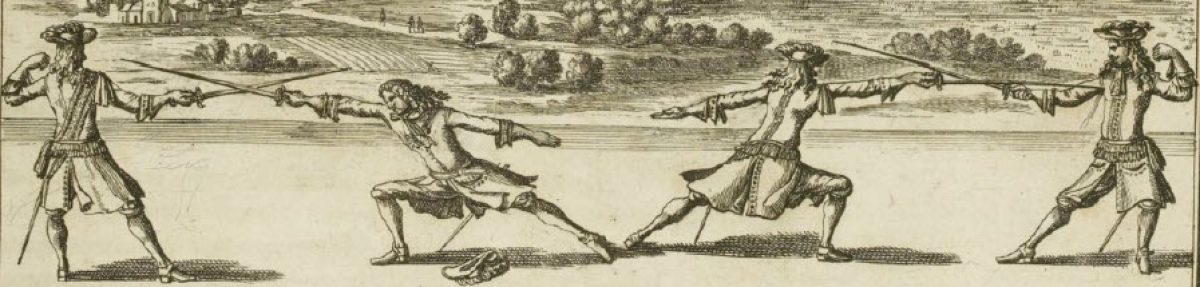

Capitale Escrime Historical Fencing focuses chiefly on French fencing of the 17th and 18th centuries. We began as a group of dedicated small sword enthusiasts. The brainchild of one of the founding members, Joshua Baker, CEHF began as an extra practice. In 2022, Joshua approached Jim Emmons at Sala delle Tre Spade Historical Fencing (now CEHF) in Newberg, OR, just north of Salem, about small sword lessons. In addition to meeting with Jim one-on-one weekends, Joshua joined Jim’s adult fencing class at Chehalem Parks and Rec’s Aquatic Center (Newberg), but more than that, was instrumental in boosting enrollment by convincing several friends to join. Eager for more time fencing, these friends all agreed to start meeting in Salem as well.
Our approach is historical–this means we look to extant works on fencing from the Early Modern Period and use a variety of tools to devise reasonable interpretations. Any such interpretation is tentative. All fencing, then and now, relied on universal principles such as distance, tempo, judgment, speed, initiative, and tradecraft, so an understanding of these principles does much to help us “unpack” surviving sources. Contemporary history, culture studies, the archaeology around weapons, also assist us. Our approach is closest to what was called “classical” or “traditional” fencing in the 1990s and early 2000s.
Statement of Diversity, Equality, & Inclusion
Capitale Escrime Historical Fencing does not discriminate on the basis of “race,” color, sex, gender, sexual preference, age, or physical condition.
The only people not welcome are bigots. What is a bigot? They are people who generally espouse unscientific, ahistorical, and illogical views that are unsympathetic toward others. In the worst cases, they act upon these beliefs to attack, verbally or physically, those they deem unworthy.
We follow the Golden Rule at CEHF–we treat people with the respect we wish extended to us.
What We Fence:
Current Instruction (as of Jan. 2025)
- SMALLSWORD: informed mostly by French sources, among them de Liancour, L’Abbat, Girard, and D. Angelo
- RAPIER: “Transitional” Rapier leaning on the work of Charles Besnard (1653) & the Neapolitan School as codified by Marcelli and Pallavicini.
- SABRE*: sabre at CEHF falls along two tracks. The first centers on the Radaellian corpus, especially Barbasetti (we also examine other Radaellian masters, e.g. Del Frate, Masiello, Pecoraro & Pessina, etc.); the second is French sabre along the lines of the 1908 Règlement d’escrime.
- BROADSWORD: late Insular tradition as codified by McBane, Hope, and especially Page
- BAYONET: for bayonet fencing and bayonet vs. sabre we look to a variety of sources, some Italian, many French, and some English and American. All hail from works written between 1750 and 1917.
*Jim has had the incredible luck to study with masters trained in both the (late) Radaellian/Italo-Hungarian tradition (Albert Couturier) as well as the French school as outlined in the 1908 Règlement d’escrime (Delmar Calvert).
Where we Fence:
CEHF is comprised of fencers from every background, some Olympic, some historical, some SCA, but all of us united in a love of fencing.
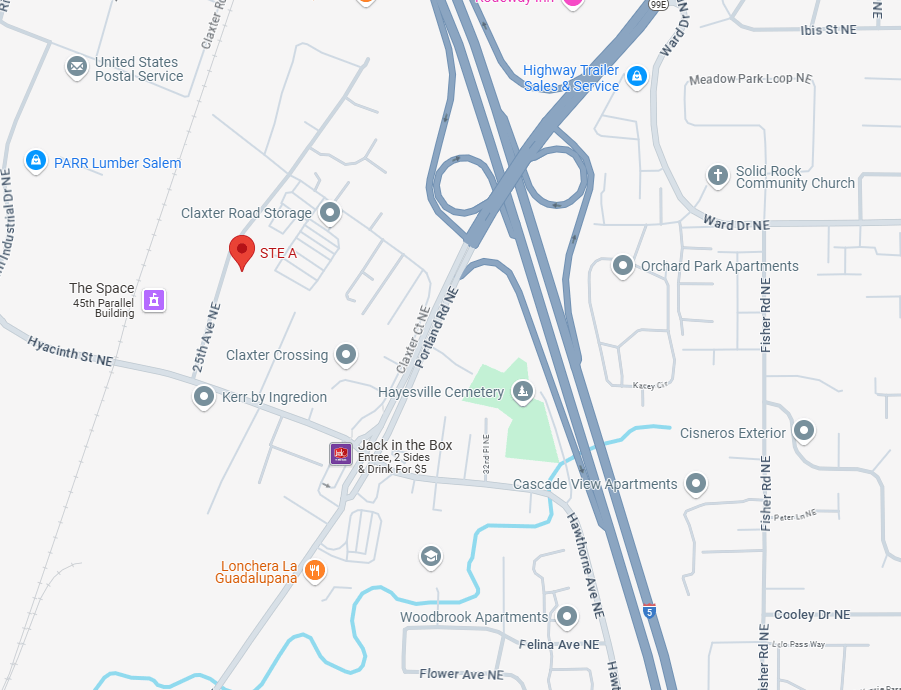
Some weekends we meet at CVDA–the Chehalem Valley Dance Academy, Newberg, but we also meet Sundays at the gym our host school, Seize the Vor Historical Fencing [https://www.seizethevor.com/]. Generally, we alternate weekends.
Seize the Vor Historical Fencing, Salem, OR [4240 25th Ave NE STE A, Salem, OR 97301]
Chehalem Valley Dance Academy, Newberg, OR [311 E 1st St, Newberg, OR 97132]

Individual Lessons:
The best way to learn, CEHF offers individual lessons in 30 minute and 1 hour blocks, time and days to be determined with the student. Currently (Jan. 2025), my schedule makes it more difficult to accommodate individual lessons throughout the week. I do my best to accommodate students, so if one is interested in individual lessons please let me know.
Group Classes:
Typically we meet as a group. This allows fencers to work with one another and gain experience facing different opponents.
Class Format: most classes begin with warm-up and stretching, followed by drill, the lesson or lessons of the day, and for more advanced students bouting.
The Story behind our Previous Name “Sala delle Tre Spade”

- Rapier (beginner, intermediate, advanced)
The school name is the Italian rendering of Salle Trois Armes and I chose it in tribute to the late Rocky Beach, instructor there, whose estate selected us for a non-profit donation. Our focus is largely Italian, but I wanted to honor him and the impact FCSTA has had on us—not only was Rocky’s club the first one I called home in PDX, but thanks to the generosity of Rocky’s estate a lot has been made possible—masks, jackets, gloves, foils, sabres, and some coaching equipment enabled us to offer kids classes to name only one example.

Rocky was a fixture of the fencing community in Portland, and in many ways helped build the city into the hot-spot it is for fencing, particularly Olympic fencing. This link provides a brief biography: https://fencingcenter.org/
*photos from Rocky’s memorial page and fb
 Capitale Escrime Historical Fencing