Historical Fencing Pedagogy, a Few Guiding Principles

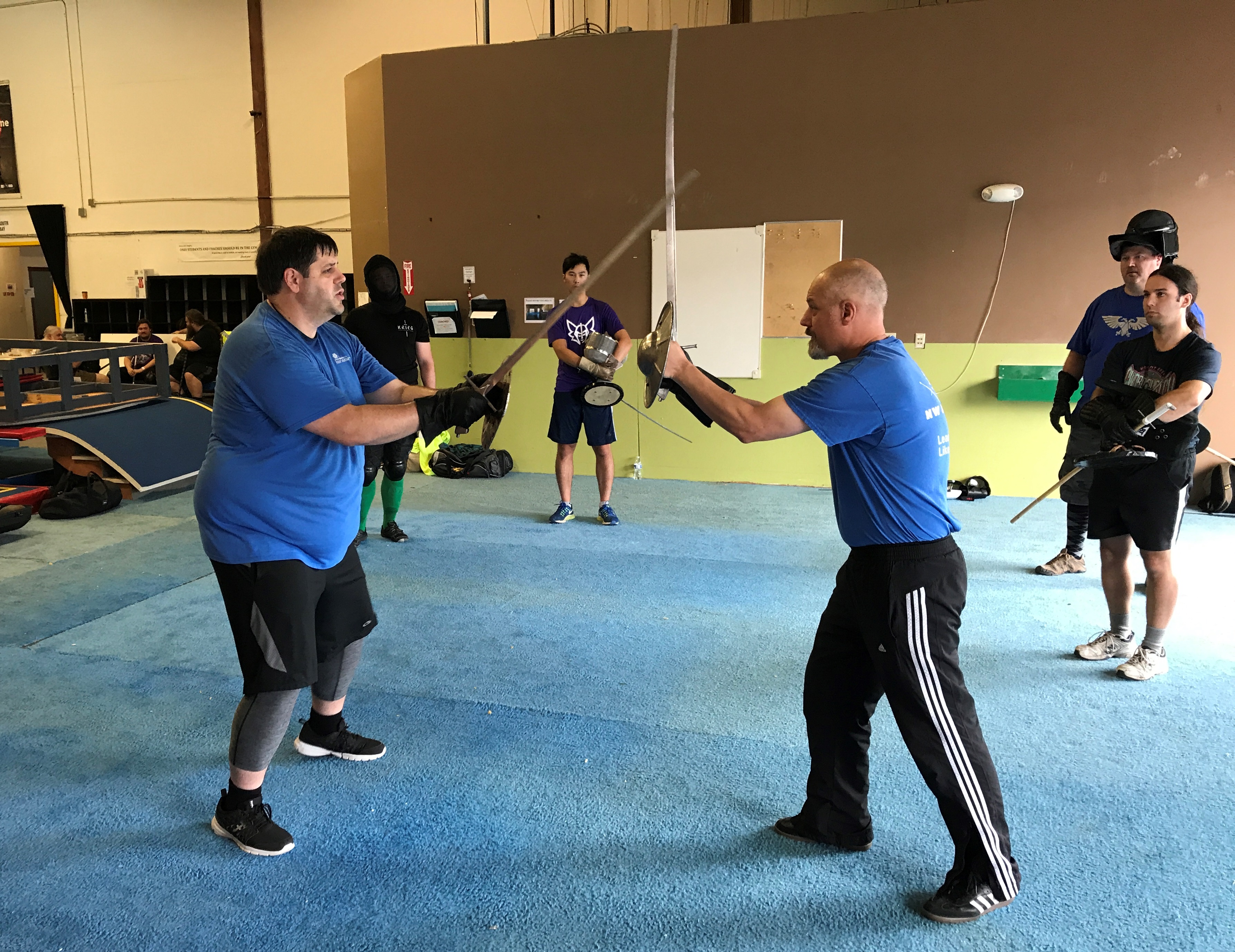
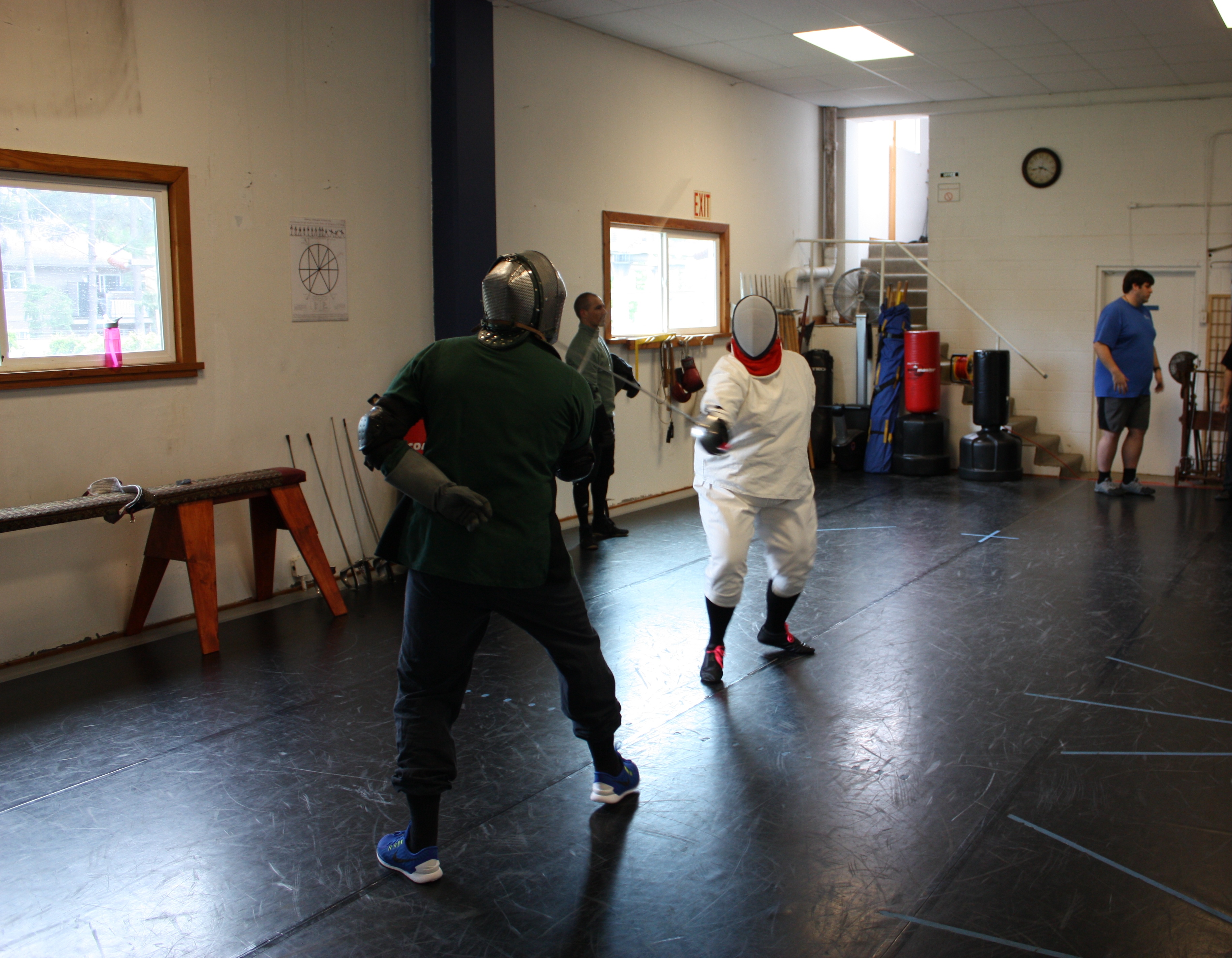
IMG_6222 (2)In watching several recent historical fencing events friends and I got to chatting about effective (and ineffective) teaching methods, and, of the difficulties that tentative endeavors such as interpreting extinct fight-systems presents any instructor. In so many ways we lack a blueprint for how to teach some of these past arts. Many of us draw from the venerable advice and time-tested techniques of established fencing programs, such as the Scuola Magistrale Militare di Roma [Military Fencing Masters School of Rome] and its North American Counterpart or the USFCA.[i] We consult other instructors, our own or colleagues, and between the collective wisdom of the schools, other instructors, and our own experience we can do a lot. We also mine the pages of works like László Szabó’s Fencing and the Master and adapt ideas and drills to our own context. Happily, this is a problem all of us share, and increasing the issue of pedagogy is coming more into the larger dialogue.[ii] There’s a small, but growing corpus of literature about pedagogy making the rounds in historical fencing circles too.[iii] These are important conversations for us to have, and as the community grows we can expect discussions of pedagogy to garner more attention. That’s a good thing.

There are a few principles that I want to share here, ideas we discussed post-event, but also some which I’ve learned as a professional teacher. I don’t claim to be novel, I don’t want to reinvent the wheel (the ones we have work fine), but these principles might be handy to others pondering the place of pedagogy in historical fencing. What follows might be a solid collection of discussion topics if not a nice primer on some simple ideas every teacher should embrace.[iv] Some I’ve covered before, many others have treated far better, but for any set of drills, exercises, and the other elements of a successful curriculum attitude about them, about teaching, is everything.

Humility

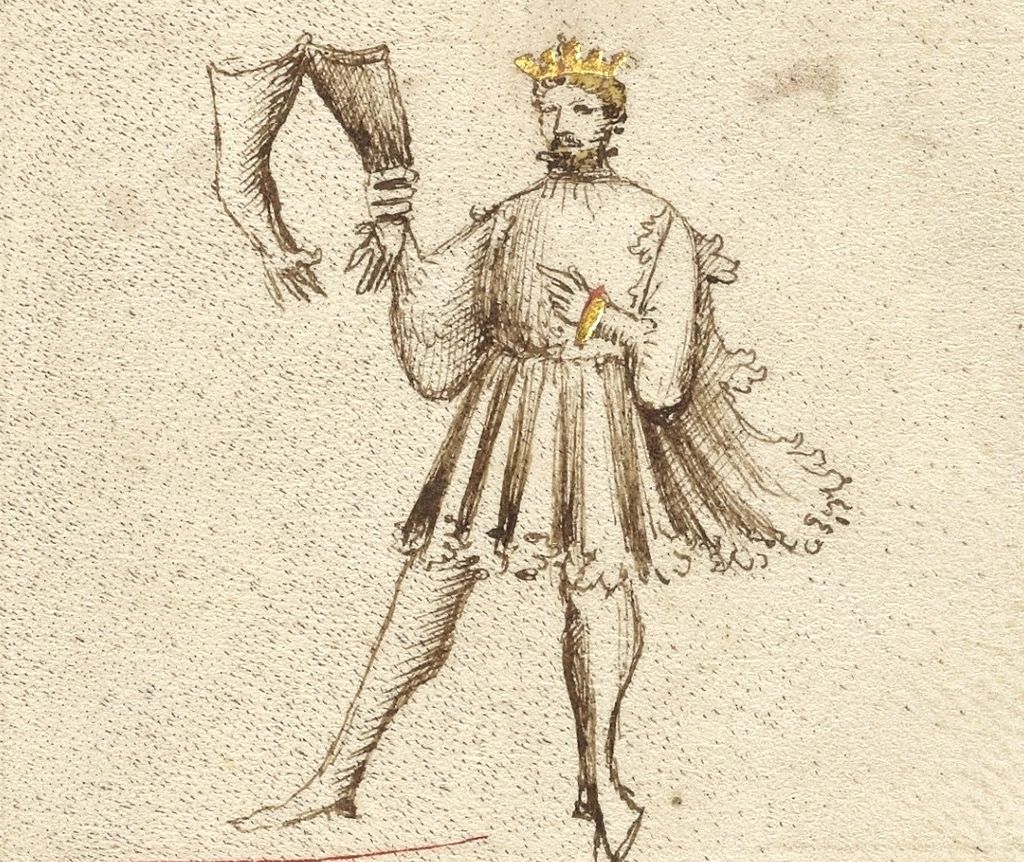
Victory of Humility over Pride from Jungfrauenspiegel ca 1200
Victory of Humility over Pride, from _Jungfrauenspiegel_, ca. 1200

No one can learn anything who lacks humility. Those who believe they have it all figured out are fooling themselves; don’t let them fool you. The texts we work with are often difficult to interpret, no one has all the answers, and that’s okay. It’s the fact that we do not know, but wish to that drives us to study.

Historical fencing is unique in that there’s no official certification program, not yet anyway, for creating a master and this means a number of things. Given the nature of the evidence, the fact that most extinct arts have no surviving tradition, it’s highly probable that the nature of any such program will be different than say a fencing master’s schooling when we finally develop such a certification. Until then, and arguably after then, even the best interpretation will only stand until a better one comes along, so, take heart, be honest, and do your best. Don’t worry about mastery—that isn’t really a concern here in the conventional sense. We’re going to get things wrong, and a humble person will more easily handle that and change.

Collaboration & Sharing

This seems like a no-brainer, but it isn’t; not everyone wants to play nicely with the other kids. Sometimes this unwillingness stems from fear—perhaps one is working on a beloved project and doesn’t want anyone else beating them to the punch in publishing. Sometimes this fear stems from insecurity about one’s approach, interpretation, ability, or effectiveness in teaching (imposter syndrome is a common issue for many instructors). Whatever might stop you from reaching out, make the effort—there’s no shame in learning from others, in asking for help, from working together.

At the event that first sparked this conversation about pedagogy there was an impressive assembly of talent, from those working in the medieval Italian and German traditions, to classical Italian, to eastern martial arts, to everything in between. Such opportunities are ideal for exploration, for presenting what one’s been working on and getting valuable feedback from people as jazzed as you are about the topic. Working together benefits everyone. Also, it’s fun—how often at work or in other social settings can you discuss the finer points of a parry? How often do you get to take swords in hand and work out some play? Talk, share, make friends—it will only help. Don’t make the mistake of working in isolation.

55a4eae5a90f78e4a119c3531a75aa77--fencing-lessons-fencing-gearCultivate a Willingness to admit “I don’t know”
Not having all the answers is okay. No one in their right mind will ever assume you do. Not knowing is what spurs us to learn. Saying “I don’t know” is never the wrong answer, however terrifying it is to say, and once said puts you on the path to changing an “I don’t know” to an “I’m going to find out to be best of my ability.”

I offer the following somewhat humorous and embarrassing example. In the oral portion of my doctoral exams, one professor, a stand-in for the Greek expert my school never seemed to be able to keep (allusions to Spinal Tap’s drummer have often been made…), turned out to be one of the two types of examiners one will face in such exams, in this case, the person who wants to see what you don’t know. His first question, of a sort, was to shoot a clay tablet to me across the table and ask “what is that?” I looked at it, replied that the clay was modern, that the script looked to be Linear B but that I wasn’t completely sure (I spent far more time on Latin and Celtic). I thought crap, this is going to be some everyone-knows-this-inscription and I’m screwed. He said it was the first line from Homer’s “Iliad.” I raised an eyebrow in disbelief, said that was impossible as Homer post-dates the Mycenaeans by a good stretch, and waited for the hammer to fall. Satisfied, he then proceeded over the next half hour to ask me random questions about Greek history from Troy to the fall of Greece to the Romans. I cannot tell you how many times I said “I don’t know.” If I seemed to know anything, he quickly changed the topic. I left feeling that I’d failed, that I was washed up, that I’d embarrassed myself, shamed my advisor, and should find a nice heavy rock to crawl under. Despite this emeritus jackanapes’ glee in stymying me, I passed, and only passed his section because what I could answer I answered well, AND, and this is the important part, because I was smart enough not to bullshit, but to admit “I don’t know.” That’s hard to do under pressure—I know, believe me—but it’s sometimes the only answer you can and should give.

Cultivate a Willingness to Remain a Student

I used to teach college courses, mostly working adults in community colleges, and it’s seriously one of the most dynamic arenas in which to learn or teach. Where a room of 18 year olds will have some decent conversation and insight, a room of 16 to 75 years olds, many of whom have acquired expertise and experience in fields from mining to combat, from factory floors to homemaking, is so full of knowledge and experience that discussions are usually richer, more full of insight, debate, and fun.

I firmly believe that the best teachers never stop being students. Good teachers learn from their students, from other teachers, and from anyone whose line of work involves instructing others, be they foremen, former drill sergeants, mothers of six kids, or farmers. My students make me a better teacher, yours will too if you listen.

Own your Expertise

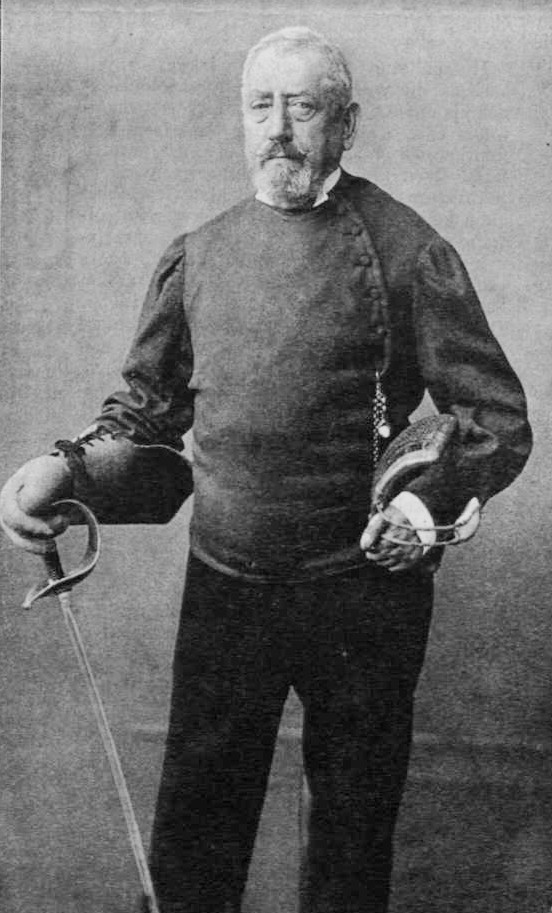
József Keresztessy, around 1892

This can be a tough one, least it is for me, and it’s because it must jive with humility. No one wants to be that insufferable know-it-all or be taken for one. If you’re teaching then chances are good that you have enough experience to do so, are the only option, or are spear-heading a study group and by default have to lead. Maybe you have more formal training, and/or certification via accredited fencing programs. If you’ve earned it, own it.

We can err the other way and undermine ourselves too. If you’re too quick to point out shortcomings, things you don’t know, then that is what people will hear—people are more likely to question you if you question yourself. It can be a fine line. I learned this lesson as a first-time college teacher. I was teaching on an army post and decided not to list my name as “dr” or “name, PhD” on the board, and at the end of the first term an older man, a sergeant, approached and asked me about it. I told him something to the effect of wanting to create an open room where they felt free to talk, to disagree with me, etc. His reply was awesome and a powerful: “Sir, this is an army post—everyone has a rank. You earned those credentials, you earned your rank—don’t be afraid to share that. Whether people feel free to chat or not doesn’t depend on your rank, but how you use it and how you show respect to them. There is room for both command and respect.”

Own your expertise, but do not wave it in people’s faces; share it with them through appropriate means, through scholarship, through teaching, and by living the example. If you are out there reading this Sgt. Bond, again, thank you.

Be Open to Revision as Necessary

With an endeavor as tentative as research into historical martial arts one must be willing to revise any interpretation, no matter how good, should new evidence come to light or a more logical interpretation enter the picture. There’s no shame in ceding place to a better interpretation, only in pig-headingly holding on to one that’s been superseded.

This should drive all of us to work even harder at drawing conclusions that follow from the texts and which make sense logically, in terms of body-mechanics, and fit the historical context. None of this work is wasted. So your conclusions about Fiore have been bested by a new theory, don’t fret—scholarship doesn’t happen in a vacuum and it may be that Jane Schmoe relied on your work to devise her own interpretation (if Jane is a good scholar she will admit that too).

Give Credit where it is Due

Following closely on the last point, always cite your source, and, always give proper credit to the scholars, researchers, and fencers whose hard work, dedication, and passion have helped your own path of study. This goes beyond leaving a paper trail or protecting oneself from plagiarism—it’s just the right thing, dare I say it the chivalric thing, to do. Everyone gets a kick out of seeing their name in a footnote, dedication, acknowledgements, or Facebook post. It honors them, and, in honoring them you honor yourself for you demonstrate that you’re a team-player, an ally, someone who is working to provide the best research, teaching, and interpretation of these martial arts as you can. Stay chivalrous my friends.

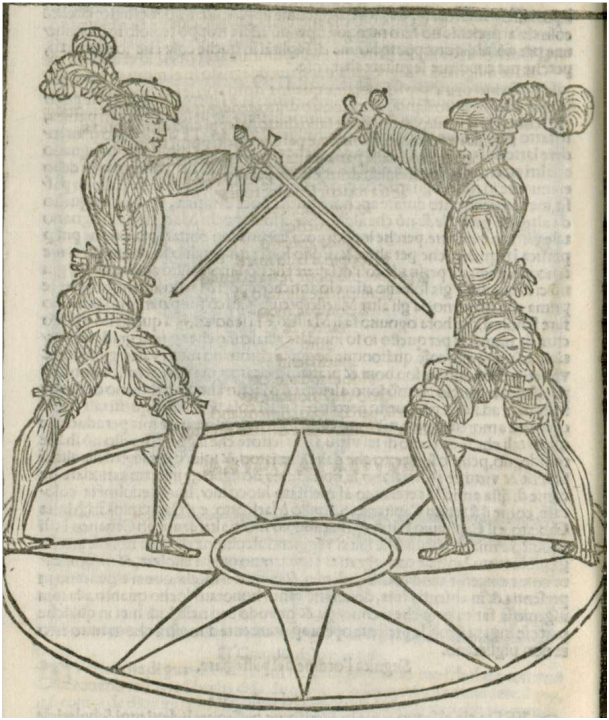
Have FunMarozzo (2)

Why do we pursue historical fencing? Why do we spend so much time pouring over the often cryptic passages in old fight manuals? We do this because it’s fun, it makes us happy, and fun is good for us. Don’t lose sight of the value of play—historical fencing exercises your mind and body, and done right, can give your spirit a workout too.

NOTES:

[i] See http://www.fencingmastersprogram.com/about.html

[ii] László Szabó’s Fencing and the Master, Staten Island, NY: SKA Swordplay Books, 1997; see also, among many others, Zbigniew Czajkowski, Understanding Fencing: The Unity of Theory and Practice, Staten Island, NY: SKA Swordplay Books, 2005; Ziemowit Wojciechowski, Theory, Methods and Exercises in Fencing, Datchet, Berkshire, UK: Amateur Fencing Association, 1993.

[iii] For a good place to start (in fact, just read this, it’s fantastic ) see Roger Norling, “HEMA Pedagogics Part 1: The Pedagogics Pioneers & The Role of a HEMA teacher,” at HROARR, November 21st, 2014, http://hroarr.com/hema-pedagogics-part-1-the-pedagogics-pioneers-the-role-of-a-hema-teacher/ (part 2 is here http://hroarr.com/hema-pedagogics-part-2-the-implications/ , part 3 here http://hroarr.com/hema-pedagogics-part-3-how-to-create-a-good-learning-environment/ ); see also a breakdown of a typical practice at The Phoenix Society for Historical Swordsmanship in “How we Train” by Richard Marsden, http://phoenixsocietyofhistoricalswordsmanship.webs.com/apps/blog/show/31776335-how-we-train-by-richard-marsden .

[iv] Pedagogy is a giant subject—here I will discuss some general ideas, but in the next installment on this I will discuss some real-time strategies for teaching.

What to Look for (and Avoid) in HEMA Instructors

early hema

In the world of sword-arts, HEMA (Historical European Martial Arts) occupies a unique place as it is, by and large, an amateur pursuit. “Amateur” here is not a put-down, just the appropriate word to use, because apart from the few accredited fencing maestri out there who represent living traditions and work on the older stuff, most everyone else comes to HEMA as an interested enthusiast. Many if not most of us started in sport or classical fencing or other martial arts (e.g. Asian martial arts), but unless you’re young and a more recent student of historical fencing, chances are good that you learned from someone who has just been working on something longer than you have. That is okay, it’s just how it is, but not all instructors are equal and it pays to do your homework.

This is an important consideration as there are increasingly more people setting themselves up as instructors and without a viable certification program how is one to know if they’re worth visiting? While in time some qualification process might be in place, and as nice as a certification program might be, it would still be wise to have some guidelines for judging potential teachers as even some qualified instructors, no matter the field of study, can be stinkers. [1] One needs to have some measure by which to evaluate them as well as a handy list of red-flags.

The following check-list is a place to start—you may have individual concerns to add to the basic list. However, if a person or school fails most of this list, I’d recommend you keep looking:

School/Group Culture: The general feel of a place can tell you a lot about the person or people running a school. How open and friendly are they? When you call, email, or visit them, how quick are they to respond and how openly? How inclusive is the school—are there women there, younger students, older students, people in different states of fitness? What is the school’s focus? Does it tend toward the scholarly (source-driven, play oriented); is it purely tourney centered, is it a mix?

A lot comes down to what you want. If your interest is to fight in tourneys, then you should look for a school that does that and an instructor who has that as one goal for their program. There’s no wrong answer in terms of what you want—some people just want to fight, some people want to build a more complete skill set and understanding regardless of tourneys, and still others want the SCA without all the rules. Find the culture that appeals to you. This said, any version of these schools is probably going to be a better fit if they’re friendly and open to a diversity of students.

Personality: Tied to culture, the instructor’s personality has a lot to do with a school’s culture—people gravitate to people they relate to. Whatever an instructor’s focus within HEMA there are some things to look for and not surprisingly they’re tied pretty closely to the same openness, friendliness, and sense of community mentioned above. Is the instructor arrogant? Do they build students up or tear them down? Do they praise and encourage when making corrections or embarrass students? How do they respond to questions? You’re spending time and money, and unless being abused is your thing it’s probably best to keep looking.

Forgeng I 33

Experience/Qualifications: This is one of the hardest things to assess and because of the diversity of sources, not to mention instructor experience, it will vary. A lot. This said, there are again some general guidelines. Some instructors may know a lot, but be poor teachers; others may be good fighters, but know little of the source material; still others might be a decent mix of both. Many think they know a lot or have a lot of skill, but are really little more than attribute fencers with deep ego needs. If you can find a healthy balance of knowledge and skill, great, but you may need to compromise and that is okay. It may take a few visits to see what sort of person you’re working with too.

If you have no previous background in fencing or related arts, it can be extremely difficult to judge an instructor’s knowledge and skill. But there are some tells—any instructor who has spent serious time studying martial arts will have a degree of humility and will acknowledge the skill of his or her peers. Generally, they are cautious and tentative in presenting new material—all HEMA is interpretation and some interpretations are better than others.  Anyone telling you “no, this is how they did it” without decent evidence is someone to avoid.[2] Likewise avoid anyone pretending to have learned something in secret–more often than not this is going to be pure bull-shido.

If you find someone who is at constant pains to brag while putting down their peers, that’s not a good sign. A good instructor will be able to explain where something comes from, say a particular move, why we do it, and how. They’re open to questions and different points of view. They should be able to point to the sources they use too. A good instructor will also admit when they don’t know something; even better instructors will then help you find an answer. A good instructor will push you to improve, but will be supportive and encouraging in doing so. This stuff is hard enough without some jerk making you feel bad about it.

Akademia Szermierz still
Some of the crew from Akademia Szermierz, Poland–they clearly approach Fiore dei Liberi’s _armizare_ as a martial art. See http://www.akademia-szermierzy.pl/

Approach: Since we’re talking HEMA, there should be a fairly large emphasis on the H and the MA side of the acronym. Ostensibly any instructor in HEMA is looking at the sources—if not, I’m not really sure what they’re doing.

We know the little we know and we build our interpretations of past combat arts from surviving sources.

The martial arts aspect is important too—the goal should be “don’t get hit” followed by “hit and don’t be hit.” If either of these is missing, you’re in the wrong place.

Remuneration: Different schools and instructors have different rates. Comparative shopping is important. Most schools struggle to stay open, so what you pay generally goes to rent and gear. Few people make a living teaching historical fencing.

Look at their pay structure against what they teach. Do they have options for payment? HEMA is expensive, make no mistake, and many instructors will work with you to find a way to make dues less onerous. Floor fees are common, but many schools will also give you a first visit or two free. That can be a good indication of what to expect. If someone offers individual lessons, ask them how they run their lessons, what they generally teach, and how much they ask.

Safety: Better instructors will have a culture of safety and enforce it; they will seek to prevent injury, not encourage it. There’s a fair amount of macho, HEMA-bro-culture out there, sadly, so if you’re into that nonsense, go for it. It won’t be hard to find. It seems silly to have to list this, but given the general machismo when it comes to safety it needs to be said: find someplace safe. Does your instructor require the basic safety equipment? Do you see people fencing without it? How well do they take care of the masks, gloves, jackets, etc.? How courteous are fencers with one another? How courteous is the instructor?  Are they using insufficient equipment for the weapons they train, and if so, do they have protocols for how to do that safely? [3] Do they have insurance? Have you signed a waiver?

Everyone wants to get fighting as quickly as possible, but jumping in, full bore, on the first day is not wise. Learning how to fight with swords takes time, drill, patience, and dedication—you don’t make progress over night, but over years. Be wary of any program ready to throw you into the mix with no to very little training. The truth is that any fencing school must consider the lowest common denominator when it comes to safety, not the best case scenario.

In summary, here are the basic red-flags. If you see any of these, walk. Your time, money, and safety are worth more.

Common Red-flags:

  • arrogance
  • poor ability to take criticism or correction
  • narrow-minded, bigoted, or predatory
  • lack of qualifications (this includes appeals to secret knowledge or training or connections to dubious “experts”)
  • incapable of or unwilling to work with others
  • incapable of or unwilling to appreciate student ability/gifts/credentials/questions
  • problem child in larger community
  • dangerous and unconcerned with safety
  • discomfort with students visiting other schools or instructors; cultish possessiveness

To be honest, sometimes you can’t see all the red flags right away, especially if you’re an occasional visitor and/or if the problem instructor is good at hiding it, but it will out. The community, wherever you are, generally has a decent notion of where not to go.

All of this assumes you want to learn swordplay in earnest and well. It’s a long, difficult path to proficiency, and you have to be willing to put in the time. Find an instructor who can not only impart technique and passion for this complex field of study, but also one who will be there to help you and keep you going when you’re ready to quit. Any such instructor is, by definition, not going to have a lot of these foibles.

Notes:

[1] The HEMA Alliance has such a program, but not everyone in HEMA is part of the alliance and their program is not universally accepted. See https://www.hemaalliance.com/instructor-certification

[update 10-4-19: There are some organizations I forgot about and share here. One is AIMA (Associazione Italiana Maestri d’Arme) and the other is one branch of the sport org AIMS (Associazione Italiana Maestri di Scherma), which has certified a number of Maesti di Scherma Storica (historical fencing).

[2] There’s a difference between “this is how we interpret this passage” and “because I say so.” Context is everything, and some sources are much more difficult to work with, and thus, force us to be more tentative.

[3] Most clubs use normal fencing masks. They’re the most available, most affordable option, but they’re not designed for anything heavier than epee most of the time. So, if your interest is longsword, overly heavy sabre (i.e. trooper weight meant for use in the saddle), pole-arms, etc., be sure to ask how the school mixes these weapons with fencing masks. It can be done more safely, but any mask can fail. One of my favorite examples of just how easily a fencing mask can be crunched is here: https://www.youtube.com/watch?v=eW1Imv7yHig

The Art above All Else—Collaboration and Fencing Instruction

Fencing books

It’s taken me years to learn this, but with fencing I’m at my best, at my most pure when my focus is the Art–the sources, the body of technique, history, movement, theory, and, in sharing all that with other people. I started out as most people do. The masters with whom I studied took a traditional approach—I worked one on one with them, sometimes with their assistants, then drilled with more advanced students and my peers. I was encouraged always to seek out better fencers and bout with them. To most, this approach seems very top-down, that is, information comes from master to student, from senior fencer to junior, and that’s not wrong, but… it is also, by its nature, collaborative. The instructor works with a student, not just at them. In working with senior students, with better fencers, one is also collaborating. So, for me, fencing is not a one way exchange, but a dialogue. This seems obvious to me, and maybe it is to you too, but that said it isn’t to everyone.

When something’s near and dear to us, when it’s a part of us, we often fail to see how it’s not obvious to others. We go about our way, acting on the assumption others are in line with us when they’re not. Sometimes this can be taken for a lack of concern, or worse, as something threatening. To others we may simply seem naïve. For my part, I try to act in a way that makes my position clear, but intentions and results don’t always match up, and when it comes to collaborative approaches to an historically individual endeavor like fencing instruction what I’ve learned is that actions on their own aren’t enough. One must be explicit, verbal, and reassuring. One must expect the raised eyebrow from some, the head shake of disbelief from another, and even the sly smile of the ambitious who think they sense a sucker. This said, I still think it’s worthwhile to try to find ways to work together.

Regardless of what sort of fencing one teaches—Olympic, Classical, or Historical—more often than not one does so solo. A master may have a provost or two or some other assistant, but a master working with another master, any instructor working with another, is less common. There are some good reasons for this. As I mentioned in my last entry, the individual, one-on-one lesson is the norm. An instructor teaches a student. Historically, even in the days when one had more reason to learn to fence, instructors vied for students; they were in competition with one another. Today, when fencing is normally a pastime, students fewer in number compared to football/soccer or similar sports, competition can be fierce. Fewer resources and a low profit margin can make anything pretty cut-throat, and fencing is no exception.

1F8A8CB8-E8D9-4EF8-AB72-5E9B022B806A beta

It may run counter to established practice, tradition, even reason, but off the piste I do not care for competition. I understand it, but I don’t like it. In part I think some of this is a carry-over from teaching college classes. In the trenches adjuncts like me occupied working together could mean job security. At my last teaching job, for example, I was—by default—the “pre-modern” professor, so I was teaching not only things I spent years studying in order to teach, but courses in different if congruent areas of history. There are a lot of ways to do this, but my way, being scared to do it poorly, was to contact the people in those fields I know and get help. They’d send me their syllabi, textbook recommendations, articles, thematic breakdowns, everything I needed to produce a decent (not perfect) survey course in classes outside my area. All I had to do was read, interpret, and admit when I didn’t know something. Then, I would either work with students to figure it out, or, tell them that I’d look into it and get back to them. In short, I looked to my peers, and in turn, they looked to me for help teaching courses where I could help them. I’ve taken this same approach to fencing history and instruction—there are people out there, many of them, smarter, more experienced, and knowledgeable than I am, so why not politely ask for their help? I’ve made some good friends out of this too, an added bonus.

In step with the “habit” of working with others, I also realize that with something as vast as the Art, the art of defense, especially within an historical fencing context, there is simply too much to know. This is part of its appeal, and, something we have to keep in mind because we are, each of us, limited by its totality. This is humbling in the best sense—faced with such a mountain of information we have the privilege of being eternal students, forced to engage the material again and again, and with hard work hopefully grow. By extension, knowing that others have more information, or different information or perspectives, it makes sense to work with them. I learn, true, but so too do my students, and as an instructor that is my purpose—teaching. No one ever said we had to do that 100% on our own. Maybe we often do, but even then… someone, normally several someones taught us, and so really we are all the products of shared learning, of a collaborative system, whether we like to think so or not.

From a business perspective it’s easy to see flaws with this. If I send people to a colleague; if I promote another instructor’s seminar; if I do anything to advance them am I not hurting myself? Am I not potentially sending students that might be mine to them? Yes. I am potentially doing that, but it’s a question of values, of goals, and, a recognition that I’m not the only student of the Art, not the only instructor. If I truly believe—and I do—that most students benefit from learning with multiple teachers, in having problems to work out presented in different ways, then I put it to you how can I not involve my colleagues? Do I not do my students a disservice by trying to hoard their time and energy? That’s self-serving in the worst sense, and can undermine the very goals I purport to have. If my goal is sharing the Art, in igniting a fire to study it in all its variety, depth, and beauty, then other concerns are secondary–not unimportant (I have to pay rent)–but secondary.

IMG_4426

It’s not naiveté, a lack of business sense, or even a secret plot to undermine colleagues that I promote their classes, seminars, ideas, or anything else. I do so intentionally, and yes, in full awareness that it could (and often does) affect the number of people attending my classes, and even more so individual lessons. I also recognize, in truth with some sadness, that not all will return the favor. I persist though, I continue to do so because the Art comes before all else; it comes before me, before profit. To the degree that I have any business teaching, then I must do so in accordance with what I value, in what I think the Art has to teach us, and for all the mayhem and murder one learns in the study of arms, one learns far, far more than that—one can learn civility, generosity, largesse, respect, and humility. The best friends I’ve made I’ve made fencing; much of what I learned in competition or in lessons or the assault has had parallels in my life outside the sala; some of the most severe crises in my life have occurred either within this context or were partially mitigated via fencing; I even met my wife fencing. The Art has given me so much, introduced me to so much, and continues to do so whether my own classes are a success or not. Moreover, the Art doesn’t belong to me, but to us all, and it is best shared.

I believe that working together is better. I believe fair play, honest exchange, and mutual promotion ultimately helps us all and furthers the Art. You don’t have to agree, of course, but I’ll say this—if I promote your class, your seminar, anything you’re doing, then it means I recognize in you a fellow student, a fellow disciple of the Art; you’re someone I like, respect, and want the best for; you are someone I know I can learn with and from; you’re the sort of people I like to know and talk to; I recognize you as one of my tribe. I don’t care what ethnicity you are, what sex or gender you are, if you’re young or old, if you’ve got two legs or one, if you’re gay or straight, what religion you follow or don’t follow—only that we share a love of the Art (this said, note well: I do discriminate against bigots, fascists, and others who seek to harm others in thought, word, or deed. If such lowlifes read this and say “but I’m a student of the Art too,” my reply is no you’re not—if you were you wouldn’t be as ignorant as you are).

14103048_10208555503259416_5675796283840380623_o

In some respects it comes down to how we define success, in what our goals are. Sure, like anyone I want my school to thrive, to stay open to introduce people to this wonderful Art, but it’s not the only way to teach. Even if all I do is act as one stepping-stone on a much longer path, that stepping-stone is important too, and the path is long and winding. So, whatever happens business-wise, or with the other irons I have in the fire; however crippled I may become; however busy; I will, so long as I can, continue to study, train, and learn about the Art we love, in all its colorful expressions, and, I will continue to support you as you do so too.


Photos:
–Fencing Books

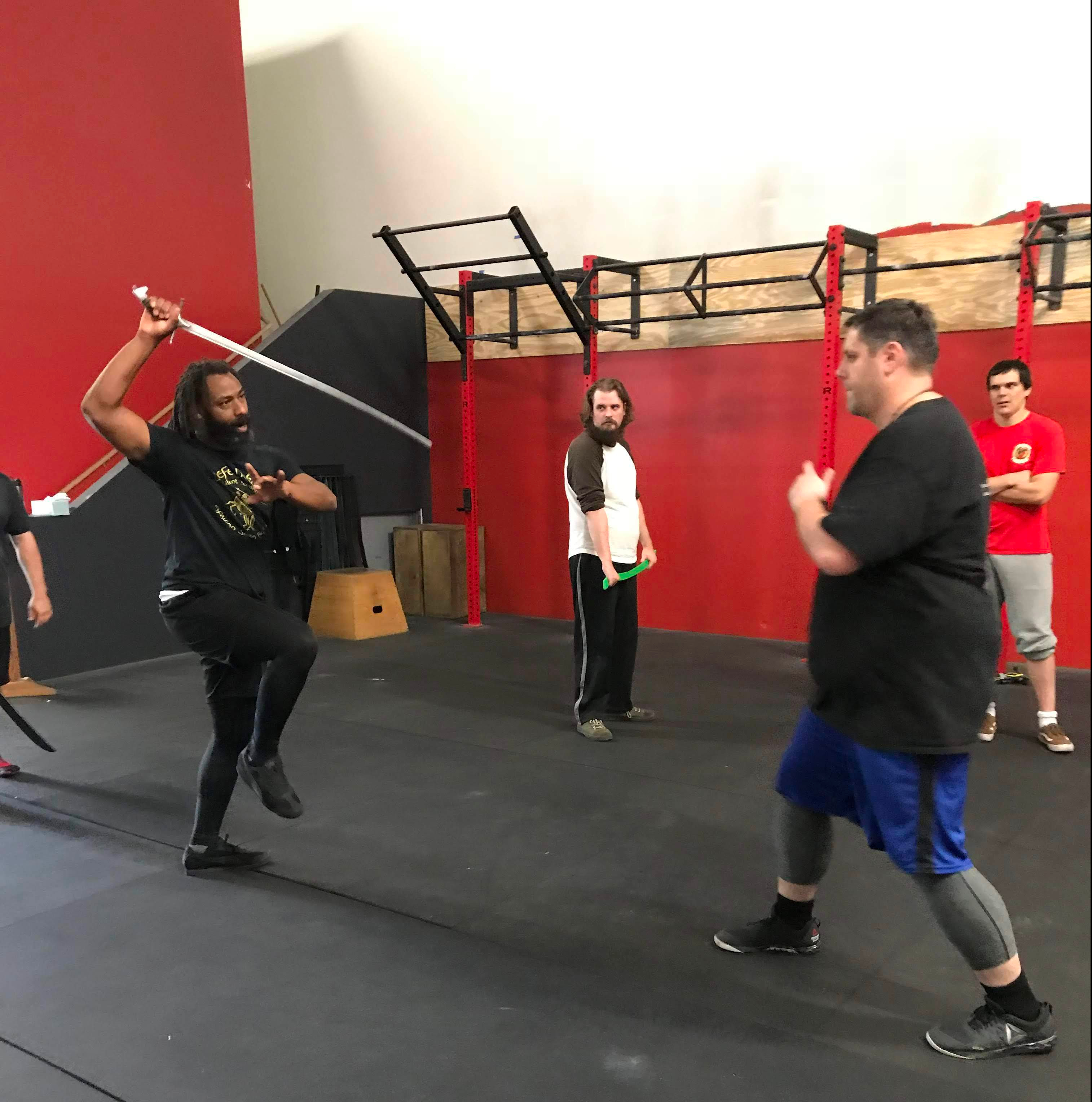
–Seminar on Maghreb Sabre with Da’Mon Stith, July 2018 at Northwest Armizare [Da’Mon Stith is one of the finest martial artists and teachers I’ve ever had the honor meet]

–Mike Cherba’s Introduction to Lashkroba class, Swordsquatch 2016 [I was Mike’s pell/cut dummy 😉 ]

–Introduction to Italian Sabre, class presented at Grit City HEMA, Tacoma, WA, August 2016 [Will Richmond and I taught this class together]

The Central Place and Importance of the Individual Lesson

deB3

In discussion with a friend and fellow fencer this morning I was reminded of something most of us on the Olympic or Classical side take for granted: the individual lesson. In historical circles one can find this option too, but less often, partly because of the backyard, study-group heritage of historical fencing, and partly because often there’s no one available who can, properly, teach the old, interpreted material super well. This isn’t a dig at my peers, just an observation. The historical community isn’t as venerable, relies less on precedent (and is often outright hostile to it), and is so varied in expression, purpose, and equipment that a standard teaching method, while desirable, is less easy to formulate.[i]

Joinville 2

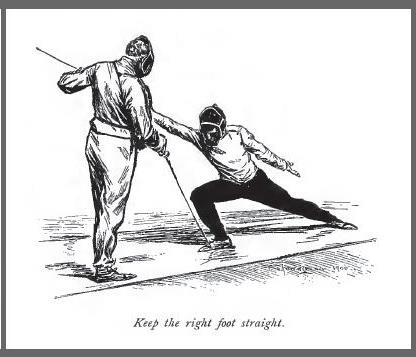
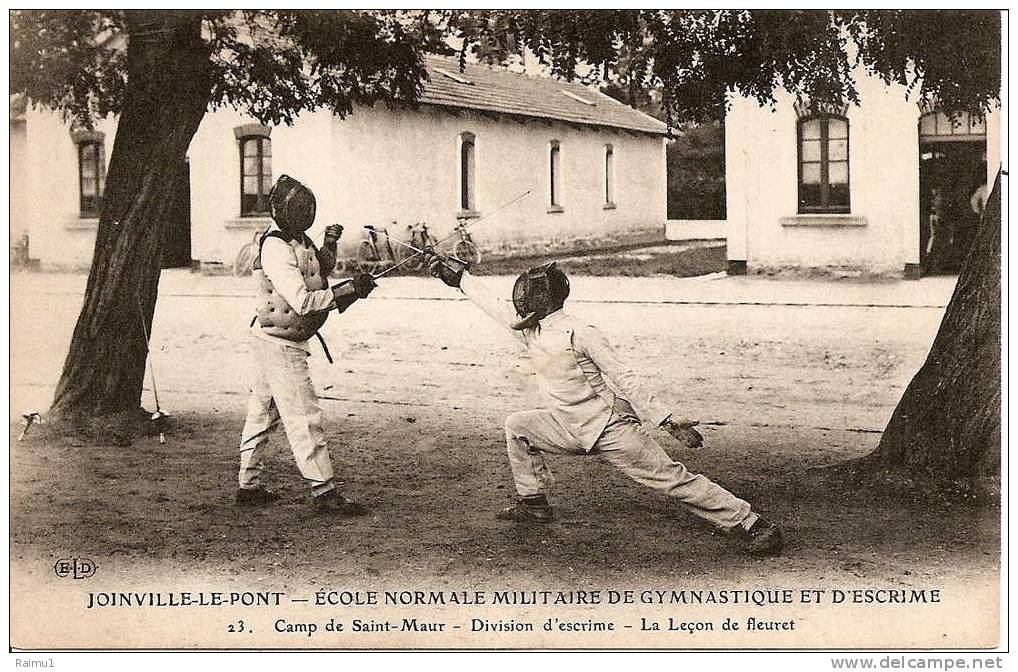
Why is the individual lesson so important? There’s a lot of literature on this, and much of it written by far wiser heads than mine (so you should check it out), but in summary the one-on-one lesson with an instructor is better because of focus, attention, and feedback. We learn a lot in group classes, but by their nature such classes can only do so much. The instructor, even with an assistant, must survey everyone, all the time, and notice what is going well, what not so well, and step in. Rather than helping one person in a focused way, they notice a problem one student might be having and make a group announcement. Maybe the student not turning that front foot straight during footwork drills realizes that the instructor is talking about them, maybe not. One on one, that student has no question. As students, we should seek out individual lessons if possible, at least if we truly wish to improve. The focused attention, the critical eye, the distinct correction for our specific idiosyncratic movement, all of that is invaluable.

One thing we don’t talk about enough, though, is what it takes for individual lessons to work well. The easy things to list are well, easy: a knowledgeable instructor, an attentive student, clear expression of ideas and techniques with demonstration, etc. But the single most important thing is personality fit. Not everyone learns the same way, not every style works for all. Students seeking individual lessons may need to shop around, and they should. Few things sink a student’s success like a bad rapport with a teacher—this could mean an outright gruff instructor to one that for whatever reason just isn’t a good fit. It’s like that sometimes.

Joinville 3

Instructors need to realize this too. If they’re in this to make money then it especially behooves them to find a style that will work for most people. Traditional approaches to the individual lesson, as still taught at the Coaches’ College or at the Sonoma program, remain the most effective, tried and true way to teach this material. There’s a reason that lessons are still taught as they are after several centuries of development.[ii] For those of us not in the profit game it’s just as important if we truly want to share this wonderful Art with people. For me, when I realize that a student struggles more with my presentation that the skill-set, if I realize that they need something I can’t give them, I recommend friends of mine or other schools who might. If we truly care about the student, then this is what we do. As an instructor, our goal is for students to grow, hopefully with us, but if not then with someone. We’re a small community, and to my mind we collectively gain by recommending one another, helping one another out, and promoting the Art over ourselves.
———-


[i] For complicated reasons many historical fencers outright reject anything smacking of “sport” or “classical” fencing, presumably for being less “martial”—a word over-used and too often poorly—than their more macho historical style of choice. This does their cousins in those other camps a disservice, but it also limits their own growth.

[ii] In brief, traditional lessons one on one start with a short warm up, say lunging a direct thrust or cut to the instructor via cues. Next, the instructor may either introduce a new concept or technique, or, may drill one already shared. Depending on the student there may be a little of both. Lessons often end with a cool-down drill, e.g. parry-riposte or stop-cut drills for sabre. Group lessons often mirror this, but writ large.

Gang Affiliation or Natural Allies? Fencers and their Camps

fencer-delmar-calvert from west coast fencing archive
Maitre Delmar Calvert, 1924-2019; photo from Westcoast Fencing Archive

This past weekend I attended the memorial for one of my instructors, Matire Delmar Calvert, and among the many thoughts that assailed me while there was a realization that despite the fact I was surrounded by mostly Olympic fencers I was with “family.” I didn’t expect that. These are all people I like, but I’ll be honest, I often have felt like I don’t belong with them.

More often than not I’ve felt like an outsider in fencing. When I stopped competing, many of my fellow fencers thought I was over-reacting or was just full of sour grapes, and when I started doing research into fencing, technique, etc. the kindest thing I was called was “nerd.” When I started trying to find and use more historically appropriate blades a fair number of people thought I was crazy (the historical community as we know it didn’t exist then). Working from books was bad enough. It didn’t get better.

1801366_10203266909176461_1837749499_o (1)
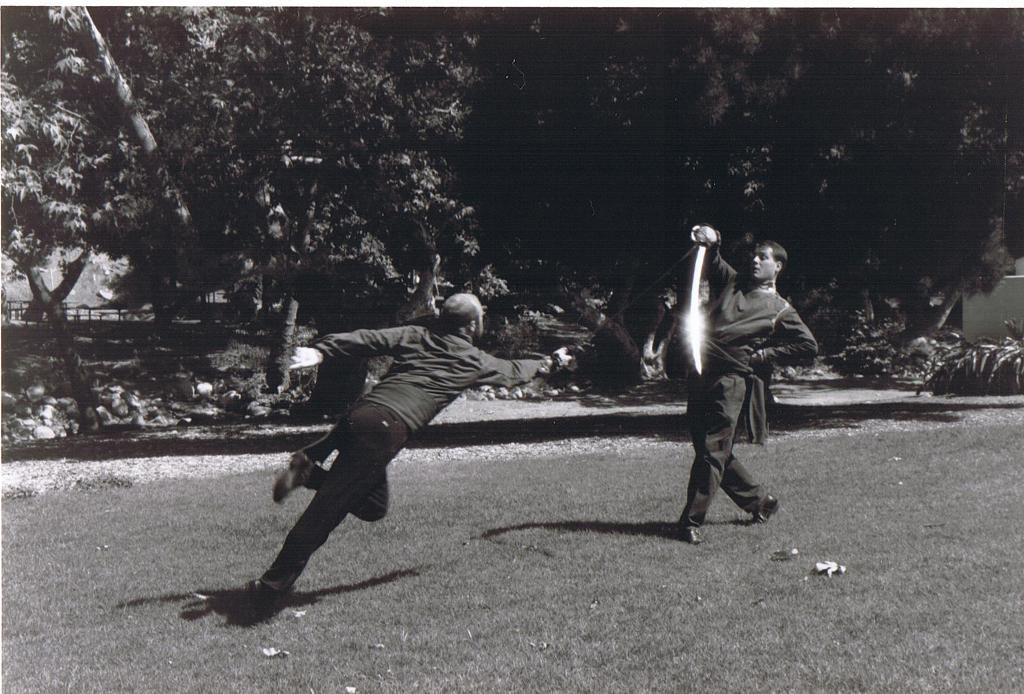
Jon Tarantino and I doing a photo-shoot, Oaks Park, Santa Barbara, for a friend in 1997–aside from schlager blades, these crappy Indian-made repro cavalry blades were all we had, and yes, they were rubbish.

I left the competitive world in 1996—I was disgusted with the band-aid vs. cure approach of the FIE/USFA to the issues in electric sabre. It just wasn’t fun anymore, not for me, and so I left. I began pursuing “Classical” or “Traditional” fencing, but understand that in saying that I don’t mean the artful dance variety—I wanted to return to sabre pre-electric, and that led me further and further back, ultimately to the core texts that created what I knew as sabre. Labeled “too sporty” and failing to pay homage to what has become the established “Classical” community, there was no welcome there either. It’s just as cliquish as the Olympic world, maybe more so for being smaller, though I’m happy to say that in more recent months I’ve had the pleasure to get to know more people within that community and hope it’s a sign that we’ll communicate more.

Time in historical fencing has proved just as difficult, if in different ways. The first historical club I attended, off and on, I entered at a difficult time for me and my family. I needed an out, something that wasn’t standing uselessly next to a pregnant spouse undergoing treatment for cancer and trying to keep a four-year old’s world as normal as possible. I should’ve done more research. I knew of Maestro Hayes’ school in Eugene, but with my schedule at the time I couldn’t make that drive. I did what anyone might do instead—I saw the need at the club I was in and decided I’d try to help. It was an utter and complete failure—fragile egos too often see help as a threat. This proved the case at this school.

abject failure of a seminar
Alex Spreier of High Desert Armizare, vs. Velah Gilbert (Military and Classical Sabre page, FB), with Christopher Bigelow (Northwest Fencing Academy) in green and Mike Cherba (Northwest Armizare) in blue, both in the background, 2015, at the ill-fated seminar on Angelo’s sabre and broadsword I put together

My last event there, one I put together to help them, but which ended up being micromanaged by the guy in charge of sabre there (first by planting his student in the seminar to keep an eye on me, and then, at the last minute, by showing up himself and taking over the seminar), was the last straw. After sharing my thoughts about it with him, I left and never looked back, though happily and ironically, became the best of friends with his student, and, met two people better connected with the larger historical community. I visited one of their schools, one super close to my house as it turns out, and was there for several years.

IMG_4385
Swordsquatch 2017, class I co-taught with a friend, covering Parise’s “On the Ground”

Having spent time in each camp’s turf, having fought side by side with each gang, hearing what they have to say about one another, themselves, all that, is illuminating. More than ever I think that despite the differences there’s more that we have in common that we think. This is a hard sell—group identity, misunderstanding, envy, ignorance, all work together to prevent more interaction. We are all the sorrier for it.

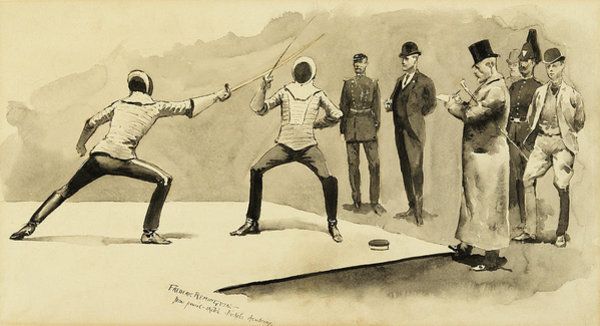
1-fencing-at-dickels-academy-frederic-remington
Fencing at- Dickels Academy, by Frederic-Remington

One of my goals with Sala delle Tre Spade is, to the degree possible, to bridge these divides. ALL fencers, whatever gang affiliation, are welcome—our turf is their turf. We are all united by study of the sword, and, we might learn a lot from one another. It makes me happy to know that in our tiny group we have historical, classical, and Olympic fencers; some have been or are in the SCA; some pursue several “styles” of fencing at different times in the week. We’re a small school, and so have very little influence in the larger fencing world, any of those worlds, but it’s a worthy goal trying to get people together to share what they know, because it builds ties and expands the parameters for what we might learn. We’re the richer for it, and while it’s anyone’s guess how long we’ll last, I know in a way that I know few things that it will have been worth it. We’ll all keep fencing regardless.

The First Foe—Instructors and Bouting

Partner Drills 2

There are many things that distinguish Olympic and Classical fencing from historical fencing, but one that’s surprised me is the place of bouting with an instructor. It’s not that this doesn’t happen in Olympic or Classical schools, but it happens differently when it does, and in my experience doesn’t tend to raise the same questions.

I’ve not taken a poll, but I believe it’s common for instructors in historical circles to free fence with students. Not all do, but certainly many, and it’s easy to see why. Most “HEMA” clubs are grass-roots, that is, they start say with one or two people eager to explore extinct art X and they form a backyard study group. They start off, then, fencing one another. Many such clubs are so small that in order to have people to test techniques and plays against an instructor has to fence. That instructor often is only the instructor because they’ve spent more time with a text.

In Olympic and Classical schools normally instructors have been trained within those cultures—with long traditions of pedagogy, with established programs for training teachers, people entering these fencing spheres interact with instructors differently. New students, for example, take lessons from an instructor, but don’t fence them in free bouting. They may in time, but more often than not outside of teaching bouts new fencers fence against more advanced fencers. I’ve worked with four masters so far and only with the last have I enjoyed the privilege of free bouting. I had teaching bouts, sure, where I was restricted to specific things we’d been working on, just using them in real time, but not free bouting. Thus, my perspective as an instructor is largely shaped by these experiences.

The reason I’m exploring this here is that I’m always a bit shocked when someone asks me how they did or if I was holding back on them. These are honest questions, and I’m always happy to provide feedback, but it’s important I think to establish how one should think of any bout with an instructor. The caveat is that this is my view, one not shared by all within the historical community, but so far as the group I run goes this is how I look at it.

An instructor’s first duty is to teach. This should guide everything they do. This pertains not only to overseeing drill, but also to bouting. It’s especially important in bouting, because by its nature a combat between two people, even friendly, is a contest, it is competition, and few places are as prone to ego as this. Everyone likes to win, everyone wants to, but victory, even the small victory that comes in a single bout, isn’t the goal of an instructor in that match: their goal is to use that bout to build up the student. What does that mean?

First, it means that the instructor must balance pushing the student realistically enough that they respond correctly, but not so hard that they overwhelm that student. Second, it means that while the instructor is trying to land the touch, they’re not doing so at any cost—if landing the touch defeats the lesson, don’t land it. Start over, set it up for the student again. Third, it means holding back. This isn’t, by the way, being condescending toward that student, it’s honoring where they are skill-wise in that moment. Hitting them with every tool in your tool box, with all ferocity, is as useless and defeating as it is stupid. The instructor becomes a bully, the student is frustrated, embarrassed, and no one learns anything. The sala is not a place for the instructor to show off what they know, but to teach. If your self-worth requires you to seek these little wins, fine, but there are other venues for that. There is no glory in defeating your own students.

As an instructor, it’s your students who come first, not you. When you bout with them, your goal is to increase their skill; yours will improve in helping them.

It can be easy to get lost in the fun, so you must focus—limit yourself to those maneuvers that allow your students to see opportunities to use what they’ve learned, and set them up to do that. This doesn’t mean you’re handing it to them; one does with brand new fencers, but with more advanced students you need to sell it, make it real, otherwise you’re not helping them. Your job in these cases is to mimic what they’ll see on the strip or in the ring.

Instructors need good bouts too, and this is yet another argument for continuing education. One should never stop being a student. If you need bouts, find them, but go to the appropriate place—seek out better fencers than yourself, enter a decent tourney, go to a master and take lessons. It’s good for you, and, it’s good for your students.

Safety Basics

This can be a thorny topic. We talk a lot about safety, it sort of comes with the territory, but ask any gathering of historical fencers what safe-practice means to them and you’ll likely get more than one answer. People come to historical fencing from different backgrounds, with different gear, safety protocols, and expectations. This is an important point to keep in mind. It might be a window into your instructor’s approach, but also it may explain why your training partners have different attitudes toward safety in class.

In some respects, safety is a relative term. For example, I have friends and colleagues who generally wear only an unpadded canvas jacket. This is what they wore at the sala where they started out. The maestro who runs that school is classically trained and his program for Armizare, just as in his traditional fencing classes, inculcates an increasing amount of skill and control over time. Because his fencers have this control, and because they gradually build toward more intense drill, they can wear light jackets in relative safety. Not everyone starts this way—I see people from many backgrounds, classical, Olympic, MMA, Asian martial arts, and SCA. Each typically brings with them the safety protocols they are most familiar with, but naturally they don’t always meet up. Some are far more conservative, some downright dangerous. Combined with varying levels of skill differing ideas about safety can create a potential landmine.

In this clip, for example, my friend Mike Cherba, head instructor at Northwest Armizare, demonstrates that even a normal blow from a feder can wreck the typical fencing mask: https://www.youtube.com/watch?v=eW1Imv7yHig I know Mike well, and trust me, this is not his hardest cut—strong as he is, Mike’s level of control is equal to it and he’s one of the few people I feel I could fence with in longsword with a normal mask. If you’ve followed any HEMA tourney footage then you’ve seen people hit way, way harder. What constitutes a “hard blow” is relative too.

What can we do to mitigate that? First, we need to be aware of these differences. It isn’t necessarily something people think about it, but they need to. Not just the instructor, everyone. Expectations within any group or school should be explicit. This ensures that anyone new to that school knows what the culture is, what gear requirements are, and armed with that information can decide whether or not it’s the school for them.

Second, people need to have a minimum of protective gear—just because they shouldn’t need it doesn’t mean they won’t. You have to plan for the lowest common denominator with chance of injury, not the best case scenario. A mask is a must, ditto a jacket, solid hand protection, and guards for groin and neck. Chest protectors are not a bad idea for both sexes as well. It will only take one broken rib to convince most people, but better they never get the broken rib. I was never a big fan of the gorget, but I also recently heard about two near-misses that convinced me that they’re a good idea (so that is me overcoming my own background and bias).

Third, the instructor must cultivate, and enforce, a culture of safety. Despite some excellent recent articles about the idiocy and dangers of the “go hard or go home” mentality, there is still a disproportionately large number of people who embrace the idea that only pain teaches. This is macho bullshit at its worst. If that’s your thing, fine, find a club that caters to the fight-club ethos, but it’s on you. If you’re young, just remember this—whatever fun you have now, whatever injuries you incur, they come back to haunt you later and will affect the quality of your life. I was never given to macho b.s. much, but in my twenties I was certainly less cautious and had no mind for the possible long-term effects of injury. Now, comfortably into my forties… I have joint issues all along my right side—knee, hip, elbow, and shoulder—thanks to over-training, fighting while injured, and a few unrelated accidents that compounded these existing problems; I have scar tissue from a stab wound and broken fingers that also compromise my ability to train and enjoy something I love. Be smarter than I was.

In designing curriculum, the instructor needs to assess the potential risk in each drill. This might mean working with another instructor or one of the more advanced students to test it out prior to class. Consulting with other, knowledgeable instructors can help too; there is no reason to go it alone. Stand on the shoulders of giants if you need to.

Lastly, each fencer must take responsibility for safety. They need to wear the right gear, ensure that their friends do, keep an eye out of hazards, help maintain weapons, and if they feel unsafe speak up. There’s no shame in that and it might save someone a trip to the ER.

Most of all, each fencer must work hard to become proficient enough that they have a basic level of control. This does several things. It develops one’s ability to handle the weapon, but in that process one also learns to read situations better; one realizes faster if one’s own attack is going wrong as well as if one’s partner’s is. Collectively this makes for a safer drilling and bouting environment. Every fencer’s first defense is the Art, is good technique well-applied—your gear is there, again, for when this fails.

Some basic guidelines everyone should follow:

  • Keep floors clean and gear out of the way
  • Wear your mask
  • When not engaged in a drill or bout, keep sword/weapon tips down, pointed at the floor
  • Maintain your weapons and safety gear; replace things when they wear out*
  • Refuse to play with anyone not as concerned about safety as you are—it’s not worth your eye
  • Don’t fence when too tired, angry, or otherwise distracted
  • Look out for your mates
  • Follow the rules, those of the sala and those provided with any drill or within a bout

*Romantic notions of the sword-as-heirloom aside, yes, even swords must be replaced in time

Rev. of Chris Holzman’s translation of Marcelli’s _Regole della Scherma_ (1686)

Marcelli, Francesco. The Rule of Fencing. Translated by Christopher A. Holzman. Wichita, KS: Lulu Press, 2019. Originally published, Rome: The Press of Domenico Antonio Ercole, 1686. 520pp. ISBN 978-0-359-71908-2. HC $42; Pb $32.99.

Francesco Marcelli’s Regole della Scherma (Rule of Fencing), published in 1686, is arguably one of the most important fencing treatises in the Italian tradition. On the one hand, it’s one of the core works on Neapolitan fencing, not only in terms of how thoroughly Marcelli explains the particularities of the southern school, but also as a book which retained its significance far after the author’s time. His influence is obvious from Terracusa e Ventura’s True Neapolitan Fencing (1725) to Rosaroll and Grisetti’s The Science of Fencing (1803), and even down to Masiello’s Italian Fencing (1887).

Francesco Marcelli was one of several masters within this tradition who codified the art of the Neapolitan school. There are differences between these authors, and it’s clear there were serious rivalries. Pallavicini, for example, refers to Francesco Mattei as a “modern” master, but receives a few barbs from Marcelli in turn. Their differences notwithstanding they have more in common than not and have long been considered proponents of the same regional style.

In some ways Rule of Fencing bridges older models of fencing manuals with those which came after—like earlier works, say by Marozzo, Marcelli covers additional weapons of his time (rapier, smallsword, dagger, and sabre), but the specificity and thoroughness of his system, while often peppered with Classical allusions or extended metaphors, reads more like works of the 19th and early 20th century. This holds true both in outline and precision. Marcelli’s coverage even includes discussions of terrain, fighting at night (with and without a lantern), and what it takes to be a good instructor.

Chris Holzman, as Tom Leoni, the author of the forward and a distinguished translator in his own right, remarks, is ideally suited to tackle the monumental task of translating Marcelli for an English audience. Where his training and deep knowledge of Italian fencing opens up the material, Chris’ language ability and sensitivity to nuances in Italian allow him to unpack the author. Rule of Fencing is not an easy read. Marcelli assumes a familiarity with Classical authors and fencing masters that few contemporary readers possess. His prose is complex, it’s fancy, and much of it expressed in a grammatical mood that doesn’t work well in English.

Chris’ approach here, as indeed in all of his translations, seeks to provide as much of the author’s ideas, language, and expression as possible. Keeping as best he can to what the original writer wrote is difficult, and can ring a little oddly in modern ears, but the advantage of Chris’ method is that he gives the reader a closer approximation of the original, and, with far less chance of the translator’s ideas creeping in. It is always clear if and when Chris’ voice interjects—this is important for anyone keen to keep clear what is Marcelli, and what is not. To assist us further there are notes, a short overview of the context in which Marcelli wrote, and brief explanations of the guard positions, Marcelli’s take on targeting lines (e.g. what he means by inside line), and less common terms such as the “scommosa.”

As important as Marcelli’s Rule of Fencing is for students of Italian fencing, it is equally important for any fencer truly interested in the concepts of the Art. Devotees of rapier will have more to chew on than most, but any fencer, Olympic or Classical, historical or SCAdian, will appreciate the degree of specificity, the completeness of Marcelli’s presentation, and the author’s use of illustrations. The connection between Neapolitan and Sicilian fencing with that of Spain is here, as it is in Pallavicini, everywhere evident, so students of destreza have yet another work to consider that touches on their own focus. Marcelli cites a number of earlier and contemporary Italian masters as well, opening a valuable window into how early modern masters looked back at their own, and other, fencing traditions and sources.

Perhaps one of the most valuable features of the Rule of Fencing is the way in which Marcelli breaks down complex ideas. As a quick example, in Ch. VI of Book I, Marcelli treats tempo. He starts with a short statement about when a student should learn it and why, then explores what other authors have said, from de Carranza to Alfieri, and finally provides his own insights into this core universal of fencing. There is a lot there to consider, and this is as true of Marcelli’s notions of universals (timing, distance, judgment) as it is in his explorations of particular techniques, their application, and the various contingencies that arise between fencers of different temperament and skill.

If you buy one book on rapier, or one book on Italian fencing, or even one book on fencing theory and application, let it be this one. One can and will return to it again and again, for there is more to mine here, to consider, to attempt within one’s own training than in most other works. You needn’t be a rapier fencer to benefit—there is something here, a lot of somethings, for every fencer.

JBT Emmons

Sala delle Tre Spade

Trust & Partner Drills

Badminton 1893Drill is a mainstay of fencing. We do footwork. We practice point control. We make molinelli in the air and at a target. We (should) be doing a lot of drill. In historical fencing we sometimes devise or find ourselves doing drills that are new, concocted out of our source material, and it’s a fair question to ask what might be signs that a drill isn’t up to par or might even be dangerous? What does it take for a drill to be “safe” when we’re talking about hitting people with weapons? Different types of partner drills require different levels of complexity, intensity, and safety-gear. The instructor has primary responsibility for introducing safe drills and monitoring how fighters are managing safety, but there’s an equally heavy burden on fencers performing the drill. They need to exhibit proper control and courtesy or they’ll injure their comrades and injured comrades mean fewer people to fence with.

On the instructor side, it’s often a balance between imparting what a particular skill or play requires and safety. Teaching longsword and sabre, for example, requires modulating what safety means. If one is teaching Fiore dei Liberi’s Armizare, a combat system designed to main and murder people, either in the lists or in the field, then one must be more vigilant in some ways than when teaching sabre. Most if not all of Fiore’s techniques must be modified to make them safe and some of them one can never do at full speed save perhaps in armor (and sometimes not even then). Teaching a sabre class, in comparison, makes for an easier balance of technique and safety. The relative weight, flex, and delivery of the thrust in sabre, though deadly with sharps and in earnest, is likely to do little more than bruise someone, especially if they’re wearing proper protective gear. With a stout jacket, one is rarely marked at all. This is often not the case when thrusting with a longsword—there is more power generation, more mass, and more surface area to the weapon. One thrust against the mask with either weapon will demonstrate the difference. Each weapon was meant to do harm in different ways, in different contexts. Assuming the exact same safety requirements is dangerous–fencing masks, good as they are, were not designed for longsword.

An instructor must understand the dangers inherent in a drill and modify it when and as necessary. This is the first step. The second is monitoring a class to make sure that fencers aren’t doing anything to nullify that modification. There’s no room for leniency with this—if any fencer is acting in an unsafe way they either fix it or one pulls them out of the drill. In some cases the drill itself needs further refining. Safety gear, good as it is, is only a fail-safe, an additional layer after one’s technique fails. No mask, jacket, glove, or pad will make you invincible and it’s stupid to proceed as if they will.

The same heavy burden for safety is shared by the fencers executing the drill. Drills can be complicated and applying sufficient oomph to the play with the control required to ensure no one is hurt is a tough skill to learn. Not everyone, in fact, learns it. I’ve seen experienced fencers fail to exercise control in drills; I’ve seen them fail to pull a blow that had clearly gone wrong. No one should have to “Fence for Two”—it’s the responsibility of both drill partners to proceed in such a way that both fencers are as safe as they can be.

There are several attitudes and skills one needs to cultivate to be the sort of person people want to drill with:

Courtesy: It’s important to be a courteous partner, not just in the sense of polite salutes, hand-shakes, or the blade-smack to the butt or thigh a la American football, but most importantly in the sense of the Golden Rule. Do you want to be injured? Do you want to be fearful of working with someone? Of course not, no one does. Work to be a safe partner and you help everyone, yourself included.

Control: Control is the marriage of skill and awareness. It takes a long time to develop. It means having a full understanding of each move, its direction, intensity, and target, as well as the ability to modulate any of the three at will. It’s a hard-won but crucial skill that requires hours, weeks, months, and years of hard work, drill, and patience to develop. Never stop working to achieve it. Control is not fool-proof, however, as everyone can and will misjudge from time to time. However, once you have it, people will want to drill with you because they know you’re safe and can help them learn whatever technique it is you’re all working on. You will learn more too because you’re both comfortable.

Competence: A certain degree of skill, of the ability to use the weapon, is always to be desired. For beginners naturally this is not necessarily there, but it will develop over time and provided one puts in the time. Within historical fencing there is, unfortunately, this general sense that one can just “dive in” and become proficient. This is not true. Being aggressive and suicidal doesn’t make one a good fighter—have the patience and smarts to do it right first, to put in the time, to learn enough to make actual bouts worth your time. The truth is that those who just jump in do so because it’s fun, and it is, there is no arguing with that, but too often the goal is simply to win, not to learn, and bouts—like drills—are another learning opportunity. As ever, if your ego is driving you, if you’re relying on speed, strength, brutality, etc. alone, you’re never going to get very far, and moreover a lot of good people, better fencers who could help you improve, will avoid you. At my age, I don’t have time for macho b.s. and have no qualms refusing to fight people who don’t have the requisite skill or control. I have old injuries enough to deal with and I don’t care for more.

Consistency: Emerson’s ideas of a foolish consistency being the hobgoblin of little minds holds in fencing as elsewhere, so it’s important to be consistent in the right ways. First, developing the ability to perform the same action correctly and pretty much the same way each time is important. Likewise, the capacity to perform the same action in the same tempo or from a standard distance is helpful. Much of this comes down to practice, but a lot comes down to focus and awareness too. Staying zeroed in on the drill, its purpose, what you need to do to do it successfully seems obvious, but a lot of people sort of go through the motions, especially if it’s a drill they’ve done multiple times. Even the oldest, most basic drill remains useful if approached correctly.

These attitudes and skills work best where there is sufficient trust. When it comes to safety and a successful drill trust is at the very heart of it. Some time ago, in an Armizare practice, I saw a student, one with considerable skill for someone her age, break a drill out of fear. She knew how to do the drill; she knew what the instructor wanted her and her partner to do; but she didn’t trust her partner. In this drill, when she made a mandritto fendente as the initial attack, the defender was to counter by striking into it with bicornu—done right bicornu effectively takes the center-line and breaks the attack.Pisani-Dossi MS 19b-b

What she did was modulate her attack—if her opponent was likely to break her cut, she pulled and beat instead so as not to get spiked in the face. I spoke with her afterward during a break and it was clear she felt awful; in her mind she had messed up. I told her that, actually, she had demonstrated considerable skill in reading her opponent and adjusting things to keep herself safe. These are not bad things. She was just fencing for two because she didn’t want to get hurt. However, it also meant that the drill had failed. There are multiple sadnesses there: first, this dedicated, hard-working student learned less than she might have, as did her partner; second, this drill was a good one, but like anything it required trust to succeed; and lastly, a capable, skilled student left that drill feeling she had failed, when in fact, she had not. Trust is everything. Without it, nothing works or at least it won’t work as well.

Actively cultivating courtesy, control, competence, and consistency will do a lot to dispel fear, because on the one hand it helps train one to do things more effectively, but on the other it also alerts one’s classmates that one is a team-player, that they have your best interest at heart. It helps build trust, and when you’re playing with swords, even blunt ones, you need that. Students who don’t feel safe, who in fact aren’t safe, aren’t going to stay long, and that is a net loss for all of us.


First image, “Parry in Seconde,” from The Badminton Library of Sports and Pastimes,  Walter H. Pollock, E. B. Michell, and Walter Armstrong,  London: 1893.

Second image, sword in two hands, zogho largo/wide play, play of the first master, Pisani-Dossi MS 19b-b.

2nd Sabre Invitational Results

This past Sunday’s tourney, a small, experimental invitational sabre event, was a success despite a rocky start. We didn’t have internet, so the scoring program had to be used from a phone with hot-spot; the ring we had planned to use was in Canada; but we made do. Our rule-set lists a piste as well as a ring and so we went with that. It was honestly more comfortable for most people there, and sure made judging easier.

We learned a lot this year and will update the rule-set accordingly. There is also talk of putting together a beginner’s tournament, so a lot going on. Below are a few photos from the tourney.

62416507_10219985600053492_2095688219310948352_o

Our finalists: (L to R) Patrick Bratton, winner of the Technical Award for Best Exhibiting the Art; Will Richmond, gold; Don Uy, silver; and Tim Duefrane, bronze.


62527692_10219985585493128_7362510497322631168_o

Tim Duefrane (in black) vs. Patrick Bratton (in white); directing, Dennis Le, judges Richard Lowrey (grey knickers), Patrick Ma (black pants), and not pictured Vincent Chiu and Morgan Blackmore.


IMG_4689

With a small event it’s easy to end early, so why not keep fencing?! Post-event pick-up bouts. In the foreground, Christopher Bigelow vs. Patrick Bratton; in the middle, Callie Jones-Esquire vs. Richard Lowrey.

IMG_4684

More pick up bouts–here Hannah M. Switzer (green) and Vincent Chiu (white) square off. Patrick Ma waits in the background.