Dealing with Criticism

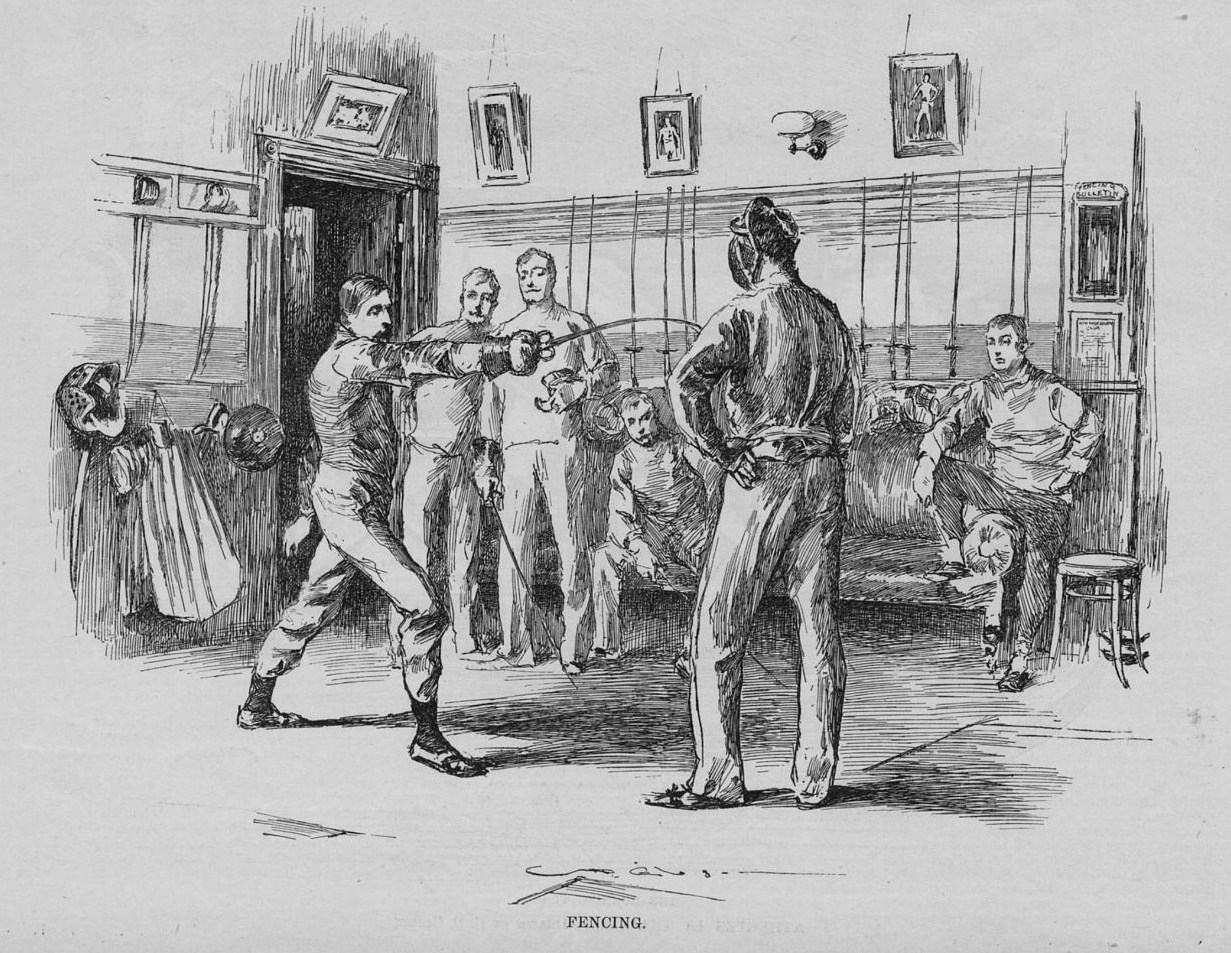
FENCING published in Harper's Weekly June 1890

It’s a commonplace that criticism is one of the hardest things we face. No one enjoys it, but shared correctly and viewed appropriately criticism is a powerful tool. For the fencer it can help to “unpack” criticism as it applies to us as student. This is as true for the researcher. Just as important as these two situations is an instructor’s ability to offer criticism well.  In each role we approach this differently, experience it a little differently, but in each case—as student, teacher, researcher—we’re in an endeavor that by definition includes correction. So, it’s worth reflecting on some of the ways we give and receive such evaluation.

Despite its etymology “criticism” generally connotes something negative. [1] There are probably multiple reasons for this, but one reason must be that so often people don’t offer these observations well, either in terms of kindness or effectiveness. It’s easy to take criticism personally, as an attack on our character, and when criticism is offered poorly it’s small wonder. One of my instructors many years ago—and since he’s still active I’ll not share his name—was notorious for his meanness in lessons. More than one student left a lesson in tears. He was less liked than he was feared, and while many of us did well, many more of us might have had he been more amiable. For me, having grown up within military culture, it was a little easier to deal with some of what he said (while my father was not draconian, I certainly heard a lot of orders given elsewhere that were brusque). I didn’t take it personally, not that it was easy sometimes. Two of the more memorable comments he made to me were “you move like a bovine,” during a lesson, and in coaching piste-side at one tournament “Grow a pair and hit that guy—my grandmother could do this.” Hardly inspiring.

In comparison to my other instructors, all of whom were task masters in their way, this one sharp-tongued coach stood out. He’s not unique. A friend of mine here in Portland was so scarred by a foil coach as a teenager than he left fencing all together until discovering HEMA. Hopefully your instructor isn’t like this—if so, I encourage finding a better one if that’s possible. If you’re stuck with a lemon, or, if you struggle with criticism generally, there are a few things to keep in mind that might help.

As Student
Looking first at proper criticism, i.e. the constructive, meant-to-help sort, the most important thing to remember is that learning includes getting things wrong. Correction is thus part of the learning process. We make mistakes, we mishear, we struggle, we forget, etc. and a good teacher points these out and helps us get them right. Usually our problem is less being corrected than how we are corrected. This is as true in fencing as it is at school or at work.

This said, even the kindest criticism can be hard to swallow. This is all the more true when we feel like we’re doing our best. We expect results from hard work, and that’s not wrong, but as a working hypothesis it needs refinement. Hard work on its own does little—it needs to be consistent, it needs to focus on the correct things, and hardest of all it takes time. Fencing is difficult. It is a highly technical art. If you’re going to assume anything—and assumptions are generally a bad idea—then assume years of constant, persistent practice. Be kind to yourself and give yourself room to mess up.

No one masters this stuff right away. Being armed with more realistic expectations helps a lot. Knowing that what you’re studying is difficult and time-consuming should temper the impact of criticism. When you expect it, it feels less about you and more about the process. Just keep at it. However dressed the critical assessment of your skill is at that moment looks less awful seen against the backdrop of long-term development. It’s a moment of time—you will learn to do X, and then find some new challenge. All of this requires that your ego is in check, that you’re less concerned with how you look in front of your peers, and that too takes work. Focus on the Art, not the perception others may have of you.

If your instructor is like that one I describe above, then you’ll need to separate out the emotional chaff from the constructive grain. This means ignoring any comment that touches on feelings and focusing instead on those that treat substantive issues. In the case where my instructor referred to my movement as “bovine,” he went on to have me do footwork for the rest of the lesson. I was plodding, not advancing, and so I spent a lot of time trying to make my front and back foot land at the same time (back foot to floor as front toes land). [2] I ignored his nasty comment and just focused on the skill. Easier said than done, true, but with practice and a good attitude it’s possible.


As Instructor

Photos-1858-Victorian-fencer

It’s in our own best interest to be kind when offering advice or criticism. Kind doesn’t mean talking around an issue or walking on egg-shells; it means sharing your evaluation in a way more likely to reach that student. Often the best policy, a la the Golden Rule, is to mix whatever analysis you have for them with encouragement. We know this stuff is difficult, we know it takes time, because we were at the same stage of development once—this should make us sympathetic.

Like anyone we can get frustrated. Maybe you’ve had a bad day, maybe the student doesn’t seem to be trying. Your job is to recognize that emotion, put it in place, and proceed without expressing whatever vexation you’re experiencing (if you are). It doesn’t help your student, and more than likely will only stymie them. As important as criticism is, so too are compliments were appropriate. Initially you may only compliment their effort or an aspect of one action, but with encouragement students are far more likely to press on, because they know you believe they can do it. This support is especially critical as they start—many new fencers quit not because they don’t like what they’re doing, but because it feels impossible. No coach should reinforce that idea. Your own training is proof it isn’t impossible, and with that insight your support is not empty, but informed.

Expect to repeat yourself, a lot, especially with younger students. Expect to repeat the same lesson often. Expect to work at new ways to explain the same thing. Patience is worth cultivating, and, it will help you and your students. Our enthusiasm, patience, our can-do attitude is everything, and it’s not a race: if it takes student X longer to master a specific technique, then it does.

Returning to my gruff former instructor, how else might he have addressed my poor footwork? Here is one approach, least it is close to the sort of thing I have found useful:

Halt! Okay, now when you advance listen to the sound. Good—you’re making a single advance, right? How many steps did you hear? Not sure? Okay, do it again. How about now? Two! Did you feel like you were smooth or sort of    bopping up and down? Correct, kinda bobbing, right? This time try to coordinate  the landing of the back foot with the front toes as they touch the floor. Watch me—I lift the toes, I glide just over the floor, and as my front toes lands so does my back foot. How many steps did you hear? One. And I wasn’t bobbing, right? Now your turn.”

In this example there were no ad homines; no questions as to the student’s simian ancestry, relation to barnyard animals, or quips about the student’s masculinity or femininity. This example focuses on the skill-set, on the specific actions, and explains them. The instructor demonstrates it, and then encourages the student to try again.

There are a lot of ways to do this, but whatever words you choose it’s best to build up, not tear down.

As Researcher

If you’re a researcher or translator you’re going to run into critics. There are different sorts, and happily many you can ignore. The ubiquitous internet “troll,” for example, the dolt who just has to pick something apart or disagree, isn’t worth your time. There are a lot of people in the historical fencing community with over-inflated notions of their own brilliance and/or importance, so chances are good if one of them attempts to heckle you that you’ve somehow put them in touch with their own insecurities. Not your problem. Be above that and avoid the intellectual squalor to be found in the fetid fen of the comments section. [3]

The only criticism worth troubling yourself about is proper, subject-driven, constructive criticism by credible people. You may disagree, or, have information that your reader doesn’t, and the situation may or may not warrant a rebuttal, but if you put your work out there you should expect that some aren’t going to like it or agree with your conclusions. For a quick example, an article I wrote for my graduate advisor’s Festschrift received some decent criticism. Now, the reviewer, since they didn’t deal with the editor of this book, couldn’t know what I did, namely, that the stuff the reviewer wanted to see in my article had been there, but had been excised for length. I wasn’t happy about that, but as the first academic article I had in print I didn’t know to push back, or, time-allowing, edit it so that all that could be there. The reviewer’s point is a good one, and my article would’ve been better with that information still there. We learn.

600px-Libraries_in_the_Medieval_and_Renaissance_Periods_Figure_5

The public nature of this criticism makes it all the harder to take. Where even a decade or two ago a review might only be read by those with subscriptions or access to the periodical that published it, today a quick search of your name and a title on Google allows the entire world to find it. Add social media sharing and that many more eyes are likely to see it.

How we react to criticism says a lot about us, so it’s worth reflecting, even preparing for various scenarios. Good criticism is always nice, and being gracious about it is important. However, dignity, grace, and measured reactions to a bad review or criticism are as important, maybe more so since people are far more likely to notice and remember fireworks than a thank-you. If the evaluation is accurate and fair, if the criticism leveled at your work stands up, then it behooves you to make changes and re-share the work. Own it—there is no shame in admitting we’re wrong when we actually are. If it’s not possible to fix or reshare the work, then you can write something else and discuss it there. I’ve had to do this, even preemptively, when I’ve noticed an issue in my own work. [4] Allowing poor work or a mistake to stand or worse digging-in and trying to justify it are unwise. Maybe you have supporters, maybe you don’t, but if an error you’ve made has been demonstrated sufficiently, the better part of valor (and scholarship) is to own it, then fix it. [5]

Knowing what is fair criticism or not, what is accurate or not, can be difficult. To state the truth not all professional reviewers are as balanced, fair, or objective as they should be. Some have their own agenda and their criticism, as such, is more “you didn’t do what I would have done” than anything substantive about what you actually produced. It’s not fair, but nothing is fair. In cases like these it can sometimes be important to write a rebuttal. One must be careful to separate personal embarrassment in making errors from chagrin with one of these critics. Each situation is handled differently.

Understood, accepted, and used as a tool for growth effective criticism can be valuable. It helps when that criticism focuses on the task, not our character, and when it is shared in a supportive fashion. If you fence, and it doesn’t matter what style, you will have to find ways to handle being evaluated. The good news is that it does get easier over time. With practice it’s far easier to focus on what they’re attempting to help us do than anything else. Pick your instructor well, realize that they’re doing what your hired them to do (teach), and remember that there is “no growth without assistance.” [6]

———-

NOTES:

[1] Our word “critic” derives from Latin criticus, itself a loan from Greek kritikos, “capable of judging.” Context is everything, but as a general rule, for most American speakers of English anyway, “criticism” is a word that most interpret negatively without further clarification.

[2] This is a very useful pedagogical tool. Students tend to make smaller steps, tend to coordinate their feet better, and in time improve their advance as well as retreat. In practice, during a bout, one doesn’t necessarily move as nicely as this, but one will move better for having worked so hard at it.

[3] I’d rather not name the people, one in particular, that seem to make an effort to disagree or undermine anything I say or post on social media or elsewhere, but they’re good examples of insecure people with ego needs that outweigh their ability to reason or play nicely. Unless there is a reason to correct them, I ignore them. Arguing with the village idiot, as the old saying goes, only creates two idiots.

[4] A fun example, and one hard for me not to enjoy given the irony of my interest in historical fencing, is a line that was misprinted in Artifacts from Medieval Europe (2015). On page 32 the line “Like the sword discussed here, they were still broad enough to cut, but also had a strong, rigid diamond shape that enabled the sword to punch through plate like an awl.” The word “plate” should have been mail, for while it is possible to pierce armor with poor heat-treat—a friend of mine has done this with a dull spear-head—swords in the age of plate weren’t used against armor, and when they were, they were used like a pole-arm to stab into those sections not as well-armored, generally of cloth and/or mail.

[5] A good example of this problem is the debate, such as it is, between two translators of the same rapier text. One of these translations, made by a well-respected scholar, is certainly freer in expression in some places, but is far and away a better version than the other. The author of the less successful translation has attacked his rival on a number of occasions, but to little effect outside of his little collection of supporters. I’ve read through the criticism of his work and the complaints hold up. Even when called on it he refused to accept it. Don’t be that guy.

[6] So says the character Li Mu Bai in “Crouching Tiger, Hidden Dragon” (2000); https://www.youtube.com/watch?v=UiuQNFiEmMs

IMAGES:
First — scene entitled “Fencing,” in Harper’s Weekly, June 1890.

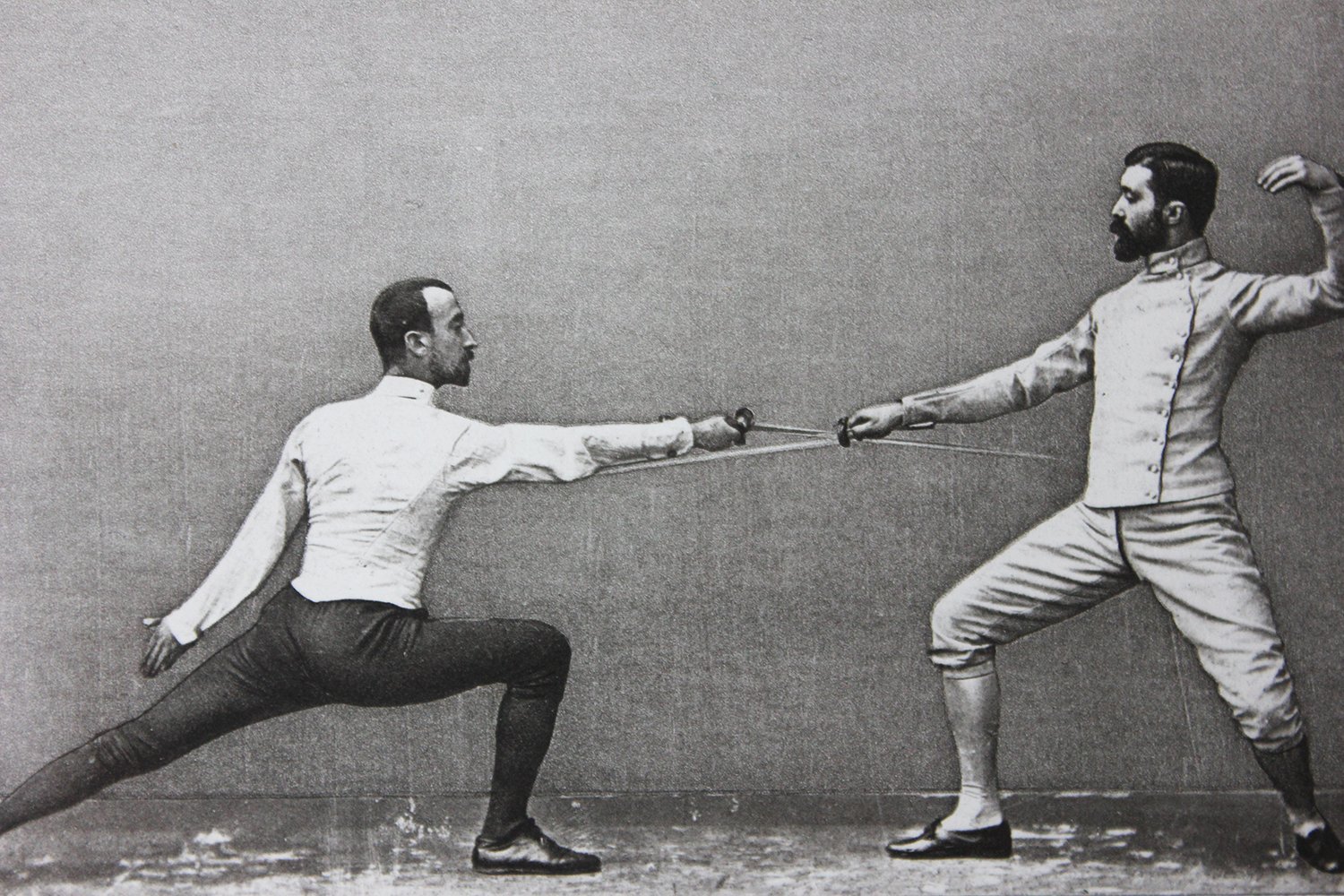
Second — “Victorian Fencer, 1858,” https://www.leonpaul.com/wordpress/fencing-history-fencing-in-the-19th-century/

Third– modified image of a print, by J.C. Woudanus, 1610, of shelves in library of the University of Leiden: https://en.wikisource.org/wiki/Libraries_in_the_Medieval_and_Renaissance_Periods

The Art above All Else—Collaboration and Fencing Instruction

Fencing books

It’s taken me years to learn this, but with fencing I’m at my best, at my most pure when my focus is the Art–the sources, the body of technique, history, movement, theory, and, in sharing all that with other people. I started out as most people do. The masters with whom I studied took a traditional approach—I worked one on one with them, sometimes with their assistants, then drilled with more advanced students and my peers. I was encouraged always to seek out better fencers and bout with them. To most, this approach seems very top-down, that is, information comes from master to student, from senior fencer to junior, and that’s not wrong, but… it is also, by its nature, collaborative. The instructor works with a student, not just at them. In working with senior students, with better fencers, one is also collaborating. So, for me, fencing is not a one way exchange, but a dialogue. This seems obvious to me, and maybe it is to you too, but that said it isn’t to everyone.

When something’s near and dear to us, when it’s a part of us, we often fail to see how it’s not obvious to others. We go about our way, acting on the assumption others are in line with us when they’re not. Sometimes this can be taken for a lack of concern, or worse, as something threatening. To others we may simply seem naïve. For my part, I try to act in a way that makes my position clear, but intentions and results don’t always match up, and when it comes to collaborative approaches to an historically individual endeavor like fencing instruction what I’ve learned is that actions on their own aren’t enough. One must be explicit, verbal, and reassuring. One must expect the raised eyebrow from some, the head shake of disbelief from another, and even the sly smile of the ambitious who think they sense a sucker. This said, I still think it’s worthwhile to try to find ways to work together.

Regardless of what sort of fencing one teaches—Olympic, Classical, or Historical—more often than not one does so solo. A master may have a provost or two or some other assistant, but a master working with another master, any instructor working with another, is less common. There are some good reasons for this. As I mentioned in my last entry, the individual, one-on-one lesson is the norm. An instructor teaches a student. Historically, even in the days when one had more reason to learn to fence, instructors vied for students; they were in competition with one another. Today, when fencing is normally a pastime, students fewer in number compared to football/soccer or similar sports, competition can be fierce. Fewer resources and a low profit margin can make anything pretty cut-throat, and fencing is no exception.

1F8A8CB8-E8D9-4EF8-AB72-5E9B022B806A beta

It may run counter to established practice, tradition, even reason, but off the piste I do not care for competition. I understand it, but I don’t like it. In part I think some of this is a carry-over from teaching college classes. In the trenches adjuncts like me occupied working together could mean job security. At my last teaching job, for example, I was—by default—the “pre-modern” professor, so I was teaching not only things I spent years studying in order to teach, but courses in different if congruent areas of history. There are a lot of ways to do this, but my way, being scared to do it poorly, was to contact the people in those fields I know and get help. They’d send me their syllabi, textbook recommendations, articles, thematic breakdowns, everything I needed to produce a decent (not perfect) survey course in classes outside my area. All I had to do was read, interpret, and admit when I didn’t know something. Then, I would either work with students to figure it out, or, tell them that I’d look into it and get back to them. In short, I looked to my peers, and in turn, they looked to me for help teaching courses where I could help them. I’ve taken this same approach to fencing history and instruction—there are people out there, many of them, smarter, more experienced, and knowledgeable than I am, so why not politely ask for their help? I’ve made some good friends out of this too, an added bonus.

In step with the “habit” of working with others, I also realize that with something as vast as the Art, the art of defense, especially within an historical fencing context, there is simply too much to know. This is part of its appeal, and, something we have to keep in mind because we are, each of us, limited by its totality. This is humbling in the best sense—faced with such a mountain of information we have the privilege of being eternal students, forced to engage the material again and again, and with hard work hopefully grow. By extension, knowing that others have more information, or different information or perspectives, it makes sense to work with them. I learn, true, but so too do my students, and as an instructor that is my purpose—teaching. No one ever said we had to do that 100% on our own. Maybe we often do, but even then… someone, normally several someones taught us, and so really we are all the products of shared learning, of a collaborative system, whether we like to think so or not.

From a business perspective it’s easy to see flaws with this. If I send people to a colleague; if I promote another instructor’s seminar; if I do anything to advance them am I not hurting myself? Am I not potentially sending students that might be mine to them? Yes. I am potentially doing that, but it’s a question of values, of goals, and, a recognition that I’m not the only student of the Art, not the only instructor. If I truly believe—and I do—that most students benefit from learning with multiple teachers, in having problems to work out presented in different ways, then I put it to you how can I not involve my colleagues? Do I not do my students a disservice by trying to hoard their time and energy? That’s self-serving in the worst sense, and can undermine the very goals I purport to have. If my goal is sharing the Art, in igniting a fire to study it in all its variety, depth, and beauty, then other concerns are secondary–not unimportant (I have to pay rent)–but secondary.

IMG_4426

It’s not naiveté, a lack of business sense, or even a secret plot to undermine colleagues that I promote their classes, seminars, ideas, or anything else. I do so intentionally, and yes, in full awareness that it could (and often does) affect the number of people attending my classes, and even more so individual lessons. I also recognize, in truth with some sadness, that not all will return the favor. I persist though, I continue to do so because the Art comes before all else; it comes before me, before profit. To the degree that I have any business teaching, then I must do so in accordance with what I value, in what I think the Art has to teach us, and for all the mayhem and murder one learns in the study of arms, one learns far, far more than that—one can learn civility, generosity, largesse, respect, and humility. The best friends I’ve made I’ve made fencing; much of what I learned in competition or in lessons or the assault has had parallels in my life outside the sala; some of the most severe crises in my life have occurred either within this context or were partially mitigated via fencing; I even met my wife fencing. The Art has given me so much, introduced me to so much, and continues to do so whether my own classes are a success or not. Moreover, the Art doesn’t belong to me, but to us all, and it is best shared.

I believe that working together is better. I believe fair play, honest exchange, and mutual promotion ultimately helps us all and furthers the Art. You don’t have to agree, of course, but I’ll say this—if I promote your class, your seminar, anything you’re doing, then it means I recognize in you a fellow student, a fellow disciple of the Art; you’re someone I like, respect, and want the best for; you are someone I know I can learn with and from; you’re the sort of people I like to know and talk to; I recognize you as one of my tribe. I don’t care what ethnicity you are, what sex or gender you are, if you’re young or old, if you’ve got two legs or one, if you’re gay or straight, what religion you follow or don’t follow—only that we share a love of the Art (this said, note well: I do discriminate against bigots, fascists, and others who seek to harm others in thought, word, or deed. If such lowlifes read this and say “but I’m a student of the Art too,” my reply is no you’re not—if you were you wouldn’t be as ignorant as you are).

14103048_10208555503259416_5675796283840380623_o

In some respects it comes down to how we define success, in what our goals are. Sure, like anyone I want my school to thrive, to stay open to introduce people to this wonderful Art, but it’s not the only way to teach. Even if all I do is act as one stepping-stone on a much longer path, that stepping-stone is important too, and the path is long and winding. So, whatever happens business-wise, or with the other irons I have in the fire; however crippled I may become; however busy; I will, so long as I can, continue to study, train, and learn about the Art we love, in all its colorful expressions, and, I will continue to support you as you do so too.


Photos:
–Fencing Books

–Seminar on Maghreb Sabre with Da’Mon Stith, July 2018 at Northwest Armizare [Da’Mon Stith is one of the finest martial artists and teachers I’ve ever had the honor meet]

–Mike Cherba’s Introduction to Lashkroba class, Swordsquatch 2016 [I was Mike’s pell/cut dummy 😉 ]

–Introduction to Italian Sabre, class presented at Grit City HEMA, Tacoma, WA, August 2016 [Will Richmond and I taught this class together]

The First Foe—Instructors and Bouting

Partner Drills 2

There are many things that distinguish Olympic and Classical fencing from historical fencing, but one that’s surprised me is the place of bouting with an instructor. It’s not that this doesn’t happen in Olympic or Classical schools, but it happens differently when it does, and in my experience doesn’t tend to raise the same questions.

I’ve not taken a poll, but I believe it’s common for instructors in historical circles to free fence with students. Not all do, but certainly many, and it’s easy to see why. Most “HEMA” clubs are grass-roots, that is, they start say with one or two people eager to explore extinct art X and they form a backyard study group. They start off, then, fencing one another. Many such clubs are so small that in order to have people to test techniques and plays against an instructor has to fence. That instructor often is only the instructor because they’ve spent more time with a text.

In Olympic and Classical schools normally instructors have been trained within those cultures—with long traditions of pedagogy, with established programs for training teachers, people entering these fencing spheres interact with instructors differently. New students, for example, take lessons from an instructor, but don’t fence them in free bouting. They may in time, but more often than not outside of teaching bouts new fencers fence against more advanced fencers. I’ve worked with four masters so far and only with the last have I enjoyed the privilege of free bouting. I had teaching bouts, sure, where I was restricted to specific things we’d been working on, just using them in real time, but not free bouting. Thus, my perspective as an instructor is largely shaped by these experiences.

The reason I’m exploring this here is that I’m always a bit shocked when someone asks me how they did or if I was holding back on them. These are honest questions, and I’m always happy to provide feedback, but it’s important I think to establish how one should think of any bout with an instructor. The caveat is that this is my view, one not shared by all within the historical community, but so far as the group I run goes this is how I look at it.

An instructor’s first duty is to teach. This should guide everything they do. This pertains not only to overseeing drill, but also to bouting. It’s especially important in bouting, because by its nature a combat between two people, even friendly, is a contest, it is competition, and few places are as prone to ego as this. Everyone likes to win, everyone wants to, but victory, even the small victory that comes in a single bout, isn’t the goal of an instructor in that match: their goal is to use that bout to build up the student. What does that mean?

First, it means that the instructor must balance pushing the student realistically enough that they respond correctly, but not so hard that they overwhelm that student. Second, it means that while the instructor is trying to land the touch, they’re not doing so at any cost—if landing the touch defeats the lesson, don’t land it. Start over, set it up for the student again. Third, it means holding back. This isn’t, by the way, being condescending toward that student, it’s honoring where they are skill-wise in that moment. Hitting them with every tool in your tool box, with all ferocity, is as useless and defeating as it is stupid. The instructor becomes a bully, the student is frustrated, embarrassed, and no one learns anything. The sala is not a place for the instructor to show off what they know, but to teach. If your self-worth requires you to seek these little wins, fine, but there are other venues for that. There is no glory in defeating your own students.

As an instructor, it’s your students who come first, not you. When you bout with them, your goal is to increase their skill; yours will improve in helping them.

It can be easy to get lost in the fun, so you must focus—limit yourself to those maneuvers that allow your students to see opportunities to use what they’ve learned, and set them up to do that. This doesn’t mean you’re handing it to them; one does with brand new fencers, but with more advanced students you need to sell it, make it real, otherwise you’re not helping them. Your job in these cases is to mimic what they’ll see on the strip or in the ring.

Instructors need good bouts too, and this is yet another argument for continuing education. One should never stop being a student. If you need bouts, find them, but go to the appropriate place—seek out better fencers than yourself, enter a decent tourney, go to a master and take lessons. It’s good for you, and, it’s good for your students.

Trust & Partner Drills

Badminton 1893Drill is a mainstay of fencing. We do footwork. We practice point control. We make molinelli in the air and at a target. We (should) be doing a lot of drill. In historical fencing we sometimes devise or find ourselves doing drills that are new, concocted out of our source material, and it’s a fair question to ask what might be signs that a drill isn’t up to par or might even be dangerous? What does it take for a drill to be “safe” when we’re talking about hitting people with weapons? Different types of partner drills require different levels of complexity, intensity, and safety-gear. The instructor has primary responsibility for introducing safe drills and monitoring how fighters are managing safety, but there’s an equally heavy burden on fencers performing the drill. They need to exhibit proper control and courtesy or they’ll injure their comrades and injured comrades mean fewer people to fence with.
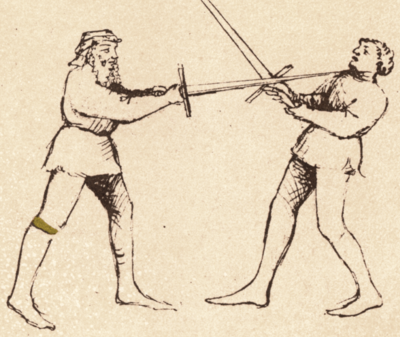
On the instructor side, it’s often a balance between imparting what a particular skill or play requires and safety. Teaching longsword and sabre, for example, requires modulating what safety means. If one is teaching Fiore dei Liberi’s Armizare, a combat system designed to main and murder people, either in the lists or in the field, then one must be more vigilant in some ways than when teaching sabre. Most if not all of Fiore’s techniques must be modified to make them safe and some of them one can never do at full speed save perhaps in armor (and sometimes not even then). Teaching a sabre class, in comparison, makes for an easier balance of technique and safety. The relative weight, flex, and delivery of the thrust in sabre, though deadly with sharps and in earnest, is likely to do little more than bruise someone, especially if they’re wearing proper protective gear. With a stout jacket, one is rarely marked at all. This is often not the case when thrusting with a longsword—there is more power generation, more mass, and more surface area to the weapon. One thrust against the mask with either weapon will demonstrate the difference. Each weapon was meant to do harm in different ways, in different contexts. Assuming the exact same safety requirements is dangerous–fencing masks, good as they are, were not designed for longsword.

An instructor must understand the dangers inherent in a drill and modify it when and as necessary. This is the first step. The second is monitoring a class to make sure that fencers aren’t doing anything to nullify that modification. There’s no room for leniency with this—if any fencer is acting in an unsafe way they either fix it or one pulls them out of the drill. In some cases the drill itself needs further refining. Safety gear, good as it is, is only a fail-safe, an additional layer after one’s technique fails. No mask, jacket, glove, or pad will make you invincible and it’s stupid to proceed as if they will.

The same heavy burden for safety is shared by the fencers executing the drill. Drills can be complicated and applying sufficient oomph to the play with the control required to ensure no one is hurt is a tough skill to learn. Not everyone, in fact, learns it. I’ve seen experienced fencers fail to exercise control in drills; I’ve seen them fail to pull a blow that had clearly gone wrong. No one should have to “Fence for Two”—it’s the responsibility of both drill partners to proceed in such a way that both fencers are as safe as they can be.

There are several attitudes and skills one needs to cultivate to be the sort of person people want to drill with:

Courtesy: It’s important to be a courteous partner, not just in the sense of polite salutes, hand-shakes, or the blade-smack to the butt or thigh a la American football, but most importantly in the sense of the Golden Rule. Do you want to be injured? Do you want to be fearful of working with someone? Of course not, no one does. Work to be a safe partner and you help everyone, yourself included.

Control: Control is the marriage of skill and awareness. It takes a long time to develop. It means having a full understanding of each move, its direction, intensity, and target, as well as the ability to modulate any of the three at will. It’s a hard-won but crucial skill that requires hours, weeks, months, and years of hard work, drill, and patience to develop. Never stop working to achieve it. Control is not fool-proof, however, as everyone can and will misjudge from time to time. However, once you have it, people will want to drill with you because they know you’re safe and can help them learn whatever technique it is you’re all working on. You will learn more too because you’re both comfortable.

Competence: A certain degree of skill, of the ability to use the weapon, is always to be desired. For beginners naturally this is not necessarily there, but it will develop over time and provided one puts in the time. Within historical fencing there is, unfortunately, this general sense that one can just “dive in” and become proficient. This is not true. Being aggressive and suicidal doesn’t make one a good fighter—have the patience and smarts to do it right first, to put in the time, to learn enough to make actual bouts worth your time. The truth is that those who just jump in do so because it’s fun, and it is, there is no arguing with that, but too often the goal is simply to win, not to learn, and bouts—like drills—are another learning opportunity. As ever, if your ego is driving you, if you’re relying on speed, strength, brutality, etc. alone, you’re never going to get very far, and moreover a lot of good people, better fencers who could help you improve, will avoid you. At my age, I don’t have time for macho b.s. and have no qualms refusing to fight people who don’t have the requisite skill or control. I have old injuries enough to deal with and I don’t care for more.

Consistency: Emerson’s ideas of a foolish consistency being the hobgoblin of little minds holds in fencing as elsewhere, so it’s important to be consistent in the right ways. First, developing the ability to perform the same action correctly and pretty much the same way each time is important. Likewise, the capacity to perform the same action in the same tempo or from a standard distance is helpful. Much of this comes down to practice, but a lot comes down to focus and awareness too. Staying zeroed in on the drill, its purpose, what you need to do to do it successfully seems obvious, but a lot of people sort of go through the motions, especially if it’s a drill they’ve done multiple times. Even the oldest, most basic drill remains useful if approached correctly.

These attitudes and skills work best where there is sufficient trust. When it comes to safety and a successful drill trust is at the very heart of it. Some time ago, in an Armizare practice, I saw a student, one with considerable skill for someone her age, break a drill out of fear. She knew how to do the drill; she knew what the instructor wanted her and her partner to do; but she didn’t trust her partner. In this drill, when she made a mandritto fendente as the initial attack, the defender was to counter by striking into it with bicornu—done right bicornu effectively takes the center-line and breaks the attack.Pisani-Dossi MS 19b-b

What she did was modulate her attack—if her opponent was likely to break her cut, she pulled and beat instead so as not to get spiked in the face. I spoke with her afterward during a break and it was clear she felt awful; in her mind she had messed up. I told her that, actually, she had demonstrated considerable skill in reading her opponent and adjusting things to keep herself safe. These are not bad things. She was just fencing for two because she didn’t want to get hurt. However, it also meant that the drill had failed. There are multiple sadnesses there: first, this dedicated, hard-working student learned less than she might have, as did her partner; second, this drill was a good one, but like anything it required trust to succeed; and lastly, a capable, skilled student left that drill feeling she had failed, when in fact, she had not. Trust is everything. Without it, nothing works or at least it won’t work as well.

Actively cultivating courtesy, control, competence, and consistency will do a lot to dispel fear, because on the one hand it helps train one to do things more effectively, but on the other it also alerts one’s classmates that one is a team-player, that they have your best interest at heart. It helps build trust, and when you’re playing with swords, even blunt ones, you need that. Students who don’t feel safe, who in fact aren’t safe, aren’t going to stay long, and that is a net loss for all of us.


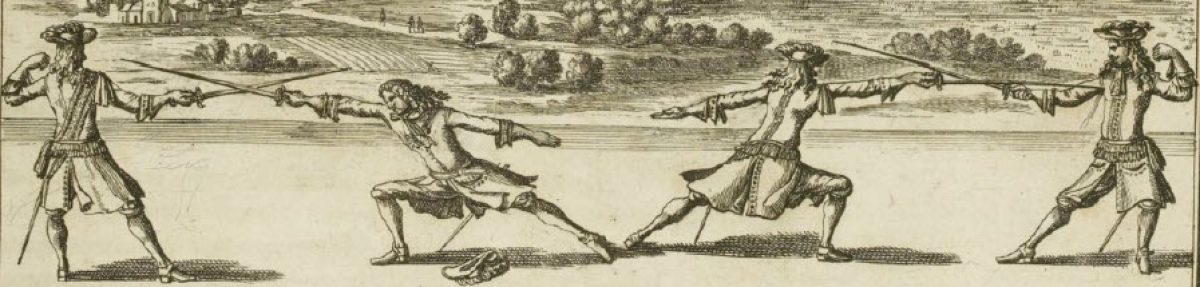
First image, “Parry in Seconde,” from The Badminton Library of Sports and Pastimes,  Walter H. Pollock, E. B. Michell, and Walter Armstrong,  London: 1893.

Second image, sword in two hands, zogho largo/wide play, play of the first master, Pisani-Dossi MS 19b-b.