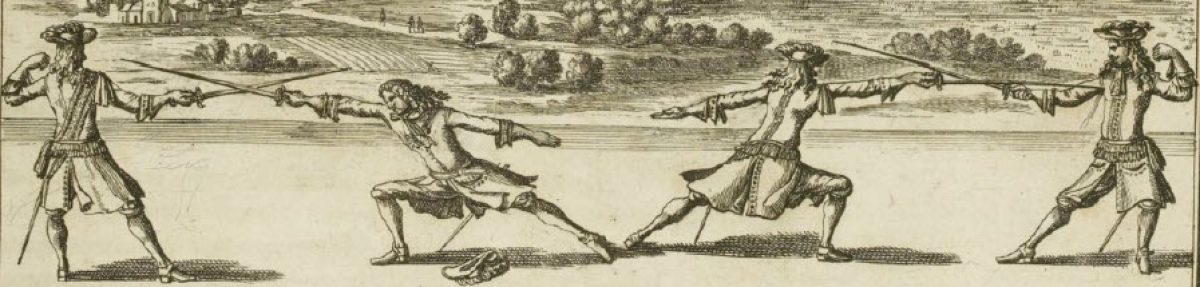
How to Tournament, Deuxième Partie

[This is a continuation of the post “How to Tournament” posted yesterday (19 June 2023)–much of what I say here has been said before, including by me, but since it is on theme, here it is anyway]
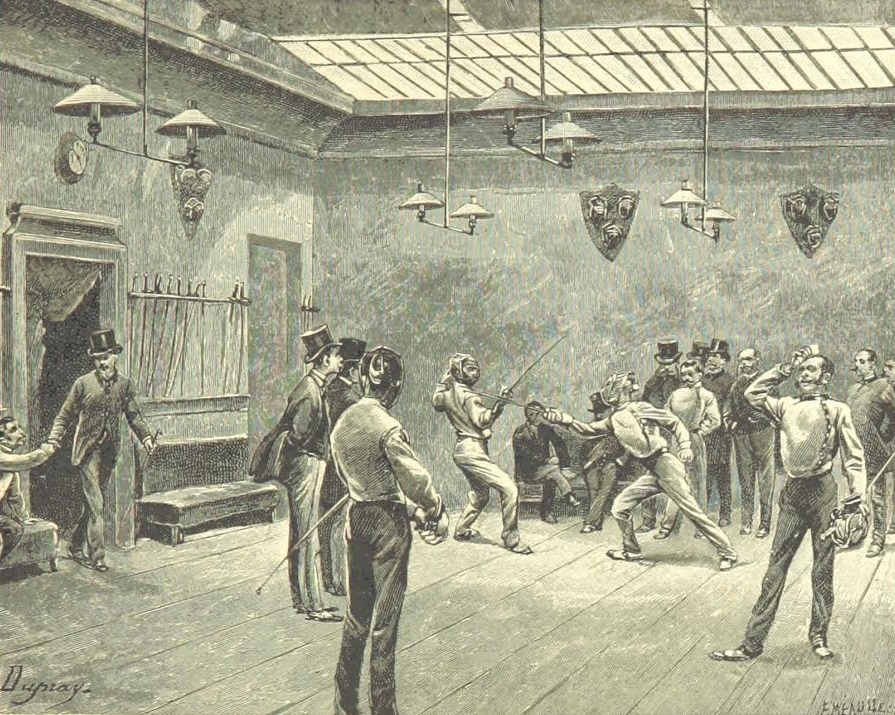
In part one of “How to Tournament,” I focused mostly on intelligence gathering and assessing the competition. Here, I’d like to discuss mental preparation, a topic covered earlier in part by the “The All-Important Place of Calm” [15 May 2023, https://saladellatrespade.com/2023/06/19/how-to-tournament/]. The approach to managing emotion is key here too, because nerves, excited or fearful or nervous, can derail us no matter how well-trained we are or ready we are to compete and succeed. One way to think of it is akin to drill. We tend to fight as we drill, because we condition ourselves to respond to certain actions and situations and reinforce this via repetition. We can do the same thing mentally—without meaning to sound like Moonbeam the Hippy or some faux guru on tele, cultivating calm and simultaneously picturing ourselves in an event, start to finish, and in specific instances of action, can do much to help us the day of the event. What is familiar is less likely to unsteady us, so from physical training to mental training, we can make even competition just another day sword in hand.

Calm, Revisited

Not to repeat the earlier post, but calm is something we can choose and practice like anything else. In this instance, this means consciously focusing on one’s place in the event and when necessary supplanting negative emotions (nerves, anxiety, fear, whatever) with concrete thought. For the first, visualizing our performance, from the moment we enter the event to specific actions, beforehand can do a lot to prime us. It’s not magic (sorry Moonbeam). Whatever other benefits visualization may have, the process of making something familiar helps remove uncertainty. The more we know something, the more comfortable we are with it, and thus, the less likely nerves take over. [1] [yes, I did just repeat this… see? repetition!]

Duel between an unfortunate braggart and Kyuzo, “Seven Samurai,” 1954

When nerves pop up, and they sometimes will, we’re better prepped to manage them having already envisioned the situation, but we can apply active replacement too. This requires noticing, consciously, that we feel nervous, and then pausing to distance ourselves long enough to set that emotion aside and replace it with something more useful. For example, Fencer X has just completed the first pools, and is nervous about the second. The competitors here are strong and Fencer X begins to doubt. Noticing this, Fencer X stops, takes a deep breath, and says to themselves “No. Focus on what you know. You’ve seen these people fight; you know how to counter them. Relax and have fun.” Conscious thought, that focus, can—with practice—remove some degree if not all of the negative emotion that undermines us in a fight.

Constructive Visualization

In no way is this a nod to crystal-thumping charlatans; I draw upon a few sources for this, but maybe the most important being well-attested memorization protocols. [2] Self-help books from the 1980s aside, all this is really is a form of meditation, just very focused meditation. Simply put, one focuses on imagining oneself at the event. If one can visit the venue first, that helps—gives a face to things. It might help to visualize oneself entering the facility, full of calm, and warming up. Next, one might visualize a specific action one’s been working on lately and successfully executing it in a bout. Perhaps an entire bout, maybe even against a specific opponent, is worth contemplating.

None of this determines the outcome, but what it does do is prime the mind for action and reduce potential nerves. Ideally, one gets on the strip or steps up to the ring and is utterly calm or maybe just in state of happy excitement. One can tell, by the way, when this happens. It shows. I have found in competition, as well as in at least two actual fights (fists, not swords), that steady calm can utterly unnerve some opponents. Calm suggests confidence, and with that, skill. This can affect what judges see too (remember: competition is a game, as psychological as physical if not more the former). [3]

Pre-Tourney Practice

In conjunction with mental preparation, one normally trains physically before an event too. This exercise may take place during regular practices or within individual lessons if one is taking those, but people often add additional drill in the mix too. Much of this may be one’s normal cardio and/or weight etc. training—all ideal times by the way to visualize things the day of.

?

For those practices focused on fencing, emulating the warm-up or pre-competition lesson tends to work best. This style of lesson is similar to a technical lesson, but the goal is to build confidence in the fencer, not to impart new skills. Keep things simple and focus on those actions a fencer does best—drill so as to make these actions as crisp, tight, and well-timed as they can be. Warm-up lessons are also typically short, maybe 10 minutes, tops 15. My approach in the past has been to include some of these types of lesson a few times in the weeks leading up to an event. The week of, we focus hard on these things, and, anything that the fencer may have had trouble with in the past. [4] The day of the event, I would have them warm up, then put them through the same short, 10 minute warm-up. Like contemplating success, this style of lesson has them work things they do well, all of which build confidence and ready them for the pools.

Intent, Expectations, and Take Aways

As in so many things, we get out of them what we put into them, but added to this much comes down to how we do this, what it is exactly that we invest. I tell my students and any colleague I prep for an event, to set goals. What do they want out of this event? How does it fit into their growth and experienced as a fencer? Laying all that out helps set expectations for an event, and thus, helps prevent the common distractions that come up when things don’t go as planned.

Versatility is a vital skill for any fighter—if weapons break, does one have a backup? If one’s tactics are failing, can one notice, adapt, and continue the fight? How does one handle victory in a bout? How does one handle defeat? The culture we create in a club or school goes a long way in shaping and cultivating this skill.
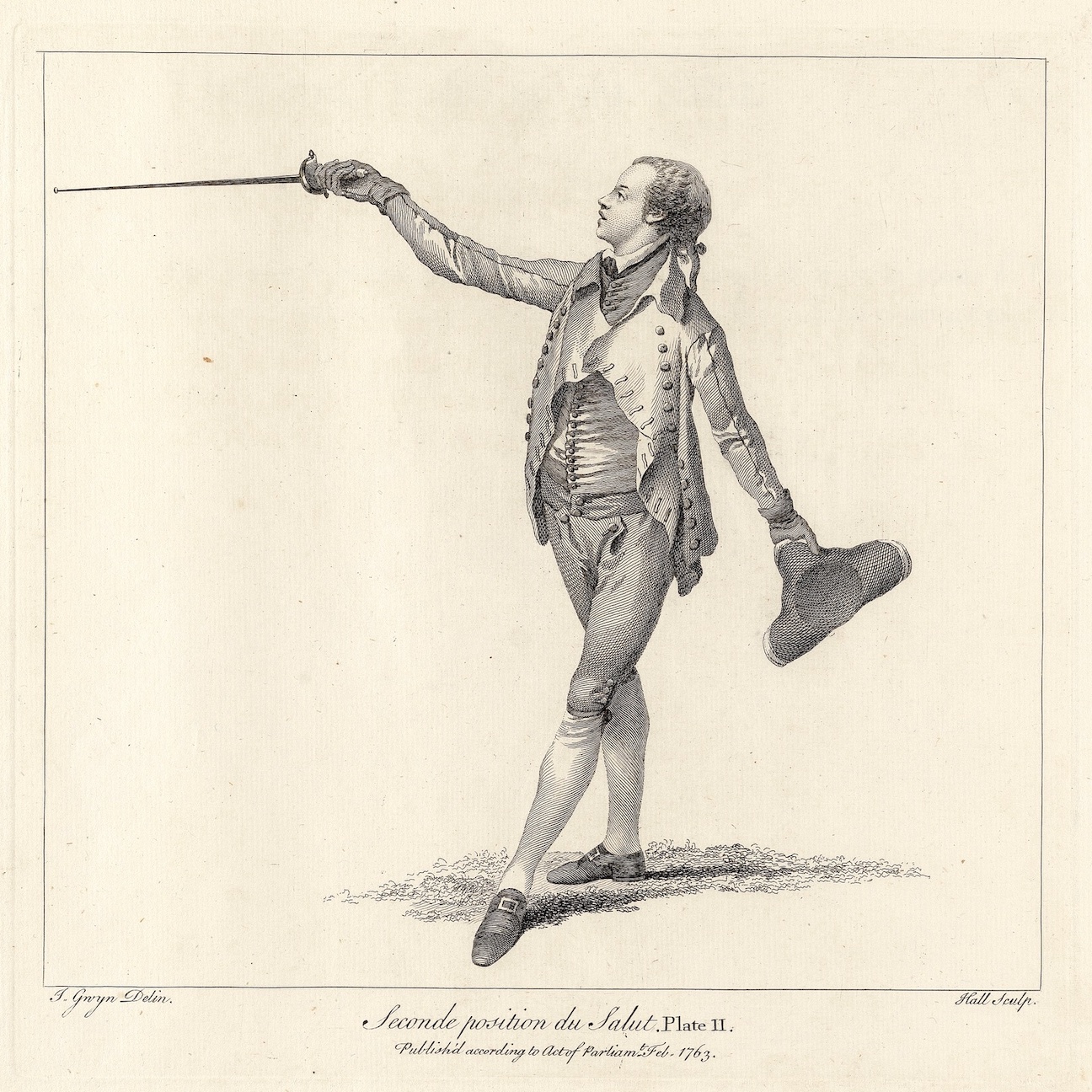
Charles Hall (1720?-1783) after James Gwin (1700-1769), “Seconde position du Salut. Plate 11.” from L’Ecole des Armes  by Domenico Angelo (1717?-1802), London,  R. & J. Dodsley, [1763],  engraving, Yale Center for British Art, Paul Mellon Collection; SOURCE https://www.ccpl.org/charleston-time-machine/swords-fencing-and-masculine-choreography-early-charleston

Be gracious, be courteous, and show largesse win or lose. I’m a strong advocate for managing both victory and defeat with a becoming grace and humility. Today it went one’s way—great; tomorrow it might not. No one with any aspiration to sanity dislikes a generous, gracious fighter. In fact, people will want to fight with that person because their heads are screwed on right and they make it fun. Fencers like that make the bout about the bout; they think in terms of a shared, dare I say it intimate experience and not just what these tiny victories might do for their self-worth. Officials like them too, because they don’t whine when they lose a point, even if unfairly, and use proper channels to protest something they find illegitimate or untoward.

After the Event

Conducting a post mortem after the tournament is important. With any fencer I have prepped, I like to follow up with them and see what they thought went well, what not so well, and how the experience might guide future training. This helps me, as their instructor, but it helps them too. It’s a chance to see that what they’ve learning is working as well as those areas that might benefit from additional practice.

Lastly, I always asked them if they had fun. Fencing tournaments, of any kind, are not famous for making any participant rich. We don’t have pay-per-view prize fights with purses to match. In the U.S. one never sees fencing on tele unless it’s the Summer Games and we have high level fencers in the run for medals.

We fight in tournaments, for the most part, because they’re fun. I have written a lot about tournaments and bouting as learning tools, and they are, but they should be enjoyable as well. Looked at in this way, a good tournament (emphasis on good events…), can push our skills forward and be a blast at the same time, and there are not many areas in our lives to day to day where we can often say that.

NOTES:

[1] We are resilient creatures. One of the best, if more extreme examples of this, emerges powerfully from combat and the process by which many military folks become accustomed to the extremes of life-threatening horror. I leave it to those military personnel and veterans willing to talk about it to explain this as they can do so better than I can.

[2] I mean no offense to modern spiritualists etc., just those trying to make a buck off of people. There was a spate of new-agey self-help books in the 1980s that mixed decent advice with a lot of b.s. Check the shelves of most any bookstore and these scams are still on the shelves. There has been a lot of work on how we can use, even improve memory, and condition ourselves. One of the more influential books for me, odd though it may sound, is M. T. Clanchy’s From Memory to Written Record, England 1066-1307, Hoboken, NJ: John Wiley & Sons, 2009. I also recommend, for a broader look, Fances A. Yates, The Art of Memory, Chicago, IL: University of Chicago Press, 1974.

[3] I remain convinced that I will never acquit myself better in a fight than I did in the last one I had, or didn’t have rather, in college. A sub-letter got nasty with my girlfriend at the time about rent, and I told him to knock it off. He decided to take it outside, and once outside, kicked off his shoes and danced about posturing. I stood across from him, ready, and waited. At one point he started to approach, so I started to raise my hands and smiled. He stopped, and a few second later walked over with his hand outstretched. Having had excellent masters, I didn’t trust this gesture and made it clear that if it was a ploy it wasn’t going to work. He was, happily, sincere. So, we walked away from the small crowd that had gathered and talked it all out. I was just looking after my girlfriend, and he was trying to save face, both understandable places to land, and since I had no ill will toward him, nor he toward me so far as I know, it was easy to fix.

[4] I didn’t invent this style of lesson. They’re well-known in Olympic circles. For a solid explanation of warm-up lessons, among other types, see Maitre Robert Handelman and Maitre Connie Louie, Fencing Foil: A Practical Training Guide for Coaches, Parents, and Young Athletes, San Francisco, CA: Pattinando Publishing, 2014, 324-325.

The Problem with Bouting

Bouting is easily one of the most enjoyable aspects of fencing, but it can also prove to be a troublesome problem. The fact that it’s so fun only helps mask the issue. In this case I do not mean those clubs who focus on little else but “sparring,” a different misfortune, but the misuse of bouting, specifically focusing so much on winning that the value of bouting as a pedagogical tool is all but lost.

“HEMA,” because it lacks a robust coaching pool, is all over the map when it comes to teaching.[1] Some groups do their best to work fundamental actions, but many do not. Too many put a weapon in a new person’s hand, give them five minutes of instruction, and push them into the ring. People with busy lives and for whom swords are recreation often want to get fighting as soon as they can; it’s understandable, but lamentable. Instructors cater to this desire because they don’t want to lose people. That too is understandable, but again, lamentable. Given the audience for this site, and the unpopularity of my position on this, I don’t expect to sway many to adopt the approach I have embraced, but it would be remiss of me not to try, because I’m convinced after decades of watching what happens when people bout too early that there’s a better way to build solid skill.

Why Bouting Too Early is Unwise

There are several reasons why new students shouldn’t bout from the off, but spend time acquiring and drilling good technique, building a keen appreciation for measure, and an equally keen sense of timing. 

Safety: First, fighting even with blunted weapons is dangerous. New fencers hit hard because they lack control and the fine motor skill required to modulate their attacks. Thrown into the stress and excitement of a bout in real time, these fencers are unlikely to learn finer motion because they’re too keen to strike and to a lesser extent defend. Their actions tend to be larger and harder, neither of which are hallmarks of skill.

Stunted Growth: Traditionally there’s a reason why new fencers weren’t thrown into the assault too early. Without solid fundamentals fighting before one is ready is a prime way to cement bad habits, none of which are easy to correct once they become ingrained. One of the reasons that “HEMA” suffers so badly from shoddy fencing is because many fencers are, ironically, rewarded for crappy fencing. It’s not hard to “git gud” in one’s local group, jump into a local tourney, and intimidate and/or hurt one’s opponents on the path to a medals and glory. I’ve judged a lot of tournaments and have seen this over and over again. Worse, these same fencers take their good luck for skill and start teaching, thus creating another generation of hard-hitting louts convinced of their own genius.

Wasted Opportunity: Bouting, approached correctly, is a pedagogical tool, at least that’s what it is supposed to be. It’s a chance for both fencers to test out what they’re learning in real time. Ideally the first bouts a fencer has is with their coach–these teaching bouts, as they’re often called, require a lot from the instructor. They must possess the skill to alter how they present an action, change tempo, play with distance, all of these things in order to provide the student with realistic scenarios.

Drill, good as it is, often consists of snapshots of actions made in an actual assault. The feint to the inside line, disengage to the outside line, for example, is something two fencers can practice and within a short time get down because they establish a rhythm. Fighting isn’t like that. The metronome effect that can occur in drills creates a fencer who can only make that action if the same, exact conditions are present. [2]

Free-bouting, as opposed to a teaching-bout, ideally takes the conditions a coach changes on purpose and randomizes them. This is to say that a coach usually tells a student what it is they’re working on, what they will set up, and what the student must try to do, at least at first. As a student advances, a coach can say less about the specifics. With a fellow fencer, however, the student normally does not get any advanced warning. They just jump in and either seize the initiative or react to that of their opponent. This can be a super effective learning tool IF both fencers take advantage of it, if both realize that the bout is way to test, break, and improve their tool sets.

One Upsmanship: No one is immune from ego issues. Competition is one place where we often see these normally hidden issues emerge. Whatever self-worth concern drives a person can easily take over a bout, because “winning” makes people feel good and serves as a species of external validation. When the goal is winning, in feeling good about one’s skill and self, then learning normally takes a back seat. One becomes more concerned with getting the touch than in how one makes the touch, and that how matters. It’s easy to hit an opponent, but not easy to hit them and not be hit oneself–that requires far more attention and presence of mind, far more calm and mental fortitude, and none of that is fostered well when the concern is ego-driven.

Moreover, too much concern with winning can make things ugly; it can break down what should be a partnership in learning into a battle of egos. If one person crows about landing a touch, the other may not take it well. Resentment may fuel hard-hitting in both directions, shots after the halt, and ill-will. Learning and improvement, the purpose of a class or lesson, suffers when behavior like this enters the picture. People tend to struggle to learn in a place where they don’t feel safe. Class should challenge students, but because it should push them it must be a place where other stressors are removed or at least reduced. Behavior which introduces needless distraction, which engages emotions unhelpful in the acquisition of skill, have no place in the sala.

Bouts as Learning Tools

The bout within the context of a class is not the place for the same energy, ethos, or goals as one has in competition. A fencing class is a cooperative learning lab, not the piste, not the ring. Everyone will get far more use and enjoyment from bouts when they bring the right mind-set to it. Use these bouts as a way to practice, to learn, to see what works and what doesn’t. Use them to play with measure and tempo, to test them out with different techniques and tactics.

Inevitably instructors will encounter students who struggle to embrace this notion of bouting as really just more or less unplanned drills in real time. My advice, if this goes against one’s plans, is to quash it immediately. I have a sort of “Defcon Levels” approach to managing this problem in my classes:

Level 1–Student is no longer allowed to bout
Level 2–Less gentle reminders and a review of my approach to bouting
Level 3–Gentle reminders that we’re partners in learning, opponents not adversaries
Level 4–Cultivating and reemphasizing expectations about bouting
Level 5–Establishing clear expectations about bouting

First, I make sure that my rules and expectations for bouting are explicit, not only when someone joins a class, but before each portion of class that includes bouting. 

RULES for BOUTING

  • Safety equipment–mask, jacket, glove, etc.–are mandatory
  • Be respectful: your opponent is your partner in learning
  • Be gracious: acknowledge a hit and refuse to accept a touch you know you didn’t make
  • Be humble: we’re here to learn. Save all the fire and drive for competitions
  • Be gentle: hard-hitting is the mark of a poor fencer, of an untutored brute
  • Be curious: ask questions if you have them; observe and analyze the action
  • Have fun!

Second, I actively cultivate the proper approach and do my best to model the behavior I want to see, from congratulating my partner on a good touch to keeping the mood light. When a student breaks protocol, if they crow about a point, get too aggressive, or start talking about who won/lost I remind them that we are here to learn, we are working together toward that goal, and that it’s not about win or lose, but improvement. If the gentle reminder fails, and it does sometimes, I stop class, have everyone remove their masks, and I lecture them: I reiterate the rules and expectations, and inform them that future infractions will mean no bouting for that person. If after a more stern warning a student persists, I stop the class and remove them from bouting. It’s not happened (yet…) but should a student persist in such behavior, I will ask them to leave until they’re ready to act responsibly.

What we do is dangerous. Part of my job as an instructor is to help students hone a dangerous skill set safely, to learn to use it responsibly, and in the spirit of camaraderie that should unite us all as comrades-in-arms. One of my goals is to instill in my students the truth of the school motto, vis enim vincitur arte, “for force is conquered by art.” Strength, power, all of these have their place in fighting, but our tools in fencing–applied correctly–replace and mitigate force. That’s why we use them. [3] 

Each club or school will have its own approach and protocols for bouting. I have found, having visited so many schools, having fought so many people from different club cultures, that treating the bout as a tool produces better results. The assault engaged in as a learning exercise can still be fun, it can still be a fight, but with the focus on improvement over net performance, students are better prepared for competitions, they’re more likely to help others improve, and generally they’re a lot more fun to fight because they’re there to learn and have fun instead of beating people down. There is a time and place for the aggressive, go-get-’em approach, but generally it’s untoward and unhelpful within a class setting.

NOTES:

[1] There are many good instructors out there. However, there are also a lot of horrificly poor ones.

[2] This is one reason altering drills, even simple ones, via the universals is so important. In the example used here, changing the measure and footwork, changing the tempo the feint and thrust/cut are made in, changing the set up, all work to make this one action far more useful when the fencer needs to use it in a bout.

[3] We talk a lot in historical fencing about attribute fencers, about this person’s speed, that person’s strength, and we tend to downplay them because the milieu in which we work is focused on skill, not the application of natural abilities. In an actual fight, however, and depending on the context, something like strength does matter. It might not in a duel between two people with smallswords, but it almost definitely would in armored combat in the lists.