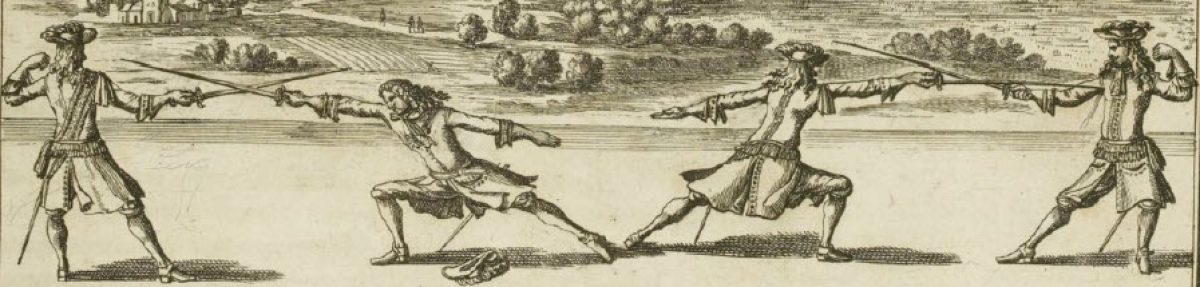
Our sister school, Barbasetti Military Sabre since 1895, recently held its annual SabreSlash event in Prague, Czechia (Oct. 1 & 2). Maestro Michael Kňažko, a dear friend and one of the chief organizers of the event, related that it was the largest crowd they’ve yet had. As one of the best events I’ve ever had the privilege to attend, this naturally makes me happy, and having left most social media I’ve been slowly gathering what news I can from him, attendees, and those following the various stories on sites like facebook.
Of these, one of the more interesting if tragic tales related to me was about the confusion so many in “HEMA” have around right-of-way (ROW) and how it works or used to work in sabre. Much of this is explained by a lack of familiarity or experience with sabre pre-electric as well as electric. As someone who competed before the widespread adoption of electric scoring for sabre, and suffered for several years trying to make it work, I have some perspective that might help should they chance to read this.

One of the comments shared with me was this:
AFAIK, what they wanted to do with electric sabre didn’t work due to the technology. They experimented with sabres that had motion measuring devices, to try and only score proper cuts, and also looked at how to only have the edge and point score. In the end none of it worked properly and they gave up and ended up with the current ‘touch with any part of the magic wand’ result, and I guess in that context they thought they needed to have ROW for some reason. I don’t actually know why they chose ROW for Olympic sabre, but certainly in the late 1800s sabre rules ROW was not universal, and in at least one of the early Olympics they still allowed legs as a target. There was a lot going on at that time and it’s difficult to know why they landed on certain decisions, such as no-legs and ROW. But it was clear by the 90s that everyone was gaming the ROW horribly in sabre.
I don’t know who wrote this, but they raise key points that are worth examining.
First, sabre, like foil, employed ROW before the adoption of electric scoring. The only weapon that does not use ROW is epee. Officially, electric scoring for sabre was adopted in 1988, was first used at a major event in 1989, and was adopted for NCAA fencing in the mid-90s. It was a complete disaster and led, so the author above remarked, to “the current ‘touch with any part of the magic wand'” calamity that has dogged the sport ever since.
Second, the use of the capteur or accelerometer was short-lived. This device, a small gauge inserted into a port in the knuckle-bow of the bell-guard, more often created foil and epee-like mechanical issues on the strip than it did assist in determining the impact of a cut.

As I understand it, there is now a move afoot to reintroduce the capteur as well as the fleche. Good luck FIE, you’ll need it: at least two generations of sabre fencers have learned how not to fence and have about as much notion of proper edge alignment as they do why not getting hit might have value (a failing they share with their cousins in “HEMA”).
Right of Way
This concept is misunderstood and much abused in historical fencing. I get it, I do. As I’ve written here ad nauseam the logic behind ROW is solid–it’s the abuse of the rules around it that is the problem. Briefly, this is what ROW is:
IF threatened/attacked, one’s response should be defensive
In terms of specifics, the Refereeing Handbook provides a nice, short list:
- A properly executed attack has priority over a counterattack
- A properly executed stop-hit (attack in preparation) has priority over an attack
- A riposte has priority over a remise
- A properly established point-in-line has priority over everything
- None of this applies in epee [1]
Fencers love arguing over what constitutes a “proper” attack, etc., but the first point “should” make sense: if something sharp is speeding toward one, the absolute stupidest thing one can do is counterattack–sure, maybe one hits, but one also failed to defend. Not smart.
The exception, point two, is a counterattack made in the right situation, and thus, at the right time and measure–normally this means one has at least one tempo of fencing time to attempt the counter. Such a tempo is often created by an attacker starting out of distance or attacking poorly, say with their arm too exposed. Ideally one has enough time to make the counterattack AND parry-riposte should that counter fail.
The riposte trumps a remise for the same reason as point one–the initial attack was parried and the initial attacker “should” expect that having lost their initiative, that their opponent is going to make a return. Thus, ignoring that riposte in order to push through a remise, that is a second attack in the same line, is utterly daft.

As an example, a close friend and old comrade from college, recently bouted in longsword with a KdF club in his area. His opponent made an Oberhau, or a descending cut from above and my friend parried this with Ochs; the attacker ignored the parry and thus the riposte and continued to push through, sans any force (it having been spent when parried) and received a Mittlehau or horizontal cut to the abdomen. The attacker was upset with my friend, but the weight of the riposte’s impact was entirely his fault. My friend, realizing that his opponent didn’t have the foggiest notion of the logic of the sharp point/edge attempted to explain it to him, but came away feeling that he had both failed and poisoned the well. It didn’t matter that he himself had been hit, only that he had eventually made contact, however weakly, with my friend’s mask.
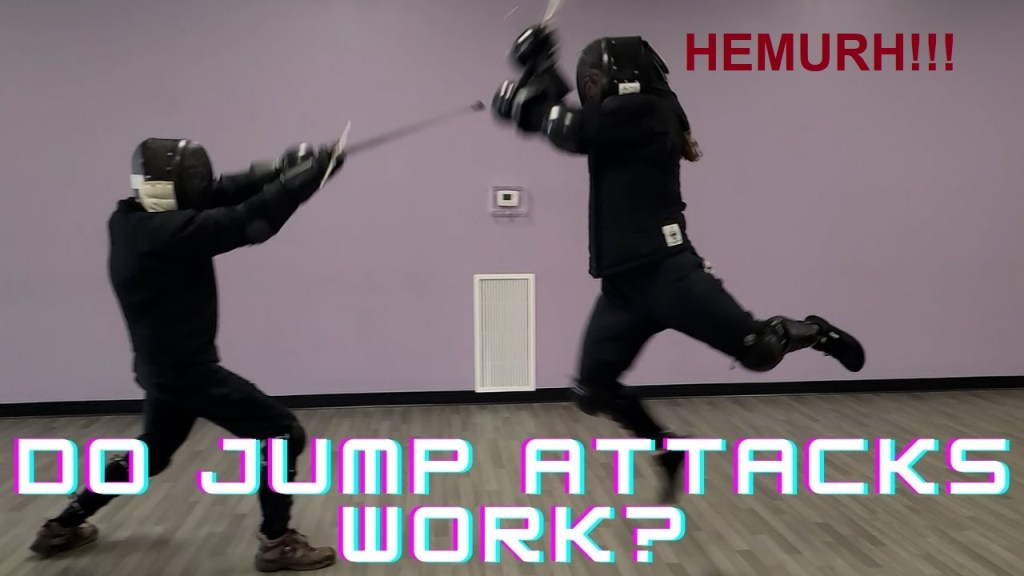
Herein lies the major stumbling block with HEMA–getting the touch is not everything, it’s how we get the touch. If the only virtue is making contact, then one doesn’t need classes, drill, or practice. Find a friend, armor up, and just whack away–it requires no art, no science to do that.
The point-in-line, again a subject of pointless (haha) debate among fencers, is a simple concept: if someone is pointing a sharp thing at one, then it behooves one to deal with the sharp thing first before trying to reach target. [2] Put another way, don’t run onto a sword. The line has priority, and thus ROW, because it is, again, rather silly to rush upon something sharp.
ROW as Pell
When historical fencers raise their hackles about ROW it is, nine times out of ten, not ROW they’re upset about but the ways in which their Olympic colleagues game it and/or misapply it. The examples of this are legion and cataloguing them of little value, so I’ll share two classics.
Exhibit A: Slappy Sabre
It would seem illogical that one could score by striking the strongest part of an opponent’s defense, but… one can. Thanks to the nature of the Olympic blade, a well-placed blow–yes, even with the s2000–can whip over the guard and hit. Because the rules allow any part of the blade to score, it’s irrelevant in the sport if one hits flat. This was a major problem in the 90s and one of the things that drove some of us out of competition–the choice was leave or adapt to the idiocy of some game divorced from fencing. Careers and more than one generous commercial deal were made this way.
It didn’t used to be like that. Before electric, before the director had to obey the box, they listened for the sound of steel or fabric, or the order they were in, and moreover, looked to see if a thrust was passe, that is, whether it had brushed against the target rather than sticking or slicing into it. The entire approach to sabre, even to how much of it is taught, exploited the disappearance of these critical nuances and does so still.
Exhibit B: Floppy Foil
Changes in timing within the box have helped, but a standout example from foil is the infamous “flick.” If one has ever held an actual smallsword or epee d’combat, one will realize instantly how insane this attack is. The argument for it was that it constituted an attack because the fencer had “forward momentum.” It was irrelevant that their blade might be pointed towards the sky or behind them.
Many of these flicks landed on the back and no one was turning tail, so… how an ostensibly rigid thrusting weapon should reach the back when no back was in view might have raised some doubts, but nope. Coaches and fencers eagerly adopted it and referees and rulebooks bent over willingly. For a time the language in the ruleset changed from “extended” arm to “extending” arm, a subtle but important distinction. [3]
It’s not just Making the Touch

Both “HEMA” and Olympic fencing struggle with poor understanding of what a touch means, and thus it’s little wonder they resemble one another more and more. There is a difference between making a touch at the right time and way and just merely making contact, however powerfully or “martially.” IF the goal is to fence as realistically as one can and/or in accordance with the principles that aimed to keep fencers of the past alive, then focus ought to be first on defense and second on reaching target without being hit oneself.
This changes how we fence. We attack less often or haphazardly; we’re more careful. It takes considerable effort and practice to do this at all, let alone well, for as I’ve blathered on and on about we feel safe and do this for fun. There is nothing wrong with fun–it’s maybe the best reason to fence. Likewise, it would be moronic not to fence safely, least in my country where legal and insurance reasons make not following safety protocols truly unwise choices.
This said, as a community we ought to focus a bit more on being honest about what it is we’re doing. If one is not concerned about being hit, only hitting, there are better and less expensive venues for living out sword and sorcery fantasies. You’ll get no judgement from me, I don’t kink shame. You be you and find like-minded consensual folks with whom to play. However, for so many in HEMA to insist upon a “martial” approach and then jump into the fray without any concern for protecting themselves and solely focus on getting the touch, whatever happens, is about as close to gaming the system in Olympic fencing as it gets.
ROW–Theory vs. Practice
Returning to ROW, the principles behind it are sound. They make sense, but importantly these ideas only work if one abides them, and, attempts to fence correctly. Playing to the director and/or judges, exploiting weaknesses in the rules, etc. are all part of fencing and have been for a long time, but one doesn’t have to fence that way. One can fence properly and in accordance with ROW–the problem is most people don’t, whether Olympic or HEMA. They want to win, not necessarily win and fence well, and too many people don’t realize that there is a difference. As I’ve commented more than once, one doesn’t need to fence expertly to win–if one knows the rules and how to massage them, if one is focused on making the touch at any cost, one can go super far.
Events like SabreSlash, in employing an interpretation of ROW, are raising the bar–appropriately–for competition in historical fencing. To anyone who understands ROW, and how it attempts to introduce the reality of the sharp point, most HEMA competitions look exceedingly poor. For all the time and effort HEMA players put in, the average skill level, if competitive bouts are any guide, is low. One reason for this is that too few fighters approach the bout with the logic ROW attempts to instill.
For colleagues in “HEMA,” learning to distinguish between theory and practice (exploiting rules, poor judging, etc.) will do a lot to lower one’s blood pressure. Learning to fence according to the logic of the sharp point will, if one works at it, improve one’s understanding and skill. [4] There is nothing to lose, and much to gain.
The Unexamined Training Regimen is not Worth Pursuing
ROW is not perfect. It’s just a concept meant to capture some of the reality behind fighting with actual swords. Like any theoretical framework it is subject to human foible, but this doesn’t mean that the core of ROW is silly–it isn’t. The whole point is first, not to be hit, and second, to strike the opponent in ways that minimize risk to oneself.
It’s difficult to understand why this would be such a point of contention in a pursuit like “historical martial arts.” It begs the question: why is it such a problem for some HEMA players? In this instance I think it perhaps comes down to being unable to reach the bar that events like SabreSlash present.
Looked at another way, many if not most of the directors that Barbasetti Military Sabre use are masters. They know more about fencing, and more about competitive fencing given their decades of experience, than most anyone competing. Some attendees have next to no experience outside of HEMA’s flawed rule-sets, and so stepping back, which is more likely, that a collection of masters with decades of experience are worthless, or, that the HEMA players whining are unhappy that their usual approach failed them? It is easier to cry foul than face the possibility that their training, years of hard work, and ability are flawed, that they may have in fact wasted considerable time and effort on poor interpretations and training.
My heart goes out to them, honestly, because that is a wretched place to land. They have a choice, though, and if anything it’s a harder one than facing the reality that their skill level is inferior, their years of training wasted. Anytime our sense of self is tied so intimately to training and where we believe ourselves to be with that training, we face two options. One, the easier and more popular choice, is to blame others, the ruleset, and seek communal support.
The other choice, is to step back from one’s sense of self, and examine the facts more objectively, to entertain the possibility that the real issue might be ourselves and not something else. It takes considerable strength to make this second choice, because if we intend to continue study it means starting over, at least in part, and acknowledging that some of the ideas and practices we’ve railed against for so long might, in fact, have merit that would have saved us from being in the very sport we’re in. It can be done. A good friend of mine, who started out in HEMA, faced this very situation and made the hard choice–he’s not only a better fencer now, but a happier one.
If I’ve learned one thing with these posts it’s that they are mostly a vox clamantis in deserto–my audience is extremely small and oddly enough, with less than five exceptions, comprised of European, East Asian, and South American readers. If anything I post here helps anyone, anywhere, even one person, then great. Site stats for this post have proved no exception to the handful o’ readers rule, which is too bad as I think this piece could help some HEMA players better understand ROW, and, what it might do for them, but as a teacher and fencing instructor I feel duty-bound to do what I can to help regardless of the actual impact it might have (its a lot like teaching freshman survey courses actually).
NOTES:
[1] USA Fencing Refereeing Handbook, Version 1. 2 (April 2012), 38.
[2] In Olympic fencing a proper point-in-line must be held at the right height, established before an opponent is in range, and is thus often a point of contention despite being a simple concept. In historical fencing, issues of when it is established aside, it doesn’t matter if that line is shoulder-height or not: if made in time, and projecting forward, then one must deal with that point. A surgeon likely wouldn’t ask the person spiked by such a line whether it was at the right height or not.
[3] For an old examination of the “extended” vs. “extending” arm, see JBT Emmons and Dennis Le, “The Difficulty of Judging an Attack in Modern Foil,” 2002, https://saladellatrespade.com/instructors/research-media/
[4] IF HEMA players understood the logic of the sharp point better, the issues they have with double-touches and the afterblow would be greatly reduced. Doubles are often a result of not paying attention or reacting to an attack incorrectly. The afterblow, as used in competitive HEMA anyway, is a way to exploit the rules–it’s the same as doubling out in epee. Get one point ahead, then double or afterblow and win the match. It’s smart gaming, but not good fencing.
 Capitale Escrime Historical Fencing