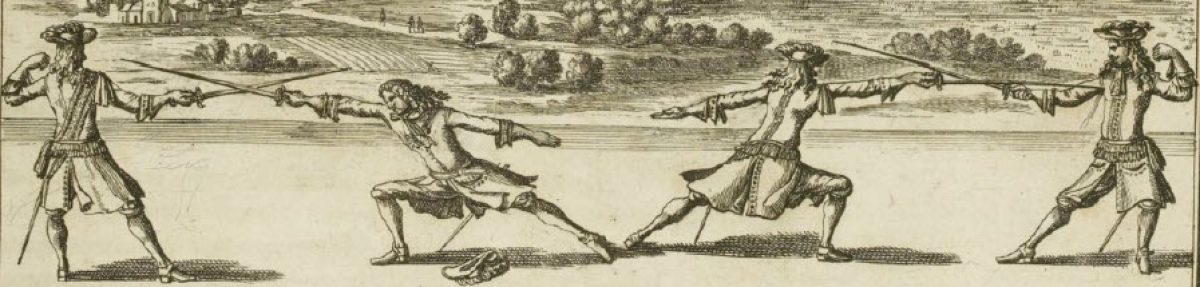
Tending our Gardens


“Cela est bien dit, répondit Candide, mais il faut cultiver notre Jardin.”
Candide, Voltaire (1759)

Unlike most posts here this one, while it deals with some aspects of historical fencing, likely will say far more about me than anything sword-related [readers keen for the former can stop reading here]. We each of us have our karmic burdens, our boulders to push uphill over and over again, and so long as we don’t go completely mad or become crushed by those boulders, so long as we take a look around us, chances are good we may learn something. If nothing else perhaps we build resilience and in a chaotic, irrational, and unerringly unfair world, that counts for something. Not to admit defeat, at times, is the best middle-finger one can extend to that chaos.

In my case, and returning to karmic burdens, I seem to require relearning certain lessons repeatedly. Perhaps I’m uncommonly thick-headed (jury is mostly still out on that) or perhaps I was born under an unlucky star, but regardless the one lesson I’ll be highlighting here concerns assumptions about how people think. Fair to say, I’m a walking poster-child for all manner of mistakes, but this one, because it might conceivably help a reader, seemed appropriate to share. It’s also an issue I run into all the time in the historical fencing community: I assume reason; I assume evidence matters; I assume people look to these even when first experiencing something emotionally, but by and large they do not. I always fail to realize most people work off emotion with little to no rational reflection. [n]

When we lack or fail to use more rational introspection, we can come to the wrong conclusions. That can be especially dire if the conclusions are about another person’s intentions, because we may blame them or attribute motives to them that are not there. There are many explanations as to why this happens, and while interesting to analyze, the why is less important than developing ways not to make the mistake. Our operating assumptions, viewpoint, and experience can be at complete variance, and we need to be aware of this fact. Sometimes we may look at the exact same thing, but we come away with different conclusions, and the more we realize that this might be in play, the more likely we are to find happier solutions.

It may be my age or life-experience (it’s no doubt both), but it’s clear to me that often I’m not, to quote Inigo Montoya, “using the same wind they are using.” I run into this time and time again, and because I value reason, analysis, etc., and because life has not allowed me much opportunity if any to assume I’m always correct, I look at this and think that the one common denominator is me. Somehow, I must be doing something wrong, or expressing things in a less ideal way, something. Often that is true, but, just as often the problem isn’t me.

When we find ourselves in any disagreement or confrontation, it’s healthy to ask what our responsibility is and what we may have contributed to the problem. Emotion is not our friend in this instance—depending on one’s emotional make-up and experience, guilt, fear, anger, all manner of unhelpful emotions, often unrelated to the event at had but the awful gifts of past trauma, infect the current problem. So, we have to think, analyze evidence, and as much as possible work from facts. It’s not that emotion is wrong or bad, it just is, but if we act on emotion alone we get into trouble. Sometimes a lot of trouble.

One thing I try to remember is that very few things in life are about us. The me-o-centric universe that so often seems to shape behavior today, while common in the age of the selfie and instatwitterbook, is a deviation from normal. Put another way, not everything is about you. In the example that spawned this post I realized pretty quickly that while directed at me, the issue was not about me at all, but another’s own doubts and sense of self. That is liberating for me, and that’s nice, but out of concern for the other party I felt compelled to respond to their message.

Even when insulted, angry, or hurt, some pause, some time to allow ourselves to feel something, and then time spent thinking about it, applying the tools of reason, is vital. Analysis makes emotion take a back seat. Analysis clears the way for us to be more compassionate, odd as that may sound, and in most human interactions if not all compassion is a far better response than any other. What I know, just from my own collection of personal hells, is that very very few people know I have them, and so, I suspect that everyone else does too.

When I received that recent complaint, one I felt was unjust, I was angry—it’s an extremely short trip as I am baseline angry all the time and have been since I was eleven. I also knew that responding in anger would do nothing, in fact, it might make things worse. I let that wash over me, just as one might a wave too large to surf, and thought about it—why did they send this? What is it that they’re upset about, and what if anything does it have to do with me? Do I own any part of it? What steps make the most sense to improve if not solve this?

When I responded, it was after sober reflection, well after the immediate emotional response, and I did my best to be polite and fair. This person felt hurt whether I believed they should or not, and so it made sense to tread lightly, to be compassionate. This doesn’t mean I didn’t explain things from my perspective—I’m not good at taking things on the chin—but my hope was that what I shared might help them reevaluate their own perspective and maybe reexamine their own assumptions. I have no idea how they responded, as they didn’t reply, but I hope that they realize that some of their fears were without foundation, and, that I in no way had it in for them. I have monsters enough to fight without trying to creating enemies.


The Point: the reason I am sharing this extremely personal, embarrassing, and uncomfortable stuff is because the approach so closely matches the decision making in fighting, in fencing, and especially in a competitive space. Emotion is not our friend in fighting—it will steer us wrong. Good fencers spend years learning to think versus feel, as do most martial artists, and there is a good reason, one beyond the benefits in fighting. It is practice for life. If one spends hours and hours a week actively choosing to think rather than react emotionally; if one works at keeping a cool head; if one does one’s level best to see each opponent as a teacher, a learning opportunity, as an equal, a partner; if one approaches a fight of any kind with understanding and compassion; then one is more likely to use the same approaches and point of view in other aspects of life. Make no mistake—it takes considerable strength to wield understanding and compassion in a disagreement; it’s far harder than anger. Anger is easy.

As a caveat, I am not saying don’t feel things or that one should stifle emotion, not at all. FEEL what you feel, give yourself space to feel whatever it is as powerfully as you must, for as long as you need, but then set it aside. We feel all kinds of things, and no matter how real, legitimate, or illegitimate, one should always think before one acts. It’s a cycle, because we will (hopefully) always feel things, but rarely is it wise to act on feeling alone, this is as true in fighting as it is in romance, as true at family dinners as in one’s workplace.

Fencing, I know, rarely applies the same life lessons that one more commonly finds in East Asian martial arts, but it’s there. The Art is one. It belongs to all people, all nations, and no matter what it is, Muy Thai, fencing, boxing, BJJ, Tai Chi, you name it, one can find meaning in the study of the Art beyond the piste or ring. There is something to be said for a path that helps reduce the pain of existence, ours, but maybe that of those around us too. We are better able to, as Candide recommended, tend our garden. One thing Voltaire left out, that I’d like to add is that our gardens invariably lie adjacent to those of many others, and so part of tending our garden is being mindful of those next to us, that even those in gardens far away, face the same struggles, the same challenges, and thus deserve some empathy.

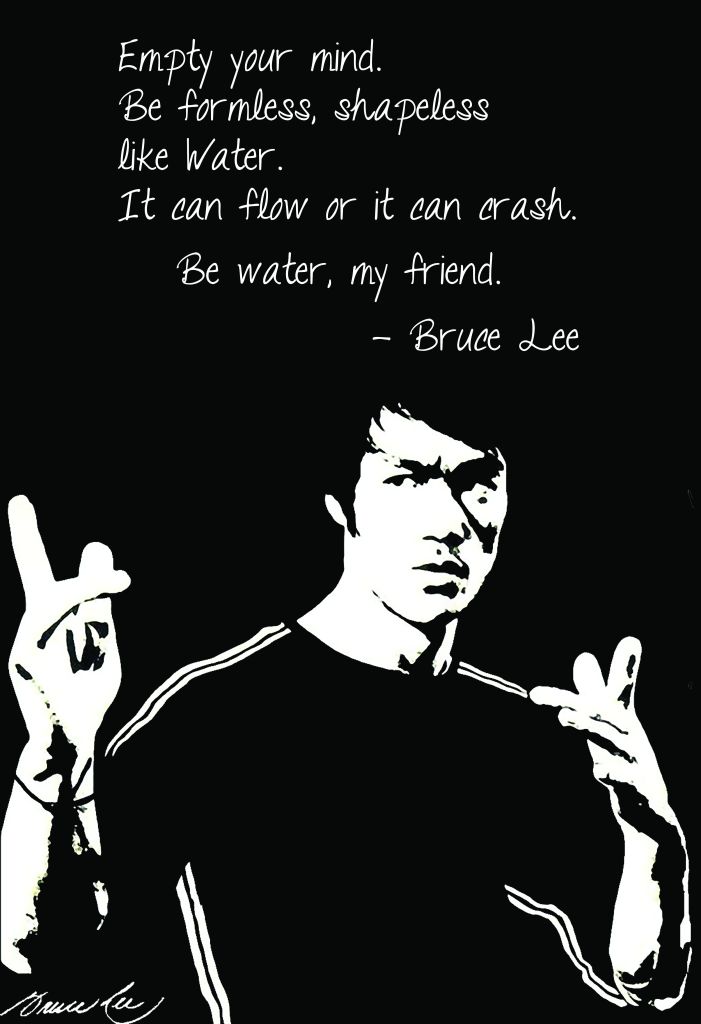
The All-Important Place of Calm

Young Kendoka in mokuso, via Pinterest

Having received some upsetting news and struggling with the mix of disappointment and rage that ensued, I got to thinking about the place of calm, not only in our lives, but also within the Art. We fight best when we are unemotional, calm, and receptive. Emotion clouds judgment. That is a lesson, a karmic burden, that I keep bumping into again and again, and in too many areas. Clearly, I have a long way to go. The question with regard to the Art is how do we cultivate that calm? Moreover, how do we teach it?

The Sword and the Mind

The heading is a nod to an excellent book, The Sword and the Mind, a collection of works on swordsmanship translated by Hiroaki Sato. In one section, Setsunintō (volume two in the book), the author wrote

listening to the sound of the wind and water means maintaining a calm surface and a fighting spirit within…just as a waterfowl afloat on the water maintains an outward calm while using its webbed feet busily below, so must the mind inside be kept on guard. And if you continue your training in this fashion, the mind inside and outside will melt into one, and the distinction between the two will disappear. To attain this state is the ultimate of the ultimate. [1]

This idea is something rarely if ever expressed in western European sources, least I’ve not encountered it in anything I remember reading. The attention to our state of mind, however, shows up a lot in East Asian works on the martial arts. In particular, the impact of Chan/Zen Buddhism on the fighting disciplines was profound. My early training was in East Asian martial arts and as I’ve remarked before my years studying those systems have influenced my approach to fencing. I see the Art not only as the pursuit of self-defense and combat skills, but more importantly as a means by which to grow, improve, and odd as it may sound, cultivate empathy and compassion. More so than any other portion of life, work, school, etc., it’s the Art that has given me the most. Thus, in my own training I’ve worked hard on the mental aspect. I’ve also tried to help my students toward this same quiet-mind.

In the west, the term we most often use for this state today is “flow,” a very modern concept in terminology and one perhaps popularized most by the work of Mihály Csíkszentmihályi and Jeanne Nakamura. The idea of “flow” has since been popularized in Csíkszentmihályi’s book Flow: The Psychology of Optimal Experience and in his TED talk, among many other, similar titles by other writers. [2] The basic premise is that in flow

Concentration is so intense that there is no attention left over to think about anything irrelevant, or to worry about problems. Self-consciousness disappears, and the sense of time becomes distorted. An activity that produces such experiences is so gratifying that people are willing to do it for its own sake, with little concern for what they will get out of it, even when it is difficult, or dangerous. [3]

This state is possible to reach via many methods, but for me I have encountered this state most often when fighting, and, typically when fighting a particularly skilled opponent. The thing is that entering a state of flow, and thus of calm in a sense, doesn’t happen automatically or without some degree of training, least in terms of the fighting arts. I fought empty-hand and with weapons for a long time before ever entering flow.

What I’ve come to realize, however, is that even if we aren’t in a state of flow, we can still cultivate the calm typically required for it to appear.

Cultivating Calm: Body and Mind

We tend to be more relaxed when we are confident. Some assurance that we know what we’re doing, that we can react appropriately, tends to make it easier to perform. For fencing, a key part of acquiring that confidence derives from the often monotonous practice of drill. There is no royal road to skill—one must put in the time. One of the things I advise in teaching students how to drill, especially on their own, is to remove the emotion they may have about it. I do the same thing with my own children when it comes to chores, homework, or anything unpleasant.

How? Well, we feel what we feel, right or wrong, appropriate or no, but how we feel doesn’t have to guide action. So, when a student says “Ugh, I hate drills… they’re so boring,” I reply “I know, but they’re important—take a minute and feel as strongly and passionately as you wish. When you feel ready, take those feeling and set them aside.” The analogy I give them is washing dishes—I work from home and do a lot of the housework. I don’t “like” housework. It’s not fun. So what? It must be done irrespective of how I feel, so, I simply apply no emotion to it. It just… is. This approach not only makes the task less unpleasant, but also makes it faster and less disruptive, particularly if I have other, more important or pleasant goals to meet during the day.

It takes practice to remove emotion. A LOT of practice. As a caveat, this does not mean one doesn’t feel things or that one shouldn’t; that is unhealthy. Feel. You’re human and feeling is part of our lot. The trick is to feel the emotion, whatever it is, acknowledge its legitimacy, and then consciously decide not to allow that feeling to drive thought or action.

Between the two, physical training with its repetition, correction, and perfecting, and, the mental aspect of setting aside emotion, we can more effectively reach a place of calm. When we work a this, and I do mean work at it, we find that one of the places where we are actually the most quiet, the most calm, is en garde. The conscious efforts we make toward that calm reap unconscious rewards. I’m not usually aware that I’m calm. It’s usually in retrospect or if I am actively thinking about my mental state when fencing.

Proof is in the Bouting

As a proof for the vital place of calm, if my own testimony is unconvincing, I offer the example of my friends at Winged Sabre Historical Fencing. One of my favorite fencers is Russ Mitchell—he’s a formidable and gracious opponent, and, one hell of a teacher. Rarely have I faced another school’s students and faced what I did in Texas a few weeks ago. From his senior student, Kat, to some of his newer students, what impressed me most was their calm, the lack of frenetic energy and motion that often accompanies not only new fencers, but some of the most seasoned (not all who bounce in modern epee do so tactically…).

One of the fencers I had the pleasure to fight was Kevin. He’s a bit older than me, and has only been at this for a few years, but I will be the first to tell you that between his being unflappable and the terrifying effectiveness of the Hussar system Russ teaches, I had my work cut out for me. To his credit, Kevin asked me after the bout what he did wrong so that he could work on things. I wasn’t sure how my answer would go over, but I led off with “well, let me tell you what you did right—everything.” He dominated that bout. I might have hit him once, but I know and am honest enough to admit he controlled the action and stymied my every attempt to get past that blasted middle-guard lol

Some of the Attendees late Saturday, 22 April 2023 (photo by Annamarie Kovacs); Kevin is, I believe, in the mask on the left

I mentioned that his calm, something I noticed in all of Russ’ students, was the key. It allowed them the space and level-headedness to use what they had learned. I was–and remain–extremely impressed with what I saw from Russ’ fencers at the St. George’s Day Exhibition of Arms. This speaks to a master’s command of material and pedagogy, and while Russ may not have the sheepskin with maestro written upon it, he is one of the few people I consider a master in historical fencing. I have yet to pick his brain for how he approaches the cultivation of calm, but it’s on my list of things to ask wiser heads than mine.

Drill and Presence

For those interested in this, reading Csikszentmihályi’s book might help, but so too will practicing both purposeful shelving of emotion and drill. In class, in the lesson, or on one’s own, getting out of our own way is the key to progress. Much as one can, acknowledge the emotion that arises, then set it aside and actively focus on the task. In time, with practice, this process becomes more and more automatic. If it helps, read up on both western ideas of “flow” and the more philosophical works on fencing—use what applies, leave the rest. [4] It is worth the effort and time to cultivate calm—it will not only help one improve, but also make fencing a lot more fun and rewarding.

NOTES:

[1] The Sword and the Mind, translated by Hiroaki Sato, Woodstock, NY: The Overlook Press, 1986, p. 71.

[2] See especially Nakamura J, Csikszentmihályi M, “Flow Theory and Research,” in Handbook of Positive Psychology, Snyder CR, Lopez SJ (eds.), Oxford, UK: Oxford University Press, 195–206. See also Mihály Csíkszentmihályi, Flow: The Psychology of Optimal Experience, New York, NY: Harper Perennial, 2008. For the TED Talk, cf. https://lateralaction.com/articles/mihaly-csikszentmihalyi/

[3] Csíkszentmihályi, Flow, 71.

[4] For a few places to start, consider Taisen Deshimaru, The Zen Way to the Martial Arts, New York, NY: Penguin Books, 1991; Joe Hyams, Zen in the Martial Arts, New York, NY: Penguin Putnam, 1979; Michael Maliszewski, Spiritual Dimensions of the Martial Arts, Tokyo, JP: Charles E. Tuttle Company, Inc., 1996; also worth a read Pema Chodron’s When Things Fall Apart, Boston, MA: Shambhala, 1997. I suggest the following with caution as it’s very much a product of its environment, 18th century Samurai culture, and should be approached with an awareness that Hagakure by Yamamoto Tsunetomo reflects not only a disappointed warrior’s views of a changing world, but these ideas as recorded by another samurai, Tashiro Tsuramoto. The edition I have is Hagakure: The Book of the Samurai, translated by William Scott Wilson, New York, NY: Kodansha International, 1983.