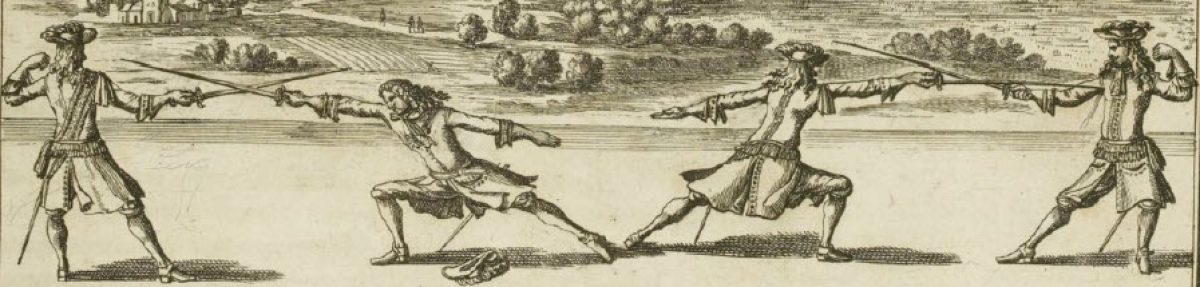
_Semper Anticus_: The Importance of Continuing Education

Resilience and creativity may not be the most lauded skills in fencing, but they probably deserve to be included among the virtues traditionally associated with it. Despite Covid-19, storms, fires, political upheaval, and much more, fencers have still found ways to study and train. The pandemic has forced everyone to find new ways to pursue the Art, from sharing solo drill footage to various online meetings. In a sense it’s an ideal time to work on self-improvement because most of us can’t congregate yet. We have time to expand our knowledge, increase our skill-base, and hone ability. It can help to have goals with this–this past week I started an extended course via the USFCA (the United States Fencing Coaches’ Association), online, and though we’ve only met once it’s clear to me just how valuable this class is going to be.

One thing I have always told students, be it in college courses or during fencing lessons, is that we never stop learning (we shouldn’t anyway). A teacher is first a student and if they’re smart they remain one. I have probably expressed this different ways, ad nauseum, in most settings, but it’s because I believe it’s true. Even if we have something down well and have taught it umpteenth times someone else may know a way to improve our approach. There’s always more to learn or new ways to do what we already do well. Every instructor should take time to continue their education–it’s important.

Interacting with new people, and especially a new maestro, can be difficult for many people, but for those of us farther along the introvert spectrum it can be down-right daunting. Luckily, a good friend alerted me to this course and is taking it himself–it turns out that two other people I know are as well, one a local coach, the other a master in California. I was nervous going into the class, partly because of the social interaction (something quarantine has done little to help), partly because despite using a lot of technology I tend to struggle with these online meeting platforms, and partly because as someone who has focused on historical fencing, who has had a challenging relationship with competitive fencing, it’s easy to feel out of place. Turns out there’s a lot that can tag along with that last one.

One Art, Many Paths

Like many people, I started teaching fencing when assigned the task by a maestro. The last two masters I studied with, both of whom I spent a fair amount of time with, asked me to help newer students or assist their more advanced fencers prep for an event. Dutiful and honored I did my best. I enjoy teaching and the chance to do so was fun, but teaching is also critical in improving our own ability and knowledge. Having to teach something goes beyond being able to do it–we have to understand it. I didn’t want to disappoint my maestri or steer my fellow students the wrong way. They trusted me to do a good job or they wouldn’t have asked me, but that doesn’t mean I felt up to the task every time.

My approach to teaching is, more or less, what I saw my own teachers do. This goes for everything: the sections of a lesson, the types of drills, the various cues–verbal and physical–we use, everything. In time, we develop our own style, we tweak this or that perhaps, but this method is by definition often informal, organic, and implicit rather than explicit. Feedback from those same masters helped, as does time in the saddle, but just how different this is from formal instruction in how to teach hit me hard last week.

This course is the first “how to teach” course in fencing I’ve taken. The maitre d’armes teaching it, a highly-respected, published, and extremely well-trained instructor, hit the ground running day one. He put names to things, gave explanations, and explained a lot of what we do as fencing instructors, things I have done but never really thought about. If that class had been the only one in the series it would still would have been extremely valuable, but to know that I have weeks and weeks of similar instruction coming is exciting. It’s also intimidating.

The course in question is on epee/spada, the weapon of the modern three I’ve had the least training in, but which I have fought quite a lot. I’ve read a lot about it, both in terms of its development as a distinct weapon and with regard to modern tactics. In addition to improving my teaching I hope to gain further insight into the weapon. Often tackling the hardest aspect of a challenge first makes sense, so epee being the least familiar to me, it’s a good place to start.

Fall Down 7 Times, Get up 8

The cosmos, if we’re paying attention, has a funny way of ensuring that we stay humble. Of the various gaffs in the universe’s comedic toolbox one of the most painful (if sometimes amusing) has to be self-sabotage. We can be our own worst enemies, and moreover, in different ways. In my case, the first homework assignment for the epee course put the spotlight on a prime example of this, and for spice, on multiple levels.

It may seem odd to share this, but to date I have found that sharing tales of failure as well as success isn’t just honest, but sometimes helpful. How, for example, is a student going to know it’s okay to make a mistake if we can’t admit our own? Maybe they will learn to harness failure or missteps without our help, but it sure might save them some pain if they have a model for how one might do that. As teachers we don’t expect or look for perfection, just improvement. Part of our role, I think, is making it okay to mess up, to fail, or as common parlance has it, “to suck.” We need to be able to be bad at something first if we wish to get better at it. I don’t think this is a one time deal either, but a reoccurring process we experience at various plateau moments in learning. I am not one to boast and it makes me uncomfortable when others do it–the culture I grew up in considered such behavior ugly–but I will say that I’ve been fencing a long time, teaching a long time, and I make mistakes too. I will make more. It’s part of learning. So, while the following story may read as more humiliating than illuminating, that’s okay–if it makes it even slightly less painful for anyone else to mess up, then great. Sharing this example also sticks it to my own ego, the root of the problem, and that is healthy as well.

In my own most recent example, I was intrigued but puzzled by the maestro’s homework assignment. I understood it, I thought, and it struck me as odd, but I assumed I more or less knew what he wanted so didn’t follow up with him. I should have. I always tell students to ask questions, and, that no question is stupid in class. Better to ask than not.

He had asked us to make a video where we coaches devise two responses against the student as the student recovers from the lunge. It will likely be immediately obvious to many reading this that after having shared these two options one would have the student demonstrate counters to them. I mean, that is what we do each time we teach, right?, we take them from this action to the next, sometimes building complexity, or changes of tempo, or working distance and the student eventually makes the touch. [1] Even with Covid I teach three times a week and never make this mistake. Well… I took the instructions rather literally.

Why? I’m not sure, but I’ve had a few days to think about it and I think I’ve figured it out. First, in the past when a maestro has given me an instruction I have carried it out, and, normally without question. If they said “okay, now do x, but in this tempo…” I did it; if they said “Help Sarah with transports,” I did it. In silent lessons they wouldn’t say anything and I had to figure it out from physical cues, precedent, or deduction based on principles. This may sound rather military in obedience or thoughtless, but it isn’t really. Two of the masters I worked with were retired military officers, and having grown up in that culture it’s comfortable if not natural to me, but one reason I didn’t join the military was because I actually don’t take orders well. [2] It’s also part of traditional fencing culture–there is a time and place to ask the maestro about something, but normally one doesn’t when the sala is full, the maestro busy, and there is work to do. If the master pauses a lesson and calls to us, we answer, especially when they are asking for us to help.

The other issue, the critical one, was over-thinking. On the one hand, I tend to feel like I wear a scarlet “H” on my jacket when I’m around many Olympic fencers. If you’ve read any of the previous posts here that will make sense, but if you haven’t in summary leaving the competitive world for the historical doesn’t earn one a joyous send-off at the pub, but the finger and all too often a loss of respect. The three other people I know in the class, all with experience in a variety of branches of fencing, also have more formal training in teaching fencing. [3] When we feel like the odd one out our brains can go crazy places–in this case, I focused too much on what the assignment said and not what we were supposed to get out of it. I was more worried about what the instructor would think of me, that I might earn a larger letter “H,” than just demonstrating via that homework what I’d do in that instance. That rabbit hole leads to crazy town and interior monologues such as “Maybe it’s a test of sorts to see what we know or how we think? If so, then it’s okay to focus on that alone… or is it…” repeat. It’s a horrible place to be. The solution was simple, but I was too worried to think of it: it’s a class on teaching, so, if I gave a student A and B, what might they do with them?

More wisdom from “Blackadder II” BBC

Coming up with two options as the student recovered was not the problem, but in worrying more about getting it right I neglected the most important aspect–why do it at all, so what, why does this matter? The most important question was to consider why the maestro assigned this, what it was meant to impart. Even in the midst of feeling bad about it that irony wasn’t lost on me.

Part of the assignment was to take video of these actions. My eldest son, a wiz at all this technology stuff, helped me, as did my spouse, and I put together option one and option two. This is where another layer popped up–trusting our gut. It felt like a really weird place to stop: if it’s just me showing the option, then the student is hit, and well, that’s not really what we do. We set things up for the student to make the touch properly. I was afraid to trust myself, reassured myself that this is what he asked for, and submitted it. But, the rest of the afternoon I just kept thinking about it. It bothered me.

Later, in chatting with a friend in the class, he showed me what he and his student had done. It was all there. He shared his two options, and significantly, what his student might do to counter them. I knew it! Panic set in. Every scenario blitzed through my head, and in each one I was hounded out of class, the look of polite disgust of my fellow students blatant in their zoom boxes, the maestro shaking his head slowly, the mean jailor from “Games of Thrones” pointing at me and saying slowly “shame…. shame….”

What could I do? Maybe nothing this time, but I needed to do something to change my mindset. I asked my son if he’d be willing to add an additional move; he was; so, we made another short video and I explained in it that I’d left out the most important part, where the student defeats those two options. The maestro saw it, and in discussion about it was kind, generous, and full of helpful feedback.

Teacher, Teach Thyself and Be Taught

I’d broken my own rule, the one by which I do most everything now, which was to leave ego out of it. I was so worried that I’d put it a poor showing, that I would mess up, that I would look stupid, etc., that I fulfilled the fear or at least felt that I did. Anyone who has weathered disappointment or failure ideally is better able to handle them the next time, and while it took a while to shake off the feeling of embarrassment, of letting myself down, and all the rest, when I could finally see it objectively I was glad it had happened. Having screwed up, what could I learn from it?

Too much concern over how we’ll be received or viewed, of what others will think, not only can taint an experience, but also prevent an experience from happening. Fear of censure or failure, worry about making a mistake or looking stupid, all of that can prevent us from doing the things we need to do, things we like to do, things we should do. Not the karmic burden I would have picked, but it’s hardly unique to me. Many if not all of us suffer this at one time or another.

We need to give ourselves, and sometimes be reminded…, that it’s okay to be new to something, to mess up, to be vulnerable. If we stumble, we get back up; if we fall again, we get back up. Ever forward.

If there is one thing more I learned it’s that being in this class, learning new things, and well… re-learning some of these same lessons again…, is precisely where I’m probably supposed to be. I’ve already learned a lot, and I’ll learn more, and really, that’s the point.

NOTES:

[1] The exception to allowing the touch is when a student performs the action incorrectly; in this case the attack may fail or we ensure that it does, and then examine why. All of that is geared toward helping them perform the correct action the right way and gain the touch.

[2] It’s a long story and not particularly interesting, but I had all but completed the initial ROTC courses at my first college and the commander met with me to figure out the next step. When I told him my major, he paused then said “Huh… well… um… let’s put down ‘undecided’ for now” and I realized then and there I was going to be a poor fit.

[3] These are three people I respect a great deal and whose friendship I value. The master in California is equally at home in Olympic, HEMA, and the SCA, and a super cool chap on top of it all; the local instructor, an old friend I’ve fenced with off and on for over a decade, and I were going to start on our certs together, but things happen and he started last year; and last, a good friend of mine and fellow devotee of Italian fencing is the one who told me about this class–he has taken a variety of courses, at Sonoma, in the USFCA, and in Europe.

They Call it “Macaroni”

The Much-Maligned Smallsword and Foil and why it Matters

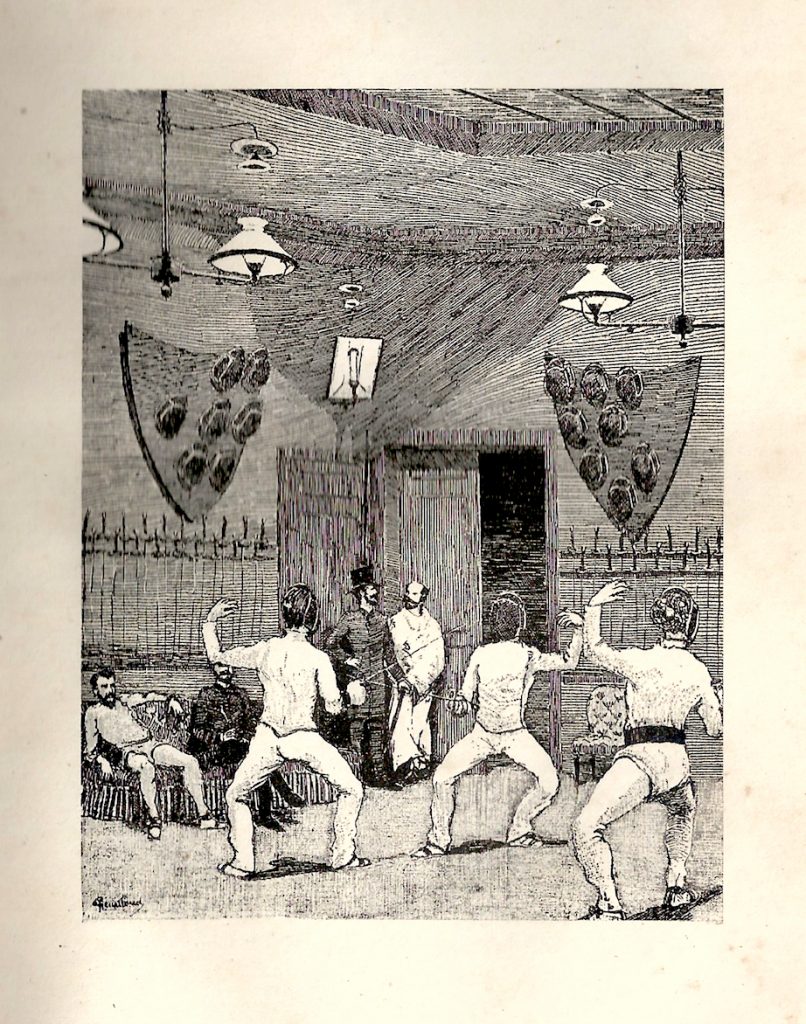
from Brown University Digital Repository [https://repository.library.brown.edu/studio/item/bdr:244908/]

One of my favorite weapons to fence and teach is smallsword. I started fencing foil—a descendant of smallsword—in the 1980s, and though obviously adapted for safer training and the sport of fencing the fundamental elements of foil impart more than most people in “HEMA” believe. Moreover, my initial training was French, and the smallsword being perhaps the early modern French weapon par excellence there is something familiar and nostalgic (if that is the right word) about it. One benefit of subsequent training in a related, but distinct tradition (in my case Italian with Hungarian elements) is that one gains another view of that previous study, just as studying another language can illuminate one’s native grammar. While modern foil and smallsword are different, it is context more than anything else which separates them. The rebated weapons of two centuries ago, while similar to the tool of today, were used to mimic actual combat safely, not used purely as a game, and in this one key difference everything rests. Because so few people within historical fencing understand or accept this, however, one of the most deadly, sophisticated swords ever devised, and its descendant, is often the object of amusement and mockery. Sad as that is, what is worse is that in discounting smallsword and foil they lose the single greatest method by which to explore the extinct sword arts that do interest them.

Wigs, Lace, and Lorgnettes

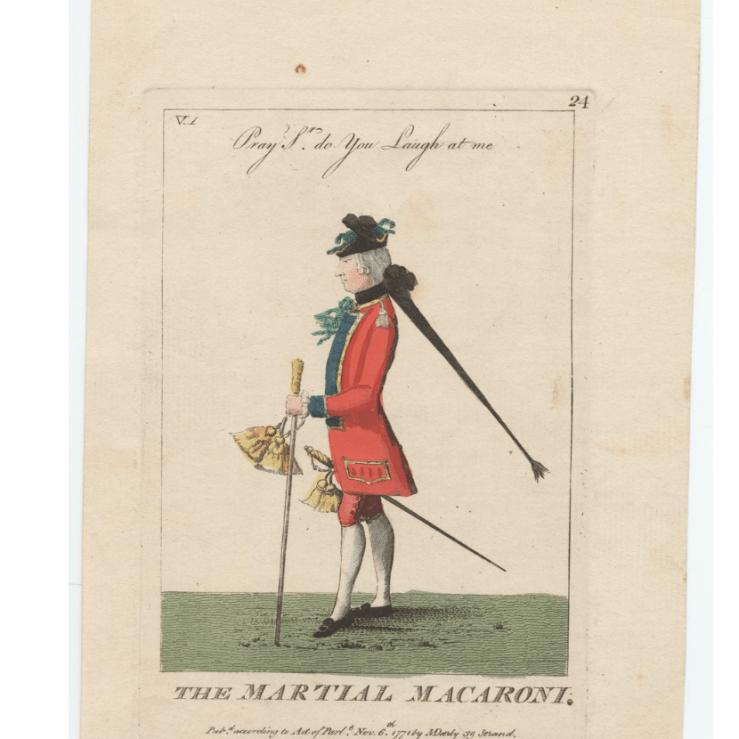
“The Macaroni: A Real Character at the Late Masquerade,” (1773), Philip Dawe

The derision that smallsword suffers in “HEMA” reflects several failures within the community. Arguably it reveals a latent and wide-spread species of bigotry. The abuse aimed at this “dainty” or “tiny” or [insert equally facile insult here] weapon highlights the thinly veiled prejudice in HEMA’s macho culture, far too much of which poisons the community and retards its progress. Aside from compensatory attention devoted to big weapons, go hard or go home, and “I gots brusies bruh!” there is the bigoted notion where sophisticated = weak/effeminate/gay, the idiocy and ignorance of which speaks volumes. Second, dismissal of smallsword, just as with its descendants, indicates a complete failure to grasp the depth and importance of the primary means by which one learns the universals of fencing. This is not merely my opinion, but demonstrable on a number of levels, from the wide array of works on fencing published over the past five hundred years to the gulf in quality one sees in the historical community, not only in terms of performance, but also in terms of translation and teaching.

While fascinating, the parallels between modern disdain for smallsword and 18th century censure of the young people of fashion called “Macaroni” and “Macaronesses” goes beyond the confines of this piece. There are better places to go for the exploration of prejudice in the 18th century as well as the on-going discussion of the battle for equality and civil rights today. My stance on all that, for what it matters, should be obvious from previous posts, but I cannot speak to either issue as appropriately as I can to the second failure, that is, the mistake that most of HEMA makes with regard to anything they define—however poorly or inaccurately—as “sporty” versus what they deem “martial.” [1]

I dtir na Ndall [“In the Land of the Blind…”] [2]

As the old saying goes, in the land of the blind the one-eyed man is king, and if any one maxim summarizes HEMA it’s this one. Examining the usual allegations against smallsword and foil one sees how poorly they are glimpsed without full vision. First, the chief bias appears to be that smallsword (a weapon), because it is related to foil (a training device), is less a weapon than say broadsword. If foil is for sport, then anything like it must be too. Second, for those who see it as a weapon its size, complex method of use, and “late” appearance make it suspect. The logic here, such as it is, suggests that the older a system is, the more legitimate it is; that lighter weapons must be less “martial;” and that anything related to the duel—save rapier—are again less serious than the “heavier” and more manly longsword, axe, etc. The ridiculousness of each of these assertions is underserving of attention, so to be brief:

  • a foil is a practice weapon, be it the modern foil, a feder, or wooden wasters—that Messer you use? Yep, it’s a foil. Ditto your Albion, Regenyi, or Ensifer
  • puncture wounds, made by triangular bayonets or the often triangular smallsword blades, leave really nasty injuries; before the innovations of 20th cen. medicine there was little one could do to repair these wounds or deal with the infections that often resulted (cf. sepsis)
  • fighting in judicial combats with a pole-axe, sword, or anything else was just as formal and bound by convention as late period duels were by the restriction of ground and etiquette

These are all well-established by histories old and new. In truth the bias really has nothing to do with history at all, but with a strong desire to differentiate oneself from “sport.” Anything that is remotely connected to sport, then, is suspect in the eyes of HEMA-Bro. Late 19th century sabres of 650-800g? Too close to the modern sport sabres. Smallsword? Too much like modern foil. That’s it. That’s really all it comes down to, and such short-sightedness cripples not only their research, if they do any, but their own practice and pursuit of the Art.

Why Later Period Systems and Modern Fencing Matter

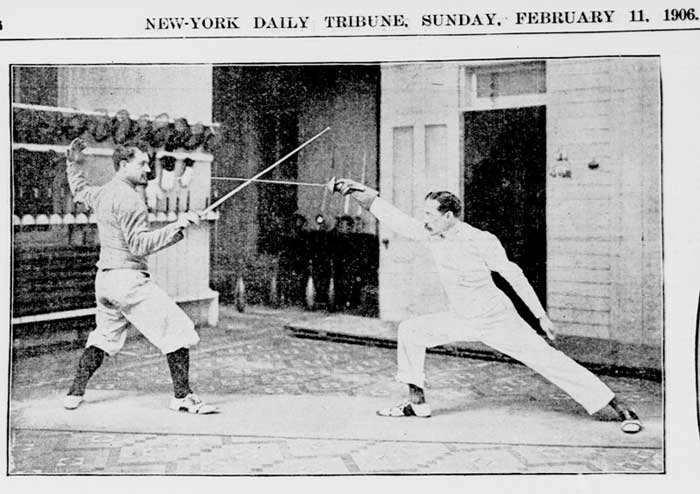
Misplaced bias against both later period historical systems and modern fencing means, in most cases, that these fencers lack a firm foundation in fencing universals and pedagogy. This lack is what tends to undermine their study most. For example, because they have no idea what actual fencing fundamentals are, they mistake aberrations for norms. When they see the problems that are easy to spot, such as the whip-like strikes from electric foils behind competitors’ heads or the floor-dragging sabre slap to a guard, they assume that what they see is the system. Wrong. Even now, decades into the worst offenses in foil, students are normally taught that extending the weapon proceeds movement of the foot and the body. This is universal and is reflected in literally centuries of treatises and hundreds of modern schools. Thus, when viewing anything in the Olympics, the World Cup, or the local NAC, one must differentiate between how a fencer performs that extension as well as how a director views and calls that same action, and examine it against what is taught. They’re often different. Competition, like it or not, comes down to successful exploitation of a rule-set. One doesn’t have to be the Chevalier de Saint-Georges or the Chevalier d’Éon to win; determination and skillful use of attributes win more fights than most fencers wish to admit.

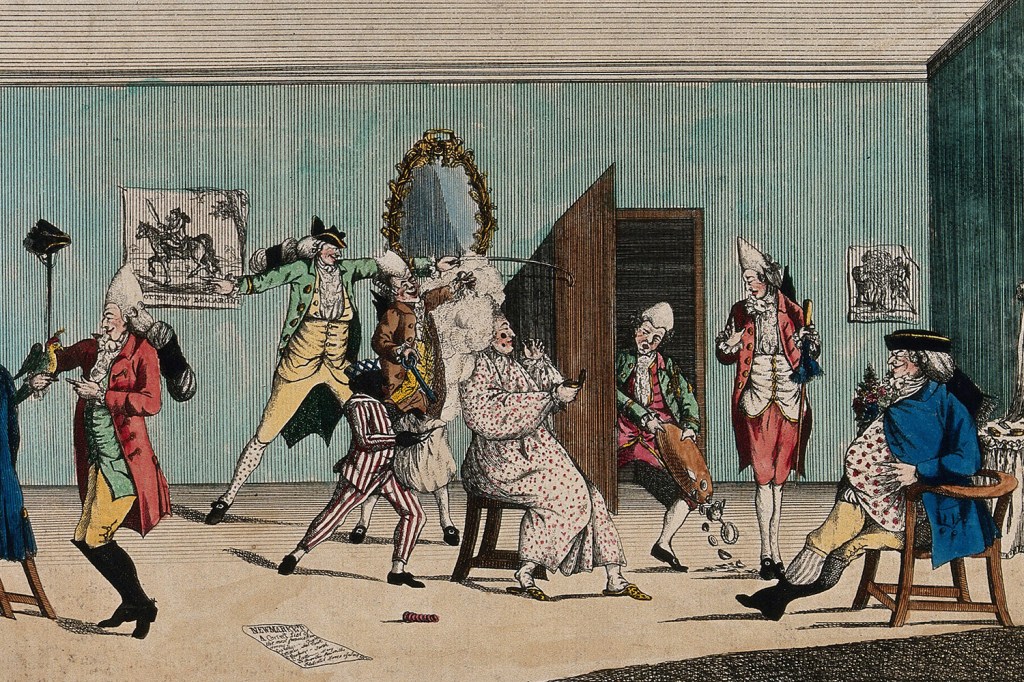
“A macaroni dressing room,” (26 June 1772) by I.W.

Not only do they fail to distinguish between what is taught and how it is used, but HEMAland also rejects traditional and sport pedagogy. They lose far more than they gain from this. Open most any decent work on fencing published in our own time and one will see first, that most do not include the ridiculous point-eating techniques, and those that do often with qualification—that is an admission, by the way, that the authors recognize that the technique is not part of the received tradition. [3] A fencing treatise is more than a collection of “moves;” it is an organized program that orders techniques, drill, and lessons in a meaningful way. It also instructs one in a vocabulary shaped by centuries of development, one benefit of which is that it provides a more effective means to discuss one’s study. Most of all, a year of foil—and this is reflected in the better modern works—imparts fundamentals that transcend foil. Knowing, for example, how the chief universals—time, measure, judgment/method—operate, and how one manipulates and achieves those universals effectively through movement, is crucial in examining any other system of martial arts, but especially those from which the modern version derives. [4] That may not seem important, but for the historical fencer it ought to be, because it is far easier to understand the unknown through the known than to come at the former with nothing or some half-conceived theory of one’s own.

In my last post (Sept. 20, 2020) I mentioned the infamous example of the misreading of Capoferro where the untutored surmised outlandish theories about his lunge. Had they had proper training in the modern lunge, done a bit more digging in the sources between now and Capoferro’s time, then the great mystery of Capoferro’s lunge would not be a mystery to them. Armed with even a nodding acquaintance with modern theory and practice would’ve helped those fencers avoid a grave mistake. Put bluntly, throwing out all that modern fencing has to teach, a system built—again literally—on centuries of work, is stupid and self-defeating. Modern fencing no more exists in a vacuum than did early modern or medieval fencing.

The Problem

For the same reason they poo poo later period weapons and modern fencing, HEMA-Bruhs refuse to listen to those who’ve studied them. Only people with the benefit of that training, or who take the trouble to learn about it, can see how all of this is actually a problem and not just sour-grapes or envy. The HEMA equivalent of anti-vaxers are convinced they have it right, refuse even to entertain that there might be something to learn from late period systems (though they’re ready enough to apply Japanese cutting mechanics and poorly understood kinesiology…), and so dismiss it out of hand. This is not a problem limited to the States either, though it’s perhaps particularly entrenched in American HEMA. We see it in the posers who ape the scholars they denigrate, in the sad attacks on established researchers by people who either deliberately misrepresent their position or are too stupid to understand it, in the idea that a few seminars make one an instructor, and in the odd notion that a 12 page pamphlet contains the same depth and sophistication as the works of Rosaroll & Gristetti or Prevost.

If those with respectable experience in Olympic and traditional fencing are ignored, then the only way to realize the value of later period arts or modern fencing is for the SPES-clad fencer to take that painful step and look at it more closely. Few do, and the results to an informed perspective are disappointing—half-baked theories, ill-conceived approaches, flawed interpretations, and a near complete lack of awareness of the importance of drilling fundamentals. [5] Our interpretations of past combat systems are only as good as the effective use of our research tools—studying extinct sword arts without some knowledge of fencing is akin to entering a bout without a weapon. Together, these flaws mean that much of HEMA is getting it wrong, and for a community supposedly interested in producing as accurate an interpretation of these extinct arts as possible, that makes little sense.

NOTES:

[1] I’m male, middle-aged, white, and hetero, and thus should not and will not speak to the experience of women or LGBT people. Friends and family who fall into either category, however, have shared a LOT with me about their own experience with bigotry so concluding that it juuuuust might bother them doesn’t seem too crazy to me. Just saying.

For related 18th cen. views, interested parties may wish to read some of the literature about notions of “masculine,” “feminine,” and the connections to contemporary ideas about sexuality in the Baroque and Georgian eras:

[2] For the person interested in the full Irish version: I dtir na ndall is rí fear na leathshúile.

[3] Compare for example Maxwell R. Garret, et al., Foil, Sabre, and Épée Fencing: Skills, Safety, Operations, and Responsibilities, University Park, PA: University of Pennsylvania Press, 1994, p. 134 on the “Flick (Cutover)” and Henry de Silva, Fencing: The Skills of the Game, Ramsbury, UK: The Crowood Press, 1997, p. 23, “The Cut-over or French Coupé.” Maxwell presents the flick as a cut-over, a reflection of how it was treated in competition in the mid-90s, where de Silva, writing a few years later, treats only the cut-over sans “flick.” It’s a subtle distinction, but for those of us competing at the time that remember the controversy over the flick and ROW, this reads a certain way.

[4] The universals always include tempo and measure, but the third term varies. Marcelli in The Rule of Fencing (1686) supplies “method” to the first two terms; Terracusa e Ventura, True Neapolitan Fencing (1725), speaks of velocity, tempo, and measure; de Bazancourt in Secrets of the Sword (1862) refers to judgment, control, and speed; Castello in The Theory and Practice of Fencing (1933) prefers distance, timing, calculation. To understand how these relate, why different masters chose different terms, requires reading them, not only for why they say what they do, but for how these terms relate to one another. Without a handle on the universals one’s ability to make sense of most works on fencing is hobbled—Girard (though see Traite des armes, Part III, “Advice for Good Composure when Fencing,” XI), Angelo, and many others assume the reader understands these or explains them within particular sections, so while not spelled out these concepts underlie all that they discuss.

[5] An informed perspective includes but is not limited to professionally trained fencing instructors, experienced fencers, or credible researchers. These is wiggle-room within these terms and I mean for there to be. There are veteran fencers, for example, who know more than many masters and teach as well or better; amateur researchers (vs. university trained researchers) who help us push the boundaries of what we know responsibly; and there are masters and professional scholars who raise the bar higher for our study of historical fencing. However, there are a lot of people who are teaching and shouldn’t be; there are a lot of people playing scholar who haven’t the least idea how to conduct research; and there are professional academics and maestri who don’t play well with others.

It is telling to me, for example, that while details may be in dispute among the maestri, scholars, and veteran fencers I know, none subscribe to the ridiculous theories that plague historical fencing, such as the silly theory of the lunge where the toe/balls of the feet land first. They are, generally, more open to new interpretations when those interpretations are better; less ready to make firm conclusions, especially for the medieval works; and understand the differences in the types of texts, how illustrations can work, and that the less a source contains, the more careful we must be. Most of all, they possess more sophisticated reading skills and realize that what they read or say must be analyzed, not just taken at face value. As a close friend has remarked, the “plates and plays” approach to HEMA is flawed; it fails to take into account all that is not right there in the image.