[14 Nov. 2023] It’s been busy lately, but I finally had a chance to make improvements to my three part series on the demi-pointe lunge. It is important to recognize a colleague’s contributions, and to that end I would like to thank Ian Brackley whose knowledge of both smallsword and 18th century history have done much to bolster several points I make. Even better, he provided another perspective on the protruding piece of leather on some fencing sandals–I have made sure to include his ideas in part three where footwear is covered. He raises an excellent alternative or additional reason for these bits of leather, and it is important to share it. Ian also shared a few more resources with me, down to page numbers, passages, and select images, some of which I missed in my own readings, some of which are new to me. Few people ever take me up on my offer in these papers to add additional information, proper criticism, or corrections, but when they do, and have the delicacy and sincerity Ian does, it only makes a paper better. IF you see this Ian, again, thank you.
NB: for those to whom this topic is new, and who are wondering why I spent so much time on it, I’m happy to explain. Reading the articles one might think that there is a major movement of people who think one should land on the toes or balls of the feet in historical fencing–I don’t believe this is true. Happily, most people don’t seem to have fallen prey to this interpretation. However, there are enough people out there (usually Scadians) who do buy into it that one may run into the notion, or, see yet another one of the queries about it that pop on some social media platform with some regularity.
It came up, again, for me earlier this month during Russ Mitchell’s recent seminar at Northwest Armizare. One of my fellow seminar-goers, when asked if we had questions about movement, was quick to ask whether one lands on the heel or balls of the feet when lunging. The person in question is also in the SCA, the likely origin of this garbage, and from the timbre of his inquiry thinks little of my study (or didn’t read it or did and doesn’t agree with it). Lest one think this is some manner of paranoia or arrogant assumption on my part, I was not the only one who found the question jarring and out of place in the discussion. Most advocates of the toe-tapping lunge tend to dig in when asked about it, so this isn’t unusual.
The purpose of the study is mostly to offer people an examination of the arguments people have presented for the demi-pointe lunge, and, how those arguments fail to hold up. There is no support for it in the sources. A number of those works they cite they have, quite clearly, misunderstood or misinterpreted.
If the snarky question at the recent seminar is any guide, no evidence, reason, or number and variety of proofs will sway those who, for whatever reason, find this daft way of landing appealing. People believe what they like. However, for those of us for whom evidence and reasoned analysis matter, my hope is that these articles will afford them some ammunition should they have the misfortune to run into this remora on the belly of historical fencing.
The much-maligned maestro, Nick Evangelista, turned a phrase that I have long used, “the logic of the sharp point.” [1] For anyone interested in fencing as more than an elaborate game of tag in unfortunate polyester uniforms, the logic of the sharp point should guide all they do. In short, this logic boils down to one idea:
If attacked, defend
When we don’t envision that point as sharp, we make poor choices—most doubles and the obsession with the after-blow stem from misunderstanding or misapplication of this logic. Why is it that in historical fencing, supposedly keen for fostering “realism,” we see such a gap between theory and practice? In short, the divergence stems from failure to learn and apply the most basic tenets of fencing theory. The reason for that is simple: too many historical fencers refuse to examine what modern fencing has to teach them.
This is a topic I’ve spent a lot of time on, but when a problem persists, we keep at it or quit. One fact I must accept, however, is that no matter how much time I or anyone spend on this, no matter how much evidence or analysis we throw at things, it won’t matter to most people in “HEMA.” There is daily proof of this, but there is also precedent: similar issues plagued the Olympic fencing world in the 1990s and early 2000s and then as now most people didn’t care. That doesn’t make them right. Their discomfort with a truth in no way changes the fact of that truth. I will argue until I’m worm-food that one should extend on a thrust, that the flat of the sabre shouldn’t score, and that off-target is, ultimately, illogical.
In like manner, not to avail oneself of modern fencing theory is to hobble our efforts at understanding fencing of the past. Modern theory was not created in a vacuum—it is the product of quite literally centuries of work. As always, one must distinguish between theory and how that theory is applied or misapplied. They are separate things.
For a quick example, applying right of way (ROW) to sabre, in theory, is sensible. ROW, in its way, attempts to enforce the logic of the sharp point, but being a game, a sport, this rule is less doctrinaire than it is for historical fencers. Historical fencers balk that ROW allows consideration of off target, and that one may win the point but still be hit. However, despite those aspects, despite the tyranny of electric scoring, the rule states that an attack should be dealt with, not just reacted to via counterattack out of time. One should defend if attacked—that is basic logic, the point, really, of fencing, defense. Thus, the ruling idea is sound, but how that rule is abused and interpreted is a mess.
Case Study: Passing Attacks
In one of the most recent and unfortunate fracases on social media, over a specific type of attack [see the post 13 August 2023, “Shadows in Caves,” https://saladellatrespade.com/2023/08/13/shadows-in-caves/], we have another example of the perils of interpretation. As I stated in an earlier post, part of it vested interest in maintaining a perceived status within the community, part of the problem was vocabulary, and partly it was a failure to understand how the sources and modern theory intersect. I’m fed to the teeth criticizing the all-consuming horror that ego plays in all this, so this post will instead focus on terms and misapplication of theory.
One mistake that people are making is equating a modern version of a species of attack for one of the same class from the past. It might help to illustrate how the terms relate. “Passing attacks” comprise a category of attacks where the rear foot passes the lead foot. Just how one does this changes. The terms and description vary as well. For two examples, we have the lunge made on the pass in de la Touche (1670), his “thrust of the pass” (l’estocade de passe), his “the finished pass” (la passe finie), and the modern flèche. [2]
de la Touche, 1670; the fencer on the right is making a thrust of the pass
No one in de la Touche’s time called any passing attack I’m aware of a “flèche.” Those quick to decry the use of a “flèche” in a recent Canadian tournament cite the use of a passing attack as modern and anachronistic, and thus out of keeping with period practice. It’s important to break down the attack, and criticism, to see if this criticism holds.
I’ve selected de la Touche in part because detractors have cited him for proof, but also because de la Touche did a fantastic job of explaining many aspects of technique. He was not the only one to include thrusts of the pass, but he is a good example. [3] The section on his thrust of the pass is long, thorough, and informative. In speaking of thrusts generally, de la Touche reminds us that one should be careful to aim for the most uncovered section of target, and, that one must thrust with conviction, that one should let oneself “go and extend as much as you can, so that the action has more force and swiftness of reach.” [4] I note this because swiftness, speed, is a critical consideration, one detractors downplay.
The master observes that one’s reach is longer with the thrust of the pass, and thus that the measure is larger so it requires more time to make. This is a crucial point. If one can hit with a thrust of the firm foot, then one shouldn’t use the thrust of the pass, unless one was initially aiming for the arm and decides to go for the body. It is particularly useful if the opponent is breaking measure (retreating) and if one wishes to surprise the adversary. Most importantly, one must accustom oneself to “execute the thrust of the pass with great swiftness, in order to compensate for the length of the action by the promptness of the execution.” [5]
Important to note, and a point in favor of the critics, de la Touche’s thrust of the pass assumes that the lead foot does not move. One advances the weapon, arm, body, and rear foot, but the front foot remains in place. [98] However, in the next section, De la Passe finie, “Of the Finished Pass,” de la Touche remarks that
The finished pass is an action by which, commanding the weak of the enemy’s sword with the forte of one’s own, one advances the foot which is behind the other in order to take the enemy in the body or to seize the sword to strike or snatch it.
La Passe finie es une action, par laquelle en dominant le foible de l’Espee de l’ennemy du fort de la vostre, on avance le pied qui se trouve derriere devant l’autre, a dessin deprendre l’ennemy au corps, ou de luy faisir l’Espee pour le frapper, ou pour luy arracher. [6]
De la Touche discusses this action, of moving the rear foot past the front, within the context of weapon-seizures. Such seizures are, as he observes, incredibly dangerous and chancy, especially if attempted when attacking (he is less uncomfortable with such seizures when defending). [7] One question arising from this is whether or not the master recommended this passing step only for weapon seizures. In answering this question one must interpret since de la Touche is not specific. How best to do that?
First, we must examine the action in the context in which the master shares it. It makes sense to include this passing step in a section relating to seizing the weapon as the distance one must travel is, arguably, longer than it is when lunging or lunging on the pass. Of note, this step is more connected to attempting a seizure when attacking than defending, as ostensibly the opponent is either standing firm-footed or breaking measure to defend.
Second, we must compare the advice in this passage with the rest of his work, with the general timbre of his approach. This is, granted, where we enter the world of conjecture. Thus, it is all the more important to work from the text, not just one passage or section. We must apply logic to any such comparison; it is, really, the only way to avoid the more obvious pitfalls, such as selecting only what supports our point of view or cherry-picking.
Whenever evidence works against us, we must deal with it honestly. In this case, the thrust of the pass itself does not appear to include moving the front foot from its place. De la Touche makes this clear. Those unhappy with the attack my friend and colleague made at An Cruinneachadh this past month are not incorrect about that. [8] However, I believe they are on far less firm ground if they suggest that the finished pass, that is a pass where both feet move, is only advisable when attempting a weapon seizure. Yes, that is the section in which it appears, but on its own that doesn’t make for a strong case. De la Touche covers the lunge in one section too, but one assumes that he wants one to use it whenever applicable.
Herein lies the crux of the problem—applicability. What follows is my take, my interpretation of de la Touche, and I will be the first to admit it is more spirit than letter of the law. I have reasons for that—we do our best to conform to what a text says, but we must remember the purpose of a source. De la Touche was concerned first and foremost with effective fencing. The goal, quite literally, was to strike and hopefully not be struck as one did so, because failure meant injury or death. If that was the goal, then slavish attention to any action makes little sense. Put another way, if one attempts a thrust of the pass, but the opponent retreats slightly more, one can either break off the attack, or, continue it (assuming the same elements of surprise and safety) by moving that immobile front foot. Fencers make different choices depending on the situation; technique, ultimately, backs up tactics, not the other way around. The attacker is at risk regardless—should they continue an already long attack, they increase the chance of failure, but should they recover needlessly just to follow the letter of the law they may create an opportunity for the adversary to attack in their turn.
In my reading, what Jay used in that match follows the logic of the finished pass and the thrust of the pass. Both fencers were working measure, but Jay launched his attack (about :07/:08 seconds in the video on fb) as his opponent (the chap in green) was in negative balance, as he was just about to initiate an action. Jay threw his arm and body forward, a la the thrust of the pass, but then crossed his feet a la finished pass in order to reach his now retreating opponent. Nothing in this action is out of keeping with what we read in de la Touche.
In fact, Jay used the proper speed to execute this attack successfully, an aspect de la Touche was quick to point out. Judging by both video of their fencing and from what I have observed on my own in person, many of Jay’s detractors do not employ speed in their own fencing, and one fears that they may not realize its importance. No attack made from just out of distance will succeed without it.
But his Fleche!
Now, what is the modern, well, 20th century flèche? It depends upon how one defines it. Generally, in French fencing, the fleche is a “running attack,” but in this can be further explained as Gaugler put it, as “a running attack executed following a loss of balance by an exaggerated forward displacement of the center of gravity.” [9] Maitre Robert Handleman provides a fuller description:
Flèche: an accelerating offensive footwork progression that may start from on guard with a rapid extension of the arm and back leg which causes the body to lean forward and become unbalanced. The front leg then releases like a coiled spring causing the fencer to leap or run forward. The rear leg comes forward to land first, in a running-like movement; the hit should arrive as the legs cross or before. The flèche is used in foil and epee and may be delivered at any distance but is most effective as a surprise in shorter or medium distance. Another variation includes bringing the front foot towards the rear to shift the balance forward and then a rapid extension of the arm in the attack and a forward drive off the front leg. [10]
Handleman’s work was published in 2014, the flèche outlawed for sabre in 1994, but older works discuss the use of the attack in all three weapons. The flèche is still legal in modern foil and epee competitions.
So, did Jay flèche? Yes and no. Yes, he made a running attack, and going by just one definition, Gaugler’s above, we can call it a flèche. However, nothing in that action was out of keeping with what de la Touche, among others, described in their coverage of passing attacks. So where does that leave us?
Old Bottles, New Wine
Often in historical examinations we employ the simple tools of comparison and contrast. Examining patterns of what is similar, what different, we can unpack a source and see relationships, connections, and with further analysis, reach conclusions about what we are studying. In some cases, one type of comparison may reveal more to us. As a related example, from the study of myth, Joseph Campbell’s The Hero with a Thousand Faces does a great job of finding cross-cultural similarities in what he called the “monomyth,” but his study is only so useful because he did not, and did not intend, to examine the differences in how this motif was or is used. A hero’s motivations, for example, may be vastly different even if the narrative construct is similar; those differences will be far more revealing about cultural values than similarities.
In contrast, the situation here is one where similarities should help make sense of the sources, but which do not thanks to bias. Prejudice against the “new wine” of modern fencing, an outgrowth of the reactionary period in which modern historical fencing was born, has persisted and continues to affect how those suffering this bias view the “old bottles” that are period sources. The flèche as they see it is an artifact of modern, 20th century fencing, not that particular century’s version of an old and time-worn attack. Why? Because in their view nothing modern is legitimate.
In fairness to his critics, if one places a photo from mid-century where a fencer is nearly horizontal in the air as they flèche, and then a plate from de la Touche side by side, then the differences are obvious. It’s clear these are not exactly the same, but they’re not the same in execution, and it should be easy to see why: the contexts are different.
pass in seconde, de Liancour, 1696
This has been obvious to other scholars of fencing. Morton’s A-Z of Fencing contains a lengthy entry on the flèche as well as one for the pass which, so Morton states, was an older method of movement, and, one in which the lead foot might, if necessary, move as well. [11] As a last example, Nick Evangelista, in defining the flèche, echoes the same cautions as de la Touche, reminds the reader it is best used sparingly and as a surprise, and most importantly, that “the pass on avant of the eighteenth century is considered the forerunner of the flèche as it is practiced in modern times.” [12] These writers see continuity as well as change, versus change alone, and with good reason. No aspect of modern theory was created ex nihil—all of it is built on precedent.
De la Touche on more than one occasion is at pains to warn the reader against actions that will get them hurt, because in 1670 people were using swords and intended harm with them. No one of sound mind is fencing in that context today—realistic as we may wish to be, we do this for fun, not because our lives may depend on it; we fence with friends, not people keen to kill us; we use safer trainers and wear safety equipment, not a simple shirt or the lack of one. In contrast, fencers using the flèche in Olympic fencing, and especially in sabre in the late 1990s, not only had no fear since they were going for points, but especially in the case of the latter could stretch the action to ridiculous lengths to game the system. Indeed, so abused was the flèche that they outlawed crossing the legs in sabre.
Wine is Wine, Old Bottle or New
In the sitcom “Schitt’s Creek,” one of the main characters, David Rose, explains his sexual outlook to Stevie, a woman who works at the hotel where he is staying, and with whom he had hooked up:
Stevie Budd : So, just to be clear, um… I’m a red wine drinker.
In addition to being a wonderful way to explain pansexuality, I see an analogy in re fencing theory. Fencing is, ultimately, fencing, and it is either effective or not. Contexts, purposes, equipment, and ethos all change, but should one lay out the better modern works on fencing side by side with those from the past the kinship becomes absolutely clear. Yes, there are differences, and in historical fencing in particular to ignore those differences makes what we do ridiculous. However, it’s double-edged—to ignore what modern theory provides any fencer, especially those attempting to interpret past sources for the Art, is to handicap one so terribly that the interpretation too easily becomes something other than what it should be, fencing. A prime example, which I’ve covered in other contexts, is the abject devotion to the images in the Bolognese corpus which produce versions of fencing more graceful than effective. [14] The desire to make “sidesword” different obscures the fact it was a cut and thrust weapon, and, that cut and thrust weapons existed before and after the 15th century. If pose becomes more important than purpose, one has lost one’s way.
The logic of the criticism used against the passing attack Jay used at An Cruinneachadh is faulty. The operating assumption is that anything that looks like a flèche, or indeed may be one, is automatically illegitimate and anachronistic. That doesn’t follow. One can make a fair case that the passing attack Jay employed abided all the cautions and guidelines that masters like de la Touche put forth, and as such, should not be classified as some aberration. [15]
[2] Philibert, Sieur de la Touche, Les vrais principes de l’Espée seule, 1670, 66 (plate just before page 65); see also Reinier van Noort and Antoine Coudre, The True Principles of the Single Sword, Glasgow, UK: Fallen Rook Publishing, 2016, 88ff.
[3] For other examples, among others, see de Liancour’s passes to the inside and outside p. 24ff in Le maître des armes (1696), Girard’s pass of quarte p. 71ff Traité des armes (1740), and Angelo’s pass in carte over the arm p. 62 The School of Fencing (1787). Of note, many works cover passing steps in connection with weapon-seizures.
[4] Van Noort and Coudre, The True Principles of the Single Sword, 90.
[5] Ibid., 100.
[6] de la Touche, Les vrais principes de l’Espée seule, 75; cf. Van Noort and Coudre, The True Principles of the Single Sword, 108. I translated this passage myself, so it differs from that of van Noort and Coudre.
[7] de la Touche, Les vrais principes de l’Espée seule, 75-78; cf. Van Noort and Coudre, The True Principles of the Single Sword, 108-109.
[9] Willam M. Gaugler, A Dictionary of Universally used Fencing Terminology, Bangore, ME: Laureate Press, 1997, 34.
[10] Rob Handelman and Connie Louie, Fencing Foil: A Practical Training Guide for Coaches, Parents and Young Athletes, San Francisco, CA: Pattinando Publishing, 2014, 444.
[11] E.D. Morton, Martini A-Z of Fencing, London, UK: Antler Books, 1990, 67; for the pass, see 132-133.
[12] Nick Evangelista, The Encyclopedia of the Sword, Westport, CT: Greenwood Press, 1995. 250. Queen City Classical Fencing’s glossary, supplies
passe avant [Fr., “pass forward”]: a step in which, from the en garde position, the fencer places his rear foot in front of the lead foot and the latter is immediately replaced forward, returning the fencer to the en garde position. [https://queencityclassicalfencing.com/fencing-terms/#p]
Important to note, the terms for passing attacks varied. Hope, for example, referred to the “true-pass” and the “half-pass:”
According to the Rules, a True-Pass is a running Motion, which a Man makes bye his Adversary’s Right-Side, in the time he is performing his Thrust against him; whereas a Thrust is commonly delivered with a close and fixed Left-foot. ‘Tis true, both of them terminat in a Thrust; but there is this Difference, that in all Thrusts wherein the different Lessons terminat, the Left-Foot is generally kept fixed; whereas Passing is performed, as I said, but a running Motion, the Body stooping forewards and the Thrust delivered, just as a Man is passing bye his Adversary’s Right-Side.
[Sir William Hope, A New, Short, and Easy Method of Fencing, Edinburgh, 1707, 136-138]
[15] Jay’s fencing is effective and he is doing well in competition, so it is possible that maybe that is the real issue: envy.
Jay, like me, like others, approaches past sources with the tools and theory that they bequeathed to modern fencing, and he is an effective fencer. Those aping the plates devoid of actual understanding are not doing as well, because their study is incomplete. When one is absolutely convinced that one’s point of view is correct, and especially when that stance is backed by those believed to wield authority (however true or untrue), then one is not only losing matches but forced to confront an even harder possibility: their training, however long, however passionate and dedicated, has been flawed. This is extremely painful and unpleasant, and my heart goes out to them. At the same time, it is something one can fix. Jay, in fact, can speak to this better than I can, as it happened to him. He didn’t quit, but put his disappointment and regret aside and started over with a better training regimen.
It’s never my intention to be mean or divisive. To the best of my ability, I try to focus on the material and evaluate both arguments and support. The more directly and clearly one does that, the better, but directness, especially online, can read differently to people. It’s easy to take any criticism personally even when it’s not intended. [1]
I didn’t pull any punches in my last post, but no blow was aimed at people as people—my intent was to target interpretations, argumentation, and issues of authority either widely acknowledged as problematic, such as “HEMA” lacking any real oversight, or, concerned with questions about credentials that have long been under discussion. [2] It’s important.
As an instructor and historian I have a responsibility to my students and everyone else to be honest about my training, how I arrive at the interpretations I do or why I use those by someone else, and to be as transparent as I can. When I get things wrong (and I do), I owe it to all involved to own it, correct it, and give credit where credit is due.
Few things are harder than declaring, publicly, that one made a mistake, but it’s one of the most important things we can do. First, it’s honest—everyone screws up. Second, owning mistakes and trying to correct them argues for one’s credibility. Third, because our interpretations are shared, we owe it to those who use them to keep them in the know. My own experience with this has demonstrated to me that not everyone will appreciate it, but it’s the right thing to do regardless of reception. Thus, whenever someone offers us valid criticism, it’s on us to consider it and if necessary adjust our conclusions.
Working remotely in a tiny corner of the world, and rarely able to travel to events, conferences, or seminars (though I try), I know of, but do not know, most of the people engaged in the current debate within smallsword circles. I know them only via their work or participation in the community. Even if I did know them, I should not judge them as people (provided they’re not bigots or overly arrogant) but evaluate their work. I expect people to do the same with anything I might share of my work. That is how research works, well, how it’s supposed to work. [3]
All of this is to say that if you are hurt reading my critique, please remember I see you as a colleague in a difficult endeavor; that we, all of us, owe it to all using our work to do right by them and produce the best work we can. Good research is a collective pursuit—we rely on others for support, for correction, and for making our work better. In like vein, we also owe it to our students and one another to be honest, frank, and ready to back up any credentials we claim. The study of martial arts, any branch, relies on trust, and we establish that trust more in action than words.
Notes:
[1] Even in person it can be hard to face criticism, but it’s part of the job. Online communication is notorious for confusion; lacking facial cues, body language, etc., we have to work harder to be clear in what we write and be sensitive to how things might read.
[2] The burden of proof for one’s credentials is on the individual. Normally, it’s easy enough to prove should one question things—maestri, for example, are handed a diploma produced by the organization that granted it and that displays the signatures of those masters that evaluated the candidate. There shouldn’t be any mystery around it.
[3] Work in research long enough and you will see the best and worst in people when it comes to using or evaluating one’s work. For every instance of helpful, well-intended help, there are a legion of people who fail to read it completely, or worse, misconstrue and misrepresent our work. For example, one reviewer of a book I wrote failed to read the preface; had he done so he would have realized that his major criticism, that the book was less monograph than he expected, was targeted towards undergraduates. For a more serious example, a dissertation from 2014, and which mentioned my dissertation from 2002, not only resorted to insulting language, but also misrepresented my work (how her dissertation committee let that go is anyone’s guess—mine would have read me the riot act for such a breach of professionalism).
One of the benefits of not having to suffer the tempests in teapots that boil over on social media is that I only hear of them second-hand. I’ve heard a lot in the past few days about an unfortunate debate on one of facebook’s smallsword pages concerned with a particular action. Controversies like this have a way of forcing people to show their colors, and this latest hullabaloo is no exception.
The lines, as I understand it, are drawn between those upset by the inclusion of a passing attack, a collection of enthusiasts including a number of English fencers, at least one sword-maker, and a few vocal students, largely American. Their opposition consists of an assortment of historical fencers who have argued for this attack based on the sources. If one is familiar with my posts here it will not be difficult to determine where I land in this debate (not that what I think will matter to many participants). However, as an instructor and historian I feel a duty to those I work with to say something.
False Equivalencies& the Fleche
The action in question is a rapid attack meant to surprise an opponent and one made by passing the back foot in front of the lead foot. To work, one chooses the right measure and tempo, and then applies the right speed and weapon angle to close the line. Whatever the name, these are the component features. It is, in truth, a dangerous action, especially if made poorly or at the wrong time or distance, but the fact that it shows up in so many works means it is worth study.
The criticism aimed at the passing-step proponents centers upon this action being too “sporty,” too “modern,” and since that first generation of classical and historical fencers arose in large part because of the excesses in the sport, anything remotely whiffing of the modern piste is immediately suspect. I know because I was there, and like these poor folks, once over-compensated and over-corrected. This was easy to do in the 1990s and early 2000s for several reasons. The complete lack of concern and disdain from fellow fencers about over-use of the fleche, of the flick in foil, of duck and cover, or any of the other aberrations was hard to understand and unpleasant to face. Second, and in ways that echo in the current debate, none of the evidence–and there was plenty–proving that these were departures from the point of fencing and ahistorical made the slightest dent in their resolve. On the one hand, older fencers unaffected by much of this failed to see the danger. On the other, many newer fencers, having made their reputations on these dubious actions were loath to condemn them; to do so would be to condemn themselves, to call into question their own position.
Ego drove much of this, and, ego drives the anti-passing step side now. Combined with misunderstanding of the problem the anti-passing step faction has taken the suggestion that a move like the fleche is viable as a personal affront. Ironically, they decry the action despite the evidence from the very sources they claim to use. Ego is the first barrier: an inflated sense of self and one’s importance tends to blind one to reason. The second barrier is mistaking issues with a particular action for the action itself. Memories of fleche after fleche in the late 1990s and all the daft measures the FIE took have made any attack like it, never mind the fleche itself, anathema.
Of note, the pro-fleche camp, for lack of a better term, has not argued that the passing attack in Vadi or L’Abat is exactly the same as the flying leap sabreurs so took advantage of in the 1990s. Contexts are different, the weapons different. This said, the idea of a rapid, surprise attack made by throwing the weapon forward and passing the rear leg past the lead one is present in our sources. Whether one chooses to use it or not is another question. Whether one makes the attack well is another matter. Whether a master advocated it or merely included it is an additional consideration. Some masters specified that they didn’t care for an action, or, that it was dangerous outside the salle, but often we don’t know where they stood on its effectiveness or safety for actual fighting. [1] There is ample precedent for fleche-like actions on the record, so to poo poo the use of an effective passing attack in modern historical competitions, which we do for fun, is about turf and ego, not the sources.
Why the one faction should stubbornly argue against the evidence of the sources should make one pause. For smallsword works alone, the inclusion of the passing-step attack is common. It should be little wonder as to why. Given the place of cross-steps forward and back in earlier works (de Liancour, 1686, is a good example), adding speed to the same method of advancing follows logically. The same attack, however, appears earlier in the sources, from Vadi to many rapier treatises. What separates historical fencing from other branches is, supposedly, reliance on the sources, so to ignore the basis for interpretation, particularly when we can trace this action over time and across masters, is odd. If the source tradition isn’t their basis for support, then what is?
The Problem of Authority
One of the bugbears within “HEMA” is a blind appeal to assumed authority. In this case, a number of early researchers and their fan-base appeal to the early success and acclaim these luminaries enjoyed in the belief that it’s as valid now as it was in the early 2000s. That is, sadly, not often the case. Research has not stopped since their time, yet many of these same people stick to outdated theories and flawed interpretations.[2] Their argument, thus, is not made from evidence and analysis, but from ego, from fear of losing the status they depend upon from their acolytes. They fear being eclipsed. The last has already happened as this latest fracas, one skirmish of many in the past twenty to thirty years, demonstrates.
Time-in is another supposed source of authority. It can lend one credibility, but depends on other factors. On its own time-in means absolutely nothing. If one has been in “HEMA” for thirty years and has not only been working from poor theories, but also continues to argue that they were correct despite the evidence, then time-in means very little. This happens a lot–I’ve met many people who have wasted years with charlatans or in glorified fight-clubs or working from once key interpretations that have been superseded.
Complicating the stagnation is an often surprising lack of understanding of fundamental actions and concepts. For example, a well-known fencer recently quoted de Bazancourt with respect to rushing in, which not only demonstrates a failure to understand the intended use of the action, but also serves to corroborate the fact they are basing their view on misuse of the action. Preparation is everything in fencing, and attacks like the passing step and even its much abused 1990s version (ideally…) relied on setting an opponent up for it. The sabreurs who flung themselves stupidly at “allez!” and who never varied the game are a different animal. In the footage I’ve seen from a recent Canadian event, the fencer employing the “fleche” used it wisely, and, as intended: as a surprise against an unprepared opponent. I am a fan of much of de Bazancourt’s wisdom, but the quotation supplied is misapplied. Used at the appropriate time and in the right setting, the passing step or fleche is no more dangerous than a lunge. Both put one at risk. Every form of attack potentially does.
Another issue plaguing “HEMA” is the echo-chamber effect. Adherents to this idea or that group focus increasingly only on what those within their section of the community teach, believe, and use. Their views become myopic, limited, and prone to precisely the ego-driven arguing we see in this current example, because for them the debate is less about sources than it is their reputations as “authorities.” They view the shadows cast on the wall by the tiny flame in their hands or in those of their heroes and take those shadows for reality. It seems real and legitimate to them because they refuse to consider any other well-made argument. In like vein, if any light is cast from someone they don’t know or who fails to pass the anemic view of authority they employ, they ignore it, or, call them heretics.
Proof is in the Teaching
Perhaps it is the Hollywood notion of 18th century manners, of high style, and the romance around the waning influence and power of European aristocracy, but many of the interpretations from the anti-passing-step camp are wooden, slow, and lacking in vigor. They present more like demonstrations or dance than a fight. It’s form over function. For all the formality and etiquette that people of the past attempted to apply to personal conflict, in the end it was a sword fight. The intent was bodily harm or semi-acceptable ritual murder, and no evidence we possess suggests that two people, potentially angry and emotional, fighting fear, and terrified of public opinion, were more likely to square off and fight as if dancing. All evidence is to the contrary. Surviving footage of late period duels is no exception, and many of those were first-blood affairs, not to the death. For all the blather about “realism” few in “HEMA” spend much time if any pondering what that means, or, what it should mean in our context. [3]
The flaccid yet florid approach these fighters take to fencing reveals too much concern for aping the elegant plates within the treatises rather than what those treatises were meant to help teach: fighting. I am not the only one cautioning fencers about over-reliance on images, but time and again many in the community gravitate to the images because they don’t understand the text. [4] While language and diction are often challenging, the deeper issue is that these same fencers lack sufficient understanding to read the text. The one place they might go for help, a solid Olympic or traditional fencing program, is anathema among them, and so, they do their best to adopt what they see in the illustrations and produce pretty bouts largely devoid of any intent.
In the footage of their bouts, in their instructional videos, and especially in their attempts to shout down opponents, the shallowness of their understanding and skill emerge vividly. The inability to fence beyond a snail’s pace, the poor use of measure, and the more choreographed timing are red flags. No one fought in slow motion. It’s hard not to conclude that this is one reason that the clubs and cliques against passing step attacks avoid bouting anyone outside their little world. Against fencers with legitimate training and armed with sufficient knowledge they come up short. Such defeats should suggest to these fencers that maybe there is more to learn or better ways to learn it. In fairness to the newer students among them, hearing from their clubs that these defeats don’t count because others are wrong or too dangerous etc. is easier to accept within their echo chamber, when the only voices they hear are all part of the same program. [5]
Make the Bold Move
It takes courage to accept new ideas, even when well-presented and argued, but it remains the right choice if one wishes to retain any respectability. Lacking any official organization to manage these things, we are left only with each faction’s arguments and how to evaluate them. The best approach is to evaluate the respective arguments in light of the evidence, and, against what the purpose of fencing used to be. The masters who wrote these works, many of them anyway, meant for their books to help teach students how to fight. Sure, some, especially later, were more concerned with salle play than with duels, but for those clearly self-defense oriented, like many mentioned in the debate over the passing attack, the goal was effectiveness first and foremost. There was ample attention to deportment and conducting oneself with grace in many works, but this was, outside a fencing hall, a secondary goal. No master stayed employed long if their students died or were maimed for life. [6]
Those quick to condemn historical fencers using the passing step attack should take their example from other members of the older guard, people like Paul Wagner, Stephen Hand, and Dave Rawlings, all of whom have continued to learn, adapt, and alter their thinking based on new and better information. Though well-known, they have remained humble and thus open to learning, and between these factors and being gracious opponents, they have stayed relevant. They have not been eclipsed.
When it comes to past fight systems, no one has a monopoly on the truth. Every interpretation must be tested and compared against the sources, and when new and better ideas make sense, when they follow from the sources, then they’re worth consideration however much that may disappoint one. At such times, hard as it is, once those shadows on the cave wall have been revealed for what they are, it’s time to do the hard thing and turn around. When one does, one sees better and grows, and often, one finds that those they have perceived as enemies turn out to be staunch allies.
Notes:
[1] De Liancour, for example, believed counter-attacks better suited for salle play than affairs on the ground (Le maitre d’armes/The Master of Arms, 1692, 13 in the pdf, 29; in Lynch’s translation, 36); Capt. John Godfrey, in his A Treatise upon the Useful Science of Defense, 1747, 12-13, expresses his dislike of the flanconade.
[2] A prime example is the demi-pointe lunge. See my papers related to this topic in the “Research” section found at the bottom of the Instructor page.
[3] I’ve spent a lot time on this in previous points, so here I’ll only add that while we strive to be historically accurate and as “realistic” as possible, the fact remains that we do this for fun, wear protective gear, and have no real need for this skillset in our own time and cultures.
[4] See my pieces on using and misusing images in historical fencing under “Research” in the Instructors section.
[5] Most fencing schools, most of the better martial arts programs, include working with and/or competing against those outside one’s own school. It’s critical for growth. It is never a good sign when instructors fear this or actively preach against it.
[6] Even in self-proclaimed self-defense works we see concern for deportment. In James Underwood, The Art of Fencing, Dublin, 1798, p. 7, he explains that he doesn’t like the off-hand arm forward because “I think the beauty of the figure is strangely disfigured by it, and that all fencers will allow that they cannot help being pleased with a symmetrical posture.”
This week’s smallsword class presented a piquant reminder of the caution required in using translations, even good translations. In this instance the translator and author were the same person, Domenico Angelo. One can usually assume that anyone wearing both hats has a firm idea of what they want to express—how well, consistently, or accurately they convey that in another tongue, however, is another matter. We can be too close to a topic, it can be too familiar, and since it makes sense in our heads we may unwittingly proceed as if all we have to do is put pen to paper (or hands to keys). This is just as true for the reader nowadays.
I often harp on the importance of reading the text and not just relying on images in our interpretations, and without meaning to sing the same old tired song, the topic here concerns one nuance of this theme. As my own example will show, what we’ve read can bias us in viewing images too, and so, as ever, we need to be cautious and read closely even if we “think” we know what a passage or illustration means.
Half Circle, Circle, Circular… Angelo uses the terms “half circle” and “circle” in several ways and there is some potential confusion possible in his English version. I don’t know and thus am hesitant to suggest what Angelo was thinking as he wrestled with the French and English in producing the respective copies of his The School of Fencing, but as someone who mines his work today if I had to guess, I’d imagine that it was oversight on part of the author/translator, or, a printer’s error.
On the face of it, some of these issues with language are self-explanatory, but syntax, punctuation, and translation can complicate some of these terms, and deserve a closer read. Call it due diligence. We lose nothing in checking our reading, and in some cases, as I discovered comparing Girard and Angelo, we not only might correct errors we’ve made in interpretation, but also gain new insights into the sources.
Similarities in Girard, in this case, likely skewed my reading of Angelo. I fix these things as I find them (or as they are pointed out to me), but this is a good example because I do my best to do things as accurately as I can and still screw up sometimes. It can happen to any of us (and will on occasion).
In what follows, I’ll present the French from the 1763 edition and the English from the 1787 as these are the two copies I have on hand. The story of the evolution of L’Ecole des Armes/The School of Fencing has been well-covered by others, so those interested in the editorial history of the text should refer to the works in the notes, at least as a place to start. [1] While variations in edition are important, I’m working with the versions to which I have access and focusing on a single, practical concern: navigating some issues of translation in making use of the work.
Examples: Demi-cercle Angelo first covers this parry for plate 19, or, page 97 in the pdf provided by the Bibliothèque nationale de France’s Gallica. [2] He writes:
De la Parade du Demi-cercle sur le Coup de Quarte basse Voïez la Dixneuvieme Planche
La parade du demi-cercle doit être formée au dedans des armes par un coup ferme sur le foible de la lame de l’advesaire, avec le trenchant du dedans & du fort de l’epée. Il faut tourner les ongles en dessus, tender bien le bras, tenir le poignet a la hauteur du menton, & la pointe de l’epée basse & soutenuë du fort au foible.
The English reads thus:
Of the Half Circle Parade, or the Parry Against the Inside Thrust under the Wrist, called the Low Carte Plate XIX
This parry of the half circle should be made within the sword, by a smart beat on the feeble of the adversary’s blade with your inside edge; your nails must be upward, your arm strait, your wrist raised to the height of your chin, and the point low, but well opposed from fort to feeble.[3]
The accompanying plate accords well with the explanation provided here. Much like the modern parry of 7th in French foil, the fencer on the right has the hand in fourth/supinated, the arm is straight, and opposes the adversary’s thrust with the inside edge (one can just make out the knuckle-bow). This parry is made higher than modern 7th, but covers more or less the same line only more conservatively since the arm is extended to parry farther from oneself. [4]
De la parade du demi-cercle sur le coup de quarte basse
The second mention of the term “demi-cercle” is used not to describe this parry, but the arc of the yielding parry made against a flanconade. The second paragraph of the section relating to the 20th plate reads
Le liement d’epée se fait aussi dans le tems qu’il tire le coup de flanconnade. Il faut ceder la pointe sans quitter sa lame, en forte que la pointe forme un demi-cercle en passant par dessous son poignet; & lorsque la parade sera formée, les deux poignets & lames se trouveront dans la position de quarte, comme on êtoit avant que le coup fut tiré, avec cette difference, que le poignet se trouvera plus bas que dans la garde ordinaire.
The English:
The second parade mentioned, called the binding of the blade, is made at the time the adversary attempts to thrust his flaconade. In order to [do] this, you must yield your point, and suffer your feeble to be taken, so as to let your point pas under his wrist, without quitting his blade in the least, that your sword may form a demi-circle; and, gathering his blade in carte, you will find that the two swords, and wrists, are in the same position as when the attack began, with only this difference, that the wrists will be a little lower than in the ordinary guard.[5]
In this instance, Angelo clearly means this descriptively, and so while the same term the context helps prevent confusion.
With the text for Plate 24, however, there is a potential problem. The French reads:
De la Risposte en Tierce sur le Coup de Tierce Voïez la Vingt-quatriéme Planche
Dans le tems qu’on pare la tierece, en tendant le bras & baissant la pointe de l’épée au corps de l’adversaire, il faut lui risposter le coup de tierce le main tournée en tierce & le poignet cavé, faire en forte que la main parte le premiere en soutenant son épée dépuis le fort jusqu’à la pointe, puis se remettre en garde en prime, ou en demi-cercle. On peut aussi risposter en seconde et se remettre en garde en seconde, en tierce, ou en demi-cercle.
De la risposte en tierce de pied ferme sur le coup de tierce.
And the English:
Of the Return in Tierce, after the Tierce Thrust Plate XXIV
At the time that you parry the tierce with a strait arm, and your point a little lowered to the adversary’s body, you must return the same thrust, only your wrist a little inclined to the outside. Take great care that the hand moves first, and oppose his blade well, from feeble to fort; to recover your guard in prime, or demi-circle parade.
You may also, after your tierce parry, return the thrust in seconde, and recover in seconde, demi-circle, or in tierce. [6]
Significantly, the punctuation is the same in the relevant section; both read “puis se remettre en garde en prime, ou en demi-cercle/to recover your guard in prime, or demi-circle parade.” Early on I had mistaken these clauses as appositive, but closer reading and practice have illustrated that this was an error. Angelo is referring to two, distinct parries.
Part of what threw me was Girard—I have spent more time with that text, and his “circular parry,” parries rather, are redolent of Angelo’s half circle parry, and, prime visually. Plate 19 in Girard looks like Angelo’s “half circle” but there is called “circle.” Plate 19 illustrates a circular parry with the hand in fourth or “nails upward; Girard has ensured that the off-hand check is depicted as well.
Plates 21 and 22 in Girard might be taken as if they represent one parry from different angles, but these are two, different parries. The images may appear similar, but each parry is made a little differently. Prime, generally, is made from tierce sweeping left (assuming a right-hander); circle, on the other hand, is achieved via a clockwise circle to gather up the incoming steel.
The parry in plate 22 could be the same “nails down” parry as 21, just seen from the other side and with the addition of the off-hand check, but 22 is Girard’s “prime,” 21 another version of “circle.” They’re not the same.
Parade of Circle with nails on top
Girard writes:
Parade du Cercle,
La main tournée de quarte, les ongles en dessus, le poignet haut & la pointe basse. Avec cette parade on pare la quarte haute, la quarte coupée, la seconde, & la flanconnade.
Pour parer lesdits coups, je fais lever le poignet à la hauteur de la bouche & tourné de quarte les ongles en dessus, le bras droit tendu, la pointe de l’Epée basse parant du cercle, en frapant d’un coup ferme sur le foible de sa lame avec le fort du trenchant pour jetter le coup au dehors des Armes, en opposant la main gauche à son Epée, crainte qu’elle ne vous offense: Et le coup paré, lorsqu’il a le pied levé pour se retirer en Garde, lui riposte de quarte droite dans les Armes; ayant toûjours la main gauche opposée à sa lame, & sans la quitter redouble la main bien soutenuë, puis se retirer dans la Garde ordinaire.
Voyez pour l’opposition de la main gauche, page 39.
Voïez la Figure de la parade du cercle les ongles en dessus [35]
Philip Crawley’s translation for this passage makes the action clear. He renders it thus:
Circular Parry
The hand turned to quarte, nails upward, wrist high & the point low. With this parade one parries high quarte, quarte coupe, seconde & the flanconnade.
To parry the above said attacks, I raise my wrist to mouth height & turned to quarte, the nails above, the right arm outstretched, the sword point low parrying in a circle, firmly hitting the weak of the sword with the strong edge of the blade to push out the attack, opposing with the left hand on the sword, for fear that they will hit me: And having parried the attack, when he raises his foot to return to guard, riposte him with a straight quarte inside the sword; always opposing his blade with your left hand &, without quitting, redouble using a well-supported hand, then return to the ordinary guard.
See the opposition of the left hand [, page 39]
See the figure on the circular parry the nails upward [7]
The image in plate 21, as I read it, captures the moment that the defender (on the left) has described the circle and met the incoming steel. Note that his hand is in tierce/nails down–a key difference from plate 19. If one took the image without the text, always a danger in historical fencing, this might be taken for seconde.
Parade of Circle with nails underneath
Parade of prime, with opposition of the left hand
Read sans the filter of Girard, with whom I’m more familiar, Angelo’s passage in either language is much clearer: one can recover into guard and use a number of sweeping parries as one does so to ensure safety.
Example: Cercle or Half Circle?! Lastly, there is section entitled “De la Parade du Cercle” [134] in the French text, and, what Angelo renders “Of the Half Circle Parry” [42]. It may be an error on either Angelo’s or his typesetter’s part, but regardless the English wording is, on the face of it, confusing. The description, however, makes it clear that this parry is not the same as the half circle parry covered earlier on page 29.
The French reads:
De la Parade du Cercle
Cette parade, qui est la principale des armes, pare non seulement tous les coups, mais aussi dérange toutes les feintes qu’un adversaire peut faire. Pour bien éxécuter cette parade, il faut bien tender le bras, tenir le poignet sur la ligne de l’epaule les ongles tournés in dessus, & par un movement ferré & vif du poignet la pointe de l’épée doit former de la droite a la gauche un cercle assez grand pour être a couvert depuis le tête jusqu’au genou. De cette maniere, en doublant le cercle jusqu’a ce qu’on ait arresté la lame de son adversaire, la parade sera formée.
Pour arrester cette parade du cercle, quand même il la doubleroit avec la plus grande vivacité, il faut arrester tout court sa lame en soutenant le poignet à la hauteur de l’épaule & tenant la pointe basse, comme dans la parade de quinte, & revenir promptement â l’épée en quarte.
Il faut s’exercer, autant qu’on peut, le poignet aux parades du cercle, au contre-dégagement, & du contre-dégagement au cercle. On peut prendre cette leçon tout seul, soit avec un fleuret, soit avec une épée. Cette exercise fortisie le poignet, le rend souple & le délie, & procure insensiblement le plus grande aisance & adresse pour se défendre dans le besoin.
The English:
Of the Half Circle Parade
This parade, which is the chief defensive parade of the sword, parries not only all the thrusts, but also obstructs all the feints that can be made; and, to execute it well, you should straiten your arm, keep your wrist in a line with your shoulder, your nails upward, and, by a close and quick motion of the wrist, the point should form a circle from the right to the left, large enough to be under cover from the head to the knee; in this manner, by doubling your circle till you have found the adversary’s blade, your parade will be formed.
And now, in order to stop this circle parade, notwithstanding its being redoubled with great vivacity, you may stop his blade short, by keeping your wrist the height of your shoulder, and lowering your point, as in the quinte parry; and, recovering, bind and gather his blade in carte.
You should exercise and practice these circle parades, from the counter disengages to the circle, and from the circle to the counter disengage. You may practice this lesson yourself, either with sword or foil: this will strengthen and supple your wrist, and will insensibly procure great ease and readiness to defend yourself upon all occasions. [8]
Of note, both Girard and Angelo’s parries of circle include a circular motion, something difficult to capture in the plates. We catch the action upon completion, at its start, or somewhere in between. Angelo’s “half circle,” on the other hand, does not include a circular motion, and thus, here, as ever, reliance on the plates alone will confuse one unless one is careful.
The Take-Away
This short examination of one term, whatever the reason for the discrepancy, hopefully serves as an example for why caution, even in a well-translated work, is sound. If, like me, you read a lot of different, contemporary sources, then this caution is all the more critical. It’s a truism of fencing old and less ancient that different authors, different masters will sometimes use the same terms to mean different things. Due appreciation for these nuances only aides us in our interpretations.
NOTES:
[1] See especially Ashley L. Cohen, “Fencing and the Market in Aristocratic Masculinity,” in Sporting Cultures, 1650-1850, Daniel O’Quinn and Alexis Tadie, eds., Toronto, CN: University of Toronto Press, 2018, 66-90, especially 69-72. See also Zbigniew Czajkowski, “Domenico Angelo—A Great Fencing Master of the 18th Century and Champion of the Sport of Fencing,” in Studies in Physical Culture and Tourism 17: 4 (2010): 323-334, esp. 327-328 for the circle parry and other content of the work; 329 for a quick look at publication; Jeannette Acosta-Martinez, “Domenico Angelo in History,” in The Fight Master 28:2 (Fall/Winter 2005): 12-15, esp. 13-14.
[2] The French edition I’m using is: Mr. Angelo, L’Ecole des armes, London, GB: Chez r. & J. Dodsley, 1763, found at the wonderful site provided by the Bibliothèque nationale de France’s Gallica site, cf. https://gallica.bnf.fr/ark:/12148/bpt6k15198162?rk=21459;2
[3] This is page 29 in this edition, The School of Fencing, London: 1787. I have a facsimile, in print, from Land’s End Press, New York, 1971, but also use the pdf available at The Smallsword Project, found here https://smallswordproject.com/historic-texts/
[4] Zbigniew Czajkowski, “Domenico Angelo—A Great Fencing Master of the 18th Century,” 328, suggests the modern septime/7th was a result of “’diminishing’ quinte and circular parries,” but I’m less convinced that this is so. Angelo’s “half circle” is, extended arm notwithstanding, clearly meant to do the same job, and, in the same plane. The difference, as I read it, is that Angelo’s fencer may have had to do this to preserve their life, not just their placement in the pools. The extended arm parry, the rear-weighted stance, and attention to measure all imply a conservative game, one meant to maintain the uneasy compromise between one’s safety and still being able to reach target. In similar vein, though not called “sixth,” smallsword’s “carte over the arm” is the clear antecedent to the chief guard in the modern French school. We have ample evidence from our texts not only of thrusts made carte-over-the-arm, but of fencers adopting a guard that is more or less sixth, that is, arm on the tierce side, but supinated/hand in fourth.
[5] French, 101 in the pdf; English, 29-31.
[6] French, 117; English, 38 .
[7] See P.J.F. Girard, Traité des Armes, La Haye: Chez Pierre de Hondt, 1740; the French text is, again, from the pdf made available by the Bibliothèque nationale de France’s Gallica site, page 35 in the text/page 62 of the pdf, cf. https://gallica.bnf.fr/ark:/12148/btv1b8626151m?rk=21459;2
The English I borrowed from the translation of the smallsword portion of Girard, Philip T. Crawley, The Art of the Smallsword: Featuring P.J.F. Girard’s Treatise of Arms, Wyvern Media, UK, 2014, p.77.
For the past few weeks I’ve been working on an article that treats an issue I seem to return to again and again—the challenge of using images in interpreting historical fencing sources. If this amounts to the proverbial flogging of deceased equines, then in my defense this particular horse is a zombie. It just won’t die. The deeper into this current project I dive, the more I see the ways that we can go wrong in interpretation. It’s tricky work. It’s one reason that professional scholars and researchers spend so many years acquiring the skills, contextual knowledge, and tools required to do this sort of work.
No one is immune or safe from a poor interpretation. It’s not an accident that scholars worthy of the name also learn to remain open to new evidence and interpretations better than their own. No one enjoys discovering that their conclusions have turned out to be incorrect or missing something important, but sometimes it happens and the best response is to meet the news with a becoming grace. Thank them for their insight and for alerting you to it, then revise and cite their contribution.
For those of us working with and from treatises with images we must always be careful. Modern life is awash in imagery and most of it we see without noticing it, from billboards to commercials on tele. We apply, again without conscious thought much of the time, an impressive array of reading skills as we encounter ads, instructions, news articles, and street signs. We are good at this. However, our relationship to images is often different from the ways people approached them in the past. We have to be aware of our assumptions and how we assign meaning to what we read.
IKEA’s wee question man
To approach a period treatise on fencing the way we do furniture instructions from IKEA is often unwise. With the exception of the abstract figure with the speech bubble and question mark, the instructions for assembling your new cabinet are intended to be as simple and realistic as possible. No matter what language one speaks or reads those images should make sense. They need to 99% of the time if that product is going to be successful. In contrast, while it is possible that the author (or artist they hired to illustrate a fencing manual) desired a one-to-one relationship between image and reality, we shouldn’t assume that.
Capo Ferro’s lunge, p. 49 in _Great Representation of the Art and Use of Fencing_ (1610)
As a case in point the famous image of the lunge in Capo Ferro’s Great Representation of the Art and Use of Fencing (1610), Plate 4, page 49, has been subject to debate as to how one lands on the front foot.
Looking at this image alone, what do we see? Is the figure in motion? Is this a snapshot of one action? How do we answer that?
From the image alone it’s not clear. This is a two-dimensional figure. The use of perspective is lovely, but while it informs us the figure is in the foreground, it doesn’t helps us much as to whether we are seeing a moment within a series of movements or a static pose. Is this a guard? The conclusion of an attack? To a fencer this looks to be a lunge, specifically, the conclusion of a lunge (to modern eyes the placement of the front knee would inspire a grumble). Taken alone we have little to go on, so, since we have text for this image it’s best to turn to that next.
Capo Ferro supplies capital letters in this image to help us “unpack” it.
A The left shoulder while in guard B The left knee while in guard C The sole of the left foot while in guard D The regular stance while in guard E The sole of the right foot while in guard F The thigh and sloping leg while in guard G The right hand while in guard H The extension of the arm (equal to its length) I The extension of the right knee (almost equal to your stance) K The extension of the stance (a little over a shoe-length) L The extension of the left foot and the turn it makes M The extension of the left knee (equal to half your stance) [1]
Two things emerge from the list even before we look to see the placement of these letters in the image. First, A-G denote various positions of the limbs and body while in guard, H-M the various positions of the limbs and body after one has lunged. Second, we know that this image captures both a static moment (the conclusion of the lunge) and serves as a short hand to express movement from guard, through space, and into the lunge.
Even armed with this information we need more information. Capo Ferro, unlike most modern authors, explains movement in various places within his treatise. In the caption to this plate he says “Figure that shows the guard, as shown in our art, & the incredible increase of the long blow, compared to the limbs, which all move to wound.” [2]
The botta longa, often translated merely as “lunge,” here requires us to read more than the image and its accompanying legend. For example, in Chapter 13, section 11, Capo Ferro discusses walking. He says one must keep the right shoulder forward, and that one should step naturally, but that moving left or right (compassing) to move the left foot first, and in a straight line that one foot should follow the other. In discussing Plate 14 (p. 67) the master tells us that Fencer D, having gained the inside line, faces a disengage (cavando, i.e. cavazione) from C to his (D’s face). So, D drops the body and steps forward with the right leg wounding C in contratempo without parrying.
Plate 14, Capo Ferro, Gran Simulacro dell’Arte e dell’uso
Here as before we see a static image, but one that serves to illustrate movement–none of that comes across without reading the accompanying text.
Reading period manuals can be difficult. Even an experienced modern fencer will struggle because the vocabulary is often unfamiliar or used in a way different than they are accustomed to. To illustrate just how powerful this can be there are fencers within the historical community who refuse to call an obvious lunge a “lunge” simply because the word they expect, that defines the motion for them, is absent. It doesn’t matter that the treatise explains the exact same action, though it should. To expect each author, in different lands, at different times, to use a single term assumes a unity of fencing practice that did not exist until the 20th century. It also ignores what the author explicitly states. That’s a problem.
Our interpretations of these manuals mean little if we ignore what they say, what they describe and advise. It is worth the time and often painful effort to figure out what a master is saying. We may get it wrong, but that’s okay. We try again. We ask people who have sat with the text longer. We keep at it. Just as we should not assume people of the 17th century or any other had the exact same understanding of visual media we do, so too should we not assume that these texts are simple or easy to understand. Most often they’re not. The authors make assumptions about their readers then that do not hold for us now. So, we are translating more than just words and images, but a world-view too.
Returning to Plate 5, the lunge, and how the front foot lands, we have to go to the text. The foot is flat in the image. If Capo Ferro, who describes stepping “naturally” is to be taken at his word–a reasonable approach given that he is the author…–then the safest conclusion is that he wanted us to step as we normally do. From this figure that step is small, the distance between E and K (or if it helps think of this as K – E = D or The extension of the stance (a little over a shoe-length) – The sole of the right foot while in guard = The regular stance while in guard). There is no reason to conclude that one must step in any other way. Next, we try it out–can we make a short lunge with the heel first, barely lifting it? Yep. Can we be 110% sure that Capo Ferro, for some reason, desired us to tippy-toe? No, but it is far from likely too, and given that he is specific about so much but felt no need to describe what a “natural” step is, we’re on firmer ground (pardon the pun) if we don’t second-guess him.
[2] Text, Capo Ferro, Gran Simulacro dell’Arte e dell uso della Scherma, 48. This is my loose translation, but I checked it against Tom Leoni’s and while less eloquent it captures the sense.
One of the hallmarks of historical fencing vs. other branches is the central place of the sources. Olympic fencers may never crack open a book about fencing, let alone an old one, because they don’t need to. This isn’t to say they shouldn’t, but that it’s not required. The high level of teaching in Olympic fencing, the focus on individual lessons, and the crucible of the tournament experience all work well together to produce capable fencers. Historical fencers, however, can’t really pursue the Art without recourse to the texts, images, and tools that comprised parts of it. There is a spectrum within historical fencing—at one pole are the handful of academics focused on the texts, at the other are those who receive all they know through an instructor who (ostensibly) does the reading for them, and then there is a wide variety of approaches in between those poles. Wherever one may be along this spectrum they should, at least on occasion, read the sources that inform their study.
To use an appropriate cliché, reading the sources is a doubled-edged sword, because while diving into the source might illuminate a lot, it also requires reading skills most people don’t apply day to day. That can be daunting. Unlike a novel or magazine piece we can’t be passive; we must be active. We must apply close-reading skills, and many people haven’t exercised those since secondary school or college; some never have. Don’t worry: the good news is that one doesn’t normally have to do this in the detail sometimes required of many historical documents.[1]
It’s important to read, if only on occasion, to check that the interpretation we’re using or learning is still valid. In much of what people normally think of when someone says “HEMA,” for example, people rely on ideas and techniques which, if one looks further into, are flawed. One of the places this is most evident is in cutting dynamics. There are false equivalencies guiding much of current practice as well as a fundamental misunderstanding of fencing universals. The trouble is that those crowing loudest have gained what notoriety they have on these faulty foundations, so there’s little incentive to own it. There’s a direct analogy here with the FIE officials, coaches, and fencers who either made their way via dubious, non-traditional actions like the “flick” or allowed such actions to count in the 1990s. Vested interest and concern for reputation above all tend to work to undermine not only better work, but also actively seek to discredit it. That’s a problem. [2]
I’ve discussed this before, but there are many ways to cut a mat—cutting the mat, on its own, doesn’t mean that one has cut that mat as one’s chosen source or style has dictated. This is a false equivalency. It won’t register as a problem unless one knows the sources, however, so that means it’s on each of us to read. It’s especially incumbent upon those responsible for teaching cutting to get this right—not all of them do. Some of the loudest voices are using techniques more in common with certain Japanese schools than with KdF or other European systems. Anyone who dares suggest this, though, is assaulted with ad hominem attacks, even home-made memes featuring the offender’s photograph. Childish responses like this should be raising serious questions about the attacker’s credibility; it’s not just the lack of maturity and fair play displayed, but the unwillingness to counter with better research. In some part the name-calling is meant to mask the fact that some of these supposed experts don’t know how to do proper research. [3]
For those concerned with approximating as best they can their chosen branch of the Art it’s vital to gain a basic understanding of the source material. It’s as important as finding a qualified, informed, and open-minded instructor. Any instructor worth the name should be open to reevaluation in light of more information or a better interpretation. Just as one shouldn’t follow Deepak Chopra for medical advice based on t.v. spots, book sales, or wishful thinking, so too shouldn’t one take the advice of any HEMA luminary at face value.
Cutting can be a good litmus test for our practice, but only if one has at least a nodding acquaintance with the source and what it says, and importantly doesn’t say, about how to cut. It’s not enough to use the right tool, or to have read a source the way one does a magazine article—one must understand as much as is possible what the text advocates. [4]
As an example, here is one of the molinelli as described by Settimo Del Frate:
47. Molinello to the Face from the Left in Three Movements
The execution of the molinello to the face follows the rules given for the molinelli to the head. The instructor gives the preparatory command and then the command of execution. For the molinello to the face from the left [hereafter, “external face”] from point in line, at the commands:
One! –turn the hand from right to left by rotating the forearm. The edge of the blade should point to the left (N. 18).
Two! –lift the sabre with the forearm, and straighten the body, carry the hand to the right of the head, approximately ten inches distant from the same. The sabre should be vertical, with the edge turned back diagonally, and the weight of the body equally squared between the legs (N. 20).
Three! –with arm power coming forward from behind, tighten the fist and give power to the movement of the sword with the body. The sabre should describe a horizontal semicircle at the height of the shoulders, so as to return the body and the sabre to the position of point in line. [5]
A fencer new to Del Frate’s seminal work on the Radaellian sabre method should have questions as they read this. Assuming they’re familiar with the term “molinelli” or “moulinets,” the French rendering being more common in the States, the next question might be “What did DF say about molinelli to the head?” The author assumes that the reader is familiar with these and indicates that they are either necessary or helpful in understanding what he’s about to share. If the reader hasn’t read that portion, they should now.
The reader should also notice that Del Frate breaks this particular action into three chief parts. Starting from a position, in guardia, of point in line (DF assumes the reader knows what this means), the fencer then:
1) turns their right hand from the right to the left (this means going from the hand in “first in second position” where the thumb is between 7 and 8 o’clock to the hand in fourth position where the thumb is at 3 o’clock); for reference one can reference Del Frate’s plate No. 18
2) from here the fencer bends the arm at the elbow and brings the weapon up by their ear; for reference examine Del Frate’s plate No. 20
3) from here, the fencer moves the sabre forward turning the hand to strike the opponent’s right cheek; this is powered by tightening the grip, using the elbow as axis of rotation, and putting the force of the body behind the blow; when the cut lands one should be more or less in the same position as 1), and then recover into guard
In broad outline this molinello is comprised of preparation, chambering, and the strike. The specifics of movement, however, require some attention. For those terms or ideas the reader doesn’t know, a glossary or reference work on fencing is useful, but so too is time spent actively thinking about each term, how they apply, and then putting them all together.
There are also things Del Frate doesn’t specify in this passage that one must know from the earlier section of his work. One assumes the point in line from guard, and upon completion of the cut, where one ends up in the same line, then reassumes guard. Of note, Del Frate simplifies the section on turning the hand; many Italian works not only break down the guards by number, but use specific positions of the hand too. Del Frate, for whatever reason, did not, neither in the section on sabre or spada. Likewise, the reader only realizes the thumb should be on top the backstrap if they’ve read Del Frate’s explanation of the grip.
Even for an experienced fencer the first attempts at this molinello might be a bit daunting. This is an older form, all but vanished in modern fencing, and much larger and more powerful than the direct cuts made today. It can make one feel vulnerable, and this is important because this is where personal experience and learning to date bumps into a seemingly less viable method. One of the complaints made against Radaellian sabre is that the fencer is more vulnerable in making these cuts. From a sport perspective that is true, but this assumes a sporting context which is very modern. When Del Frate wrote down his master’s ideas he wasn’t thinking about points, but about making cavalrymen more effective. This context is everything (cf. the last website post, “Sabre, Saddle, and the Vital Importance of Context,” 4-6-2020).
Most of us, however, are not fencing from the saddle, so the next question is “how do I make this work on the ground?” In this one passage on the molinello to the external cheek there is no explicit mention of how to cover. What do we do? We need to read more, and, perhaps dwell on those points, research them, and discuss them with more knowledgeable people. This is hard work, and it’s a lot less fun than bouting is most of the time, but it’s the work that separates a skilled fencer with deeper knowledge from a decent fencer who relies more on attributes and limited understanding. Without this work it is easy to assume that one knows better than the text. Even if that is true, a truly debatable point, IF one wants to cut the way Master X suggests, then one needs to give that master’s advice a fair try. Not one of the Radaellian masters suggests one rush into danger making wheeling cuts and exposing themselves, so, clearly they had thoughts about defense. Discussions of footwork, measure, timing, and parries all inform this, as do the molinelli themselves. A key aspect of the molinelli that’s easy to miss is how each of them moves through a particular parry. That’s not an accident.
Before a cutting target many people focus on cutting the target; that’s the goal, right? Yes, and, no. Yes we want to sever the bamboo, bottle, or tatami, but ideally we want to do so according to our chosen system. If possible, select a weapon suitable for that system. For these Radaellian cuts, for example, a sabre between 650 and 850g is perfect. Next, forget the goal and focus on the technique: think back to those three commands. From guard, establish a point in line, bring the arm back to chamber, and then cut. Use no more force than suggested.
One may not cut successfully through the target the first time. That’s okay. In time one will. This is why we do test-cutting, to help us figure out the system, to test our interpretations. Ideally, one cuts at target precisely as they make the same cuts in a bout—there is no reason one should cut differently just to sever the target. We are likely to undermine our hard work if we treat them differently. Approaching test cutting as an adjunct to our other modes of practice can be extremely valuable when conducted with the right frame of mind. There’s also nothing in shooting for accuracy within a tradition to make the exercise less fun.
Notes:
[1] In graduate school I once had the chance to take a class with Naphtali Lewis, a renowned papyrologist. He took us line by line, word by word, through the “Res Gestae” of the Emperor Augustus, a tour de force of propaganda. I have found that with most fencing works while it can help to focus on a single word, it isn’t always necessary. He impressed upon me, however, that starting out asking the question “Do I need to read in depth X” can often save us time and pain later.
[2] By “HEMA” here I mean, generally, those most associated with the sport side of HEMA (especially State-side). It is a spectrum, however, and many groups are “doing HEMA” without falling prey to the facile interpretations championed by this crowd or hobbled by their knee-jerk reaction to anything vaguely Olympic. The over-riding concern to distance themselves from Olympic fencing suggests they too see the similarities between themselves and our Olympic cousins just as the rest of us do.
[3] If fb is any guide the jealousy with which these individuals guard their view is matched only by their inability to play nicely with others. One learns a lot about anyone who’s first reply is an insult. So long as these people have a cult following, however, they’re unlikely to evaluate their own positions fairly. The recent mess of an attempt to reevaluate George Silver only last week is a case in point. On the one hand, there was a respected researcher, Stephen Hand, and a disparate, varied group of people voicing support or supplying corrections about aspects of this new theory, and on the other were the authors of the piece and their fans. The new theory doesn’t hold up well for several reasons, not least of which is that they failed to understand Hand’s position correctly. More than one researcher, myself included, concluded that this piece was less about Silver than it was about attempts to justify a) what the authors are already doing in tournaments and want to see the rules validate, and b) to fit the sources to their own interpretations. Watching this debacle of a debate was another reminder of why most serious researchers have so little to do with mainstream, sport HEMA.
[4] In fairness to those working with much earlier sources it’s often much harder to interpret how to cut. Many people view medieval and renaissance images as if they were photographs; this is generally unwise. The artist or author may have intended a realistic rendering, but that wasn’t always the case. See post “Using Period Manuals in Historical Fencing,” Sept. 18, 2019 here, and, “Transcription of Lecture delivered at the Thundermark Deed, March 20, 2019,” on my profile at academia.edu.
[5] Settimo Del Frate, Istruzione per La Scherma di Sciabola e di Spada del Prof. Giuseppe Radaelli, Scritta d’Ordine del Ministero della Guerra, Milano: Litografia Gaetano Baroffio, 1876, 43-44; for the English, see Christopher A. Hozlman, The Art of the Dueling Sabre, Staten Island, NY: SKA Swordplay Books, 2011, 34. The images from the 1876 are from the plates in Chris’ translation.
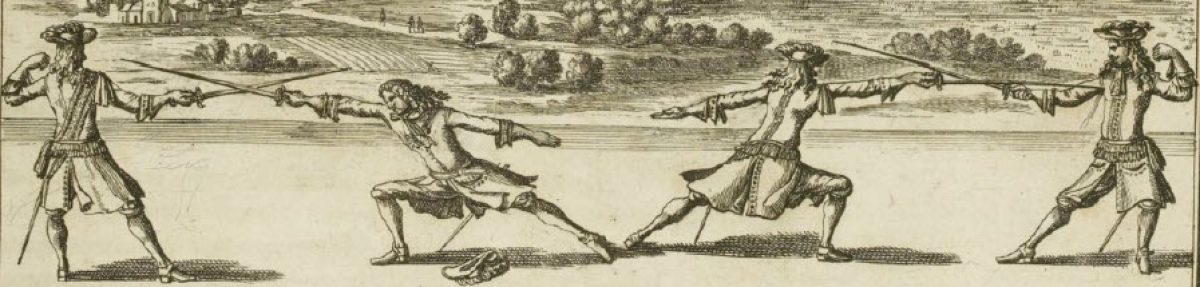

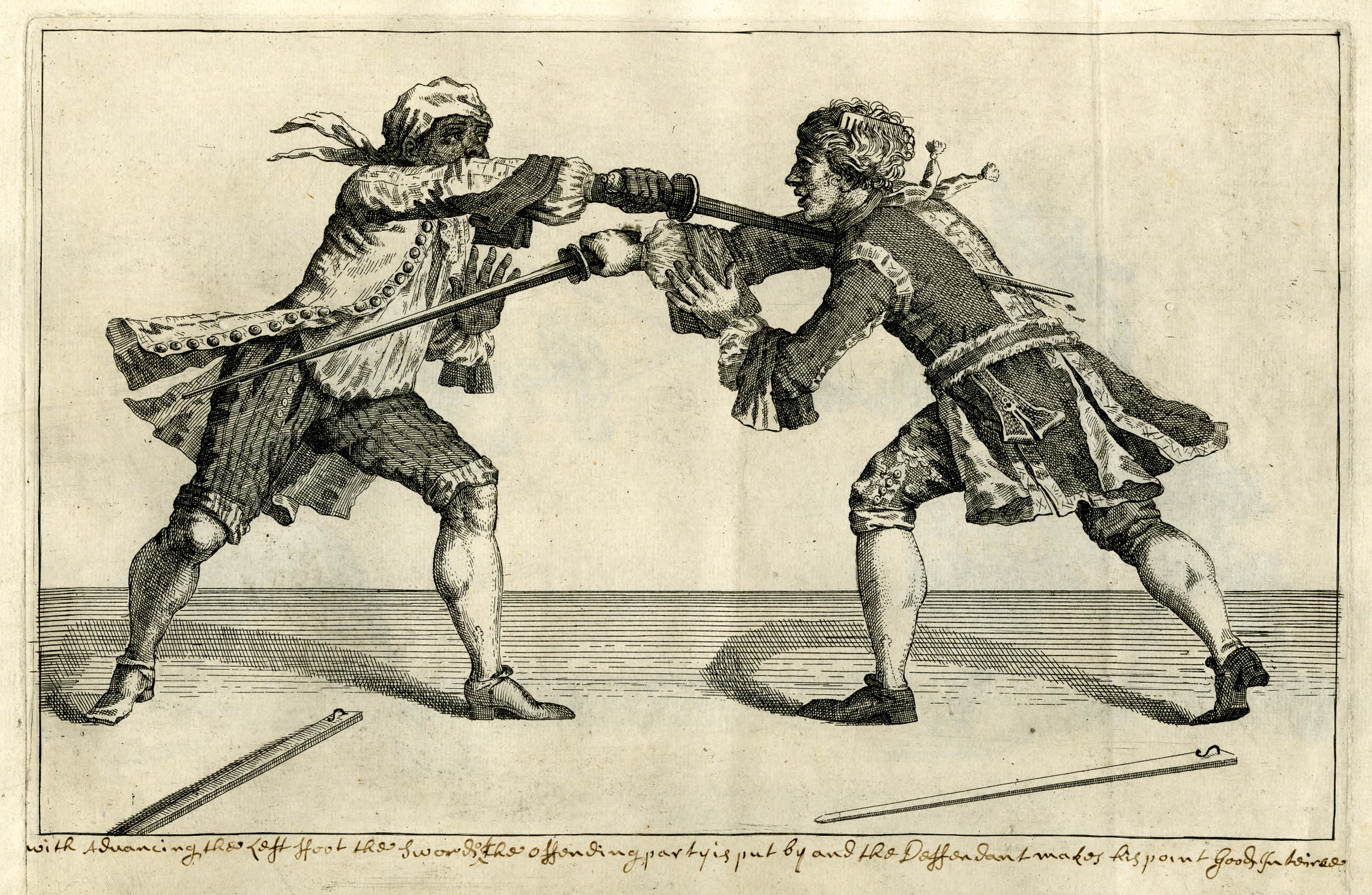
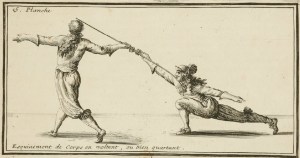


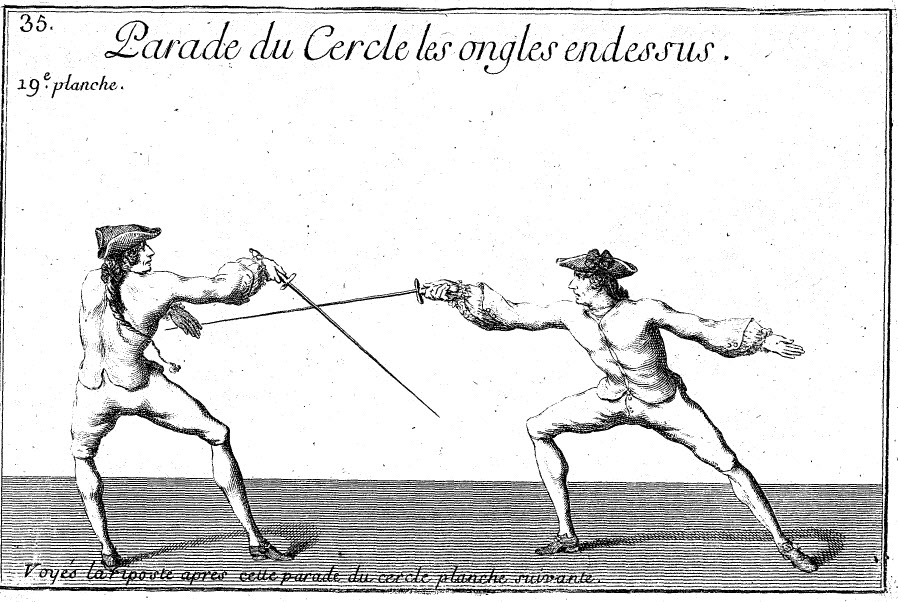

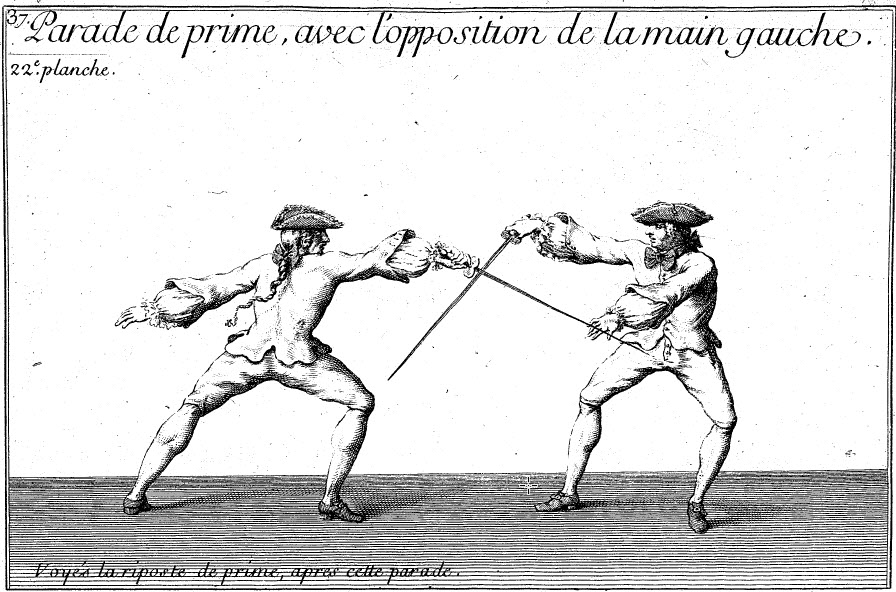


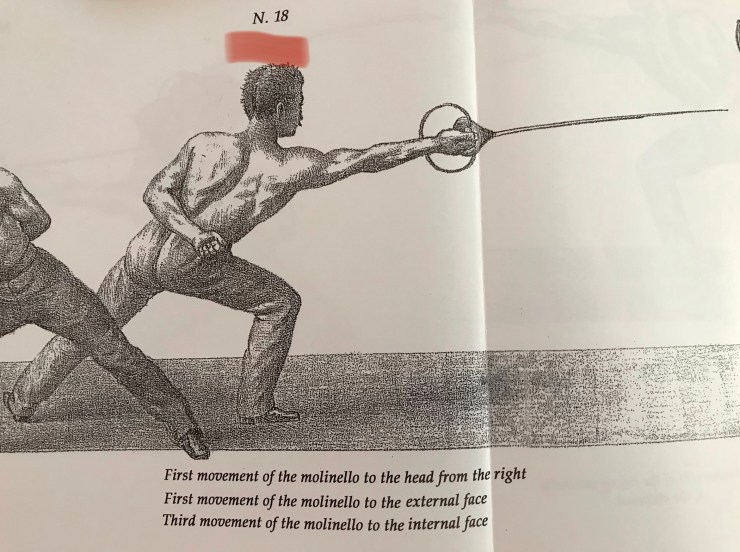

 Capitale Escrime Historical Fencing