Coaching Footwork

Coaches use a variety of types of footwork and positioning when teaching. Watch a typical Olympic lesson and you will notice quickly that the coach isn’t necessarily on guard, but more often than not standing. Rather than advancing and retreating they are walking. The reason for this is obvious, or should be, but a lot of people new to coaching do as they were taught and use the same footwork they do when fencing. That isn’t wrong, and in fact, most coaches will drop into those positions when necessary too, but they rarely stay in stance the entire time. The reason is that it’s fatiguing, especially over the course of the day.

If one is teaching a single solo-lesson, then walking steps and a more upright posture are less critical, but even there it can be helpful. If one is teaching multiple students in a day, then sparing one’s body is all the more important. Fencing is all about repetitive motion, and over time, especially over decades, some of that motion takes a toll. We can reduce wear and tear, as well as fatigue, if we take a few steps to make it easier on ourselves when we teach.

Walking Steps

I’m starting with walking as it can be the hardest to adopt, but also because most other changes follow naturally from it. Yes, walking. It was hard for me initially to walk rather than advance and retreat, not because I struggle with it physically, but because I wasn’t sure just when I should use it. For warm-ups and cool-downs walking is more natural, so start there—if you begin with wrist picks/arrests, stop-cut parry/riposte, disengage and thrust, etc., these are good times for the coach to walk versus adopt a proper guard.

In some drills one may walk as well—context is a good guide. If one is demonstrating aspects of the lunge, then it makes sense to adopt a proper guard, use appropriate footwork, and lunge as one does. This said, the coach in most other cases can substitute walking for all of this—for the lunge, we might just walk a bit faster.

Surface & Terrain

Generally, fencing is an indoor activity, and in Olympic circles almost always, but in historical fencing for a variety of reasons we are often fencing and teaching in mixed environments. If you have the good fortune to work indoors, and have proper flooring, such as wood, the springy artificial rubber stuff I don’t know the name of, or the like, then terrain is less a concern.

If you are outside, however, the coach has to take into account how terrain will affect both how they move and how the student does. I use these opportunities to expand what a student might find comfortable. Practice on gravel, sand, grass, blacktop, or concrete will test one’s mobility, balance, and endurance. Work accordingly. So, if your lesson is on a slippery surface, work on tighter footwork (cross-steps are good), and shorter lunges. If on super hard surfaces, such as concrete, make sure you include more frequent breaks, and depending on the type of fencing, limit anything that will mean more concentrated impact. When on concrete, I do not include as much footwork in the warm-up portion, for example.

Ambidexterity

Not everyone develops the ability to fence with their off-hand, but it’s something I encourage. Not only will it help you as coaching those in class who are in the minority handedness-wise, but it also provides the coach a break. When the dominant arm starts to tire, one can switch. After a time, it’s easy to forget which side one is using, and in that case changing more regularly can help balance out things.

Being able to move, to use footwork with the opposite side, also helps. The muscles etc. engage differently, and allow those on the dominant side a chance to work less strenuously. As a perk, one is far less likely to develop one side of the body overmuch.

Breaks

It may be obvious, but the coach shouldn’t be moving, let alone fencing, the entire time. Take breaks. It is not always easy to do, but they’re vital to focus and the longevity of one’s teaching career. We are not necessarily conditioned to do this; often in fencing we’re under pressure or feel that we are, and so will push on when we should not. To use myself as an example, a few years ago at a weekend coaching clinic at Halberstadt Fencing Club in San Francisco, Maitre Handelman approached me and told me “Take a break.” Both myself and the other not-young instructor had been going all day, and it was starting to tell in how we moved. We sat down, mutually lamented the horror of aging, but we did as ordered. I don’t think I could pick one thing that Matire Handelman shared as a favorite kernel of wisdom—he’s a consummate teacher and one of the best I’ve met—but this aside has stuck with me. Until recently, I was teaching every day, and had I not followed this sage advice, I’d be in worse shape than I am.

Take breaks between lessons, take them between classes. Right now, with only a three-hour block to teach on weekends, there is no gap between the three sections. So, what I do is use the footwork drills we start with to rest. In a class, and mine are mercifully small, the coach normally circulates between pairs as they work through drills, and depending on the walking surface this can be a long time to stand. When you can, sit. When you can, stretch.

Pacing

Just as we can with traditional fencing movement, we can speed up or slow down when walking. I was surprised at how much walking can affect distance, but it can, so some adjustment may be required in order to chase a student or retreat in turn if walking. This is stating the obvious, but it’s worth mentioning because if we’re not mindful about it students attacking can be in grappling range super quickly, and in attacking them it’s easy to feel like they’re sprinting away from us.

Benefits of Coaching Footwork

To explain this I’d like to point out, again, that fencing is one of those pursuits that many people pursue into their later years. This isn’t just as participation or a movement exercise–there are competitors who are elderly; coaches who teach all the time. They FENCE.

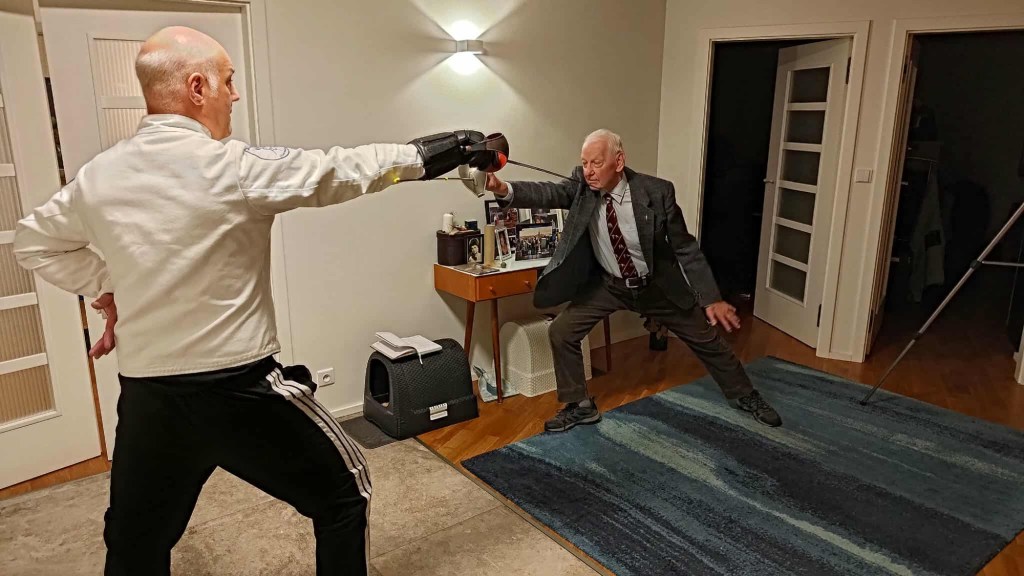
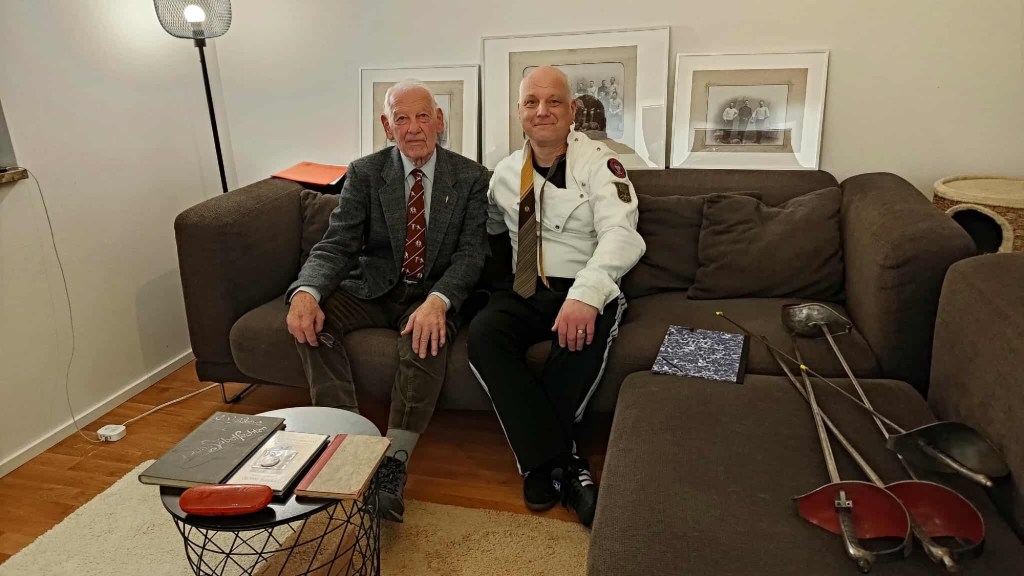
The reason they are able to do this is, no doubt, partly owing to the luck of genetics, but it’s also because most have taken care of themselves. Even if you come to this late, as I did, it will save you some hassle down the road. Having had the pleasure to learn from and compete against people decades older than I am, I know firsthand just how formidable these folks can be. The worst thrashing I ever experienced in competition was against an 80 year old man when I was 23. Al Couturier, who at the time was in his 70s, enjoyed turning on the speed during lessons as we cooled down–soon as we saw the smile in his mask and his arm take on a life of its own, we know we would be parrying like mad. It didn’t matter–he got us each time. Maitre Calvert was in his 90s when I worked with him, and would sometimes, in foil, pull off a behind the back shot as illustrated in Angelo. More recently, during my master’s exam, I had the pleasure to work with Grand Master Josef Šolc, who is 90, and can lunge a lot farther than I can and recover just as quickly. These elder fencers remind us of what is possible.

We can do it too, if we’re lucky, but that starts with taking responsibility for ourselves, setting a good example for younger fencers, and in managing our time, bouting or teaching, well.

Some News

An old friend and fencing comrade, the excellent Jon Brammer, pointed out that I had mentioned but not followed up upon the master of arm’s examination I took in Prague. Apologies.

While happy to write about fencing, I find it difficult to write about myself, so I’ll be brief and say that I passed and share some photos.

Anatomy (of a) Lesson

A major benefit of study and review is the pleasure of reacquainting oneself with ideas and practices that one knows, maybe even relies on all the time, but which one less often articulates or thinks of the way a text might explain them. I should rather have titled this post anatomies of the lesson as in fencing there are actually a variety of lesson types. This is a topic I’ve covered in various ways before, but it’s one worth revisiting and/or tackling from different angles.

In my case, accidents of the environment in which I teach have led me to extend the duration of the usual lesson, and when I’m prepping for a more typical length of time, I’m sometimes painfully reminded of this fact. Living in a relatively rural area, a lot of my students drive in from the city or other areas, often 45 minutes to an hour away, and given the time, expense, and hassle of travel (highways here can be pretty jammed), the usual 15-20 minute, maybe 30 one often gets from a coach at a salle seems disproportionately short for the effort. I normally teach in hour blocks, but this means stretching out the 15-20 minute lesson rather than cramming the hour full of material. It means more time for drill, to explore specific actions and ideas, and, time to discuss what we’re doing.

An hour lesson is not normal, least, not in most settings. Every master with whom I’ve studied expected (if they did not outright demand) silence during the lesson. If they asked a question, one responded, otherwise one remained quiet and focused. The single greatest reason for this was time—they have a lot of students to work with and little time for lengthy discussions. Some of them, happily, are happy to talk about things or answer questions out of a lesson. Before this sounds extremely old-fashioned and doctrinaire, it might help to remember that most masters or their provosts giving lessons are giving multiple, even many lessons, and often within a short window of time. Even at those salles that are open all day, a coach may teach dozens of lessons, at all levels, and they need breaks.

In addition to time and numbers, another reason that lessons tend to be short is retention of material—people can only take in so much information. Fencing is as mental as it is physical, it’s a complex of thought, action, and expression in space, which can vary in tempo, speed, and distance. It’s a lot. To add too much to a lesson is to make the lesson worthless. Thus, one reason for different types of lessons.

Types of Lesson

Warm up:        these are often mechanical, and maybe most often used before competition. It’s a way of warming up the fencer. Simple attacks, parry-riposte, counterattacks, maybe even actions they tend to favor might be the topic.

Teaching:        this type introduces new actions or ideas, or, helps the fencer perfect something that needs work.

Options:          in this version, one uses actions the fencer knows, but in different situations. The coach may initiate action, but the student might too. Sometimes both will depending on the topic. There are many things one can vary to explore the material—one can vary timing, distance, speed, type of footwork, initial action, final reactions, etc.

Bouting:          these lessons tend to be used more with intermediate to advanced students, though there are ways to modify them for the less experienced depending on what it is one is covering. [1] Often, the coach will make some action a few times, and give the student opportunities to respond appropriately. There are a variety of ways to do this:

  • Blocked Exercises (what I refer to as “Coach as Pell”)
    • Blocked Exercises with a Simple Reaction
    • Choice Repetition (more like an Options Lesson)
    • Surprise or Switching Actions
    • Foreseen vs. Unforeseen
    • Coach or Student Initiated

What type of lesson we employ depends on the student’s level of training, the weapon they are studying, and something often left out of the mix, that student’s natural inclinations and strengths.

The demands on the coach are, to be honest, significant. This is one reason that there are traditionally three coaching levels. A moniteur d’escrime, for example, often teaches fundamentals of technique and footwork. In the US, much of the training for a moniteur centers around coaches who teach at small community clubs or school programs—most often these are coaches introducing students to fencing and giving them a solid grounding in technique and tactics. A Prévôt or Provost, is similar to a master, but is a coach who focuses mostly on training fencers rather than coaches. A Maitre d’armes or Maestro di Scherma in Italian, is normally a coach with long experience and able to teach not only fencers of all levels, but importantly, coaches as well. What they do will depend largely on the size and purpose of their program and where they teach.

Not all levels of coach will teach all types of lessons. It tends to be compartmentalized. Why people fence, and the degree to which they dive in, determines a lot about their coaching. For me, I have some dedicated students who want to learn all they can, but I also have some for whom fencing is just one of many hobbies. Some work with me for years, others for a few weeks. [2] I do my best to help each meet their goals, whatever they are, and I’m also lucky to work within a network of other coaches who can further the study of my own students. Locally, there are several historical clubs as well as Olympic clubs, to which I sometimes direct students. [3] I also work with two international organizations: I represent and teach the curriculum of my home salle, Barbasetti Military Sabre (since 1895), based in Prague, Czechia, and I have the honor to work with three masters, two in Canada, one in the US, who head Storica Defensa. [4]

What Lesson When?

I teach in two formats—classes and individual lessons. Both are challenging and while there is overlap, the differences shape each one. For individual lessons, which not all my students take, the first might be an assessment lesson or a teaching lesson. The former we use to gauge the level of a person with previous experience. It varies—some fenced ten or twenty years ago, but remember a lot; some are active competitors now. What we end up covering moving forward is largely built on the conclusions reached in that initial lesson. In the latter, a teaching lesson, it either starts from scratch or from the next logical step in an experienced fencer’s progress. It takes considerable training and experience to assess any of this with accuracy.

Once a fencer has command of the fundamentals, so once they can move comfortably, have decent blade handling, and a good grasp of the basic tactics to date, we start to explore new and more advanced material. These lessons might be teaching or option lessons; sometimes it’s a mix of both. It is not often I give warm up lessons, but I do when assisting fencers at events. Bouting Lessons, on the other hand, I use quite frequently with my advanced students. Over time, it should look and feel like a bout might in the salle or in competition. This lesson style in particular requires an ability to calibrate not only what one throws at a student or responds to, but how, in what tempo, speed, at what distance, and with a thought for any follow-up action if applicable.

Adapting Formats

How does one take one of these lesson types and expand it for an hour? Well, first, if you don’t have to do that, don’t. It’s better to stick to shorter lessons if at all possible. However, if like me, it’s the fairest option for a long-distance student, then pacing is everything. I literally stretch out the normal format.

In the first ten minutes or so, we warm up—this includes stretching, footwork, and some basic actions such as parry-riposte, simple attacks, disengagements, maybe stop-cuts or thrusts.

Next, we spend 15-20 minutes on the topic of the lesson. It can be tempting to try to cover a lot in an hour, but don’t—keep it simple. Find an action, technique, and/or tactic to focus on and a few permutations following from that basic topic. For example, maybe the topic is attacks by coulé or filo, by graze. Depending on the student, I might demonstrate it first, then have them do it. That might be all we do. If they have covered it before, we add to it. First, we switch roles—if I have them attack using it first, I then have them defend themselves against it. Second, and again, dependent on level, we build from there, maybe add a feint after the initial graze, then a disengagement. We then reverse roles again—a student needs to know how to defend as well as use an attack, and in covering both their understanding deepens.

For my advanced students, the next portion of a lesson usually follows whatever we explore in a teaching or options format; the purpose of it is to allow them a chance to work on and perfect what we covered in real time and depending on level, in as real a fashion as possible. [5] Using the previous example, we would bout and explore using the graze in real time. Initially, especially with someone new to it, I set them up to make it—this may be very obvious, but it helps train them to see what it is they are looking for, and, when to use it. Next I might make it a bit more difficult, or, vary the set up. I may remove the set up, in which case they might try to create an opportunity to use the action, or, decide on a different approach. My job is to help them learn how to do that. In this style of lesson, the coach must act not only as a teacher, but a fencer capable of presenting any potential skill level the fencer may face.

We end with a cool down, normally for sabre either stop-cut/parry-riposte or arrests, or, parry-riposte.

There is ample opportunity for students to ask questions, to explain aspects of what we’re covering, and make corrections. It is vital to make it safe for students so that they’re comfortable asking questions—with an hour, we have time. In a class or shorter lesson I will announce that I’m happy to chat in more detail once we’re through with things. Explanations must be clear, germane to the topic, and constructive. Corrections, the topic for another time, should be given compassionately, without emotion, and focus on the issue. It is never okay to disparage or strike a student, practices not uncommon when I was coming up. It’s unnecessary and unhelpful—our job as coach is to build them up, not tear them down.

In historical fencing, many more experienced students may dabble in other weapons, though this is as true in the sport. [6] When this is the case, and if the coach actually knows the other weapon, comparisons across them can be helpful in explanation, even correction. Some of my smallsword students study rapier too, and so when applicable we may cover how something is handled in each case. Ditto sabre and broadsword, Radaellian or contre-pointe. The caveat here is the coach truly having the familiarity and depth within different weapons to make those comparisons constructively. “HEMA” is full of people who think they know more than they do, and so students must be particularly wary. It goes beyond the purpose of this post, but I have met a lot of students coming from schools where the coach acted as if, maybe even believed they knew a subject, but clearly did not. One advantage to being source-based is fact-checking is relatively easy, assuming one reads, and, reads widely. This is all the more true when one knows credible coaches that teach weapons one does not. When I have students interested in longsword, I send them to the coaches I know that are worth their time—I’ve dabbled in longsword, and could teach the very basics, but beyond that it would be irresponsible. It is far easier to send them to my colleagues, and, better for them.

Use What Works

Not all students need all lesson types. That’s okay. It’s best to find out what they want, then tailor things to help them get what they seek. One of the tasks I’ve enjoyed most the last few years is helping other instructors learn how to use these lesson formats. As a student myself, it helps me too, because like any coach I can always improve and will always need practice. If I’m lucky, and live to be the same age as some of the masters under whom I studied, maybe I’ll provide lessons as fluidly and expertly as they did. For now, each lesson is study for me as well as the student, and that seems fitting to me.

NOTES:

[1] With newer students, a “bouting lesson” may consist only of repeating the same simple action, both as attacker and responding as defender, but in real time as appropriate. Every drill, to the degree possible and in alignment with that student’s skill level, should emulate the conditions of an actual bout best it can.

[2] Turn-over in fencing can be high, especially if one teaches children, and this is normal. Not everyone ends up loving it, and that’s okay. We do our best to represent the Art and make it fun, and hopefully, to project the values that accompany its study. We do not all agree about those values, but if the Art teaches us anything, it is that it belongs to all.

[3] I teach historical fencing, but have students that either wish to study Olympic or already do. So long as their coaches are good, great—do both! It will only make them better fencers. This said, for beginners it’s best to stick to one track, get it down well enough, and then study the other. Far less confusing and better chances of success.

[4] For Barbasetti Military Sabre (Since 1895), see https://www.ars-dimicatoria.cz/en/barbasetti-military-sabre-since-1895-2/ ; for Storica Defensa, the facebook page is the best source of information at this time.

[5] Outside of some very basic mechanical drills, I am not a fan of any drill too divorced from the requirements of an actual bout. Drills, ideally, however simple or complicated, should be snapshots of the actions and exchanges fencers actually make.

[6] It has always varied really, but there are many “three-weapon fencers” in the Olympic sphere. There are also some specialists. Changes in competition over the last thirty years have trended towards specialization, but it is not the rule.

Historical Fencing Coaches Clinic–Post-Event Thoughts

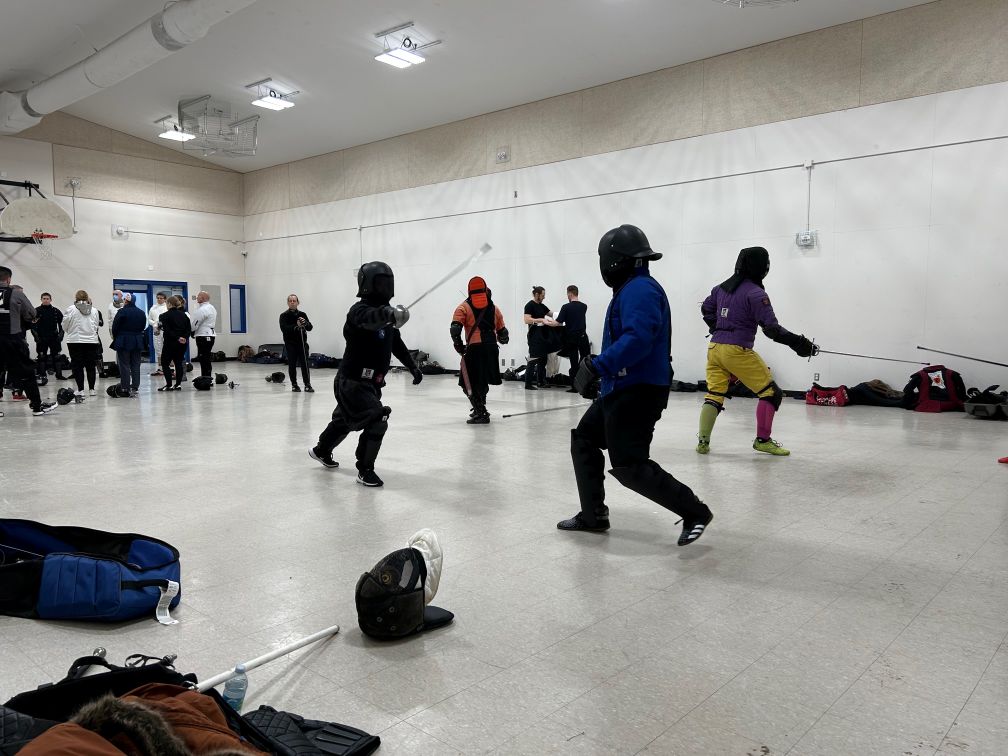
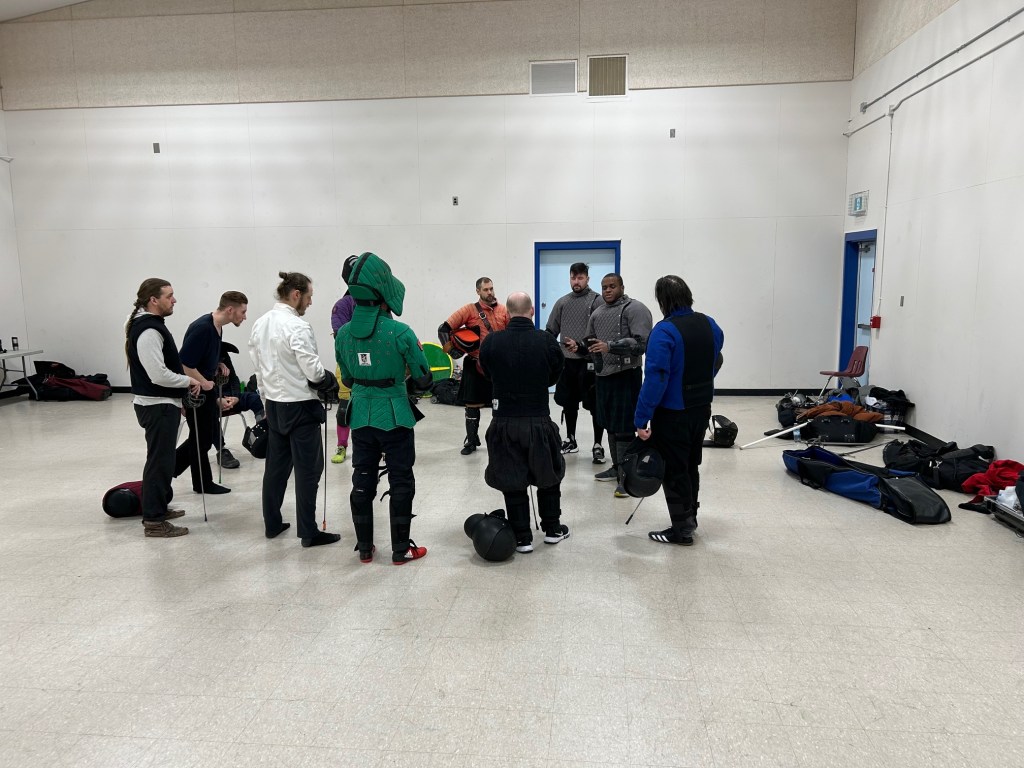
I had the great pleasure to visit old friends and make new ones a few weekends ago in Winnipeg, Canada, at the Historical Fencing Coaches Clinic sponsored by Storica Defensa. I’ve been to a fair number of coaching clinics, many Olympic, far fewer historical, but this one stood out, and no, not just because I am a Storica Defensa coach. This two-day event showed what is possible, and, perhaps a better path than typical in historical fencing.

In part, it was the mix of coaches, both in terms of experience and position, and in terms of background and focus. We had two masters from the excellent Sonoma Military Masters’ Program, David Coblentz and Eric Myers; we had Prevot Tim Guerinot from Texas; and we had two of our SD coaches, Xian Niles and myself, representing our organization. If I had any complaint it was that time demanded we have two classes run at once–I really wanted to take each one, start to finish. Even recovering from RSV and nursing a damaged Achilles’ tendon, which meant I wasn’t fencing, didn’t allow me enough time to devote to each class as they were running.

It’s all in the Details

Granularity. This was the leitmotif of the event. With many attempts in historical circles to improve fencing, from judging to technique, what’s missing is granularity, the specifics, all the step-by-step movement and thought behind all that we do. Much as it pains me to say it, this is often due to the fact that those teaching possess only a surface understanding of what it is they’re trying to teach. To the untrained eye, for example, a cut-1 in broadsword or a disengage in smallsword look simple enough, but to make either well and with consistent effectiveness demands deeper understanding, at least if one is facing an opponent better than oneself who will take one apart for the slightest mistake.

Despite the triumph of ignorance now prevailing in my nation (what sensible nation keen for equality dismantles the very agency designed to oversee that?), education and learning are difficult. The moronic maxim “those who can’t, teach,” underscores just how poorly people understand how difficult teaching is.

A lot of people can: but few can teach.

There is also great merit in incorporating different teaching and learning styles. Not everyone learns the same way, not everyone teaches a topic the same way. To have classically trained masters as well as people more on the coaching side only strengthens the approach, especially if well-organized.

Coach Xian Niles on “Strategos”

The Classes

Space and reader patience doesn’t allow for a full description of the classes, but here are the topics:

SAT
9am
Maestro Eric Myers: “Better Fencing through using and Exploiting Fundamental Concepts of Fencing, Part 1.”

Coach Xian Niles: Strategos

11am
Maestro David Coblentz, “Setting up Students for Success”

Prevot Tim Guerinot, “Intention, Provocation, and Second Intention”

2pm
Coach Jim Emmons, “Text & Technique–From Description to Practice”

SUN
9am
Maestro Eric Myers: “Better Fencing through using and Exploiting Fundamental Concepts of Fencing, Part 2”

Prevot Tim Guerinot, “Intention, Provocation, and Second Intention, Part 2”

11am
Maestro David Coblentz, “Helping Students make Good Decisions”

Coach Xian Niles, “Am I still Doing the Thing?”

2pm
Coach Jim Emmons, “Concluding Remarks” [1]

The success of this year’s event has encouraged us to make this happen again, and if possible, often. We haven’t settled on a yearly or biannual schedule, but one way or another, the value of this type of meet-up was obvious in the marked-improvement in the attendees even over two days.

Maestro Myers Prevot Guerinot Maestro Coblentz

Why this Matters

Historical fencing is not so much a community as it is a collection of micro-communities, and so when it comes to any future forecasting there must be some qualification. I cannot speak to 99% of the community–I work with a small fraction of it. This said, for that sliver of the pie, I have some ideas for where it looks like we are headed.

SD, because it doesn’t seek ownership or control, will continue to reach out to recognized authorities for help in improving coaching and fencing. Many of these people may hold a master of arms, many will not. Expertise comes in different forms, and the ability to recognize that, and harness it, is what makes an organization like Storica Defensa both flexible and strong. Moreover, some fencers respond better to certain teaching styles, and since our goal is student and coach success, this means including any skilled fencer with sufficient depth and knowledge to assist us.

Not everyone cares about qualifications. Worse, many ascribe the wrong set of rubrics to what they call qualifications. Again, this is not just my sorrow and frustration over the anti-expert and anti-intellectualism so pervasive in the United States–it is painful and terrifying watching how this anti-expertise idiocy is helping destroy the nation we were and might yet have been to create a plutocrat’s playground.

It is also a known fact within “HEMA” that many favor things like “HEMA Ratings” or the over-confidence of play-acting scholars. They can do whatever they like, but few such people will get an invite to help us, because failure to understand the relative nature of tourney success and aping actual scholars only takes one so far, and, not as far as we wish to go.

This said, there is a LOT of talent in the wider community, but few truly effective means of harnessing it. Different foci, geographical distance, jealousy, arrogance, and even the innocent failure to understand that there is more to all this than one sees do much to prevent not only better unity, but also the sort of improvement we see in better developed branches of fencing, Olympic most of all. THIS is why my comrades to the north created Storica Defensa–we need it.

As a final word, but an important one, it is vital to note that SD is not a vanity project, certificate factory, or attempt to overthrow any other viable and worthy program. Over time, as people see the events we put on, as they see how we run tournaments, how we approach teaching; as they see how their coaching improves, how their students improve; as they see the caliber of fencer we ask for help, as they see the maestri and other experts we have asked to oversee and guide SD; all of these things will be the proof of that. [2]

There has been, sadly, considerable suspicion around what we are trying to do, and I’m happy to say none of it has any foundation. We’re literally doing what we say we are doing. It says a lot, and little of it positive, that such suspicion so naturally arose around an honest effort to make things better. In some cases, personal beef with one or more organizers, fear, and concern for turf explains these concerns, but I suspect a lot of it too is just curiosity poorly expressed.

I know I speak for all of SD’s organizers and coaches when I say this, but let me assure you that

  • we are not trying to overturn your program or replace it
  • we are not granting ourselves titles, authority, or certification
  • we will not tell you how to run your club, curriculum, or what events to attend

We are, though, doing the following:

  • working to improve coaching in historical fencing
  • working to improve fencing in historical fencing
  • working to create a viable, varied, and robust program to train coaches irrespective of any other program with which they may be involved
  • working to build bridges internationally and within North America

NOTES:

[1] I had a class prepared for the afternoon slot on Sunday, but one part of teaching is reading a room. People were fried. At least one person, no kidding, was on a knee, head on their hand, looking like they needed a nap. There was also nothing in what I had planned to do that had not already been covered in depth by the other coaches.

So, I opted to scrap my class and sum up–this included a very brief reminder of how we can approach a given technique, in this case a beat attack, and build not only possibilities from it technique-wise, but also tactically. I could tell from peoples’ faces that they were a little confused that I had scrapped my class, but I lack sufficient vanity to put tired, mentally exhausted people through another in-depth class when what they really want to do is relax, free bout, or hit up our guest coaches for lessons. And, it turned out, that Javier, one of our attendees from Calgary, was celebrating his birthday that Sunday and wanted birthday bouts.

I never really know how well or poorly a class goes–few people offer a lot of feedback–but I stand by the decision.

[2] SD has approached and enlisted the help of several well-respected, certified experts to assist us as we grow. We have the honor to have the experience, knowledge, and guidance of:

Maestro Michael Knazko, Ars Dimicatoria/Barbasetti Military Sabre since 1895, Prague, Czechia, EU [Chief Advisor to SD]

Maestro Francesco Loda, PhD (x2), Cinecittà-RFA-UniTeramo, Rome, Italy, EU [Advisor]

Maitre Steve Symons, former President and CEO of the Canadian Fencing Federation (2004-2012), Winnipeg, Canada [Advisor]

Fencing While Injured and/or Old

Wound Man from the Feldtbuch der Wundartzney of Hans von Gersdorff (Strasburg, 1519)

In two separate conversations in the last twenty-four hours the topic of martial arts, combat sports, and injury has come up. My spouse’s uncle, yesterday, remarked that when he was a teen studying TKD they viewed the semi-ambulatory middle-aged coaches as old men—now much, much older, he realizes that they were not old really, but battered and damaged from hard-training and fighting. This morning, I had a chat with a friend and college, Matt L., in California, about avoiding the very thing my uncle in law noted—early decrepitude thanks to martial arts. As someone navigating that very issue I have some perspective, and some advice for those not yet there about how to avoid, or at least forestall, the physical consequences of our training.

This is a post I’ve started a number of times, then put aside. It’s not that I don’t know what to write, but that there is so much to say, and, so little that most people will find motivating. I was no different, so if this sounds judgmental, know that I’m including myself in the censure. When I was in my teens and twenties, I could do things, and so, I did. I fought in a collegiate tournament on a sprained ankle that I taped up; I didn’t wait long enough to start training again after a slight tear in the meniscus of my right knee or years later after a chance stab wound to the same knee, one that nearly severed the LCL; I didn’t take a break, but taped and armored up my torso after a missed parry meant two cracked ribs. These were not smart choices, and, they’re choices that in one way or another I have to manage now.

Injury & Recovery

If you are injured, be it while fencing or in some other activity, take-a-break. Let yourself heal. This can be especially challenging when one is an active competitor, because the fear of losing ground, of any break affecting one’s standings, rank, or success is strong. Add to that the desire not to miss favorite events and it’s a double whammy.

You have time, use it. One “can” fence on injured joints or strained muscles, but one shouldn’t. I’ve likely stateed this on this site before, but we pay for all the fun of our teens and twenties in our forties and fifties, so, the better you manage yourself when younger, the less you’ll suffer when you’re older.

A good coach, by the way, will not only support a break to heal, but actively encourage or even order it. I’ve worked with ones who said tough it out, and, a few who told me to stop and take a break. Maitre Delmar Calvert, for example, when tennis elbow started plaguing my right arm again, told me to take a break and go to PT. Maitre Handleman just a few years ago told me and one other grey-bearded chap to take more breaks and to use walking steps during a weekend coaching seminar. This is good, proper coaching, and, good advice.

As a younger person, I fought competitively for several years in ITF conference TKD, and, at a time where the pads we had were good, but only so much. A smaller glove could easily reach through headgear; the footpads we wore had no sole, so a side-kick landed as it would in earnest; and we had no chest protection. By the age of 13 or 14 I’d had two ribs and my nose broken, never mind the damage I inflicted on people the same way. When a fellow student, a bit over-zealous, broke my nose in the practice right before a tournament, my coach—who was excellent—was more worried about my mother freaking out than the fact I’d been injured. It’s fighting, and well, we get hurt sometimes—it’s “normal.” He and another coach set my nose (NOT fun), told me to go and change out of my dobak (which was covered in blood), and to keep the paper-towel under the nostril inside my lip there until it stopped bleeding (a great way to stop a bloody nose by the way).

Muhammad Ali, a hero of mine since childhood, was “the Greatest,” but paid dearly for repeated punches to the head

We accept injury as normal, but should we? Would it not be better to prevent it? I’m not sure I have a great answer or solution. On the one hand, I’m grateful for having learned early how much punching and getting punched can hurt—it no doubt helped me avoid trouble I was likely to be in otherwise. On the other hand, as a parent, well, I don’t like seeing any children hurt, especially when it isn’t necessary. My solution has been to focus on the mental side of all this, to help students cultivate mental toughness, confidence, calm, and wisdom to avoid trouble if at all possible.

Time & Repetitive Movement

Even if you are lucky to escape injury, years and years of repetitive actions take a toll on us. At 45, I started having an odd pain in my right leg and so saw my doctor. She ordered x-rays and other tests, and turns out my right hip was in the early stages of arthritis. I thought that was crazy; “I’m only 45!” was my reaction, but she then reminded me that I had been lunging on that same leg since I was 16. How many thousands and thousands of times had I likely lunged? Never mind other traumas to that leg.

It was the same with my elbows—Radaellian sabre mechanics use the elbow as axis, and even my Olympic training retained vestiges of this approach to cutting. I have tennis elbow in both arms, ironically because in 2001 I was in a serious car accident that all but destroyed my right shoulder, and so I started training as a leftie.

Neither of these issues arose from anything improper or stupid—they are the result of activity and repetition. While some degree inevitable, depending on one’s genetics and training, there is a lot we can prevent by taking simple steps. For example, had I rested my elbows longer; had I continued my PT exercises; had I taken better care of myself I wouldn’t be in as bad a condition as I am. I’ve been slightly wiser with my hip, though it has cost me some fun—I use more walking steps than fencing stance and footwork when teaching, and, hardest of all, force myself not to do things I actively want to do. At Rose & Thorns earlier this year, I desperately wanted to bout with people, but with my hip acting up after a misstep while teaching, I know I’d be on a cane, again, if I did. Missing out on the fun makes this a lot harder, but, if I can attend in 2026, hopefully that choice means I will be able to fence people.

Be Kind to your Future Self

Many of us want to fence into old age, right up until we drop, and generally we can IF we take care of ourselves. Nothing I say or write is likely to change anyone’s mind—I didn’t listen well when I was 18 or 28 either—but I’ve reached the age where it’s now my turn to take up the mantle and sound like Chicken Little.

If you’re injured, take a break and heal. If you are fencing a lot, warm-up, stretch properly, and after your workout cool down and maybe stretch again. If you are doing stupid things, and let’s be honest, at some point many of us have, at least consider first what that choice will look like in twenty to thirty years. I can’t say for sure that twice jumping out of a second-story window also contributed to my hip issues, but… [1] Fencing with seriously garbage repro sabres in the mid-90s while understandable given interest in historical fencing, meant that injuries from them were a magnitude higher than with an Olympic or Schlager blades. Neither of the latter ever cracked my ribs, sunk into my knee, or broke my fingers protected poorly by a brass knuckle-bow. The truth is the training I received, particularly from Maestro Al Couturier and his assistants, was perfect for studying Radaellian sabre, and the cutting dynamic doesn’t need a 100% accurate tool to work—one can use an Olympic sabre, something slightly heavier, or a stick. It’s the mechanics, not the tool. [2]

Ideally, in addition to fencing one is also exercising for health. This not only contributes to your general condition and well-being, but will aid you in preventing injury. A solid program for cardiovascular health and an appropriate weight-lifting/condition regimen only help. [3]

To the examples of Masters Albert and Delmar already mentioned, I’d like to point out some of the masters I’m working under in Barbasetti Military Sabre since 1895, Josef Šolc, who is 89 years old, has fenced for 75 years and is still going.

Exhibit A: Me

In much the same way as Sy Sperling was both president and a client for his “Hair Club for Men,” I’m not just advocating that you take care of yourself, but I’m a living example of what happens when you don’t. [4] I’ve been better about it in the last decade or so, but consider how late that is—I was in my 40s when I finally started paying attention to the good advice I got from coaches, maestri, and health professionals. There is no round-trip ticket to yesterday, so I can’t undo that or go back and smack sense into my younger self, but for many of you it’s not too late.

You can avoid being the middle-aged person often on a cane, or sitting out from the fun, or taking extended breaks to fix something you made worse by not taking that break earlier. We often say that the most difficult opponent we face is ourselves, and this can be as true on the piste or in the ring as it is outside of them. It will take willpower, discipline, and strength to avoid some of the pitfalls I’ve outlined here, but it can be done. You’re future self will thank you if you start taking care of yourself now.

NOTES:

[1] Details are unimportant, but needless to say jumping out of windows, for whatever reason, if it can be avoided, should be. When I talk about being young and dumb, I speak from experience 😉

[2] This is an important point and one often misunderstood, despite the fact that most of the historical fencing community is aware that people in the past often trained with sticks. The value of using a period-weight trainer isn’t that one is required to do things correctly, but that it helps us understand why certain aspects were necessary. For example, many cavalry sabres, especially mass-produced trooper blades, are front-weighted. It’s not only harder to use the wrist to move them, but it’s a less effective way to use the weapon. Radaelli’s innovation provided a better approach. One can, however, use the same elbow-as-axis mechanics with a sport sabre or stick.

[3] Beach muscles (or would we say Instagram/Tiktok now?) are not generally helpful in fencing. One needs strength in some degree, but the real value is in muscular support of joints, the cultivation of stamina, and the side benefits for one’s general health.

[4] Cf. 1984’s commercial, https://youtu.be/xeFoLdeqG1I?si=wW-4jlN131y13SgP

Manitoba Highland Gathering Tournament (22-23 June 2024)

Manitoba Highland Gathering Tournament, East Selkirk, Manitoba, Canada, 22-23 June 2024

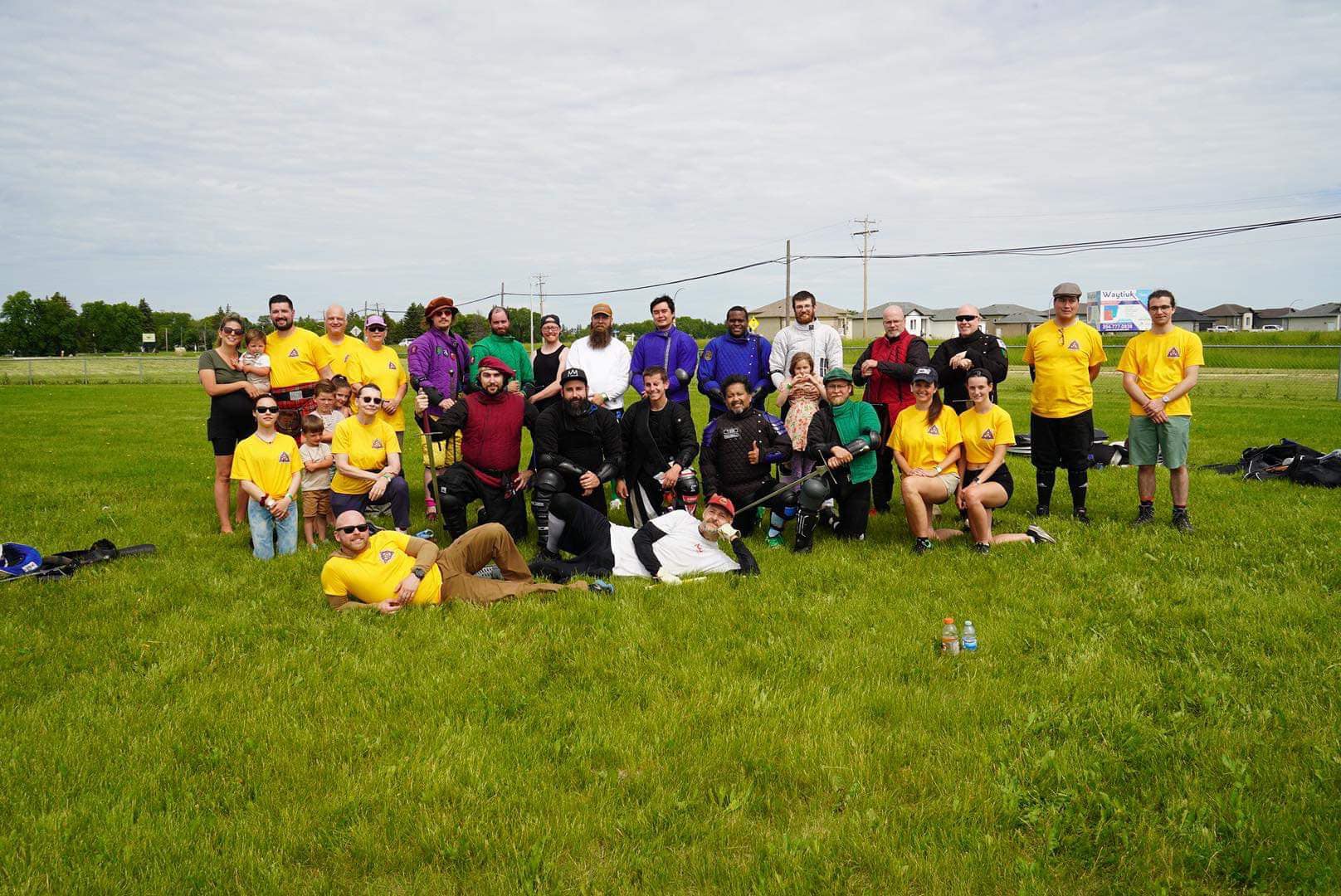
This past weekend, I had the great privilege to attend and assist my Storica Defensa colleagues in the various tourney pools at the Manitoba Highland Gathering in East Selkirk, Canada (held June 22nd and 23rd). This two-day event included longsword, veteran’s sabre, broadsword, and women’s smallsword. Despite some truly warm weather, some swampy fields, and a few moves between gyms, everything went amazingly well. The MHG Tournament marks the seventh SD event and serves to add another data point in support for the approach we are taking to competition.

In terms of safety, no one was hurt. Not one. To date, there have only been two minor injuries in SD events, both involving a failure in gloves to protect forefingers. This is more a kit issue than one of safety culture, and no such injuries occurred last weekend. We place heavy emphasis on safety and no hard-hitting is permitted. So far as I know, not one judge had to remind anyone about force levels. Club members, especially Eric Elloway, army veteran and first-aid certified, brought a giant cooler of water and officials pushed hydration hard. In fact, my friend Xian Niles noticed I was starting to stare off and had me get water, then go sit in the shade (thank you my friend, that was a wise decision). Best of all, the fencers looked out for one another—on two occasions I witnessed, fencers halted action so their opponents could fix gear.

Very Serious Fencing…

The camaraderie was visible and honestly endearing. Most bouts ended in hugs as well as handshakes, and people were keen to keep fencing post event. This is not to say that the competition wasn’t high, because it was as any clip of footage will demonstrate. The hush that fell upon us all watching some of those final matches… I don’t think anyone made a peep during the final broadsword match between Xian Niles (Niles’ Fencing Academy, Halifax, Nova Scotia, Canada: https://www.nilesfencingacademy.com/) and Zach Brown (Superior HEMA, Thunder Bay, Ontario, Canada: https://www.superiorhema.com/?fbclid=IwZXh0bgNhZW0CMTAAAR0noPMDPX7PaM8kxh8SpQdf-e15Ie53xzsJucV58BZno1pycKsN_r25q9I_aem_yB6MUK3J6OWM7jK68jGjaQ). People were quick to concede points and generally did so appropriately, and were gracious when calls didn’t go their way. If anyone needed gear, another fencer was happy to help. Rarely have I seen so many competitors as generous in assistance to one another as I have here.

The level of skill was high. The pools were designed around Storica Defensa competitive levels as much as possible. Most action was easy to follow, and thus, easy to judge (comparatively speaking—judging is never easy). The timbre of an event, the expectations that are set, do much to determine how an event goes. SD’s rules and expectations are clear in the ruleset, and so from the off everyone was more or less on the same page. In specific terms this means that people knew any hard-hitting would be called out, that fencers were honor bound to admit a hit, and that there would be zero tolerance for poor behavior. We also hit the safety aspect hard. I mean, HARD. To put this another way, these expectations attract a particular type of fencer, and in doing so, discourage those fighters keen for garbage like heavy-hitting, use of the afterblow to gain points, and other b.s. Free-fencing post pools was common, and speaks again to the level of positive interaction—people wanted to keep fencing one another.

Eric Elloway with a beautiful running attack in the vets’ sabre event

Organization is critical to running a good tournament, and it is a testament to the planning Jay and crew had that even with a few hick-ups everything went smoothly. Day one was super hot, not a cloud in the sky, and in the morning the ground was a bit damp; day two we had to switch gyms. In each case everyone just got to work and made things happen. We carried tables, gear, scoring placards, everything, and neither day went late. In fact, on both days we ended in time for people to free fence for hours before the Gathering shut down for the night.

SUMMARY:

The MHG Tournament is growing, and in time I suspect will double in size. It’s not just the fact that winners in each event received lovely prizes—sharps, training weapons, and discounts for gear—but that people were safe, enjoyed the fights, and were eager to socialize afterwards. This event is one I am adding to my list of go-to, must-attend events (the others being SabreSlash in Prague, Rose & Thorns Historical Fencing Symposium, and the St. George’s Day Exhibition of Arms).

Following fast on the heels of another two-day tournament I attended, this time as a live-stream announcer, the contrasts stood out starkly. That first event was large, and in most respects typical of “HEMA” events. [n] For example, I witnessed a fencer injure another—twice. The offender was barely censured, but should have been black-carded, and the victim, though evaluated by a medic, was not taken to the hospital. He should have been as he received a pommel-strike, full on, from a running opponent, and was visibly shaken, never mind nursing a mask-waffle print on his nose. The judging was also poor. The silver medalist in rapier, for example, should have taken gold, but the judges failed to call the action correctly. Many, I found out later, were pretty new fencers.

One of Storica Defensa’s goals is to provide better tournaments, not only safer ones, but better run, better judged ones. In this it is exceeding expectation, and I’m keen to see this develop. True, I have a stake in it as a coach for SD, but I stand by what we’re doing. It’s working.

NOTES:

[n] This was IFG’s Spring Fling, cf. https://www.youtube.com/live/ZUvk5lwEusc?si=2MXmquPiMMjVqaNE. The rapier pools were, by far, far less problematic than longsword and the sword & buckler.

Of Ranks and Cults

Today my friend and colleage, Jay, shared a video response to a concern several fencers aired on a fb page, namely, the problem with cultish programs. This is a real fear and justifiable given the fact that we do see groups who take advantage of members. It’s a shame, but it does happen. That could take many forms–perhaps students are charged for every little thing or to advance; perhaps they are expected to show absolute loyalty to some charismatic leader; perhaps they’re told not to fence with others because everyone but their own club is dangerous, or unskilled, or what have you. These are all red flags.

It’s important to me, and to Jay, because we work within an organization, Storica Defensa, that has already spooked a few people. There are, largely, personal reasons and/or prejudices that explain that, but some of those voices are loud and so we have done our best, all of us, to be as transparent as possible. There is no hidden knowledge we promise to “initiates,” there is no fee to advance, and each of the coaches is not only willing, but eager to demonstrate to potential SD fencers their qualifications. It’s only right we do so.

Moreover, we have been quick to state what we are not. None of us claim to be masters. We are not claiming any lineage, training, or certification we have not earned and/or which we cannot prove. We want everyone to know what they’re getting, and, why Xian and Jay created SD in the first place. Jay says it better than I can (see link below), but SD’s ranks do two things:

  • provide a set of goals, by skill-set, for students to help them improve [this also helps place them with people of similar skill level in events]
  • provide coaches with tools to teach more effectively

That’s it. As I often remind my own students, I didn’t invent any of the things I teach, but transmit what I learned to them. Sure, there are things I’ve added, tweaks here or there or suggestions, but these I always call out as such. None of us will be claiming to have invented the lunge… The why? is easily explained: historical fencing lacks these two things and desperately needs them.

Why Storica Defensa?

[warning: this is a long post, but I wanted to address a few things fully]

On several occasions lately I have been asked about my role in Storica Defensa, and in some cases the same way police might ask a teenager why they’re loitering outside a convenience store. There is some inherent suspicion there, and in this case, for several reasons. First, and perhaps most obvious to the denizens of social media’s historical fencing pages, because one of the founders, Jay Maas, a friend of mine, upset a lot of people with satire initially a little too subtle that aimed at fault lines in reasoning, practice, and interpretation in “HEMA.”[1]  It is not that Jay was wrong in his criticisms—pound for pound he has been correct—but that he ruffled a lot of feathers. Not everyone saw the satire, and so took his memes, comments, etc. as personal affronts. For the record, Jay knows that his previous (key word: previous) approach was not the best, and has made repeated, concerted efforts to mend things with people. [2] In many ways Storica Defensa (SD) is part of that—it’s a way to give back and rather than point out the flaws, address them and work to fix them. Second, and at the risk of upsetting some colleagues, especially those with certifications through either the USFCA or equivalent bodies, there is a sense that unknown or troublesome upstarts are infringing on their turf. Third, SD is new, not well-known yet, and those upset by it or fearful that it may affect their own programs, have misunderstood, and in some cases misconstrued, the purpose of SD.

As a person brought on early in SD’s formation, I would like to address these in turn, and explain from the inside what SD actually is. I do not join anything without consideration. Experience, perhaps especially negative experience, is a powerful teacher. More than once, either through naivete or enthusiasm, I’ve allied myself with people or groups I later regretted having joined. For a local example, some years ago an instructor at one school I attended on occasion, during a particularly difficult time in my life, attempted to humiliate me publicly more than once. It didn’t end well, but as the truth will out, his poor behavior with still others ended up destroying that school and relegated him to the sidelines. We repeat lessons we haven’t learned, and this was, for me, just such a repeat—do not put faith in people or groups who do not have your best interest at heart.

This is to say that I would not back SD if I didn’t believe in its mission or if I took issue with the organizers. I’ve known all but one of the four initial members a long time, and the fourth, Xian Niles, I quickly developed a deep respect for, even before learning of his fencing education. If I had had the least doubt that any one of my colleagues was up to no good or eager to undermine anyone else, I would not have agreed to help.

My Own Involvement with Fencing Organizations

My first exposure to the larger issues plaguing most sizeable fencing associations was with the USFA (United States Fencing Association) in the early and mid-1990s. For several reasons I have never been over-fond of the USFA. First, it’s expensive—especially for younger students. Second, it dropped the ball (along with the FIE) when the “flick” in foil and the idiocies attending electric sabre ruined traditional technique and tactics.[3] Third, it’s myopic in focus: all that matters to the USFA is the competitive world. For the vast majority of fencers in the U.S., being competitive fencers, there is little to no problem with the governing organization. Most of the time it is more or less invisible, there in the background. It works well enough for them, especially if all they know is the post-flick and flat-of-the-sabre-as-able-to-score world. That is fencing to them. [4]

In more recent years, while working toward a certification through the USFCA, I was annoyed to learn—post exam—that I had to join the USFA and jump through other hoops as well. This was not clear up front either on the website or in the test preparation documents. Having to go through SafeSport, while an extra cost, at least is something I can get behind because it’s important—as a coach, and moreover one who works with a lot of children, mostly female children these days, it’s crucial to be a part of the solution and to model good behavior. Everything SafeSport teaches “should” be obvious, but it isn’t and so while ticked to find out about a hidden cost, again, this one I understand.

In fairness, I had good experiences with the USFCA (United States Fencing Coaches Association) up to then, and was disappointed to learn that it was merging with the USFA. On the surface it’s a natural alliance and makes sense, but of the two there was a chance, a slim one, that the coaching wing might, might continue to entertain the idea of a broader view and remain inclusive. The USFA is almost solely concerned with Olympic aspirations and the competitive scene, but fencing is, and has always been, much more than that. Most fencing coaches are not training Olympians, but working in obscurity at the YMCA, your local P&R, or some college campus. The USFA gives next to no thought to them—the USFCA did, at least a little. If nothing else they allowed the late Walter Green to push “classical” fencing classes and viewpoints and allowed obscure coaches like me to participate in classes for my own improvement as fencer and coach.

On the historical side, which is far more decentralized, the “HEMA Alliance,” for example, was a good idea, but like its cousin in the sport world is more concerned with sport (largely longsword) than anything else. They offer an instructor certification course, but it is unclear just who is evaluating candidates, and of course, like the USFA more recently, one must pay to retain a certification after a few years. [5] Given that leadership in the HEMA Alliance has often been people very new to fencing, it raises serious questions about who they think is qualified to evaluate other instructors. Most competitive HEMA is dismally poor in quality so one must question just how high the bar for skill is. Put another way, if fans of a medical tv drama are teaching and evaluating surgeons, that’s bad.

In sum, I am wary of most fencing organizations, Olympic or otherwise. It’s not that they don’t include a lot of good, because they often do, but that for one reason or another they fail. It may be that I have just been unlucky with these organizations. They work just fine for many people, after all, and while they don’t work for me, I don’t condemn anyone who finds value in them. This said, I think we can do better; I think most every fencing organization with whom I’ve had contact can do better. One of the things that attracted me to SD was that built in is the notion that it’s a new group that will grow, evolve, and improve over time. One may well wonder why that is, and so, here is the single most important reason.

It’s about the Material—not Us

While SD contains personalities, SD is not those personalities. Cults of personality are popular in “HEMA,” but a terrible basis for a teaching program. Skill trumps popularity. Openness tends to be healthier than stodgy isolation. Transparency fosters trustworthiness better than hiding in the shadows. NONE of what we teach is ours—our interpretations of past fight-systems are, like museum artifacts, property of the human race. We may help explain them, teach people about them, but we do not own any of this. Be wary of anyone claiming to have a monopoly on truth, ability, or understanding. The nature of historical fencing is mutable, and must be as new or better information may change previous conclusions.

Our focus is on the material, in this case, the corpus of fencing theory and practice as put to paper over the last 700 years. The best preparation for tackling period sources, contrary to the prevailing opinion in “HEMA” is a solid grounding in traditional pedagogy and technique. Modern fencing, the sport, while it features some aberrations, still imparts a thorough grounding in universal principles and much of technique. Armed with this, a student of historical fencing will more easily unpack what the sources contain. Certainly, historical understanding of the period is a boon, but this can be obtained secondarily by leaning on the historians who work in the specific period of one’s interest. There are even a few such historians active in historical fencing.

Added to the source traditions and time-proven teaching methods, SD’s founding members, among others, have extensive experience in other martial arts systems. Though wary of “frog DNA,” of misapplying one system’s material to an older, extinct one, a broader, deeper understanding of a variety of approaches does much to inform one’s own. [6] Where individual responsibility for clear delineation might fail, collective attention to the dangers of comparison, another built-in feature of SD, does much to correct.

Storica Defensa’s Goals

The goal of SD is three-fold. First, we wish to improve the quality of teaching. Second, we wish to improve the quality of ability in historical fencing. And lastly, we want to sponsor and cultivate not only safer competitions, but also better run and judged competitions. These are three of the areas that currently suffer the most in the community. To tackle any one of these areas is a daunting task. However, they’re related—if coaching is better, the fencing will be better; if both coaches and fencers have a more sophisticated understanding of the Art, then judging will improve too.

So, here is what we are actually attempting to do at Storica Defensa.

Teaching:

Many, maybe most “HEMA” groups got their start as a tiny group of people, or an individual, who saw something about historical fencing and wanted to get involved. Some people have a background in the sport, others in the SCA, still others in martial arts, and many with no athletic background whatsoever. [7] The grass-roots nature of historical fencing’s development, therefore, has rarely included much if any training in traditional fencing pedagogy. In fact, given the misguided disdain for all things Olympic fencing, most people in “HEMA” outright reject modern teaching methods.

There are a handful of schools with credible masters who teach historical fencing topics, often among more modern lessons, but these are comparatively few and too often exclusive. Some are exclusive out of fear, others out of arrogance, some suffer both, but the result is the same—unless one pays their way in, kowtows to the right people, one is forever excluded. This is true regardless of skill, knowledge, or anything else save perhaps notoriety. Get enough Youtube hits, who knows, you too may be invited to WMAW. It tends to be a closed club, however, and unless there are political or social reasons to consider, or one has made a big enough splash to appear knowledgeable, outsiders are not welcome. They may attend, if they can afford it, but they will not do so as intimates of the inner circle.

I do not wish to knock WMAW—it is a solid event and would that we had more conferences that combine classes, lectures, free-play, and the all-important after-hours conversations where the real learning happens, but with all appropriate respect to those benefits, and to my friends and colleagues who teach there, it doesn’t do much good for the vast majority of historical fencers. This is, granted, a bias of mine: I want everyone to have access to what we do, with as few economic or social barriers as possible, but not everyone sees it that way.

The few teaching programs available State-side, staffed by many of the same who teach at conferences like WMAW, tend to be exclusive too. One must travel to their events, pay for participation (which makes sense of course), and take whatever it is they’re teaching. Most of these programs have a set curriculum, and few offer help online to reach those unable to travel. This is not to say that the instruction is bad, but you get whatever it is they are offering and that may or may not be what one wants. I back—for the record—any informed, skilled, and valuable teaching program, and in do not wish to denigrate them; here, I am simply pointing out that there are various barriers that prevent these schools from reaching a lot of people who really, really need their help.

SD seeks to be inclusive, to teach teachers how to share all this disparate, often difficult material better, wherever they are and whatever the topic. Much of this can be done online. There is not, at present, any fee to join. Should SD work out and grow, in time that may change as costs to operate increase, but the goal is not profit or fame, but improving instructors and fencers. Moreover, SD does not take over a club or impose its will and ruleset on anyone—it is completely voluntary, and, is set up to work with any program. Your club, this is to say, will not be subsumed but continue to be your club. In fact, we want people to study with other coaches, as many good ones as they can, because we all benefit in the end.

Quality of Fencing:

If you’ve read much on this site you will know I do not have a high opinion of most historically-oriented competitive events. Much of it is unsophisticated, sloppy, and devoid of anything more complicated than single-tempo actions. I have, on the other hand, done my best to promote those events where both skill and officiating is excellent—SabreSlash in Prague, Czechia, and The Rose and Thorns Historical Fencing Symposium, Auburn, California, USA, stand out in this regard. The solution to seeing better fencing is creating better fencing instructors, thus point one just above. However, not everyone wants to coach, so SD has a system to help competitors or recreational fencers improve their game.

One learns better having to teach a topic, so for those clubs interested each rank in SD can teach certain other ranks a degree of material if that club wishes to do that. This can be as simple as leading footwork drills. Each rank, each set of rubrics, all the training videos, are built on traditional fencing instruction, close attention to the source material, and decades of experience between the organizers, all of whom continue to take lessons as well. As new information or better interpretations pop up, the various curricula will change if and when necessary: we do not want to rest in any interpretation should it be superseded by a better understanding of that weapon or tradition. All of our training videos and personal instruction reveal a path forward, but we also believe it is important to investigate other (rational, well-supported) interpretations. In the aggregate, we all learn more and improve.

Proof is on the piste. Watching some members work towards the next rank, and then looking back at earlier footage, the improvement stands out. The system works. For those of you more competitively-minded, SD fencers are cleaning up in a variety of events in Canada (where we started), and, in some cases at events actively hostile to some of our members. To overcome bias, dislike, and less than fair judging requires a degree of skill deep enough that it is absolutely clear who got the touch.

Safer, Better-Officiated Competitions:

Having witnessed injuries in historical fencing tournaments I never imagined I’d see, and hearing of even more, there is a deep need to provide safer, better run matches. We do this for fun, after all, and trips to the ER, permanent injuries, and all the cascading consequences of maimed limbs, concussions, and pulled muscles shouldn’t be normal.

The SD events held in Canada in 2023 and 2024 have been not only injury free, but have highlighted the difference solid officiating makes. It’s common, for a number of reasons, for attendees to act as judges. Many do not have adequate time-in let alone sufficient training to judge the high-speed action of a bout. It takes years to learn to do this even moderately well. SD dedicates time teaching instructors, fencers, everyone, how to judge. Fencers in SD, from the off, are taught to analyze and evaluate bouts. It makes sense too as for historical fencing, we do not have a body of officials specifically trained to do this job. This is normal, or was, in the Olympic world, and works better than winging it.

SD’s ruleset is also system agnostic. General terms, such as “outside parry,” for example, might apply to sabre, smallsword, longsword, or spear. Specific categories, say smallsword or longsword, will have rules appropriate for these tools, but the basis is the same: hit but do not be hit. For some weapons the scoring is weighted (e.g. longsword, sword and buckler), for others—especially those that are high-speed (smallsword, sabre), it’s non-weighted. Considerable thought and experience went into these rules.

WhoTF Do we Think We Are?

It is important to explain why we think we are able to offer what we do, and, what if any process we underwent to validate the claim. This is a fair question, and it deserves an honest, clear answer. Transparency is a necessary ingredient in trust, and in the spirit of that, here in no particular order are some of the reasons we feel capable to offer what we do.

First, none of us is claiming any rank or expertise that we have not earned. We are not maestri d’armi.

Second, each of us brings considerable experience, not only in terms of teaching, but competitively.

Third, we have taken and continue to take lessons whenever possible. Fencing is a lifetime pursuit and we are never, ever finished learning, correcting, or perfecting.

What else?

Combined the two founders (Xian and Jay) and their advisors (Patrick and myself) have over a century of experience and instruction. Moreover, each of us has long experience not only with traditional fencing pedagogy, but also deep grounding in the source traditions. Any one of us, by the way, is willing to provide evidence for this should one wish.

Both Patrick Bratton and I have doctorate degrees. In and of itself that doesn’t mean much—neither of us has a PhD in fencing ;-)—but it does mean that we spent years and years learning to conduct formal, public research, to analyze sources, to deliver conclusions clearly in print or at a rostrum, and that we know a thing or two about teaching. My initial research was in ancient and early medieval history, especially early medieval Ireland and things Celtic, but when academia didn’t pan out I turned my research skills to fencing and now, almost exclusively, research the history and development of various aspects of the Art.

ALL of us have years of formal instruction in fencing, and as I said, continue to study with a master whenever we can. Some of us more or less acted as prevots/provosts at various times in our careers. For example, my last master had me work with his younger students and ready them for competition.

Xian, Jay, and Patrick not only teach, but continue to compete in historical fencing tournaments. This means, among other things, that they’re putting their money where their mouths are—if you require proof of their skill and suitability, of their knowledge of tourney life, there it is. I used to compete, but age, injury, and a demanding schedule don’t make it easy for me to train for tournaments. Serious competitors train for these things, and let’s just say that past a certain age, and with comprised limbs, it’s absolutely necessary to train well unless one wishes to go to hospital or miss months of fencing thanks to recovery. [8]

As for the ranking system we employ in SD, from Ibis to Oak, it owes much to both the French and Canadian armband systems in Olympic fencing. [9] In fact, a former president of the Canadian Fencing Federation, Stephen Symmons (Phoenix Fencing), was instrumental in helping us devise a system for historical fencing. Note well: SD ranks are stand-alone—at present, and so far as I know for the future, there is no plan even to try to establish some equivalency with older, well-known programs and ranking systems. [10]

Finally, and to correct misinformation out there:

NOTES:

[1] The internet is notorious as an imperfect medium for communication. It is easy to misinterpret a comment or joke. This can be a hard lesson to learn, but the responsibility goes both ways—just as we need to be mindful in what we say and how we say it, so too as readers we need to take the time to evaluate and make sure we understand what we’re reading. When in doubt, ASK.

[2] It pains me to see Jay’s concerted efforts to mend things with people and to encounter people who either ignore that fact or for some reason don’t think it’s enough. This has happened twice in the last month.

[3] I have waxed long and boringly on these faults often, so will leave it at this.

[4] One reason Olympic fencing will never fix the problems undermining it is that on the one hand those who have succeeded via dubious techniques have a vested interest in preserving the status quo. Second, it’s been long enough now that an entire generation or two of fencers doesn’t know any better. All the garbage, as I stated above, is fencing to them.

[5] Just as we have people play-acting as scholars, so too do we have people without ability playing instructor. Got to crawl before you can walk, and in “HEMA” too many people only run.

[6] In the “Jurassic Park” sense of frog DNA as a misguided shortcut.  A classic example is cutting competitions—much of the technique by so-called experts comes not from the manuals and treatises they claim to use, but from their experience in Japanese sword arts. There are many ways to cut through a target, but that doesn’t mean they’re all the same.

[7] One of the best things about historical fencing is the diversity. However, the same ethos is too often applied to pursuits like research and teaching where there are conditions. We should have a variety of viewpoints in scholarship, but all of them should be informed; we should have different approaches to coaching and learning, but the people teaching should have sufficient training to teach.

[8] The older the engine, the more maintenance it requires. Time, wear, and repair take a toll. The vintage auto one takes out once in a while will likely survive a day trip in the country, but one should not take it to Le Mans.

[9] For France, see for example https://www.escrime-parisnord.com/les-blasons; for Canada, see https://fencing.ca/armband-instructional-program/

[10] This is an important point to make. I have often expressed concern over people with dubious claims of authority and/or expertise, and thus am perhaps a little too ready to show my cards. I do though, because one must. So, if anyone reading this wishes to discuss my own credentials, etc., let me know and I will do so.

There are analogies with traditional fencing ranks, I know, but this has more to do with common roles and requirements. Put another way, the ranks we’ve devised are more job description than status marker. Need help getting ready for a tournament? Find a Lion or Fist. Have questions about devising a lesson plan or approaching a new weapon under study at your club? Ask an Oak.

In brief, the ranks divide into the following:

Competitive Ranks:* Ibis (green), Ram (blue), and Lion (red)

Coaching Ranks: Fist (bronze), Oak (black)

*these are coaching ranks as well, but more limited in scope.

For the most part, the ranks help determine where fencers will be placed in tournaments. So far, having people of similar skill levels compete against one another has worked out well. There are plenty of opportunities to push themselves in working with more advanced fencers too.

For the coaching ranks, Fists are high-level coaches who can teach fencers of all levels, and Oaks primarily coach other coaches. Each of us who have been granted the Oak rank underwent the same evaluation process that new candidates do. To earn the Oak rank a panel of at least 3 other Oak-rank coaches must meet and assess the fencer in at least 3 different weapons at all levels of coaching (Fist to Lion).

[10] SD Informational Brochure, 2, 3.
The Point: Assumptions Guiding the Teaching of Fencing

One of the best aspects of teaching is that one learns in turn. I’ve been extremely fortunate to work with talented, insightful people, and few lessons pass where students don’t leave me with a lot to ponder. Yesterday, a student whom I normally meet Fridays, visited my adult smallsword class and wrote an inspired message to me with his views on some of the points I made in class. Jeff, the friend and student in question, and I have very much the same outlook on all this, but working one on one with him he hasn’t seen me present answers quite the same way I might in a larger class.

I’d like to share part of Jeff’s email here and discuss it. He wrote:

The rest of his message was just as well-written and on point. Taking his first point up, yes, I reiterate the “don’t get hit” mantra often, and have to, because for us it’s highly theoretical. I’ve touched on this at length, so won’t do so here, but we train with friends, no one is angry or trying to hurt another, and we wear safety gear. Generally, the worst consequence we suffer is we get hit. Big deal, right? There is extremely little to no incentive not to take chances, and so, people do. All the time.

Maitre Calvert with the Legion (under the “X”)

There are, true to say, instances in which one might choose to “double-out” or fight even knowing one might lose. A stand-out example, and one related to me over coffee by my late master, Delmar Calvert, is illustrative. He joined the French Foreign Legion at 15, and saw action in France just before it fell to the Germans. Delmar left the Legion for the partisans when fascist sympathizers within the Legion killed a few people in their sleep. In time, the OSS found him and the others fighting in the Maquis, and trained them for commando operations. [1] It was during one mission, after having attacked a German supply column, that they realized they were about to be overrun. One of his mates grabbed a heavy machine gun, and told the rest to run for it. This man knew he was going to die, but for the success of their unit and future operations, he made the choice.

In contrast to that real-world, life and death situation, our context in fencing, historical or Olympic, is specific, and if I may say so, narrow. Moreover, unless someone is doing something especially stupid, it’s safe. Wet assume a one-on-one battle. Even in “HEMA” most of the events boil down to one-on-one bouts, not melees. There are groups like Bohurt/The Armored Combat League that pursue melee fighting, but it’s not the most historically accurate endeavor (topic for another time).

So, as Jeff pointed out, we teach, train, and fight–ideally–under a specific assumption, namely that our opponents, like ourselves, do not want to be hit. This is, however, an assumption, and not one universally adopted or practiced. Perhaps more correctly it’s an assumption many pay lip-service to, which they either have trouble implementing in their practice or fail to realize they need to.

This assumption underpins nearly everything we teach. For me, it’s raised the question again and again of how those trained in ways similar to ourselves converted that training to melee/combat situations. [2] We don’t have a lot of information, not enough anyway, to fill out that picture. The way I normally explain it is that the sport and the historical duel have rules–combat does not[3] Day to day, however, my task has been how to instill this sense of “don’t get hit” in class for our context, which assumes a room or at least a safe space, and safety gear.

Teaching fencing takes different forms. In the sport, for example, we use ROW in an attempt to instill the proper mind-set, that is, a defensive one, but being competitive, and rules being things people always find ways to exploit, we end up with deviations and if we’re really unlucky, features that undermine the original intent of the sport. Classic examples are the “flick” in foil and epee and the bell-guard slap in sabre. These are suicidal actions, but… since they can score points, and winning is the point, the choice for victory over accuracy tends to win out. That they are as ahistorical as they are senseless is immaterial–they earn one points.

In large part, the classical and historical movements owe their current form to dissatisfaction within the sport in the 1990s and early 200os. As I’ve mentioned before, the rise of the internet, and the speed with which information can travel, allowed not only for the sharing of ideas, thus helping these movements grow, but also made texts available on a global scale, one heretofore unknown. Both movements were, in theory, attempting to put fencing back on track. Of the two, classical fencing has had arguably more success within itself–focused on the three traditional weapons or close relatives, with copious sources, and even now a few elderly masters who remember how things used to be (though increasingly few of them), the classical approach is easier than that for earlier fencing, so little of which–in comparison–has survived if it was even written down at all. [4]

Historical fencing, and “HEMA” in particular, has always been a patchwork of good and poor research and interpretation, but it has been the rise of competition within hema that, ironically, has led that community to commit many of the same sins as Olympic, only under different names. Some people are aware of the irony, but most are not.

The stand-out example is doubling to win bouts. This was/is a standard strategy in epee, but we see it in nearly every aspect of hema now, regardless of weapon. It’s all either “beat them to the punch” or “well I got you too.” My issue with this is that both fail the principle of “don’t get hit.” Again, this is an assumption, but if competition is meant to show anything, then ideally it is meant to demonstrate that one opponent’s skill is superior (on that day at least…) to another’s. What has been proven if both are hit? What is proven if one wins by losing as one wins? It doesn’t make sense.

It’s confused, but then hema by and large is too, even down to vocabulary. One of the words I have come to detest in HEMA is “martial.” People use this as a synonym for “effective,” but the primary denotation of “martial” (e.g. warlike, pertaining to war) undercuts and confuses things. We aren’t fighting mock wars, but duels. A duel between two people isn’t a “martial” situation the way a 14th century field battle was. These are very different things, but since both are “fighting,” the similarity wins out over the many important differences. [5] The fact that hema tournaments want things to be “martial,” but then allow ridiculous, suicidal actions to count goes a long way in explaining why hema is a mess and why most trained martial artists and fencing coaches look down on it. Both of the latter, incidentally, get a lot of grief when they point out these flaws, and adding a self-inflicted bullet wound to their foot, the already concussed body of hema dismisses them as irrelevant.

To practice more combat-related actions at speed, with intent, will injure people and destroy gear, and no insurance company I know or have heard of is going to be okay with that. As I tell the younger folks I teach, we don’t want to hurt our friends because if we do, they won’t want to play with us. In short, there is only so “martial” we can be, and to pretend otherwise makes little sense and is misleading. Some systems, Fiore’s armizare stands out, were not meant for safe-play or competition, and surprise, what we see at events, even in many demos, is what can safely be illustrated. The same issue applies to later period weapons. This is one reason that I view the difference between “dueling” and “military” sabre as chimerical–they both relied on the same body of technique: what differed was how much one might use and the context in which one did.

For me, the best way to do right by the traditions I inherited is to present them as faithfully as they were given to me, and if possible, add a bit more of the historical context, something my other training makes possible. For the most part, since I’m preparing people to fight one-one-one, I teach according to the typical assumptions behind such combat. On the rare occasions I present material intended for different context, say weapon seizures and dirty fighting (punching with the guard, pommel strikes, kicking, elbow-breaking), I also admit up front that we can only gain an appreciation for this aspect as it is, quite literally, unsafe to train. I think there is value, however, for more advanced students in having a glimpse into that side of fencing, one we do not and cannot see short of law-suits.

One take away, and the one I’d like to focus on here, is that what most of us present to students is ONE view of a varied, far more colorful and interesting world. The sabre system I teach, Radaellian sabre, grew out of cavalry practice, and while we retain aspects of the from-the-saddle game, we cannot use it as for horseback. We don’t fight that way. Most of the surviving works for the Radaellian system cover unmounted drill, so happily we have a lot from which to draw, and can provide an impressively deep and robust system. When it comes up, or once they reach a certain stage, this is something I share with students, because they need to know that what I show them for fighting on foot would not work for a mounted context, not without adjustment. [6]

Being aware of the assumptions that underpin our program is vital. It helps us define not only what we teach, but also the “why” behind it all. It should also, ideally, help us delineate what we can teach from what we cannot or should not, the latter in the sense of safety. All the fancy stuff, the exceptions, the unique plays and actions, all of that is fun to explore, but it’s best for one to dive into all that after learning the fundamentals and having some skill with the weapon in question.

NOTES:

[1] See Bernard Coliat, Vercors 1944 Des GI dans le maquis, Bourg-les-Valence, FR: l’Imprimerie Jalin, 2003; see also https://www.lakeoswegoreview.com/news/from-foreign-legion-to-fencing-master/article_ed077025-e3a3-5f55-bd08-411da08f74a8.html

[2] For example, some officers learned via private instruction, so one-on-one. battles don’t work that way, so some adjustment from piste to field had to be made, or, one was unlikely to survive. We have hints of this. Hutton, in The Swordsman, remarks with reference to fighting in Afghanistan that

[“The Grips and Closes,” 127ff, Alfred Hutton, The Swordsman, Leeds, UK: Reprint The Naval and Military Press, LTD. with the Royal Armouries, 2009.]

Hutton’s typical Victorian sense of European superiority notwithstanding, the Afridi warrior he assumes as his example he clearly saw as a formidable opponent, and, one likely to have the upper-hand against a salle-trained fencer.

[3] Modern notions of combat ethics aside, historically and in most areas of the world, hand-to-hand fighting is utterly brutal. It has to be. What supposedly set apart the duel from a mere fight was the ritual apparatus around it, the rules and societal expectations around it. Often, it was better to lose a duel than survive one but break those rules.

[4] Classical fencing, alas, has its weirdos too, but being a smaller enclave of things swordy, it affects very few. Maitre Evangelista, a major proponent for fencing with sense, was vilified unfairly by many in Olympic fencing; he was right, and they didn’t like it.

[5] It’s the same logical failure that the ancient aliens and other conspiracy nutters tout. Reason, evidence, and logic have little sway when it comes to things people want to believe. The fantasy element in hema is strong, ditto the puerile machismo so often on display, but nothing anyone does or says will change that. To fix a problem means recognizing there is one, and that cuts too close to deep personal feeling to happen.


Specific Drills & “Realism”

“Show, don’t tell,” was some of the best teaching/writing advice I ever received. To that end, I’m adding some specific drills to illustrate what I shared in the last post on this topic better (https://saladellatrespade.com/2023/10/31/yes-yes-very-nice-but-how-cultivating-defense/ ). Many, if not most of these drills, are venerable—if anything I may have adapted things here or there, but all of what follows are standard drills or types of drills. [1]

These progressive option drills start with a basic action and build in complexity. If a student is new or struggling, one may stop with the first version and work on that, or, aspects of it. For more advanced students, one can add an additional layer of difficulty as required. In the first example, for smallsword, one could simplify the drill even more by having the student initially deny the engagement and break measure. This would observe the “don’t get hit” rule, but not set them up well for a strike of their own.

Two things I didn’t add below, but which apply are first, that it’s important to switch roles, that is, have both the student and instructor initiate the action. This gives the student a chance to act as attacker and defender. Second, movement and varying distance is critical for success. If one starts “firm-footed,” that is, in place, fine, but then add movement. Chase the student, have the student chase the instructor; start out of measure, start in measure. For more advanced students, another option we can layer in is varying tempo and speed.

Drills & “Realism”

On their own, there is little inherent in most drills to make them impart a defensive mindset automatically. All the drills I provide below, for example, can be gamed to current tourney standards easily if one wishes. How “realistic” or not they are depends on explanation and reiterating correct principles over and over and over again within each element of the drill.

One of the most frequent questions I get in drills and lessons, and a good one, is “but why wouldn’t I just do this?” This simple question has become one of the single most important ways in which I push correct mindset. To cite one example from this past week, one student in a smallsword class asked me why they couldn’t just disengage and thrust against the glide in third. I told them that they could, but then asked what would happen if they did—what is the opponent doing? If the opponent is gliding to target, and one ignores that to strike… one is still hit. Not good enough. IF one wishes to disengage in response, fine, but don’t do so into absence, do so with opposition in the new line, a shift of the body to one side, or both. [2]

Option Drill with the Glizade/Glide in Third

To Start:
S [student]: in guard of third
I [instructor]: in guard of third
*engaged on the outside line

  • S: finds measure and gains weak of I’s blade with middle of own [3]
  • S: performs glide in 3rd, maintaining opposition, and strikes target (forward target or chest)

2A:     

  • S: finds measure and gains weak of I’s blade with middle of own
  • S: performs glide in 3rd, maintaining opposition, and thrusts
  • I: parries 3rd, ripostes; S. parries in 3rd and ripostes [4]

3A

  • S: finds measure and gains weak of I’s blade with middle of own
  • S: performs glide in 3rd, maintaining opposition, and thrusts
  • I: parries 3rd, begins riposte; S. disengages, engages in 4th, thrusts to target with opposition

4A:

  • S: finds measure and gains weak of I’s blade with middle of own
  • S: performs glide in 3rd, maintaining opposition, and thrusts
  • I: makes dérobement to avoid glide and engages in 4th
  • S: via circular 3rd, retakes line and glides in 3rd to target
  • I: finds measure and gains weak of I’s blade with middle of own
  • I: performs glide in 3rd, maintaining opposition, and thrusts
  • S: parries 3rd, ripostes

2A:     

  • I: finds measure and gains weak of I’s blade with middle of own
  • I: performs glide in 3rd, maintaining opposition, and thrusts
  • S: parries 3rd, begins riposte; S. disengages, engages in 4th, thrusts to target with opposition

3A:

  • I: finds measure and gains weak of I’s blade with middle of own
  • I: performs glide in 3rd, maintaining opposition, and thrusts
  • S: makes via dérobement avoids glide and engages in 4th
  • I: via circular 3rd, retakes line and glides in 3rd to target
  • S: parries in 3rd, ripostes

Finta Scorsa or Advancing Feint of Marcelli

To Start:

  • S: in guard of prima
  • I: in guard of third
  • S: in prima, makes false attack to the high inside line
  • I: parries in 4th
  • S: via cavazione /disengages to outside line, and strikes target (forward or chest)

2A:     

  • S: in prima, makes false attack to the inside line
  • I: parries in 4th
  • S: via cavazione /disengages to outside line; I parries 3rd, begins riposte
  • S: parries in 3rd (or 4th depending) and ripostes, striking target

3A

  • S: in prima, makes false attack to the inside line
  • I: parries in 4th
  • S: via cavazione /disengages to outside line; I parries 3rd, begins riposte low-line
  • S: takes 2nd, ripostes with opposition

4A:

  • S: in prima, makes false attack to the inside line
  • I: parries in 4th
  • S: via cavazione /disengages to outside line; I parries 3rd, begins riposte low-line
  • S: takes 2nd and thrusts; I. parries 2nd, begins riposte
  • S: parries 2nd, ripostes with opposition
  • I: in prima, makes false attack to the high inside line
  • S: parries in 4th
  • I: via cavazione /disengages to outside line, and thrusts
  • S: parries in 3rd, ripostes to target

2A:     

  • I: in prima, makes false attack to the inside line
  • S: parries in 4th
  • I: via cavazione /disengages to outside line; S. parries 3rd, begins riposte
  • I: disengages to 4th, starts riposte with opposition
  • S: disengages to 4th, ripostes with opposition to target

3A:

  • I: in prima, makes false attack to the inside line
  • S: parries in 4th
  • I: via cavazione /disengages to outside line; I parries 3rd, begins riposte low-line
  • S: takes 2nd and thrusts; I. parries 2nd, begins riposte
  • S: parries 2nd, ripostes with opposition
  • I: with parry in 2nd, passes left foot forward in order to seize guard
  • S: steps back, attacks to body

Working from Mezzaluna (Marcelli)

To Start:

  • S: in guard of mezzaluna
  • I: in fourth guard [5]
  • I: in fourth guard, makes attack to the inside line
  • S: parries with dagger; with sword ripostes to target (forward or deep)

2A:     

  • I: in fourth guard, makes false attack to the inside line
  • S: attempts to parry with dagger (downwards and out)
  • I: disengages to strike hand
  • S: parries with dagger (upwards and out), ripostes with sword to target

3A:

  • I: in fourth guard, makes beat attack against sword to open the inside line
  • S: parries in 4th to close line, ripostes with opposition
  • I: parries with dagger (upwards and out), ripostes with sword inside line
  • S: parries with dagger (downwards and out), ripostes to arm
  • S: makes false attack to face
  • I: parries with dagger (upwards and out)
  • S: disengages and strikes arm or hand

2A:     

  • S: makes false attack to face
  • I: parries with dagger (upwards and out); ripostes to arm
  • S: disengages and strikes to arm or hand
  • I: parries with dagger, ripostes
  • S: parries with dagger (downwards and out); ripostes to arm

3A

  • S: makes false attack to face
  • I: parries with dagger (upwards and out); ripostes to arm
  • S: makes circular parry in 3rd; ripostes via glide to outside line
  • I: parries in 3rd, checks with dagger, ripostes in high line over engagement [6]
  • S: parries with dagger (upwards); shifts right, ripostes to body

Options from an Engagement in Second

S &I: in 2nd, at punta spada/last third/weak of the sword; then, start out of distance

  • S: cuts over to threaten face with feint via half thrust
  • I: moves to parry in 1st
  • S:
    a. performs molinello ristretto or coupé to the arm [7]
    b. performs molinello ristretto via rising cut to the bottom of the arm

2A:

  • S: cuts over to threaten face with feint via half thrust
  • I: moves to parry in 1st
  • S: performs molinello ristretto via rising cut to the bottom of the arm
  • S: secondary attack: pushes through to thrust or cut flank

3A:

  • S: cuts over to threaten face with feint via half thrust
  • I: moves to parry in 1st
  • S: a. performs molinello ristretto or coupé to the arm
  • I: parries 3rd, cuts to head
  • S: parries 5th, cuts via molinello to head

4A:

  • S: cuts over to threaten face with feint via half thrust
  • I: moves to parry in 1st
  • S: performs molinello ristretto via rising cut to the bottom of the arm
  • S: secondary attack: pushes through to thrust or cut flank
  • I: parries in 2nd; ripostes via thrust
  • S: makes ceding parry in 2nd, ripostes via thrust to target
  • I: cuts over to threaten face with feint via half thrust
  • S: moves to parry in 1st, parries via molinello to head

2A:

  • I: cuts over to threaten face with feint via half thrust
  • S: moves to parry in 1st
  • I. disengages and cuts to arm
  • S: parries 3rd, cuts head

3A:

  • I: cuts over to threaten face with feint via half thrust
  • S: moves to parry in 1st
  • I. disengages and cuts to arm
  • S: parries 3rd, cuts head
  • I: parries 5th, cuts to flank
  • S: parries in 2nd, thrusts to target

NOTES:

[1] To name one example, and analogous to the first one I share here, there is the discussion of options facing an opponent in 4th in Charles Besnard, Le maître d’arme liberal, 1653, 43 (63 [orig. French] and 161 [English] in the translation by Anne Chauvat and Rob Runacres, The Free Master of Arms, Glasgow, UK: Fallen Rook Publishing, 2022).

[2] The use of the inquartata or demi-volte, for example, would work in this instance.

[3] Two ways to vary this are to have the student find measure by a short extension of the arm from critical distance, in order to gain the weak with the middle of their weapon, or, have them step into measure to engage. The first is more conservative, but the second option is important—ideally, students learn to find measure and exploit it both ways.

[4] As set up here, the final actions are a battle of ceding/yielding parries and glides. Both help students cultivate better awareness of presence, varying pressure, measure, and opposition.

[5] Marcelli’s fourth guard for rapier and dagger is depicted thus:

Marcelli, Rules of Fencing, “fourth guard” (L) and “mezzaluna (R)

Mezzaluna, on the right, needs explanation. Chris Holzman points out that Terracusa e Ventura (1725) remarks that the tips of the two weapons are close enough to form a “half moon” shape. Here, there is a much wider gap between them. The accompanying text, however, tells us that the fencer “carries the dagger forward covering all the upper parts in such a way that the opponent only sees the chest below the dagger as target to strike.” [Holzman, Marcelli, Rules of Fencing, 1686, Wichita, KS: Lulu Press, 2019, 273; see also n. 115 that page.

[6] Here, the instructor, having parried the incoming sword in 3rd, uses the dagger to hold the opposing weapon in place in order to swing their weapon around obliquely to the right and up (assuming a right-hander) in order to threaten the face.

[7] The coupé , in Radaellian sabre as taken down by Del Frate, is also known as the colpo di cavazione or cavazione angolata. It is made by bending the forearm back a bit to increase power. Chris Holzman, in his gloss, remarks that it’s similar to the last step of the molinello. See Christopher A. Holzman, The Art of the Dueling Sabre, Staten Island, NY: SKA Swordsplay Books, 2011, 234.