On Covering, Part II: Teaching Students about Covering

[Part I, 2 June 2020, “On Covering, or, The Difficulty in Hitting and not Being Hit,” covered much of the background and context for the problem—I don’t wish to rehash that here, but reading it first will help: https://saladellatrespade.com/2020/06/02/on-covering-or-the-difficulty-in-hitting-and-not-being-hit/

One of the aspects of working with new people I most value is their fresh perspective—it’s all new to them, so they ask the questions we should all keep in mind but tend to forget. Fencers take a lot for granted. It’s one reason that even the most expert fencers should continue to drill basic, fundamental actions and study. While most everything is challenging at first, among one of the more difficult conceptual hurdles for many fencers—new and old—is how to keep oneself covered, not only in defense but also and more critically in offense. The artificial nature of what we do combined with cultural influences tend to cloud our reasoning about this. There have been a number of attempts to manage this problem, most famously perhaps the idea of “right of way” (ROW) in Olympic fencing, but no rule-set or explanation will do the job on its own. We need to cultivate an acutely conscious if artificial sense that the blunted weapons we use are sharp. If we do not, then we run the risk of failing to teach our students how not to be hit. 

What follows is a quick break-down of how I’m tackling this. Cultivating a sense of realism in practice is a topic I mention often, I know, but it’s because it’s something I struggle with like many instructors and it’s a problem I see at play in most clubs. I don’t have all the answers, but can share what I’ve found to work, and especially, the holistic approach I’m trying to implement. 

Start with the Weapon 

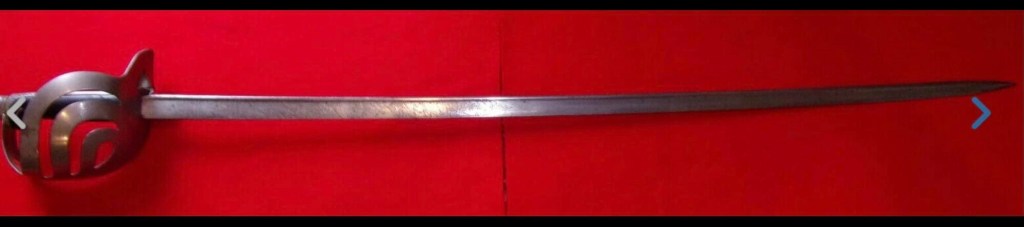
1873 Cavalry Sabre, Italy

From the outset I try to instill a sense of weapon-as-live in class. Normally, especially with kids, I have a period piece (unsharpened) on the first day to compare it to the modern versions. For sabre or foil, for example, seeing the blade profile of a period sabre, smallsword, or epee d’combat, and feeling the weight of each can do a lot to increase their appreciation of the difference in the tools we use versus what people used in the day. With adults or older children using historically inspired trainers this is easier because they are using weapons that better approximate those early tools. In both cases, however, I explain the parts of the blade that are sharp. For those that have held heavy blades, say the cheap overly ponderous facsimiles out of India or the HEMA-Bruh weight of a trooper sabre, the easy heft of a 650-800g sabre can seem unimpressive. Depending on audience I relate either contemporary, analogous examples or cite one of the recorded battles in which one of these “light” weapons proved just as nasty as anything twice its weight. 

The kitchen or hobby knife mishap is a suitable modern analogy for children. IF they ask about how dangerous this sabre or smallsword/foil was, I ask them if they’ve ever had a bad cut from some accident in the kitchen or in making crafts. Most have had some manner of accident or witnessed one. This makes the danger a little more immediate. For that one kid in Toughskins who plays it off as no big deal, I remind them that the slice we give ourselves in the kitchen or the toothpick that pokes into our hand as we make some craft, are accidents—with swords, the person threatening another with it intended to hurt that person. It makes a difference. I add that we of course do not want to hurt anyone, but that we need to remember that this is what swords were for, because if we forget then we take chances we shouldn’t. 

Reenforcing the Idea of Defense First 

Del Frate, 1868

Teaching affords us many opportunities to remind students about the nature of the weapon they are studying. Repetition of an idea as they repeat actions helps cement both thought and action in their minds. For example, when I teach them the guard position in sabre I have them in 2nd. This was typical of the Radaellian approach, but I also explain why it was the preferred guard. It directs the sharp point at target, and since the arm is somewhat extended this puts us a little farther behind the guard— as a compromise between presenting a threat and staying away from one ourselves it’s thus an ideal place from which to start. [1] When they make a direct thrust from 2nd, I explain that the dangerous bits, the point and edge, must move first and for the same reasons: it ensures that we are threatening the opponent and staying as far away as possible at the same time. If we fail to threaten them, they may counter attack. 

One of the places this is most difficult for students is in learning to parry and riposte. For example, in the last two classes I took them through this simple phrase

1. Fencer A: from 2nd, thrusts to inside line 

2. Fencer B: parries in first, then ripostes via molinello to the head 

3. Fencer A: parries 5th, makes molinello to left cheek 

4. Fencer B: parries in 6th, makes a molinello to the right cheek 

[*assuming two right-handers

This is a progressive drill, one we work up to over the course of the class, and instructive on several levels [2]. That third step, however, tends to go awry, because Fencer B in step 3 or 4 will sometimes remise rather than parry. [3] 

Parry of 5th against a cut to the head, Pecoraro & Pessina, 1912

I stop them at this point and ask them to explain the action. When they get to step four, I ask who got hit and who got the touch. They should see that they were both hit… It can be a subtle point, because if A holds that parry too long or takes too long to riposte there is sometimes a tempo in which B might remise. However, once an attack has been parried the very first thought we should have is “my attack failed and my opponent is likely to riposte, so, I need to think defense first.”  

It’s not an accident that traditionally we don’t teach the remise week one. It’s a maneuver that requires the fencer to have sufficient understanding and an adequate sense of timing and measure to pull it off successfully. New students struggle to see where the blade is going in a direct thrust or cut, so it’s best to hold off teaching them attacks into tempo until they have a decent command of elementary attacks. Even explaining what went wrong in step 3/4, many students will scratch their heads and doubt. 

Two Dead Samurai 

What tends to hang students up in step 3-4 is that they know they “hit.” B, for example, will often counter “but I hit them.” This is another instance in which I remind them that if the blades were sharp then they would be both be hit, and that since the goal is not to be hit, that the better decision is to parry and riposte. In class with the kiddos I usually refer to this as “two dead samurai”—mixing metaphors here but the words of Anthony Hopkins as Don Diego de la Vega in “Mark of Zorro” (1998) spring to mind, “Oh, yes, my friend, you would have fought very bravely, and died very quickly.” Because they’re masked, wearing jackets, and using blunt swords they feel safe; because the class they’re taking is voluntary and for fun they are excited instead of afraid; and, movies, books, and tv have cemented an impression of sword-fights that are great for stage but not necessarily accurate. Thus, it’s sometimes an uphill battle to keep the past-reality around the current one. If our goal is to mimic as best we can swordplay as it was/would be, then we must keep that earlier reality in mind. 

The entire question of who got the real hit explains why ROW, HEMA’s fetish for the after-blow, and other peculiarities within rule-sets have developed. We’re always trying to find a way to highlight, as accurately as we can, just who won an exchange. ROW emphasizes the priority of the attack where HEMA’s after-blow rules are meant to encourage one to cover. Both punish obvious mistakes; they just focus on different problems [4]. Neither, however, is perfect and interpretation not only over what the judges see, but also what a rule actually means are issues which can further complicate officiating. The inclusion of “off-target” in Olympic scoring and the lack of concern over who starts an attack in HEMA (it does matter) are good examples of where our various rule-sets fail us. 

The Logic of Sharp Things 

In simplest terms, and the way I explain this to younger fencers, is that we want to stay away from an opponent’s sharp point while at the same time threatening them with ours. If both opponents do this, then at least they start at a stand-off, each relatively safe, each facing the question of how to get to target without being hit themselves. We are safest behind the point, steel in front of us, and the moment we change that, even to attack, we increase the risk of being hit. 

Imagining the danger can be difficult, so depending on the age I change the threat. For example, with the current crop of intro students, all of whom are 11 or younger, I tell them that the point of the foil and the point/cutting edge of the sabre contain “Great Stink” and if they’re hit then they’re “skunked.” They laugh, but for this age group especially the threat of smelling bad is more approachable. It can also add to the fun. 

The goal with this is to help students learn to react and plan appropriately. With younger students, so many of whom are ready to wield a foil in two hands like a lightsaber, jumping into a fencing class is play, a chance to pretend, and even when we structure classes well and keep them busy with games and drills, they will still find ways to act out the famous battles they know from movies. As one example, in my last p&r class I had them repeat the same drill above, and when it opened up after those three initial actions one pair set-to blade banging against blade with no thought to making the touch. It’s an age group that requires constant corralling, and each time is an opportunity to ask them “would you do this if the other blade could hurt/skunk you? How open are you using that foil in two hands? You’re gunsta stink Hoss…” 

Why this Matters 

I’m all for fun and do my best to make classes enjoyable for the younger set, but at the same time I want them to learn to fence properly. All this early focus on the reality of the sharp point is critical—without this all we’re doing is playing tag. Ensuring that students learn this helps them understand why we do what we do, why technique developed as it did, and if we’re lucky serves as another connection point in retention of new information. At the same time, the sooner we set them on this path the less likely we may need to correct some of the common faults we see as they progress.  

Much of what and how we teach comes down to goals. It’s not my intention to disparage any one rule-set or fencing culture; people pursue what appeals to them and that’s fine. If tag is your thing, go for it. What I will say, however, is that for those of us ostensibly teaching historical fencing, a major goal is approaching everything as best we can as if the weapons were sharp, so we must pay some attention to inculcating an awareness of danger however artificial. It’s sort of, well, the point (pardon the pun) of what we’re doing. [5] 

NOTES: 

[1] The modern preference, and indeed historical preference in some sabre systems, is for what the Italians refer to as terza bassa, but which most people think of as third in Olympic. This version of third (outside guard for fans of English broadsword) derives from Hungarian practice. Both work, but they set up different expectations. A guard in second is at once defensive and offensive; Hungarian third is defensive: the guard and blade are held closer to the body, so parries are made closer to the body and set up speedy direct cuts well. Second, on the other hand, presents a sharp point from the outset to discourage someone from rushing in; parries are taken a little farther out and the hand moves less far in transitioning between second, first, and fifth, the first triangle of parries. 

[2] There are many types of drills and ways to structure them. Progressive builds like this one take an action and build upon it. For beginners I lay out each step—this makes it easier as they don’t have to read and decide what to do the same way as when unscripted, and yet still gives them good practice in watching and reacting with one set of appropriate responses. They develop confidence and feel like they are fencing, which given how complex coordinating all these movements is helps them continue working. Adding additional movements within the phrase, changing the actions, adding different footwork, and either limiting responses or adding unscripted portions are all ways to add complexity. With this particular drill, we’ve not moved beyond being in guard and lunging back and forth. Next, they will do this with movement back and forth, advancing and retreating; then I have them start from farther out, out of measure, and work the distance to complete the drill. 

[3] The remise is the renewal of an action/attack after it has been parried or while the defender is preparing to riposte. Some refer to this as a reprise, but this normally includes a return to guard (forward or backward) before repeating the action/attack. 

[4] Doubling, or the incontro, is one of the most common faults we make, and often it’s because we have a plan and follow it through without considering how facts change in the moment. Rule-sets can support this. Outside of epee, where a double penalizes both fencers, one need only make sure they land with priority, with ROW, to score—if they’re hit, it doesn’t matter, because they had right of way. In HEMA, which generally doesn’t consider who started an attack only who was hit, doubles are particularly thorny. Was it a double or an after-blow? This is cart before the horse. The first consideration should be who presented a credible threat first and how did the other fighter respond? If the defender chose to double or just reacted, they goofed up. Sure, the attacker should do all they can to cover, but that second fencer didn’t observe the don’t-get-hit rule, the primary rule, and shouldn’t be rewarded for it. 

[5] In HEMA competitions, for example, a lot of exchanges are deemed doubles that highlight this problem. In fairness to the fencers, the director has significant responsibility for seeing and interpreting what they’re doing, and the quality of directing varies considerably. To illustrate these reasons, we can examine—for the first—something as simple as how we extend the blade, and for the second the gulf we sometimes see between what we think we are doing in a bout and what we have actually done. In terms of technique, we see the reality of the sharp point in how we make a direct thrust: from 2nd in sabre or from tierce in smallsword, the hand is shoulder high and slightly outside the shoulder, because this helps close the line. Held directly in front, stiff-armed—which many students adopt at first—the arm is likely vulnerable. When I correct this, I remind them why we hold the hand the way we do, where we do. Regarding the second idea, that plan/execution don’t always match up, many fencers in bouts, be they practice or in competition, assume they’ve made the touch when in fact they haven’t or have doubled. It can be hard to see this—after all, they had a plan, they executed the plan, and thus are confident that they did what they were supposed to do. However, for anyone who has felt this way and then seen video footage of themselves… well, it becomes easier to see how intent and execution don’t always align perfectly or do but at the wrong time. 

SabreSlash 2021

I will share more once I settle in—the flights home were not conducive to sleep and jetlag is fierce coming back to the US, least it is for me. As a quick preview of just how wonderful Sabre Slash was:

Steel Bouquet, or, The Advantages of Multi-Weapon and Multi-Text Study

The title might make a decent band name, but no, I’m not starting a band. It’s meant to capture the common photo of an instructor grasping either their favored weapon or multiple arms. [1] Normally they’re clad in the jacket or gambeson that accompanies those tools best. Fancier shots have black backgrounds highlighting vaguely period expressions with a tinge of hipster coolness. Not knocking them, they can be nice, but it’s beyond whatever emotional depth or panache they’re meant to express which I wish to touch on here.

Many if not most fencers in the Olympic orbit become single-weapon fencers. It’s often true in historical circles too. They specialize. Historically, one started out in foil and then perhaps explored sabre or epee. The “three-weapon” fencer actually deserving of the name was, when I was starting out and even when competing, something of a special case. For context, I mean NCAA and USFA fencers between say 18 and 25. Many might dabble in the other weapons, but the fencer who could actually fence each as intended was less common. In my college club there was one fencer who was truly a three-weapon fencer, Dennis.

A close friend, and now one of my oldest, Dennis has more than once been a mentor to me. He will always be. When I was struggling with something new in sabre, for example, he would drill with me until I got it. When I destroyed my right arm in an auto accident, it was Dennis who agreed to train me as a lefty. Even now, Dennis has helped me as he could with an epee coaching class, playing the advanced student for me in video homework. A number of years ago when I was still working on competitive issues in Olympic fencing it was Dennis who ended up co-authoring a paper on difficulties in judging foil. He is versatile. He can help with all these things, and more, because of it.

Beyond the obvious perks to versatility, there is a still more important reason that it’s a goal worth pursuing: depth of understanding. It’s an analogy I’ve used a lot, but studying a different weapon or tradition is like learning a new language, one that helps you understand your own that much better. Over the past year, when most of us have been unable to meet up to fence, I’ve watched and/or advised people working in isolation. Some had partners to train with, many more did not. But what I noticed in each case was the more that these students included disciplines and weapons they didn’t normally study the better they got at their primary focus. More than that, their understanding of the universal principles underlaying all fencing increased. It was akin to watching what I imagine Dennis’ first few years fencing were like.

It can be daunting trying something new. At a certain point in training, however, it can be the catalyst one requires for growth. This raises an important question—when should one start dabbling in other weapons and forms? Alex Spreier (High Desert Armizare, Bend, OR), in a short thought-piece I shared here a while back (“Alex Spreier on Universals,” 2 May 2021), summed it up well:

The first step on the road to being able to discern patterns, principles, and universal aspects of the Art is the one I expect will be the most controversial – you need to spend 3 to 5 years focusing on developing your skills within one system. This allows you to build up a “vocabulary” of how to move your body, how to respond to threats, how to create threats, and ultimately this vocabulary will enable you to start recognizing patterns. And recognizing patterns is key to uncovering principles.

The idea of dedicated, formal study of one system or weapon for years goes against common practice in “HEMA,” but it is nonetheless the best path to improvement. As Alex explains, what this focused time does is impart the necessary skills to acquire new ones later; at the same time, it builds an intellectual framework and vocabulary that assists pattern recognition and retention in learning.

On an app that serves as the virtual lounge for the “collective” of schools that work together in this part of the PNW, we have had several ongoing discussions; in depth, evidence-driven conversations about key principles, ideas, or techniques that we have less information for than we’d like. One in particular highlights the importance of cross-training and text-diving.

Ex. Mezzo Tempo & Counter-time

The example in question was put forth by one of the instructors, Andy Playmate (Northwest Armizare), who has been running the longsword pod. In looking at tempo in longsword, and what a few different interpretations/translations say, he asked about Vadi’s notion of mezzo tempo or half-tempo and how it relates to counter time, attacks in preparation, etc. A rapier fencer as well, he asked questions related to both weapons: “what do you think the relationship is between mezzo tempo and stop cut/thrust? And second, did stop cut evolve from Mezzo tempo or somewhere else?” Great questions and ones which underscore how difficult it can be to unravel key concepts even armed with good training and vocabulary.

Starting with Philippo Vadi (fl. 1480), what does he say?

I do not have a copy of Vadi handy, so here I will rely on Guy Windsor’s translation available at Wiktenauer:

Chapter XIIII. Theory of the half tempo of the sword

I cannot show you in writing

The theory and way of the half tempo

Because the shortness of the tempo and its strike

Reside in the wrist. [2]

The half tempo is just one turn

Of the wrist: quick and immediately striking,

It can rarely fail

When it is done in good measure.

If you note well my text,

One who does not practice [the art] will get into trouble:[44]

Often the quick flight from one side to another

Breaks with a good edge the other’s brain.

Of all the art this is the jewel,

Because in one go it strikes and parries.

Oh what a valuable thing, To practice it according to the good principles,

It will let you carry the banner of the Art.[45] [3]

In my reading of Vadi, mezzo-tempo here suggests an action that blocks and cuts/thrusts at the same time. For once, Florio’s glossary [http://www.pbm.com/~lindahl/florio/] may be helpful here. He defines mezzo a few ways, but while it can mean “half,” it can also mean “a mediator, or intercessor. As a space or interveall of time or place” (313). Mezzo here may mean more “middle” as an action that either splits the difference or occurs during the “middle” of an opponent’s attack; mid-tempo. I can’t say that for sure, but given what Vadi says here—and going by Windsor’s translation—that makes sense to me. One way to illustrate this is to image that Fencer A throws a cut, a mandritto fendente, and B selects the time in which that cut is still developing to intercept it with a cut of their own, likely with a step somewhat to the side (to the right assuming two right-handers) that at once blocks and stops the incoming attack and that strikes at the same time. A close out like this, something later rapier masters saw as ideal, might be defined as a type of counter-attack, but perhaps the most accurate term would be an attack into preparation or an attack into tempo, that is, where one attacks as the opponent initiates their attack. Certainly what Vadi describes here is in line with later masters. [4]

Looking at what other masters say about mezzo tempo makes sense as we try to figure out Vadi. For Italy, the next generation of masters, especially the Bolognese school, is a logical next step. The Bolognese masters also employ the term, but don’t agree amongst themselves as to definition. The Anonimo and Viggiani, to name two, both use mezzo tempo but define it slightly differently. Viggiani, for example, wrote:

Sometimes one attacks with a half blow, in mezzo tempo. It is true that the majority of attacking is in mezzo tempo, since, when there are two who are well schooled in the art, he who wishes to attack will deceive his companion in such a fashion that, when his adversary is about to perform a blow, he enters with dexterity and speed and strikes in the middle of the adversary’s blow with a half blow

In the Anonimo, mezzo tempo is an attack into preparation, and contra tempo is what we see in Vadi, an attack into tempo that closes out the opposing steel and strikes simultaneously. The author of the Anonimo uses more ink to explain that there is no such thing as a half tempo, but that since one can make a “half attack,” that is, one that stops at stretto distance and is made more quickly, that they refer to it as “half” tempo (as an aside, this is a lovely example of a fencing text differentiating tempo and speed). Again, “mid-tempo” might be a better translation. Regardless, the Anonimo offers less detail about mezzo tempo. As to counter time, we read “Contratempo happens when the enemy wishes to strike, and you interrupt his attack, rendering it useless, while you simultaneously make one that strikes him.”

Dal’Aggochie, as Mike Cherba pointed out, was probably the clearest. For him, mezzo tempo is “A half tempo, the final one,… when you attack while the enemy is throwing his blow.” [5]

Um, they don’t Agree, so… what now?

So, what is the student to do with all this? How does one reconcile these disparate definitions? Vadi, Viggiani, the Anonimo, and Dal’Aggochie all include mezzo tempo, but don’t agree. It can help to group them together and see how they differ. All include an attack that interrupts that of the opponent. Vadi and Viggiani call this mezzo tempo; the Anonimo calls the same thing contra tempo. Dal’Aggochie may refer to the same thing; his half tempo sounds much the same as the others, but being less specific as to when exactly one attacks the enemy it’s less clear. Is the attack made as they are preparing (an attack in prep), as they are mid-strike (half-tempo), or is it in response to a counter attack (contra tempo)?

This is where looking at the modern definition, one derived from this tradition, can be helpful. It may not be the same, that is always a possibility, but it’s a place to start. Counter-time, sometimes referred to as contretemps (Fr.) or contra-tempo (It.), is different from the early notion of mezzo tempo. It’s usually a technique for more advanced fencers. Not each master in the past defined it quite the same way, though most tend to suggest the definition that survives today, that is, “a planned action made against an opponent’s stop-thrust or stop-cut. First draw out the stop hit, and then parry it and hit the opponent in a lunge.” [6] Other definitions are similar.

Here is one from the wiki at Academie Duello, Vancouver, Canada: “this is the opportunity to strike during an opponent’s offensive action with a shorter attack of your own that closes the line.” [7]

Masaniello Parise (1884), discussing counter time for sabre, not surprisingly is more in line with current definitions. This action is made “with veracity, advancing a step and immediately defending with a circular or opposition parry against the opponent’s action in tempo [i.e. counter-attack], and secure in defense, and ripostes without delay.” [8]

There are, however, exceptions. On one page of an old site at the University of Northern Arizona, guessing one of William Wilson’s, the editor quotes the Pallas Armata (1639) and defines contratempo as “a thrust in the same line that your adversary thrusts in (Pallas Armata, p. 6).” [9]

With the exception of this last definition, all describe a counter-offensive action made against someone making a counter-attack. It’s not specific to weapon, only the tempo in which a weapon, any hand-to-hand weapon, might be used. The distance required by such a maneuver is critical as is the speed and accuracy with which one strikes. Tempo, distance, speed, judgment, initiative, these are all universals, the elements underpinning all fencing.

Returning to Andy’s question, “what do you think the relationship is between mezzo tempo and stop cut/thrust? And second, did stop cut evolve from Mezzo tempo or somewhere else?” what can we say after reviewing some of the literature?

My answer would be that a stop thrust, if it closes the line as it lands, might be an example of mezzo tempo. Certainly that seems to fit the majority of the definitions we just examined. A stop cut might too, but these often do not close out the line—they are cuts made against an open line, but always followed by a parry and riposte in case the stop cut fails. Since it’s not usually the final blow, a stop cut doesn’t fit Dal’Aggochie’s definition well either; it’s a counter-attack followed by a defensive action. Stop-cuts, like stop-thrusts, are attacks of opportunity, but less likely performed with a close out. I’ve not touched the second question, but attacks against the forward target are reflected in more than one medieval source—for a graphic example the hands lopped off and flying in Talhoffer (ca. 1467) might serve. While the stop cut we use in sabre may derive from something native to cutting weapons, it’s not impossible that the later stop-hit/stop-thrust derived from the rapier iteration of mezzo-tempo. I’m not sure what work has been done on this if any, but it might be fun to explore.

So what?

What I’ve hoped to show with this example is two-fold. First, time spent (at the appropriate stage) working on additional weapons or systems increases our understanding. The fencers asking these questions arrived at them thanks to cross-training. They’re making connections, seeing parallels as well as key differences.

Second, the increase in awareness and understanding, in seeing yet again how the same universal principles apply, makes it that much easier to “unpack” the next new system or weapon. This doesn’t mean that it is easy, just easier. In the aggregate our knowledge and skill should grow and improve.

Importantly, one must be cautious not to misapply modern understanding, or worse—exceptions, onto the past. The more one knows of the universals across time, across masters and texts and periods, the less likely this is a danger. Many members of the historical community make the mistake of assuming anyone referencing modern works is, by definition, guilty of anachronism. That is not true, but it can look that way to someone unarmed with that knowledge and understanding. Since they cannot distinguish between excesses that help one gain points in a sport, and the universal principles that most fencers learn before they try on the silly stuff, they have trouble seeing how anything past 1500 can have any relevance. Modern discussion of the universal principles did not pop out of a cereal box on the 1 of January, 1900 or 2000; they derive from the corpus of works we read in historical fencing. Time spent with solid modern works, like time spent with another weapon, so long as approached responsibly, will help more than hinder.

NOTES:

[1] A quick google search using the terms “fencing instructor portrait” will bring up some decent examples.

[2] “Wrist” here makes more sense than “knot,” though polso is the modern Italian for “wrist.” Nodo, here, can mean knot, but it can mean junction, crux, etc., and my guess is that the other translators may have used Florio’s 1611 Dictionary (p. 333; cf. http://www.pbm.com/~lindahl/florio/), where he stipulates that Nódo can mean “also the joint of any cane.” By context Vadi clearly means turning the hands so that one simultaneously blocks and strikes. “Of all the art this is the jewel” certainly makes sense in light of that idea.

[3] For Vadi, https://www.wiktenauer.com/wiki/Philippo_di_Vadi#Introduction  

[4] Cf. Marcelli, Rules of Fencing (1686), I.I. Ch. IV., 23 in Holzman’s translation.

[5] For Viggiani, see W. Jherek Swanger, The Fencing Method of Angelo Viggiani: Lo Schermo, 64r; p. 7 of the pdf; for The Anonimo, see Stephen Fratus, trans., With Malice and Cunning: Anonymous 16th Century Manuscript on Bolognese Swordsmanship, Lulu Press, 2020, 64 (see also p. 49); for Dal’Aggochie, see The Art of Defense: On Fencing, the Joust, and Battle Formation, trans. Jherek Swanger, Lulu Press, 2018, 29v.

[6] Rob Handelman, and Connie Louie, Fencing Foil: A Practical Training Guide for Coaches, Parents and Young Athletes (San Francisco, CA: Pattinando Publishing, 2014),441.

[7] http://wmawiki.org/index.php?title=Academie_Duello_Glossary

[8] See Christopher A. Holzman, ed., The Roman-Neapolitan School of Fencing: The Collected Works of Masaniello Parise, Wichita, KS: Lulu Press, 2015, 272-273.

[9] https://jan.ucc.nau.edu/~wew/fencing/terms.html

Georgian Sword & Buckler

My friend Mike Cherba (Northwest Armizare, Sherwood, OR, USA) recently shared some basic drills for Georgian sword & buckler with renowned scholar and martial artist Dr. Manouchehr Moshtagh Khorasani (Razmafzar Persian martial arts organization;  Frankfurt School of Finance and Management and ISM (International School of Management, Germany). I had the pleasure to serve as Mike’s pell and drill partner for this video, something I’m always happy to do as Mike is doing important work and this fight system is extremely fun to fight.

NB: There is a lot here, so for those interested, start with the first few exercises before moving onto the more intermediate drills.

The link to part one is here:  https://youtu.be/hUVOj_A1Grs

More Fun with From Page to Practice, or, How to Use your Sources

It’s easy to point out examples where we go wrong in using historical fencing sources. It’s also important if we care about producing the best interpretations we can, but on it’s own pointing out a problem isn’t the same as providing possible solutions. From time to time I like to take a passage from a source I use and share my approach. The one caveat is this: I don’t have all the answers. I’ll be the first to admit that. What I do have, however, is extensive training in language, source analysis, and fencing theory, not only theory as it is taught now, but theory as it developed over the past 500 years. Taken together these can be valuable tools for making sense of sources.

Start with the Source

For historical fencers our primary authority is the page. This can be tricky. We are removed in time and culture, explanations vary in depth, and we often face an incomplete record. Each of these factors alone or together affect how much of that authority we can access, and thus, how much we can interpret with any surety. The more information we have for a system, the better, but this depends too on the nature of that information. We have, for example, far more detailed description for rapier across languages and time, but have far less for medieval sword and buckler.

Most people, in my experience, look to an instructor for help; the burden for doing this work is then more or less shifted to that club and its instructor. Assuming one’s instructor is doing an effective job at interpretation, then there’s arguably less to worry about. However, a good instructor will be able to explain their work, methodology, and approach. In ideal cases they share that information day one. This is one opportunity where we can assess an instructor’s ability.

If you don’t have access to an instructor, if you like to read on your own, or if your instructor is giving you homework, then it helps to have some help. Let’s say you are one of my students and I’ve given you this passage from a key Radaellian sabre manual, Settimo Del Frate’s Instructions for Fencing with the Sabe and Sword:

56. Molinelli Alternating with Parries

When the student has learned the execution of the various molinelli and parries, he must become competent in their execution by repeating the same molinillo many more times, alternating between the various molinelli, and alternating and mixing them with various parries. He will also do this exercise while moving. This practice must be performed with proper progression to be worthwhile, giving the student nimbleness and ease in the handling of the sabre, which he can easily put into use. He will also learn the advantages of moving and rotating the sabre in the hand with the movement of the forearm. The exercise is also valuable to clear in his mind the advantages of the reasoned progression of instruction.

            This lesson of molinelli alternated and mixed with parries teaches only one new thing, which is the way and time to turn the edge in proper amount. When the various molinelli are executed at the same time, the commands are given for the execution of the molinelli and parries, only having to modify the preparatory command to the exercises that the students are to execute.

            For example:

            Two molinelli to the head, the first from the left and the second from the right, and then a parry of 5th and a molinillo to the face from the right, or—

            Two molinelli to the face from the right, a parry of 6th, and a rising molinillo to the flank, or—

            A molinillo to the face from the right, a parry of 1st, and a molinillo to the head from the left, cavazione (or coupé) and on guard in 3rd, etc.

            The exercise is easily varied, and it will be necessary for you to adhere to a reasoned and complete progression, in order to obtain from this important practice the greatest possible benefit.

[Christopher A. Holzman, The Art of the Dueling Sabre: A Translation and Explanation of Ca. Settimo Del Frate’s Award-winning Textbook on Giuseppe Radaelli’s Sabre Method for the Fencing Masters School of Milano, Staten Island, NY: SKA Swordplay Books, 2011, 39-40]

56. MOLINELLI ALTERNATI CON PARATE

L’allievo che ha appreso l’esecuzione dei diversi mo linelli e parate, è esercitato nella loro esecuzione, sia ripetendo più volte lo stesso molinello, sia alternando i diversi molinelli tra loro, sia alternandoli frapponendovi le diverse parate ed anche le diverse marcie. Quest’esercitazione fatta a dovere e con giusta pro gressione varrà a dare all’allievo quella scioltezza e faci lità nel maneggio della sciabola per cui potrà mettere in pratica più facilmente e sentire i vantaggi di muovere e ruotare la sciabola ferma ed equilibrata nel pugno per movimento d’avambraccio, e varrà inoltre a chiarire nella sua mente la ragionata progressione dell’insegna mento ed i suoi vantaggi. Per questa lezione di molinelli alternati e misti con parate, si avrà solo da insegnare, come cosa nuova, il modo ed il tempo di girare il filo con giusta gradazione, quando si devono eseguire più molinelli dalla stessa parte; per il rimanente valgono le norme date per l’ese cuzione dei molinelli e parate, fatti separatamente, avendo solo l’avvertenza di modificare il comando ana logamente agli esercizi che si fanno eseguire.

Per esempio:

Due molinelli di testa, il primo da sinistra il secondo da destra –parata di 5a e molinelto di figura da destra – oppure:

Due molinelli di figura da destra –parata di 6a, e molinello di montante da sinistra – oppure:

Un molinello di figura da sinistra –parata di 1a, mo linello di testa da sinistra — cavazione (o coupé) e guardia di terza, ecc., ecc.

Gli esercizi come si vede facilmente, ponno essere mol tissimi e svariati, e sarà necessario l’attenersi ad una progressione ragionata e completa, onde ottenere da questa importante esercitazione il maggior frutto possibile.

[S. Del Frate, Istruzione per la Scherma di Sciabola e di Spada, Milano: Litografia Gaetano Baroffio, 1876, 49-50.]

If you have some Italian and a copy of the original work, then it’s a good idea to place it side by side your translation. In this case, Chris Holzman is one of the best translators working on the Italian corpus: he has a number of native speakers—who are also experienced fencers or maestri—read over his work. This is a vital process in any translator’s work. It’s due diligence. Even with an excellent translation it is helpful to look at the original provided you possess some ability with the language. Reading them side by side will reveal a translator’s choices, but it will also reveal nuances that translation sometimes has trouble capturing.

Now, what do you do with this passage? First, read it more than once, and as you do so isolate key ideas. Right away one knows from the subheading that the number “56” suggests that this is deep within the text. The author, Del Frate, was adamant about the logical progression of lessons, so if anything here is unfamiliar then rereading earlier sections will help. If for example you don’t remember the difference between a molinillo to the head from the left and one to the face, go back and read that first. Or maybe you don’t recall exactly which parries are which. Go back and review. Once you feel more certain with these, then reread the passage again. Then read again and take it line by line.

The first line informs us that this exercise builds on previous lessons, so review can be useful. It also tells us that what this section provides is a way of mixing the molinelli with parries. In review you recall that Del Frate introduces the concept of the molinelli first (§8, 10 Holzman; §8, 16-17 Del Frate), then covers each molinelli in turn through Chapters VIII -X (§42-55, 339, Holzman; 39-49 Del Frate), and finally he offers a few different exercises with the molinelli, such as the one covered here, as well as with a lunge (§57, 41, Holzman; 50-51 Del Frate) and against attempts at engagement (§58, 41-42; 51 Del Frate). If the idea of mixing molinelli and parries is odd at first, then be sure to read each of these sections in succession first.

Del Frate’s method, Radaelli’s, is progressive. We first learn the molinelli as an exercise and way to foster strength, flexibility, and edge alignment. As we improve, we see that each of the molinelli not only cover the major lines of attack, but travel through each of the parries as well. From standing we add movement, first with a bit of lean, then with the feet, the lunge, and then all of it together. So, since this mix of parries and molinelli is near the close of the section for sabre and just before the synoptic tables, it figures that the author assumed some facility first. In the cavalry this was, of course, a lot easier to establish as the troopers had regular drill under military sword masters.

The next few sentences establish additional reasons for the drill:

  • it will impart “nimbleness and ease in the handling of the sabre”
  • the student will “learn the advantages of moving and rotating the sabre in the hand with the movement of the forearm” [1]
  • and “the exercise is also valuable to clear in his mind the advantages of the reasoned progression of instruction”

These are handy to keep in mind as you work through the drill—they’re the reasons we bother doing it. We also learn that this exercise teaches us one new thing:

This lesson of molinelli alternated and mixed with parries teaches only one new thing, which is the way and time to turn the edge in proper amount.

Now, assuming you’ve had experience with molinelli and can perform them pretty well, how do you incorporate this section of the text?

Important to note, Del Frate is addressing an instructor here, thus the reminder that in giving commands the only change is what commands the instructor gives. To explain this Del Frate provides three examples. These are a fantastic place to start.

  • Two molinelli to the head, the first from the left and the second from the right, and then a parry of 5th and a molinillo to the face from the right, or—
  • Two molinelli to the face from the right, a parry of 6th, and a rising molinillo to the flank, or—
  • A molinillo to the face from the right, a parry of 1st, and a molinillo to the head from the left, cavazione (or coupé) and on guard in 3rd, etc.

Each of these can be performed solo or with a partner. If you’re mining this section for pell-work, then start with these three and when you’re comfortable mix and match with other parries and molinelli. If you have a partner, it will help to write out just how this will work, and then when you meet go through it a few times slowly, e.g.

Del Frate, “Mixing Parries and Molinelli” [cf. Holzman, 39-40; DF 49-50]

1. Two molinelli to the head, the first from the left and the second from the right, and then a parry of 5th and a molinillo to the face from the right, or—

Drill as Is:

Fencer A in 2nd; Fencer B in 2nd

Fencer A makes a molinillo from the left to the right; B receives touch

Fencer A makes molinillo to the right to left; B receives touch

Fencer A parries 5th, and makes a molinillo to the left cheek

Drill as Partner Drill*

Fencer A in 2nd; Fencer B in 3rd

Fencer A makes a molinillo from the left; B parries 5th, cuts head

Fencer A parries 5th, makes molinillo to the right; B parries prima, ripostes to head

Fencer A parries 5th, and makes a molinillo to the left cheek

*This adds an additional parry for A, and more realistic responses from B. Everything we do should have real application, especially in partner drills. An instructor can take the part of B in the first instance, because part of an instructor’s job is to provide a target. We can assess what a student is doing well in this way and make corrections. As we add complexity, the instructor’s role takes on more realistic behavior.

Starting with a drill as written is best. This can be surprisingly difficult at times. In Luigi Barbasetti’s The Art of the Sabre and Epee, for example, his description of the rising cut from the right is dense.[2] It’s not impossible to figure out, but it’s not the clearest description either. So, take your time, and if needed take one portion, one move of a drill at a time.

As an instructor I use this differently than I do as one of a pair of fencers just working out. If neither you or your partner is the instructor, then the second option above is going to do more for you, because it more closely mimics what we actually do in a bout. While we might make two cuts in succession, more often than not our opponent will react to the first one, so mixing in more for Fencer B makes sense. It’s still important to go slow before going fast, and to keep it simple at first. Even if that is just for warm-up, it will help. It’s practice seeing the lines, gauging the time to respond, all of that. Doing the drill as-is is fine too.

For the instructor sharing a drill like Del Frate’s molinelli with parries, focus on proper technique, placement, and flow with newer students. It’s a good place to start with multiple action drills. It will take time to perfect, but early encouragement and praise of what they are doing well is vital. As they become more familiar with the drill the instructor can shape the clay as it were more directly; students tend to be more accepting of criticism when they have a better grasp of the task and when they don’t hear a litany of complaints the entire lesson. This stuff is difficult, it’s easy to feel overwhelmed—an instructor should never forget that.

If an instructor is working with more advanced students not only can one mix and match molinelli and parries, but also the tempo. The second drill, for example, where there are two cuts made to the face from the right, then a parry of 6th, and a molinillo from that parry to the flank, one can have the student start out making each portion in regular succession, then change it up so that say the second cut arrives faster, or the parry-riposte is made faster (so slow, fast, slow, slow; slow slow, fast-fast).

Adding movement to this is another option. Traditionally this is how fencing lessons often go—it’s how I learned and it’s what masters are still teaching instructors. Have the students start out standing in close measure; each will go through the exercise 5-10 times. Next, have them move one step out and advance/step in to target. Then, have them take a little more distance so that they’re in critical distance or about tip to tip/top third of the blades; from here have them perform the drill with a lunge.[3] Lastly, have them advance in and lunge. With the advance lunge it’s possible to play with tempo via the feet too.

If in doubt or if you want more perspective, reach out to other fencers working in the same tradition. If you don’t know them well, then it pays to start your message or email politely. That should be obvious. You may find not only help, but new ideas to share with your students or group. There is no reason to go it alone, not when there are people who have been working on the same material for a long time.[4]


NOTES:

[1] If one only looks at the image and description of the grip where the the thumb is placed on the backstrap, etc., then it is easy to miss that in use the hand’s position changes fairly often. One thing the molinelli teach us well is how this works, and, how to make those minor adjustments with control.

[2] Barbasetti, The Art of the Sabre and Epee (1899/1936), 24:

20. Molinello to the Abdomen

This molinillo is composed of two movements:

1. Starting from the final position of the molinillo to the head (Fig. 10), describe backwards with the point half a circle, until your forearm is in a horizontal position (Fig. 13).

2. Continue this movement, hollowing the small of your back, raising the elbow as much as possible, in order to describe forward with your blade another half a circle and deliver a horizontal cut to the abdomen of your opponent (Figs. 8 and 14).

And for comparison, the 1899 text in German (46-47):

20. Schwingung auf den Bauch.

Sie wird auch in zwei Theilbewegungen zerlegt:

1. Man gehe von der Schlussstellung der Schwingung auf den Kopf aus (Fig. 10), führe die Klingenspitze mittelst eines lothrechten Halbkreises in der Richtung des Klingenrückens so nach rückwärts, dass der Vorderarm mit dem etwas erhobenen Ellbogen wagrecht liegt (Fig. 13).

2. Nun setze man die Bewegung durch Kreuz hohl unterstützt, halte den Ellbogen so hoch als möglich und führe die Spitze, einen Halbkreis beschreibend, direct nach vorne, so dass die Klinge den Bauch des Gegners durch einen nach links ansteigenden Querschnitt träfe (Fig. 14).

Of note, in step 2, there are some differences in language that are significant. The word Kreuz, for example, here means “small of the back,” not “cross,” the primary definition. As a native speaker of English (American), this definition works better for me than “hollow,” which is perfectly correct, but less specific. Conversely, Querschnitt, “cross-section,” doesn’t explain the action as well as “horizontal” does. However, ansteigenden, from ansteigen, “rise,” would be helpful in English. Classically, the rising cut from the right is less horizontal than it is diagonal, and it is, for me at least, the least easy to perform.

[3] Critical distance is where a fencer can lunge to target. This is relative given height, reach, etc., but a good place to start is where the blades would cross at the top third or tip. If too close or too far, one can adjust. I often refer to this concept merely as being “in distance.” Most of our attacks in sabre are delivered via lunge, so figuring this out is important not only in lessons, but in partner drills, and in a bout.

[4] In the “links” on this site, near the bottom, I’ve listed a few resources for those working in the late Italian tradition.

Military vs. Dueling Sabre, Revisited

In discussion with a local group studying Insular broadsword [1] the topic of what makes sabre “military” or “dueling” came up, again. We explored the place of context and how it’s the key to the distinction, such as it is. This may seem a pedantic topic, and it’s one I’ve covered before [see n. 10 below], but because of the popularity of works for infantry drill it’s an important one. If accuracy in our practice is at all a concern, then we need to view all the myriad videos, fb pages, pdfs, and seminars carefully. Many instructors are, without realizing it, instilling an inaccurate distinction between military and dueling sabre. They are not so much different species as they are siblings who chose different MOSes in the army. [2] Failing to realize this results in poor recreation of past fencing systems.

“Military” Sabre

Often synonymous with “sabre” in “HEMA,” the idea of “military” sabre is a term that is generally used only with reference to European systems developed for and used by various branches of period militaries. English sources are arguably the most popular, though Dutch, German, Spanish, and Portuguese works are also in wide circulation. Preference is for earlier sources, and thus the 18th and 19th century English works, particularly those for broadsword as penned by Roworth, Page, Angelo, and others enjoy great popularity. It was not until after the Napoleonic Wars that the English government issued regimental manuals, so prior to that various treatises written by military men, such as Charles Roworth, provided the necessary instruction. While less popular within HEMA, for reasons I’ll share below, most French and Italian sources used in HEMA are also military works or were produced by military men.

In commonwealth and former colonial countries there is a parallel and sometimes dual fascination with Scottish “highland” broadsword, particularly in Canada and the United States. These fencers look to Henry Angelo, Sir William Hope, Thomas Mathewson, Donald McBane, Archibald MacGregor, G. Sinclair, and other sources, such as the Penicuik Drawings. The romance and reputation for ferocity associated with the highland clans of Scotland is as powerful now as it was in the late 18th century, a fact not lost on those, like Henry Angelo Sr., whose use of exotic adjectives and nods to exotic warriors helped popularize his system. [3] After all, in some ways the ’45 was just history enough to the generation writing fencing treatises in England ca. 1775-1800 to have accrued legend and wonder, similar in a way to what World War II was for interested children (not to mention adults) in the 1970s and 1980s. It helped too that the enrollment of Scots into the English army as “ethnic” units meant that kilt, bagpipe, and broadsword remained fixed in the minds of English people. Broadsword, however, was not unique to Scotland, but widely used in the Isles from at least the time of The-Englishman-What-Shouldna-be-Named, George Silver. It was during the 17th century rebellion against the crown that the broadsword came into its own, particularly with cavalry, both Cavalier and Roundhead.

The military connection with this collection of works is obvious. However, because fencers often read these texts shallowly, without understanding the context, they form conclusions that are incorrect or at best incomplete. One result of this is that military sabre has become associated with interpretations that are not wrong per se, but which place undue importance on certain elements common to most infantry sword manuals. [4] There are two examples I will cover here. First, is the widespread practice in HEMA of always fighting in close measure. There is a notion that one doesn’t retreat or recover out of the lunge in defense. This is sometimes the correct action, but it is not a rule written in stone, and in fact is sometimes exactly what someone should not do. We are meant to use measure even if it means retreating. Second, there is a fetish for attacks to the leg in much of HEMA sabre; it’s not that leg cuts and defense weren’t part of these systems, they were, but that too much focus is given to them in a context where they make less sense, a bout between two opponents.

Hug Me, No, Closer Brother

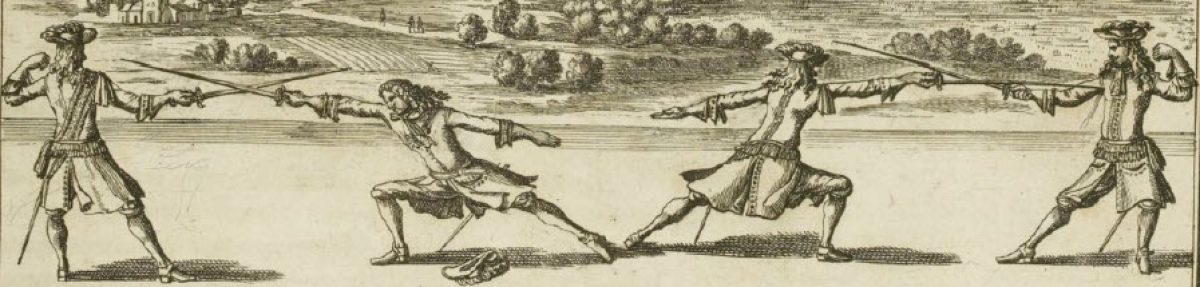
One of the most common features of HEMA bouting is sticking to close measure to fight. There are a few reasons for this. On the one hand, one must be close enough to strike, so on a simplistic level the closer one is, the more likely one can strike—conversely, the more oneself is at risk. On the other, because there is a tendency to take images in our sources at face value many fencers, with the best intentions, assume the same distance they see in these images.

A further complication, and a critical consideration of context, is the attention paid in infantry manuals to both footwork and measure. Henry Charles Angelo, in his Infantry Sword Exercise (1845), remarks that his work is intended as

the surest and quickest mode of forming Swordsmen; and the Drill Officers are to understand clearly, that when Recruits have completed their Preparatory and Drill Practices, without and with the sword, they need no longer be required to remember the precise order in which they are here given; nor to repeat them, if sufficiently instructed to go through the Review Exercise effectively, where every Cut, Point, and Parry is shown. [Introductory Remarks]

The language here explains that the goal was forming competent, not expert swordsmen. Further reading illustrates that Angelo assumed that the men trained together, in ranks, and assumed this position or that attack on command (see for example page 28). This is not close, individual training, but training writ large—corrections were made, but not as a maestro might working one-on-one with a student. Given the fact the men were in “Files” (rows) and thus close together, there is little discussion of footwork or measure.

Angelo mentions the advance, retiring (the retreat), and the lunge (36), and further specifies that there can be no set distance for how large the step is, but that the men should shoot for a step of about six inches (11-12). In Section VI Angelo expands slightly upon measure, mentioning both the line of direction (36) and seeking the most advantageous position so that one may effect “a decidedly quick movement in that direction where your opponent has the least means of resistance (35).” What detail he provides pertains to which guard is best against which attack, not how one might move. There is discussion of shifting the leg against leg attacks (cf. 30), but also attention paid to the issues the men will face in rows. Taken together, there is very little to go on in terms of movement and manipulating distance. Angelo mentions “proper distance” (e.g. 30), but doesn’t elaborate. While the regimental swordmaster’s knowledge aided the men in learning that all important information, no such aid is available to those exploring this text. Angelo assumed that his professional readers knew that information. Today’s fencers are left with the barest descriptions.

from Henry Angelo Sr.’s “Ten Divsions of the Highland Broad Sword,” 1799

This paucity of explanation, coupled with images from works like Henry Charles Angelo’s father’s (Henry Angelo Sr.) “Ten Lessons of Highland Broad Sword” (1799), suggest that fencers are more or less always in close distance to strike. Without study of traditional fencing theory, or of the first Angelo’s The School of Fencing (1763/1765), any fencer working from this collection of sources is at a disadvantage. One should not stay in measure all the time. Traditionally, depending upon which source one reads, there are three critical measures—out of distance, where one must advance and then lunge to target; in measure, where one can lunge to target; and close measure, where either party may strike the other. [5] Knowledge of measure and how it works, for offense and defense, means that one should be able to get in and out of distance, even if that means making a small tactical retreat to give oneself more room and time to defend. There is nothing cowardly about that at all—it’s tactical. A retreat is not the same thing as turning tail and running.

Ankle-Biters and Eating Thrusts

Why do so many regimental works include leg defense? Training soldiers en masse was not intended to create expert swordsmen, only effective swordsmen, as Angelo remarked; in most cases the focus was and remained on the effective use of firearms. Second, because soldiers might easily find themselves in situations where their legs were vulnerable, leg defense was included. This is one reason there is so much focus on the head and the leg. The question today’s fans of regimental broadsword need to ask, however, is why?

19th cen. engraving depicting Colonel Wm. Prescott in the redoubt on Breed’s Hill, Battle of Bunker Hill, 17 June 1775.

There are no rules when it comes to fighting with a sword in war. Any polite, genteel nicety picked up in a gentleman’s salle is inapplicable in such chaos. Attacks from multiple directions, punching, kicking, grappling, the mix of bayonet and rifle-butt, not to mention musket and cannon-balls flying amidst the combatants make that impossible; likewise the noise, blood, mud if it is present, smoke, uneven or challenging terrain, and minimal control over distance also affect everything. In such a context it is far more likely that one may have to defend the legs, and all the more so if one is defending a high position such as a bastion or redoubt. Without considering this vital piece of the puzzle fencers today wishing to recreate Napoleonic era sabre will put undue emphasis on a target that in their own context is more likely to earn them a double or counter-attack in time. Too many fencers take these ideas out of context and use them as a litmus test for how “martial” a tradition is—that doesn’t follow, not if examined in context. Put another way, attacking the legs doesn’t make one’s approach more “military,” though arguably knowing how to defend the legs might. Even the authors who cover leg cuts are quick to advise against the practice—it is a prime way to east a thrust al la Calvalotti.

With the exception of reenactors, most of HEMA does not engage in mock battles, and if so, these are more performance piece and living history than accurate reproductions of those battles. They can’t be otherwise, because people would be hurt. Just like the best options today for steel swords, bayonet trainers are dangerous; the introduction of cavalry is a force-multiplier that would make a lawyer drool. This isn’t to knock these events, not in the least, only to state that our ability to stage period “battles” will lack the very things that make the difference: horror, fear, and the threat of death. Most people, whatever it is they study, are—whether they like it or not—fighting in conditions that are closer to the duel than to combat. A few of us cover multi-opponent scenarios, but even these tend to read more like kung-fu theater than the reality, that is, where each of the “baddies” waits their turn rather than doing what they would really do if it were safe, flank or stab from behind. [6] Most HEMA bouts are one on one, or, a duel, however “military” the approach.

“Dueling” Sabre

The complex nexus of relationships around the duel of honor, from its civilian and military contexts to the length of time it remained important (which also varied by culture), make it less easy to “unpack.” There are a few such relationships that one must consider and which temper the attempt to see “dueling” sabre as some completely different species. It would be better to refer to dueling sabre, if one must separate it out, as a subset of military sabre, and one for the most part confined to officers.

Within HEMA one reason that dueling sabre is believed to be “other” is the connection it has to modern fencing; this, combined with the fact that modern weapons are lighter makes modern (or anything smacking of modern fencing) immediately suspect. The poor logic behind this is that “modern” equals “bad” and that lighter weapons are unrealistic or worse, effeminate and unmanly. [7] The issues here should be obvious, but won’t be unless someone has spent some time studying traditional or modern fencing, has done their homework as to weapon weights, and admits that the somewhat Freudian obsession with big, heavy weapons has less to do with historical fencing than it does immature notions of masculinity and unsophisticated locker-room notions of sexual and gender politics.

Most fencers can relate that the duel of honor started in the “Renaissance” and survived into the twentieth century, but what they often fail to mention is that this odd adjunct to European manners didn’t have a linear trajectory. Its practice varied by nation, culture, and time period. For example, while the duel survived a long time in Italy and France, it was actually less long-lived in England more or less ending in the mid-19th century. Some look to 1852, others 1845, in marking the end of the duel in England. [8] The duel in German states began to shift toward a preference for legal proceedings in some cases, and into ritualized student combats, the Mensur, in another. In some places the duel never really took off, the New England region of the United States being one such example. [9] In some areas, like Ireland, dueling enjoyed a violent if again relatively short tenure, and there, as in the US, the preference was more often than not for lead rather than steel. These differences are critical in understanding why works on fencing from countries like France and Italy not only were written and published more often, but also why modern fencing owes so much of its methodology and technique to them. In both nations, though it was usually illegal, duels continued to take place well into the twentieth century, and for several decades one might study with a maestro for a duel in either country who was also training Olympians.

This is important on several levels. First, the general disregard within HEMA for later Italian and French fencing owes much to the connection to modern fencing. Second, because the duel lasted so long in Italy, and because it was especially prevalent within the aristocracy, government, and military, the manuals for sabre reflect as much concern for the duel as the battlefield. This is a critical aspect too often glossed over in the critiques of Italian sabre. As I’ve stated before, the demands of the duelist require more than the demands of a soldier relying on a sabre as a side-arm he may rarely or never use.

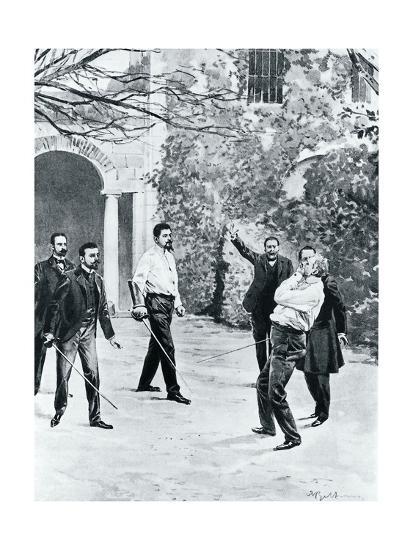
Death of Felice Cavalloti, 1898–he died via a thrust from a less-experienced fencer that entered his mouth and pierced an artery as it passed through the back of his head.

Third, most of the influential works on sabre produced in Italy were either written by military men or were intended for use in the military. From Del Frate’s distillation of Giuseppe Radaelli’s revolutionary new method onward nearly every work of note has some connection to the military. Dueling, though certainly well-attested in the civilian world, was perhaps most prevalent in the military. It was one of the Napoleonic era’s most lasting legacies in Italy. Thus, the officers and soldiers who wrote these works knew that in addition to having to provide basic instruction for the soldiery, these works might also be used to teach officers who might, like it or not, be called out to fight. The inclusion of synoptic tables for lessons in Del Frate, Masiello, and others offer far more than the short tracts on basic sabre for the infantry and reflect this very concern. A duelist might face a complete duffer, or, an accomplished fencer, so preparation for the duel demanded more than what an infantry private needed.[10]

So What?

Does any of this matter. It can. It sort of depends. For fencers who see the larger picture everything mentioned here will earn a “yeah, and…?,” but for those who have not yet studied outside their chosen tradition or who think it is a waste of time there’s at least one take away. If these fencers reject Italian or French fencing because it is “only dueling” sabre, then they may wish to reexamine that position. The military sources for sabre produced in France and Italy, because their officers might have to fight duels, include more than infantry manuals, because one needs more in one’s toolkit to fight one-on-one. No comrade is going to flank and spike the enemy focused on you; no stray musket ball is going to remove the soldier behind that enemy. It is one on one, and there is as much if not more danger fighting the unskilled as there is fighting an expert.

If you find yourself fighting in close distance; if you realize you never really move a lot; if you are obsessed with your opponent’s juicy armor-clad thigh; then there is a lot you might mine from French and Italian military sources. You lose nothing in doing so, and here is why—if not exactly contemporary, you will find fuller discussions of footwork in Italian works back to the 17th century, and thus “period” justification for more sophisticated movement. None of this material existed in a vacuum. Moreover, Domenico, Henry Angelo Sr, and Junior ran a salle in London that taught more footwork than the bare-bones infantry manuals. More attention to the richer sources, even within one’s own tradition, will aid rather than undermine your “military” sabre.

NOTES:

[1] I use this as a collective term for those works, mostly Scottish and English, written for the use of sabre or broadsword from the 18th to 20th centuries. It’s a handy way to refer to these popular works. At present I’m meeting with this group to help them with interpreting the texts.

[2] MOS: in the US Army this acronym stands for “military occupational specialty,” e.g. Combat Engineer (MOS 12B) or Cannon Crewmember (MOS 13B).

[3] Angelo, for example, wisely termed his broadsword method “Highland” and “Hungarian.” Like highland Scotland, the influx of Hungarian hussars who revolutionized light cavalry and fashion alike loomed large in popular imagination.

[4] Of note, not all of the Insular works are as skimp on details as to measure and movement, and again context helps us. If one examines Charles Roworth’s The Art of Defence on Foot with Broad Sword and Sabre (I’m looking at the 1804 edition), to name one example, one will see that the author spends more time discussing these vital considerations of fencing (distance, 37ff; the advance, 39; the retreat, 40; various forms of traversing, 41-43). Unlike later official publications, which were written for professionals teaching soldiers, texts like Roworth’s, though written by military men, covered more ground as readership might include non-professionals. For those keen to stick to works like the Infantry Sword Exercise, adding a study of Roworth, McBane, or Hope will provide much needed elucidation as to footwork, measure, and tempo, and, from the same group of islands.

[5] See Nick Thomas’ nice explanation in his edition of the Infantry Sword Exercise of 1817, here http://swordfight.uk/wp-content/uploads/2016/11/Infantry-Sword-Exercise-Angelo-1817.pdf , for more on the Angelos.

Today, these three critical distances are still taught, though sometimes with further divisions, at least for coaching. In the French school, for example, coaches employ six distances for epee. There are nuances I glossed over as well. For example, depending on distance and reach, a fencer in distance to lunge to the body might be able to reach out and hit the extended target/arm without a lunge.

[6] Armored combat is an exception, but in most cases our safety gear doesn’t encourage the realities of multiple opponent attacks. The back, for one, if it is protected is normally only covered by a jacket however heavy, and the back of the legs probably never. Thus, it’s not that we can’t have people avoid kung fu theater queuing, but that we shouldn’t. There are ways to teach multiple opponent scenarios, and they add a bit of flavor to the usual fare, but much of what we will do will mimic rather than recreate out of safety concerns.

[7] HEMA, like most things, is no stranger to what people now call “toxic masculinity.” This is a notion that gets thrown around a lot, sometimes without justification, but it is accurate as it pertains to big man/big sword dick-measuring stupidity and its attendant vices. It will be clear that I have little patience for this business—aside from the idiocy of it, it gets in the way. Fencing is difficult enough with adding onto it.

[8] See for example Martyn Beardsley, “England’s Last Duel,” 8 July 2019, https://www.historyanswers.co.uk/people-politics/englands-last-duel/ ; Jeremy Horder, “The Duel and the English Law of Homicide,” Oxford Journal of Legal Studies 12: 3 (Autumn, 1992): 419-430; R.B. Shoemaker, “The Taming of the Duel: Masculinity, Honour and Ritual Violence in London, 1660-1800,” The Historical Journal 45: 3 (2002): 525-545.

[9] There is a lot of work on American duels, and to repeat, I’m not saying we didn’t have them. We did, clearly. But culturally the idea was less “native” to the US, and didn’t survive long, because our people have historically had few qualms about shooting without ceremony those we don’t like and because of an unfortunate and unbecoming love of litigation, two problems we are, alas, still infamous for world-wide and for good reason. For some of the works on dueling in the Americas, see for example Baldick, The Duel: A History (1970), Freeman, Affairs of Honor: National Politics in the New Republic (2002), Holland, Gentlemen’s Blood (2004), and Murray, The Code of Honor: Dueling in America (1984) are informative. See also Stevens, Pistols at Ten Paces: The Story of the Code of Honor in America (1940), Williams, Dueling in the Old South: Vignettes of Social History (1980), and Burchfield, Choose your Weapon: The Duel in California, 1847-1861.

[10] I discussed this early on this page, see “Dueling” or “Military” Sabre, May 15th, 2019. It should be obvious why an infantryman, relying on his rifle and bayonet more than a sabre or hanger, would require less training, but for those who don’t see that then a side-by-side comparison of Roworth or Angelo set against Del Frate, Masiello, or Rossi should make it pretty clear even if one is only counting techniques per source. I also believe that competition among military fencing masters for the honor of running the national school meant that they approached their treatise writing almost like a resume. Chris Holzman has been working on some juicy bits from Jacopo Gelli that provide additional details about the rivalry between southern and northern Italian masters for control. I’m not sure when that will be available, but I’m eagerly awaiting it.

Italian Sabre & “HEMA”

A recent comment on facebook, one shared by a friend, illustrated something that has long troubled me—the failure to understand that tourney success is as poor a guide to how effective a tradition is as it can be individual prowess. The reason this should concern any sabreur remotely interested in historical fencing is two-fold.

First, there are well-known voices within HEMA who are influential and who have failed to appreciate these facts. Some have made public pronouncements without qualification that are likely to mislead many people and perpetuate ignorant ideas. Regardless of a fencer’s chosen area of focus in sabre one assumes they want as accurate a picture of past practice as they can garner, so for that reason alone it’s important to correct the error.

Second, competitors need to understand that daft comments about the prevalence of one style of sabre or another in major events reflect prevailing culture more than the merits or weaknesses within a given tradition. For a recent example one such commentator remarked

“nobody in modern times has ever won a major tournament using Italian sabre method. Sorry if that upsets you.” [1]

Where to start with this… If this individual, an Englishman, means within the span of modern competition beginning with the Olympics (1896), then there is ample evidence to the contrary. Of these examples my personal choice to illustrate the error would be H. Evan James, British sabre champion in 1905, who clearly didn’t share the commentor’s views. [2] If by “modern” he means HEMA, then that is worth examining in more detail.

There are two key reasons we don’t see more Italian sabre in HEMA and why we see even less in major competitions. Competitive HEMA sabre, by and large, reflects infantry sabre, and perhaps most often English infantry sabre, a watered-down version of a more complex methodology. [3] To be clear, it is not that more complete, sophisticated fencing didn’t exist in England, but that one isn’t going to find it in the Infantry Sword Exercise. Likewise, “simpler” here doesn’t mean “easy”—if anything, fans of infantry manuals face a greater challenge than those of us who prefer everything spelled out.

What this means is that rarely is one going to see any of the more sophisticated maneuvers and tactics one might find say in Masiello or Barbasetti, because those studying 40-page infantry manuals don’t learn them unless they dig deeper into their own corpus or parallel ones. Second, judging, such as it is, is calibrated to what those judges are expecting to see. So, if the level of sabre never rises beyond hop-and-chop, however well-performed, the judges will have a lot of trouble recognizing more complex actions. I’ve observed this first-hand myself at every single HEMA event I’ve ever attended or watched on video.

To use a local example, at the 2017 Winter’s End Tourney near Portland, Oregon, those fencers who attempted attacks into tempo with the point, such as an arrest or who attempted to manipulate distance tactically, suffered. Judges simply didn’t recognize what they were doing. What they saw, as the flags told it, was only what they knew to look for, obvious single-tempo attacks, all of which were made at close distance. Outside of the Italian and Olympic trained fencers present all of the fighters did their best to ape the images they saw in their sources, right down to never leaving close measure! Apparently, no instructor told them that what one might see on Angelo’s poster or described in a drill for the regiment to practice in unison, is not how one actually fights. One fencer, Italian trained, ate the competition alive but fared poorly because the judges lacked the ability to see what he was doing. [4] The fact that it was obvious meant nothing, because it was only obvious to the poor maestro I asked to officiate and to the few of us there who studied French or Italian fencing. Most everyone either missed it or ignored it because it didn’t look, and I quote, “martial” enough, a stupid term, much-used (incorrectly to boot) that boils down to one thing as HEMA-Bruh uses it, hitting hard and fast. A good fencer can hit hard, but chooses not to; a bad fencer doesn’t know the difference.

The quality of judging, like the quality of fencing, is relative—HEMA has yet to realize this. Any fencer who has spent time in Olympic fencing, on the contrary, knows all too well how true this is. An “A” ranked fencer in Bumblefuck, Middle of Nowhere, who is the best of all 6 people in their region, is likely not the same “A” that a fencer who earned that rank in a major city with hundreds of competitors is—what it takes to earn an “A” in the latter environment is a lot more demanding. In HEMA, however, most competitors possess only a modicum of skill, because their sources, even if they mine them top to bottom, do not include enough to make them brilliant one-on-one—the sources were not designed to do that. So, if both fencers only possess an “E” standard of skill (Olympic Fencing’s lowest rating), are held only to that elementary standard, and the judges lack the ability to judge beyond that, then however good those fencers might be, they remain “E” fencers. If this is all they know, and all they care to examine, then they will mistake that “E” for an “A.” This is what a lot of us outside or at the edges of HEMA see whenever we see HEMA bouts or what we conclude when some blowhard touts their supposed prowess.

There are exceptions too—there are students of Insular broadsword that bring out the best of their favored tradition. My go-to when I have questions about broadsword is Jay Maas of Broadsword Manitoba, Canada. In addition to being approachable, Jay is also one hell of a skilled fighter, one who to me exemplifies just how effective the Insular broadsword tradition can be. Why is he so good? Well, for one, he clearly has a knack for the Art, but he also studies not only regimental manuals, but those for highland broadsword, contemporary smallsword, and importantly—modern foil. Most significantly of all Jay understands these sources, that is, he has excellent command of the elements, fundamentals, or universal principles that make fencing what it is. He uses measure, his footwork is fantastic, his toolkit for technique and the options it provides deep, and his sense of timing is spot on. Jay puts in the time as anyone who has chatted with him or watched him fight or teach can attest. When I think of the people I want at an event, who represent their branch of sabre/broadsword, best, Jay is one of my top five, because I know he’s a gracious fencer and will give anyone, no matter what tradition, a fantastic fight.

With regard to officiating, if the standard by which HEMA judges fencing is rudimentary fencing, then it’s hardly surprising those competitors (and perhaps Youtube personalities) don’t realize the difference. Add their misguided hatred of all things non-HEMA and it makes even more sense—they refuse to learn by analogy, and what better analogy is there of how competition can go wrong than the excesses and gaming in Olympic fencing?

Italian sabre within HEMA, if we can even say that exists, is small. Because of the pedagogical approach, because of the source tradition, and because acquiring sufficient proficiency to compete takes time, there aren’t many of us competing. HEMA throws people into competition way too early, one result of which, well, I’m discussing here.

But there is another reason. No competitor who works hard to develop a sophisticated game is keen to jump into an event where none of that matters, where it will not even be seen, or where it will be, oddly enough, ridiculed. The shame there doesn’t belong to those of us in the Italian tradition, but to the boors who lack the inclination to look beyond their own source material, whose ego needs and dreams of badassdom cannot stomach the idea that someone else, or some other tradition, might have something to offer or, heaven forbid, be superior to their own.

It’s not an accident, after all, that Italian and French fencing stuck, that they were the traditions that formed modern fencing, because every nation in Europe, at the time, saw enough merit in the approaches to abandon their own native systems. It is worth noting that at the very time these nations adopted French or Italian methods both of those nations were still witness to the duel. It’s worth reflecting on all this, especially for those championing English infantry broadsword as the paragon of sabre systems, because if the popular Italian masters who so pissed off a certain Englishman circa 1599 don’t provide some hint as to the value Italian methods held for Englishmen, then perhaps the various repeated attempts to introduce more sophisticated sabre into England over the course of the late 19th and early 20th might.

Funny how for all the talk of English sabre no one ever talks about these men save Hutton (who recommended a “Continental” sabre by the way, page 2, Cold Steel, 1889). What about…

Francis Vere Wright, author of The Broadsword: As Taught By The Celebrated Italian Masters, Signors Masiello And Ciullini of Florence (W. H. Allen & Co., London,1889) or…

the Ministry of War’s 1895 Infantry Sword Exercise (based off of Masiello, but with errors in understanding) or…

Lt. Betts, The Sabre and How to Use It (Gale & Polden, Limited, Aldershot & Portsmouth, London, 1908) or…

Leon Bertrand, Cut and Thrust (Athletic Publications LTD, London, 1927)?

For some, I suspect, to discuss English attempts to improve their own fencing by introducing foreign ideas undermines the romance, jingoism, ethnic pride, and one sometimes suspects sadness over the loss of imperial glory. If those are the chief reasons one fences, they are poor reasons.

There is nothing wrong with studying regimental broadsword or infantry manuals, but there is in ignorantly claiming that they are the last word in sabre. For fans of English sabre who really want to know more about their chosen tradition looking beyond these sources is vital. For the Georgian/Regency period, a look at French smallsword and sabre (for the latter Le Marchant (1796) is a must) will be illuminating; both Angelo (1763 in French; 1765 in English) and Olivier (1771) wrote in English and French and Angelo has excellent plates and illustrations. As the grandfather of the Henry that wrote the Infantry Sword Exercise Domenico Angelo’s work will give one some idea of what the Angelo family’s salle offered in terms of instruction, that is, how much more there was to learn than what one sees in infantry manuals. For those more into Victorian sabre, contemporary French works (e.g. the Manuel d’escrime, 1877) and yes, Italian works (e.g. Del Frate (1868 & 1876), Rossi (1885), and especially Masiello (1887)), will help fill in the picture. There is merit in looking outside one’s own tradition, not only for what one might learn to help one’s game, but also because sabre then as now didn’t exist in a vacuum and gaining some sense of the larger picture will increase understanding.

In time, if HEMA survives its growing pains (betting is even money), we will likely see more events that allow for a wider, deeper variety of expression and sabre play than we do now. If and when it’s possible, one such event we’ve been trying to get off the ground here: a sabre invitational last held in 2019 that was slowly growing pre-Covid. The goal with this event is to provide a venue for fencers who want more than Mongo-chop-chop and who are capable of playing at a higher level. There is a lot of good sabre out there, most unfortunately drowned out by the din of arrogant single-tempo champs, but it doesn’t have to stay that way. The sources are there, and there are people who work from them, but that avails one little if they don’t take advantage of it.

NOTES:

[1] Matt Easton, facebook comment, shared with me March 19th, 2021. NB: The friend that shared this with me was quick to say that it may be a joke, that at least that some are treating it as one, and that Easton also appears to have walked back this comment somewhat.

I’ve not had the pleasure yet to meet Mr. Easton, but as a fellow fan of sabre and someone that has often pointed people to some of his videos, I might recommend in a friendly way that he be a trifle more careful. An experienced fencer, and no stranger to sources, Matt might make a joke that someone without his background takes at face value. Certainly the responses to his comment suggest wide support for what he said, and that is a problem being not only incorrect but needlessly inflammatory. No student of Italian sabre is unaware of what the majority of HEMA thinks of their tradition.

[2] Mr. James’ sabre is Radaellian, and if that seems incidental, then that very Italian leather sabre cuff should help cement the fact he studied Italian sabre. For his Olympic record, cf. https://www.olympedia.org/athletes/22152

[3] In an earlier post I discussed this issue, see “Dueling” or “Military” Sabre, May 15th, 2019. It should be obvious why an infantryman, relying on his rifle and bayonet more than a sabre or hanger, would require less training, but for those who don’t see that then a side-by-side comparison of Roworth or Angelo set against Del Frate, Masiello, Rossi, or Pecoraro & Pessina should make it pretty clear even if one is only counting techniques per source.

To reiterate: simpler texts do not equal easy to learn and fight, in fact they are far harder to use well. This system produced some very fine swordsmen, and does today when, like Jay Maas, Paul Wagner, Stephen Hand, Nick Thomas, and others read and study these works in light of fencing principles that supply what the authors of those texts assumed the reader knew.

[4] No, it wasn’t me, I was helping to officiate, but it was a friend of mine, a senior student of Maestro Sean Hayes, and a gifted fencer.

Khevsureti and Martial Arts

My friend Mike Cherba (Northwest Armizare) has a guest post on kogenbudo.org. It’s a great site, and Mike offers an excellent primer on this fascinating (and extremely fun) folk system of martial arts from highland Georgia. Here is the link:

Of Parries, Precipitation, and Poultry

Photo by Kalisa Veer, https://unsplash.com/@kalisaveer

We can do most anything when it’s important to us. In the sodden pinelands of the Pacific Northwest the pursuit of most everything entails acceptance of weather if not outright preparation for it. Whatever it is, hiking, sailing, running anyone devoted to these activities does them irrespective of weather. Fencing is normally more or less immune to the elements because usually it’s indoors. Here, because of the damp, we may buy and apply more 3-in-1 oil than others, but fencers everywhere must combat the rust that mixing damp kit and steel fosters. The combination of PNW weather and a pandemic, however, means facing unique challenges. Most fencers at this point have either participated in or know people who have attended online classes, posted footage of drills, or who have even worked out together via zoom or google-meet. Because we can’t congregate inside or in large groups, we’ve had to be creative. Many of us studying the Art have to train; it’s not just the exercise, but that it’s part of who we are, our way of understanding the world, even acting in that world, and so we can’t not, if that makes sense.

The group classes I was teaching either collapsed thanks to Covid or have been put off until it’s once again safe to train indoors. The more fencers with whom I speak the more I hear similar tales of woe. Most of us, if we have a space, pull in just enough to pay rent; moreover, the most affordable insurance demands that we operate as non-profits, so it’s very week by week, skin of the teeth staying open. I wasn’t the only one to lose a space and the people who used it. While easy to take that to heart—and one does at least in part—the truth is that most martial arts studios, of any kind, probably have a shorter half-life than new restaurants. My other classes, conducted through a local parks and recreation organization, will (hopefully) return when we’re in a better place with Covid, but otherwise I imagine what I am doing now will continue.

One of several excellent covered spots in the region

Most of this year I have taught a handful of people, individually, once a week, outside, and masked. Living where I do this means navigating months and months of rain. I’ve found a few places, such as public parks, with sufficient covering to keeps us from being soaked, but at various times these have been closed during quarantine.  So, we’ve used porches, garages, one portion of a barn, my backyard, an empty street, and a local basketball court. Focused on the students, and what they need, as well as how best to supply that, it’s easy to ignore the cold or wet (less so the heat for me). It also strikes me, each practice, how dedicated these fencers are. They meet with me every week, and like ancient Persia’s messengers, “are stopped neither by snow nor rain nor heat nor darkness from accomplishing their appointed course with all speed.” [1] Their zeal in turn keeps me going too; I work harder, prepare more, and do all I can to help them improve. I owe them my best.

There are times, though, when just how weird all this is hits me. Probably my favorite example, so far, was having to stop practice to chase a chicken back into its coop. One of my students lives on a small farm just outside of town, and we often meet in a space next to his barn. We had a good laugh about it once that blasted wee dinosaur was back in its cage, but never did I think managing fowl was something I needed to be prepared for. Ridiculous moments like that help make the difficulties in working out of doors easier. Slipping on mud, wet planks or concrete; walking to practice with a giant garbage bag over my fencing gear (not looking at all suspicious, I’m sure); the strange head-bobbing machinations we make to ensure that face-masks don’t become headbands inside our fencing masks; and competing for covered space with any other group who normally trains indoors (high school dance and cheer teams, kids at play, adults meeting to chat so many feet apart) it’s all become part of the equation. In addition to the sad contributions we make to slapstick comedy, there are other benefits.

This farm I visit once a week, for example, has a little concrete, but is mostly gravel where we practice, and so footwork drills in particular are affected. Working without a decent floor creates a number of hurdles. Concrete is nice and flat, but hard; it can also be slick. Gravel is pure rubbish to fence on, but sometimes the only option, especially as what isn’t mud is more than likely a fen in hiding. Grass is slick, but also hides those covert fens until one steps into them and loses a shoe (NB: shoes fill surprisingly fast with mud. It’s worse than chickens). Wood, such as decking or the planks at certain parks (sitting areas, bridges, etc.) are better, but the latter are normally full of benches, picnic tables, or railing. Somehow, wherever we end up each week, we “make it work” (the excellent Tim Gunn, a fencer by the way, would be proud). One unlooked for benefit from all these odd places is that trying to fence on them helps put some of the observations in the sources about terrain into higher relief. For one example, Monsieur L’Abbat, who wrote about smallsword, not only recommends that the lead foot be lifted slightly and set down “flat and firm,” but also that the rear foot, depending on the ground, not turn over too much onto the edge. [2] It also, I believe, helps us learn to adjust footwork to fit the ground—the importance of proper technique with footwork is all the clearer too: if we don’t do it right there is the very real chance that we’ll twist a knee or ankle or end up cap-a-pie in mud. Terrain also affects measure which can affect tempo, and while certainly not an ideal way to work those all-important universals, what we’re learning would be difficult to do otherwise.

In a similar way, attempting to fence in winter clothing can be illuminating. It’s rarely truly cold here, but the damp makes it feel much colder, and balancing layers with exercise is tricky. Like normal outdoor activities we often start with more on and discard layers as we warm up. No one, however, wants a nice winter coat slashed or poked, and so this often means various layers underneath fencing jackets. Mobility can be affected either way. The days where we conduct lessons without rain and roof mean situating ourselves as best we can to avoid the sun (it can refract nicely on the mesh of the mask); if it starts to drizzle we normally keep going, but rain makes it hard to hear and see, never mind the potential danger in slipping. That’s really not ideal even with practice weapons in hand. While additional clothing, because it’s modern, doesn’t necessarily give us a sense of how fighting in a great coat, justeaucorps, or pelisse was, it nonetheless makes us aware of how clothing can affect technique, and, of what we need to do to ensure we maintain good form.

In recent weeks some of this has been harder to juggle. An ice storm last weekend made homework for the epee course tricky; my other responsibilities and various jobs, vehicle failures, changes in school schedules, everything it seems makes coordinating lessons a little more difficult. But I do it. We do it. Because we can’t not. More than anything else this is the fact that comes up for me most when I stand back at look at the past year.

Salute, from Girard, P. J. F. Traité des armes. France: La Haye, 1740.

It’s an honor to meet these students each week. With all that is going on in the world, in their own lives, with all the shared challenges humanity faces, they make time for fencing. Rain, snow, or shine, they make it. Their level of dedication, depth of passion for the Art, and the discipline it takes to do that each week is truly impressive. As their instructor I’m humbled by that, especially given the loss of a school and students, of major plans that had to be postponed, of all the disappointments, because these woes are out front, visible, and quick to clamor for attention. It would be easy to dwell on what I lost.

When the Art is our life, when what we learn in studying it is the lens through which we understand so much of what we experience, when it is for lack of a better expression a way of life, a creed, then these seemingly small victories appear less small. My students are fencers in a long, difficult bout, and they’re not giving up. Covid, online school, sick friends and relatives, job issues, isolation, all that may have points on them, but they’re not forfeiting; they’re still in the fight. That sort of resilience is perhaps the greatest lesson we are learning each week. It’s proof of fudoshin (Japanese “immovable mind”) and its benefits, of the ability to focus despite calamity, poor weather, or chickens. [3] Sharing this time with my students, handing down the tradition handed to me, and seeing them improve, all while things collapse around us… there’s beauty in all that and I’m grateful to be a part of it.

NOTES:

[1] Herodotus, The Persian Wars, 8.98. See for example Herodotus, The Persian Wars, 4 vols., translated by A.D. Godley, Cambridge, MA: Harvard University Press, 1920-1925, available online at http://www.perseus.tufts.edu/hopper/text?doc=Hdt.%208.98&lang=original

[2] Andrew Mahon, who translated L’Abbat’s book into English, makes a piquant observation about the rear foot and the ways in which it might turn onto the edge:

“Monsieur L’Abbat recommends the turning on the Edge of the Left-foot in a Lunge, as may be seen by the Attitudes. This Method indeed was formerly practised by all Masters, and would be very good, if their Scholars had not naturally run into an Error, by turning the Foot so much as to bring the Ancle to the Ground, whereby the Foot became so weak as to make the Recovery difficult… Therefore I would not advise the turning on the Edge of the Foot to any but such as, by long Practice on the Flat, are able to judge of the Strength of their Situation, and consequently, will not turn the Foot more than is consistent therewith.

It may sometimes be necessary to turn on the Edge, on such Ground whereon the Flat would slip, and the Edge would not, if it were properly turned; but even in this Case, by turning it too much it would have no Hold of the Terrace, and therefore would be as dangerous as keeping it on the Flat.

The chief Reason for turning on the Edge, is that the Length of the Lunge is greater by about three Inches, which a Man who is a Judge of Measure need never have recourse to, because he will not push but when he knows he is within Reach.

Monsieur L’Abbat, The Art of Fencing, or the Use of the Small Sword, 1734, ed. Andrew Mahon (Dublin, IRE: James Hort, Gutenberg.org).

For the lead foot, of note is this passage:

The Foot should fall firm without lifting it too high, that the Soal of the Sandal, or Pump, may give a smart Sound, which not only looks better and animates more, but also makes the Foot firm, and in a Condition to answer the Swiftness of the Wrist.

Care must be taken not to carry the Point of the Foot inward or outward, because the Knee bending accordingly, as part of the Thigh, goes out of the Line of the Sword, and consequently, of the Line of Defence, besides ‘tis very disagreeable to the Sight.


The Feet sometimes slip in the Lunge, the Right Foot sliding forward, or the Left backward; the first is occasioned by carrying out the Foot before the Knee is bent, whereas when the Knee brings it forward, it must fall flat and firm; the other proceeds from the Want of a sufficient Support on the Left Foot.

Il est bon que le pied frape ferme sans l’élever, que la sandale claque avec éclat, ce qui non seulement paroît & anime advantage, mais encore bonifie le peid & le met en état de suivre la Vitesse du poignet; il faut éviter de porter la pointe en dedans ou en dehors, parce que le genoüil ployant sure cette ligne se fort, & une partie de la cuisse de la ligne de l’epée, & par ce moyen de la défense, outre que cela choque extremement la veüe. Les pieds peuvent encore manquer dans l’alongement le droit glissant en avant & le gauche en arriere; le premier vient de ce qu’on porte le pied avant de ployer le genoüil, au lieu que quand le genoüil le deviance il ne peut se porter qu’à plomb, & par consequent avec fermeté, & l’autre se fait par le manque d’apuy sur la partie gauche.

Jean-Francois le Sieur Labat, L’Art en Fait d’Armes ou de L’Epee Seule, 1696 (Toulouse, FR: Chez J. Boude, La Fédération Française des Arts Martiaux Historiques Européens), Ch. 3, p. 18-19.

[3] 不動心(fudōshin) is a concept in various schools of Japanese swordsmanship. My exposure to this concept, for fencing, was via kendo. There are various resources for those interested in this idea. See for example, Taisen Deshimaru, The Zen Way to the Martial Arts (New York, NY: Penguin Compass, 1982); Joe Hyams, Zen in the Martial Arts (New York, NY: Tarcher/Putnam, 1979); Michael Maliszewski, Ph.D., Spiritual Dimensions of the Martial Arts (Rutland, VT: Charles E. Tuttle Company, 1996); Hiroaki Sato, ed., The Sword & The Mind (Woodstock, NY: The Overlook Press, 1986).

Piste & Page (Part I)

[I’ve been asked several times how I got into historical fencing, why I’m no longer competing, etc., and figured it would be helpful to me if no one else to spend some time on that. Thirty years of fencing, and forty of martial arts, puts a body through a lot so the easy answer to the competition question is “mileage.” For the literary minded this is a choice between playing Achilles or Nestor—the former’s path may gain one glory, but a shorter career; the latter a longer career, but less glory. I intend to do all I can to fence until I am utterly unable to do so, and so that means focusing more on teaching and research than it does tournaments. Few talk of Nestor, but he made it to Troy and acquitted himself well so while hardly the most exciting character among the Danaans, there are worse role-models 😉 In any event, here is part I of how I landed where I currently am]

A friend of mine, an author working on a new book, asked me why sabre is my favorite weapon. This sparked a longer conversation about how I got involved with historical fencing. I learned a long time ago to develop answers akin to those one uses in academia, that is, to have a soundbite, a two-minute answer, and then a full answer which might take a few minutes, each appropriate for specific instances. Most people, for example, when they find out you’re a professor ask “what do you teach?” and expect a short answer, such as “history.” Going into detail about Libanius’ support of the Emperor Julian or imported narrative tropes in Irish hagiography is usually only of any real interest to me and three other people. Neck-deep in graduate research, working alone for the most part, it’s easy to answer these questions with far more information than people want or need. It can take time to read that in people, least it did for me. They might ask, but they don’t really want to know.

It’s the same with fencing. I replied with a short answer, but my friend wanted more, so I told him that like many people I started in foil, but that the sabre squad at my university needed a fourth member so I volunteered. I had watched the sabreurs fence, and was attracted to the speed, noise, and violence of it. It looked fun!

Our coach at the time, Maestro Edwin “Buzz” Hurst, was strict, appropriately demanding, and quick to dress us down if we got lazy or our attention wavered.[1] This was difficult for many students. An Annapolis grad and retired naval officer, Buzz can summon that stern military demeanor when necessary. I learned a lot from Maestro Hurst, not only in terms of technique but in terms of tactics and strategy. One of the things I admire about him is that he never once refused to answer a question or explain something. I’ve met coaches who have 15-20 min. per student and little patience for questions. Busy as he was, Buzz was happy to answer questions after a lesson or if we happened to join him for lunch.

UCSB Fencing Team 1992–Maestro Hurst is in the middle, rear row; I am on his right as you look at the photo; Phil Ives, our sabre squad captain, is on Buzz’s left; Jason Levin, another sabreur, is just right of me and down slightly.

UCSB’s fencing club was just that, a club, which meant limited resources unlike NCAA supported teams. It was all on us for the most part to bring in additional money, something we did with everything from bake-sales to fencing demonstrations. Our numbers dipped, and about a year or so after Maestro Hurst helped us achieve the division championship (1992)—something a club team had not done in some 25 years—we found we could no longer afford him. [2] This affected the sabre squad perhaps most, but in time we were lucky to contract with another Los Angeles area maestro, Albert Joseph Couturier (d. 2014, aged 91), “Al” to us. Members of our foil squad had been visiting his salle in Culver City, and some of his students and assistants had helped direct our tournaments.

It was a long drive for Al, then in his early 70s, so two students, Larry Dunn and Brian Peña, usually drove up with him and assisted. Brian helped coach foil and epee (though he is a good sabreur too), and Larry assisted Al with sabre. The years I spent studying with Al and Larry, as I look back on it, were the years that shaped most of my game. Buzz had given me a solid foundation, and they helped me build a house on it.

SoCal NCAA Fencing, 1990s

Reputation for laxity and a “duuuuuude, the waves are like sooo killer brah” attitude aside, southern California was and remains a major hub for fencing in the United States.[3] In the early to mid-90s the level of skill in the collegiate division, fed as it was by parallel interest in USFA competition, was high among the top tier of competitors. With so many maestri in town, and post 1984 Olympics (Los Angeles), coaching was not only available, but often of extremely high caliber. It had long been this way. Some names are well-known in American fencing, such as Aldo Nadi and Henri Uyttenhove, but Delmar Calvert, Len Carnighan, Michael d’Asaro Sr., John MacDougall, Torao Mori, Heziburo Okawa, George Piller, Charles Sandberg, Doc O’Brien, Hans Halberstadt, and many others all taught at some point or other in California, and between them and their senior students the talent pool was as broad as it was/is deep. In addition to the masters resident in the area, many world competitors and instructors visited too. Daniel Costin, originally from Romania, directed some of our collegiate bouts, and I had a few lessons with Ferenc Lukacs when he was at Salle Couturier.[4]

When there is such a high level of coaching, so long as one is dedicated and puts in the time one will improve. Like many things, the more we know of something, the more we’re able to do, the more enjoyment we get out of it. Provided with frequent tournaments, in college or via the USFA, we didn’t lack for chances to hone our skills. One reflection of this mix of enjoyment and skill was the fact that after the sabre portion of a tournament was over—we were usually first to finish—a number of the schools in the conference would keep fencing. This was common pre-electric sabre.

Depressions Beach, Isla Vista–yes, yes it is somewhat a miracle that any of us at UCSB ever graduate.*

We came to know many of the fencers at UCLA, USC, CS Fullerton, and others. Our major rivals, however, tended to do their own thing.[5] The chance to fence with some of the best fencers in our area, after the stress of competition, not only made for fun but allowed us to fight better fencers without the pressure. We learn a lot in friendly bouts with those more skilled—the fact that it’s fun helps too. As a much younger person fighting in competitive TKD tournaments I had been encouraged to seek out better fighters—one will face some tough bouts, but what we can learn there is invaluable. It is just as accurate in fencing. D’Artagnan Sr., one may recall, tells his son “Vous êtes jeune, vous devez être brave par deux raisons: la première, c’est que vous êtes Gascon, et la seconde, c’est que vous êtes mon fils. Ne craignez pas les occasions et cherchez les aventures. Je vous ai fait apprendre à manier l’épée; vous avez un jarret de fer, un poignet d’acier; battez-vous à tout propos; battez-vous d’autant plus que les duels sont défendus, et que, par conséquent, il y a deux fois du courage à se battre.” [6] This happy camaraderie changed dramatically with the advent of electric-sabre in collegiate fencing.

Electric Scoring: Sabre’s Charge at Krojanty [7]

Electrical scoring wasn’t new and had been a normal part of foil and epee for decades, but sabre proved far more difficult to convert.[8] Where depressing a button at the tip of the weapon is a fairly simple mechanical process, figuring out how not to make the non-dangerous portions of a sabre blade register as a hit is complicated. To this day no one has done it. It’s one piece of metal, but only the true edge, tip, and last third of the false edge—supposedly—should register a score. That is in keeping with real blades—the flat might smart, the forte might bruise, but neither is sharp. In the days when sabre was fenced dry, where we had a director presiding over the bout and four judges to assist, this was far easier to track. The director had to listen as well as look—if they heard fabric before steel, it was a hit; if steel before fabric, it was parried and the following “thwack!” was whip-over; if the sounds were simultaneous then chances were good it was a malparry or failed parry. The judges, ideally, helped determine this by acknowledging either a hit or miss, or in the event they were unsure or could not see, they could abstain.

Since the judges were pulled from the teams, and since some teams were open to cheating, the judges could and did try to game their role. A good director called them on it, however, and made it clear that such garbage wasn’t going to work. Given this potential problem with judges the appeal of electrical scoring was obvious; but it was introduced too soon. The technology only worked in ideal circumstances, but those with the power to do anything about it didn’t see that.

Whether used with an accelerometer/capteur (as we did initially) or without, electric scoring in sabre only works if everyone is playing according to ROW (right of way), is skilled enough to fence cleanly, and honest enough to acknowledge a fair hit against themselves or deny a poor hit awarded to them. Assuming well-trained fencers who are defense-minded, who aren’t adapting their technique to exploit the scoring system, it “can” work. However, because it was so easy to exploit weaknesses in the system, the lowest common denominator became the path to success. Crappy fencing could and consistently did beat out better fencing. To make matters worse, the rules, then as now, do not allow one to overrule the box. Worse still, the rules soon changed to reflect the new reality.

Almost overnight the problems became obvious. First, from the director’s call of “allez!” both fencers would fleche at one another and double out. In the next exchange, the better tactician might feign a fleche, but instead take distance, make say a beat-attack against the fencer making the fleche, and make the touch, but… lose the point. The reasoning behind this, such as it was, argued that since the attacker’s light went off the other fencer must have failed to make the beat-attack in time. Half the time the director called it a failed parry-riposte—understandable, perhaps, but less so when the fencer making the beat is taking distance and striking either the middle or last third of the blade… Part of a director’s job is to make the call as to who has ROW, the initial attacker or the person who made the counter-attack in tempo, and this was still required, but increasingly the director came to rely on the box versus their eyes and ears.

With both lights signaling, and thus both fencers “hit,” the fencer making a simple attack with a fleche, say a cut to the head, was awarded ROW mostly because their attack was straight-forward. Anything more complicated than hop-and-chop was too easily taken for a failed parry or searching for the blade. The problem with this is that the very same principle of ROW means that an attack into tempo, such as a beat cut–properly made–takes ROW away from that attacker. Relying on the lights rather than one’s senses was a natural mistake, one only encouraged by the director having to bow to the box. Between less focus on what the action actually was and expectations for bad fencing at the collegiate level, directing followed the fencing as it descended into the chimpanzee donnybrook it increasingly became. As for the parry-riposte game, it was gone.

The “Flunge” **

The answer was a band-aid instead of a solution. They outlawed the fleche and any other attack where one crossed one’s legs. Fencers, however, who relied on it began to make a similar, if far more clumsy attack, the “flunge” (more or less a fleche except that the legs don’t cross). The en garde position went from mid-century third, a compromise between offense and defense, to a forward leaning position, one where the hand was held at about hip height, point near the floor, to facilitate a speedy slap at the bottom or side of the bell-guard. [9] These fencers were literally attacking the strongest part of one’s defense and scoring—it didn’t matter that this was whip-over. The light went off. One could take the Platonic ideal of a parry and it meant nothing. The entire ethos of the game changed, and the frustration of some combined with the glee of those getting away with it fostered a bully approach of mask-throwing, simian grunting, and screaming clownishness that has persisted. Had they addressed the one thing that would have fixed it all, the nature of the blade, they could have saved themselves a lot of trouble (and no, the s2000 blade did not solve the problem).

Disillusionment

Anyone who spends years dedicated to honing a complex set of sophisticated techniques is going to be a little disappointed that almost overnight they don’t matter. As in so many things, it also didn’t matter that one was right—that the logic of ROW argued against the ridiculousness, that both common sense and history were on one’s side. Nothing. What mattered was winning. The chimp who slaps at your bell-guard and makes a light go off has not proven that they’re the better fencer, only that they’ve learned a game using sabres well. There is a difference.

The lack of concern, even amongst our teammates, was disheartening. The coaches were sympathetic, but on the one hand hamstrung by the rules and on the other were accustomed to a different experience on the piste themselves. There was a short time where high-level competitors, who had been trained properly, could work around the nonsense. Directors too, since they were dealing with A-level competitors expected and looked for more than the hulk-smash blitz of the flunge at the bell-guard. Only later when these fencers started to suffer too did coaching change. In their view, I suspect, bad fencing is just bad fencing, and since they had less trouble, the problem wasn’t the electrical scoring system, just newer or less-experienced fencers than themselves.

Defection

I can’t recall the exact date, but it was during the last two years of my competitive life that I made the break. It wasn’t apparent to me then, in fact it wasn’t for a very long time, but looking back on it the decision to dive into the sources was a turning point. For a long time the sea-change in my imagination was the memory of a comrade and I cracking open two bottles of McEwan’s Export Ale after our last collegiate bout, but in hindsight that was just a sad denouement.

Carl Thimm’s bibliography and other works in the university library were my first stop. I combed bookstores, and the burgeoning internet where among other things I discovered that there were other weirdos like me as well as people like Patri J. Pugliese who had started scanning and sharing long out of print manuals and treatises. I discovered both further conviction for the cause and comfort in works like Barbasetti’s that were so close to what I had learned.

Tolle, lege!

To most historical fencers this will sound pretty normal, i.e., looking at sources, but in Olympic circles it is, or was, less common. There was almost never any reason other than an individual’s curiosity to consult a work on fencing, especially in our region. We all took lessons from masters who had carried on centuries’ old methods, who could answer questions, and while the historical nugget here or there was fun trivia, the focus was improvement to advance and medal. One didn’t need books to do that.

If reading up on fencing, and reading old fencing manuals was odd, even worse were the attempts to create more realistic (yet still safe sabres). With apologies to my friends in the SCA, my teammates back then, viewed the various experiments that my good friend and fellow sabreur Jon Tarantino and I conducted as one step away from puffy shirts and bad Elizabethan accents. It cost us most of our credibility with the club. We were tolerated, but barely. Pity to say that now, some twenty-five years later, the ill-will people bore us remains strong with some former teammates. No amount of explanation, even apologies for souring newer fencers, has made a difference.

Dennis Nedry to Dodgson: “See? Nobody cares.”

One thing I believe to this day was that Jon and I found a simple solution, one we proved worked, and that would have helped alleviate a lot of problems if it didn’t outright fix electric sabre or make it unnecessary: a return to more historically accurate blades. The core issue was whip-over, so logically a slightly stiffer blade would help. This was the path the FIE took and the resulting s2000 blade is stiffer.

However, that was only part of the problem. Fencing with a weapon so light is fast, so fast that it allows one to do things that one cannot do, not safely anyway, with a weapon of period weight. This was less an issue when the lighter blade was invented for the sport because training still reflected the reality of the duel. After all, the duel had not disappeared in Italy yet, nor in France for that matter, and there were still people either issued swords or using them in war as late as World War II.

Stiffness was an easy solve, but adding weight is not something I think anyone official considered. Concerns over legal and safety issues were raised when Jon and I brought it up, but these were weak arguments. Produced correctly, blunted, with proper flex, a blade along late 19th century lines is as safe as anything else. The additional weight becomes negligible quickly after a little practice, and there is no marked increase in force—most of that comes down to training. Good fencers are not hard-hitters.

We sunk a lot of time and money into researching options for such a blade. The problem was no one made them. We went through a lot of crappy Indian-made “cavalry” repro-sabres, any theatrical blade even slightly robust, and at least two really lovely—but totally unsuitable for bouting—“Masiello” sabres made by Oscar Kolombatovich. In most cases we had to alter these weapons significantly to use them safely. With the repro cavalry sabres, for example, we tapped out the peen to remove the blade, ground it down to a more suitable length for use on foot, reground the tang, tapped the tang for a pommel nut, and reassembled the sabre. Even a clipped point that is rounded out by grinding, however, can be dangerous, and while these were fun they were never ideal.

We settled on schlagers, the oval ones still available then, as they had enough flex to thrust safely, were rigid enough not to whip, and were closer in weight to earlier blades. To test our hypothesis, we rigged two schlager blades for electric, accelerometers and all, as these were the closest thing we could then get to say late 19th century practice blades. Most of this was easy—we painted the inside of the bell-guard to insulate it, taped the pommel nut, and added an accelerometer jack into the last two steel guards we owned. These were robust, had a rolled edge, and lasted an impressive amount of time. All that remained was to suit up and try them out.

To say that we demonstrated that they worked well for electric would be too prosaic—it literally solved every issue. Even a panic parry close to the body didn’t incur whip-over. After we beta-tested it, we had one of the coaches try it. They agreed it was better, but sort of shrugged. Suited up as we were, and with tips wide and broad enough for safety, it was less a concern for any danger, I suspect, as it was that they were just too different. Jon and I explained that the increased weight was necessary, that current blades were too light and meant that speed dominated the game over proper technique (still the problem today). We added that it took a few weeks to adjust to the weight, but that it was worth it. For proof, here we were, sharing the fruits of our labor so others can see how easy it was. No amount of enthusiasm, no demonstration of proof of concept, nothing made the slightest dint in anyone’s opinion. Not even having them try it out helped. It didn’t matter to anyone but us. It’s not hard to set out on one’s own after that.

Glad as I am, thrilled as I am, that we have the blades that Castille Armory, Danelli/Balefire, and Darkwood make, it’s hard not to wish they’d been around in the 1990s. Castille’s 16mm sabre blade would have solved most of the issues. It still could. The daffy junk one sees in modern sabre won’t work with a proper blade.

In Desertum

The last half of the 1990s and the first decade of the new millennium I spent researching, drilling, fencing, and taking lessons whenever possible. Like Bracciolini, everywhere I went I hunted for books, buying whatever I could find that was useful. [10] I also worked on a few papers, one with Jon entitled “Is a Heavier Blade the Answer?” which never saw the light of day. I published another article in Fencer’s Quarterly, edited by Maitre Nick Evangelista, and was hopeful of publishing a second when the magazine folded. [11] I’ve continued to write, mostly for myself or students, ever since.

Eager for allies, I continued to look for them, but the few I found were as beleaguered as Jon and I were. Most had given up and left the competitive world. It was hard to blame them for it, but I didn’t want to do that. I wanted fencing to be what it had been, to fix something it ought to be able to do, and, that it could do safely. I wanted to compete again. My interest in classical and/or historical fencing, at the time, was largely geared toward improving Olympic fencing, but it had been clear for a long time, especially with the rise of both “classical” fencing and early historical experiments that this was a waste of time. Whatever I would do with fencing it seemed more and more likely I would be doing it alone until I could find other, like-minded people to fence with again.

NOTES:

[1] Maestro Hurst is an active coach, not only teaching out of his Cabrillo Academy of the Sword, but as a long-time officer, in many capacities, of the USFCA. https://www.cabrillosword.com/instructors

[2] I wasn’t part of club leadership and can’t say much about the decision process that led to us losing Maestro Hurst. Rumors must have been circulating as a chance meeting at my school library with a rival coach proved. The late Carlos Fuertes, a former Pacific Coast Sabre Champion and then a coach for Cal Tech, recognized me when I said hello, and asked if I had a moment. He was in the same tracksuit that I normally saw him in and was even wearing his “dancing bear” t-shirt. That “moment” turned into some 45 minutes of him cross-examining me (he was a lawyer as well) as to the “real” reason Buzz was no longer coaching at UCSB. It’s true that a few of my teammates were unhappy with Buzz and took his sometimes strong criticism personally, but as far as I knew while that might have made it easier for them to make the call, the fact was we were a club team and continually poor. Buzz was my second coach, but the first master I had the privilege to study under and there was no way I was going to feed rumors one of his rivals had heard. Buzz had no special affection for me—I was just one of many students–but he was my maestro, he gave me my start in sabre, and loyalty is important. I would not dishonor that or him. It’s not easy finding articles etc. for this period in California’s fencing history, rich as it is, but the source is the West Coast Fencing Archive, cf. https://www.westcoastfencingarchive.com/2015/05/18/san-jose-state-university-unknown-tournament/ . The LA Times archive also has some articles.

[3] Southern California has long boasted a thriving fencing culture. The large number of colleges and the proximity of Hollywood meant that there were always a lot of fencing masters resident in the area. There were also often close relationships between some college teams and public salles, because many collegiate fencers also fenced, outside the academic setting, for those salles. Maestro Couturier was with us long enough that UCSB at the time was a satellite as it were of his school, and the rivalries we had with schools like Cal Tech and its connection then to Salle Grenadier, meant that opponents often had twice the reason to defeat the competition. This was not as Jets and Sharks as it sounds, but as sabre culture soured in the late 90s these additional loyalties definitely played a role. For those interested in Hollywood and fencing, the standout work on the connection between fencing and Hollywood is Jeffrey Richard’s Swordsmen of the Screen (New York, NY: Routledge, 1977).

[4] Ferenc’s lesson was straight-up old-world Hungarian, and the only “t-shirt lesson” I ever had. These tend to stick in one’s mind as outfitted only with a mask and glove any failed parry means that an attack stings more than usual. There was a language barrier, so much of the lesson was carried out by repetition until I made the right correction. The one example burned in memory was that my guard of third was off just enough in one lesson that Ferenc cut at my arm, the whipover of which did a number on the top of my forearm, until I made the correction that prevented it. Though not my way of doing things, I will say it did make my guard and parry of third pretty decent.

[5] CSLB and CalTech were my school’s major, consistent rivals, but much of this varied by squad and over time. UCSB’s sabre squad, pre-electric, tended to meet up with that of UCLA, CS Fullerton, and some of USC’s sabreurs to get in some extra fencing. Reuben, whose surname I forget, from UCLA, and Jason Late of USC were two of the most enjoyable, skilled fencers we had the pleasure of facing, and, were always gracious win or lose. I learned a lot fencing with them.

[6] Alexandre Dumas, Les Trois Mousquetaires, Ch. 1. [“You are young; you must be brave for two reasons: the first is that you are a Gascon, and the second, you are my son. Do not be afraid of opportunities and seek adventure. I have taught you the sword—you have a leg of iron, a wrist of steel; fight about everything, fight all the more since duels are forbidden and therefore there is twice the courage in fighting.”] http://www.gutenberg.org/cache/epub/13951/pg13951.html

[7] The Polish cavalry charge against German mechanized infantry is proverbial for famous disastrous last stands. See for example https://worldhistoryproject.org/1939/9/1/charge-at-krojanty

[8] Epee was the earliest of the three to go electric (1931). Foil followed in 1956. The first more or less successful version for sabre saw service in 1986 for one event’s finals pool; the first complete event to feature an entirely electric sabre section was the 1989 World Championship. See Nick Evangelista, The Encyclopedia of the Sword (Westport, CT: Greenwood, 1995), 197-200; E. D. Morton, Fencing A-Z (London, UK: Antler Books LTD, 1988), 57-58; Julius Palffy-Alpar, Sword and Masque (Philadelphia, PA: F. A. Davis Company, 1967), 117-118.

[9] Stupid as this sounds, slapping at the bell guard was an easy way to take advantage of the modern blade and score. The s2000 blade, ostensibly less flexible and thus less prone to whipover, was an improvement on that particular blade design, but not a solution. It’s just too light, which encourages speed over proper technique. This doesn’t mean that there isn’t a technique to making a touch now, but to say that modern technique is at variance with an impressive amount of literary, even video evidence from a time when practice was closer to the real thing. The guard of third, which has become the standard en garde position, is due to Hungarian influence. Italian sabre, which transformed the Hungarian program, has a similar parry, terza bassa or low third, but historically this was a low-line option used in specific circumstances. The guard of choice, and in my view still the best guard, is second. It presents a threat, it puts the point on target and makes a thrust or actions with the point easier, and yet allows for quick parries in the first triangle (first, second, and fifth) as well as setting up various molinelli well.

[10] Like the generation of Italian humanists before him, like Petrarch and Boccaccio, Poggio Bracciolini stands alone as the finest discoverer of ancient books. As a Papal secretary, Poggio was ideally situated to explore libraries. The Council of Constance (1414-1417), which attempted to rectify the breach in the Church caused by the “Great Schism,” was a key event which allowed for a number of humanists to visit northern libraries. Poggio, for example, visited Cluny in 1415 and brought to light several works by Cicero unknown at the time, including speeches such as the Pro Roscio and Pro Murena. He later visited St. Gall where he uncovered a complete version of Quintilian. While many of the texts they found have since been lost, copies exist which led us back to them and their editions. Tireless, Poggio traveled through France, Germany, and England hunting for ancient manuscripts. Like other humanists, he was not simply a collector, but a scholar who edited copies of those new works that he found and who shared his ideas with other humanists. He even helped popularize a new style of handwriting, one based on the old Carolingian minuscule [this is an adaption of a piece I wrote for ABC CLIO).

[11] See “Fundamentally, we have gone off the track…,” in Fencers Quarterly Magazine 9:3 (Spring 2006), 26-28; a second article, one on the weird book that is Cut and Thrust: The Subtlety of the Sabre by Leon Bertrand (1927), was set to be printed but FQM folded. That piece lives on my academia.edu site, but is dated. The world is no poorer for the fact it wasn’t printed.

*Source: https://www.californiabeaches.com/beach/depressions-beach/

**Flunge photo via (source: https://www.reddit.com/r/Fencing/comments/f2i0p4/my_friend_pulling_off_a_flunge/)