My friend and colleague, Da’Mon Stith, one of the key figures in promoting HAMAA: The Historical African Martial Arts Association, is doing important work, the sort that goes well beyond just learning how to use swords or practice stick arts. They do a LOT of outreach in Austin and one of their goals is to create a space for those who can’t always enjoy these things.
Historical Martial Arts, generally, is expensive and thus prohibitive for many people, but Da’Mon and crew have developed programs and approaches that mean many more people can dive in and experience all the history, culture, and fun that comes with studying historical combat. If you’re looking for a good cause, and have a little funding to spare, please consider contributing to their project.
In historical fencing we place significant weight on the concept of “realism,” here defined as fencing as accurately as we can both in the sense of treating the blade as if sharp and in attempting to fight as closely as one can to the dictates of the system we study. However, outside the lunatic fringe, we also fence as safely as possible. One of the frequent observations I’ve shared here is that our sense of safety affects how effectively we accomplish this. Without fear we are prone to make actions we might not were we fighting in earnest. Short of expensive medical bills, law suits, and jail time, however, there is only so much we can do about it. It’s daft not to wear gear—as I tell kids “eyes don’t grow back”—so we are left with cultivating a strong sense of awareness. It’s not an ideal solution, but the effort isn’t wasted. The proper mindset, and awareness of how our study is hobbled, only improves our understanding and hopefully our interpretations. This subject popped up again for me recently during a rapier lesson and got me thinking about all this in more detail.
To date, I’ve covered this in a general way, mentioning the problem and suggesting that we would do well to keep it in mind. However, a natural question is how; how is one to cultivate this sense and where? Do we think this way all the time, just with certain maneuvers, or only in certain contexts?
‘Tis but a Scratch!
King Arthur and the “Invincible” Black Knight from “Monty Python and the Holy Grail,” 1975
Arguably one of the more serious failures we make in historical fencing is downplaying the effect, physical and psychological, even a non-lethal wound has on a person. More than once I’ve mentioned the kitchen or craft-knife accident, but a shot to the face by a hard ball, the lacrosse stick that misses pads and jabs an arm, the toe that meets a furniture corner, and the car-door that smashes a finger all ought to remind us that even “minor” injuries can ruin our day. I’m not the only person who believes we need to remember this—just his past week Matt Easton of Schola Gladitoria posted a video that discusses a number of examples of how non-lethal wounds can affect us. [1]
Somehow, however, once we don a mask we can forget this. I can’t count the number of times I’ve heard someone say “oh that was just my arm” or “meh, you only stabbed my hand,” and yet were we to have a finger smashed or an arm broken or cut-deeply I doubt we’d brush it off so casually. Having broken most of my fingers at some point, having had a near-compound fracture in my dominant arm, and having had stitches for deep wounds I know myself that sometimes one can keep going, and, sometimes one is rendered hors d’combat. I’ve fought on, twice, after having a finger smashed so badly it was bleeding, but only because I didn’t realize how bad it was. Once I did realize it I stopped fighting. I’ve also been bruised hard enough to stop a fight: I literally couldn’t hold the weapon after that hit. The context is important.
We cannot know, in many cases, how we would react in these situations, but even so we need to be mindful of the fact that even a so-called minor wound might stop a fight, incapacitate us, or freak us out enough that the fight would effectively be over. We forget this to our peril if we’re truly trying to fence as realistically as we can. While “HEMA” talks a lot about the after-blow, a shot made after one’s own that lands, we ought to be just as concerned about the incontro, the double, about being hit as we make our attack.
The Role of Teaching
Everything we teach should be in accordance with the source tradition we work in, but it also must abide the reality principle. If we are teaching anything without a concomitant concern for self-preservation, then we’re doing it the wrong way. It’s not just about making the touch, but doing so in such a way that one is not hit in the process. This will feel and present very differently than much of what we see today in historical fencing. It requires us to be more conservative, less aggressive from the off, and far more cautious.
To illustrate this I want to take a look at a few common aspects of most fencing: for offense, feints and beats; for defense the parry/riposte and attacks in tempo. Some of these I’ve mentioned before, but not in one place nor in this specific context. Regardless of consideration of technique or its application, however, we need to revisit what “don’t be hit” means as a guiding principle when making these common actions. How we teach them is everything.
Offense: Feints
Feints are what we often call “fake-outs” in colloquial American English. They are actions we make to force an opponent to move their blade out of the way so we can strike them in a specific line. They are not easy to do. On the one hand there is the technical aspect, the individual motions the fingers, hand, and arm make, the changing of lines, the false strike and real one, but on the other are the critical issues of measure and timing. When we teach feints we focus first on finding the right measure from which to start the feint—in brief, it needs to be made close enough to get the opponent to react, but just far enough out that one can change the line. Depending on the instructor the fine-tuning with this can be extremely specific. For a feint to work it must be convincing, but our sense of safety with a mask and trainer versus no mask and a sharp begs the question of whether we’d react even to a poor feint if it was close enough.
In examining two of Marcelli’s guards, mezzaluna and porto di ferro, last week, my friend Ken Jay and I realized something that might temper the specificity we normally apply to feints. [2] These guards, hallmarks of the Neapolitan School according to Terracusa e Ventura (ca. 1725), are stout positions. [3] Mezzaluna forces an opponent to the low line; porto di ferro, on the other hand, forces them to the high line. Rapier and dagger, deservedly, represent some of the best expressions of western swordplay, and these two guards, in our experience anyway, force one to pay close attention not only to distance and timing, but also to the nature of the attack: a simple attack will rarely succeed, and a compound one, while more likely to meet with success, can likewise be defeated thanks to the defense-in-depth provided by the dagger.
Ken observed, after I made a feint from slightly out of distance, that were my weapon sharp he might still have attempted to parry. This statement really got me thinking. In jackets, with masks, and armed with rebated rapiers neither of us is trying to be hit, but we’re not worried about what happens if we are either. We are not afraid.
This is a point worth long consideration—how perfect does a feint have to be if the weapon is sharp, the person wielding it keen to do us harm, and our own natural aversion to pain in play? Certainly training helps, but more so would experience. By the latter I mean having faced similar situations and having emerged from them unscathed. To do so would, with good reason, build confidence in one’s ability as well as a sense of how far out one can make a feint. However sure of oneself, a sharp point is a sharp point and so unless completely sure the prudent thing to do would be to react, in this case perhaps to take a half step back or off-line and parry, knowing that what looks like an attack might in fact be a feint or vice-versa. Would we take the chance and guess or play it safe? This is where experience and drill can make all the difference.
Beats
If one has spent time in Olympic fencing then one has likely learned a few different ways to effect beats. A beat is a sharp knock to the opposing steel using one’s weapon to deviate it from the line. Where a feint forces the opponent to open the line themselves, a beat is a way for us to force them to shift lines. In Olympic fencing, however, the concern is less over removing the steel from a specific line than it is in establishing right of way (ROW). This is a major difference, and for those of us who came up initially in the sport, it means a shift in view when using beats with period weapons. In the sport, making the beat regardless of shifting the weapon is sufficient to establish ROW—it’s symbolic.
Returning to Marcelli and rapier, facing an opponent in mezzaluna one can beat the rapier, but it’s not enough to make contact and strike. We may or may not have removed the steel: the opponent might replace it quickly after the beat; and of course they have the dagger waiting to intercept too. A beat from the retracted terza/third used in mezzaluna, against the inside line of a similarly held weapon, may move the weapon, but chances are high that one’s opponent will replace the line easily and quickly and thus negate the effort. Significantly, Marcelli touches on this issue in Part II, Book I, Ch. 12, “The Beats with the Sword” in Rules of Fencing.
I have not found a better occasion for making the beats than that, which is encountered in the Fourth Guard, in which the opponent’s point is found convenient for making this action. Although it can be practiced against all the other guards, nevertheless it is made more securely against this, or against any other that keeps the point of the sword forward. So then, he is always found ready to beat the opposing sword, with it standing forward, it stands separated from the defense of the dagger and stands more apt for this action. This cannot be done with such ease in the other, narrower and more united, guards because in those the opposing sword’s point is found defended by the dagger, and going to beat it, the opponent can easily be given the opportunity to take the Cavaliere’s sword with the dagger and would him with the time thrust.
[Occasione migliore per far le Toccate, Io non trovo di quella, che s’incontra nella Quarta Guardia, nella quale si trova commode la punta del nemico per farli questa attione; e benche contro tutte le alter Guardie si possa pratticare, con tuttociò più sicuramente si fà contro di questa, o contro di qual sivoglia altra, che tenga la pūta della spade avanti. Posciache all’hora si trova la spada nemica sempre pronta à toccarla, mentre con lo stare avanti, stà disunita dalla disesa del pugnale, e stà piu adattata per questa attione. Lo che non può farsi con tanta facilatà nelle alter Guardie più ristrettte., e piu unite, per che in quelle la punta della spada nemica so trova disesa dal pugnale, e con l’andare a toccaria, si potrebbe facilmente dar occasione al sopradetto di precarli la sua Spada co’l pugnale, e di offenderlo con li suoi Tempi.] [4]
Marcelli’s Fourth Guard (fig. 2, left) and First Guard or Mezzaluna (fig. 1, right); 274, Holzman, 204 in the pdf
Time spent working this sword (and dagger) in hand proves the wisdom in Marcelli’s caution. His Fourth guard, being more extended, is a safer bet for a beat than either mezzaluna or porto di ferro—with those, the beat may be a decent preparatory action, but on its own it’s not likely to succeed, not without one also being hit.
Marcelli goes on to explain that just as with feints, the strike must follow immediately after the beat is made. There is the danger that the opponent’s dagger will intercept, so any delay only increases the chances the beat-attack will fail. The beat may disorient, but that is not enough—it must clear the line sufficiently or one risks getting spiked making the attack. The most successful beats we have found were against the sword, but then delivered to the dagger hand with a shift to the side, or, followed by a feint. With the layered defense provided by rapier and dagger compound attacks are crucial. It’s not that simple attacks can’t work, but that against a skilled opponent they are harder to achieve. We have also found that beats from the outside line which drive an opponent’s rapier toward the inside line tend to work better—not only does it open the line more securely (there is no dagger), but also it’s easier to make the thrust and close-out the opposing weapon. Conversely, those beat-attacks we made on the inside to the inside were far more likely to be parried or earn us a spike as we closed the attack.
Defense:Parry/Ripostes
In teaching people to parry, we are attempting to impart to them an action which has a lot of moving pieces, all of which must work in concert, and which not only must begin at the right distance, but start at the correct time. The concept is simple—“stop the other sword”—but the execution is complex. A parry by itself might preserve one, but on its own does nothing to offend the opponent, and so we generally make a riposte afterwards. There is, in short, a lot that can go terribly wrong before one ever sets foot on the piste or in the ring.
Of all the ways to parry, simultaneous parry-ripostes, which block and strike at the same time—what Marcelli calls the “parries in tempo” (Parate in Tempo; 267pdf)—represent a sort of Platonic ideal of a parry for thrust-oriented systems. Marcelli writes:
The parries in tempo are none other than direct thrusts performed in the tempo that the opponent performs his; therefore, the method of making those must be learned well in order to then have more ease in the execution of these. In performing them, it must be advised that the parries in tempo can be made in all the guards, as much as in the guard below the weapons, as outside the weapons, inside the weapons, and in that of the sword forward.
[Le Parate in Tempo non sono altro, che Stoccate dritte tirate nel Tempo, che l’nimico tira la sua; perciò si deve imparar bene il Modo di far Quelle, per havere poi più facilità nell’esecutone di Queste. In opra delle quali si deve avertire, che in tutte le guardie si possono fare le Parate in Tempo, così neall Guardia sotto l’armi, come in quella di for a l’armi, in quella di dentro l’armi, & in quella di spade avanti.] [5]
Parries in tempo or what we might call simultaneous parry-ripostes take considerable time to learn to use effectively. The precision, sense of timing, and fortitude required demand consistent, dedicated training, and time to perfect.
Outside of thrust-oriented systems, however, we usually think of a parry as a block, an action which stops an attack by adopting a static opposing position. Weapon weight, measure, timing, and skill all affect how successful either version will be.
One of the worst mistakes we can make in teaching students how to parry and riposte is to fail to cement in their minds what a parry means. A successful parry is a sign that an attack has failed. This doesn’t mean that the defender is out of danger, but it does mean that the attacker should have one thought in their head: defense. The entire logic behind Olympic “right of way” rests on this principle. [6] Both fencers, early on, can misread this situation. The defender, having parried, may strike with zero regard for the fact the other person is still armed; the attacker, their first attempt stopped, may continue to target with no regard for the riposte screaming towards them. Both children and adults have commented to me in drill “but I hit them,” which is true, but only half-true. Yes, you hit them after or as they riposted, but was that the wisest, safest choice? No. You got hit too.
Marcelli’s Third Guard or Fianconata (left) and Porta di Ferro (right); 277 in Holzman, 208 of the pdf
The defender must do more than parry and strike—they must do so with the awareness that there is still a sharp point out there. The riposte must follow quickly lest the opponent use the extra tempo to remise, and ideally the defender will riposte as much as possible in such a way that a smart attacker will not try to take tempo, but parry in turn. The attacker, on the other hand, having been parried, should realize the attack failed and immediately go on defense. Sure, there are times the defender’s response is slow and a remise an option, but here too one must do what one can to renew that attack safely and cover.
Attacks in Tempo/Counter-Attacks
As mentioned just above, attacks made in tempo against an attack, versus a defensive response, are often an option, but they are dangerous to make. Fencers with an excellent sense of timing—which can be improved dramatically via drill—can avail themselves of this option with more success, but what holds for the less skilled holds for them too: they must consider their own safety in making such an attack.
The standard stop-cut drill in sabre is a good model for this. Ditto arrest drills in epee. In sabre, the instructor attacks poorly, usually in three main ways: cutting to the inside exposing the inside forearm; cutting the outside exposing the outside forearm; cutting to the head with a bent arm exposing the bottom of the forearm. The student makes a counter attack in tempo, either making a cut or an arrest to each of the exposed targets, as they step back, then parries the blow as it terminates in that line, and ripostes. Here, the student employs counter-offense, a blow in tempo, but also covers in case the attempt fails.
Cultivating Caution
None of what I’ve shared here means much unless one’s goals are to fence as “realistically” as possible. Any set of competition rules, by definition, has to make allowances for deviation from realism if for no other reason that the challenge of effective judging, and it’s competition, a game, so that is okay. One should be forthright about it, own that fact, but assuming one realizes the limitations, fine. In teaching, however, in drill, in all we do as learners we need to cultivate a proper sense of caution and do what we can within a given system to avoid being hit. To own the truth, being hit is historical too—sword combat crippled a lot of people and put a lot of people in the ground—but unless one is keen to emulate that, it’s probably wise to consider how our training, in every sense, supports or undermines the guiding principle of “don’t be hit.”
NOTES:
[1] Cf. Matt Easton, “How do you incapacitate someone with a sword?!” 18 March 2022, https://youtu.be/zqADQyPBZmw]
[2]NB: while beats can be made against these guards, they are far less susceptible to beats than say when facing sword alone or against Marcelli’s Fourth Guard with rapier and dagger.
[3] See Nicola Terracusa e Ventura, True Neapolitan Fencing, 1725, trans. Christopher A. Holzman (Wichita, KS: Lulu Press, 2017), 70. Google Books, p 66 of La vera scherma napolitana rinovata dal signor Nicola Terracusa, e Ventura, Parte II, Ch. III, “Del modo di tirare le stoccate, e delle tre guardie,” or page 68 in the pdf after download. Link: https://books.google.com/books?id=PYcpqbY0e2sC&pg=PA63#v=onepage&q&f=false
[4] Part II, Book I, Ch. 12, “The Beats with the Sword” in Francesco Antonio Marcelli, Rules of Fencing, 1686, trans. by Christopher A. Holzman (Witchita, KS: Lulu Press, 2019), 313; the pdf available on Google Books is p. 29 of Parte Seconda, Libro Primo Cap. XII online, but p. 231 of the pdf after download. Link: https://books.google.com/books?id=yOVEAQAAMAAJ&pg=PP1#v=onepage&q&f=false
[5] Part II, Book 2, Ch. 2, “Method of Making the Parries in Tempo,” Rules of Fencing, trans. Holzman, 369; Google Books p. 65 of Libro Secondo Cap. II, or p. 267 in the pdf after download.
Of note, Marcelli explains earlier in his work that he does not advocate moving anything other than the weapon and arm that wields it to parry. The fencer should stand firm, in guard, and use timing, a solid guard position, and just enough movement to block or deviate the incoming attack. [Part I, Book I, CH. XIII, p. 53ff in Holzman]. In many systems, including among many Italian masters later, the feet are often the first to move, even if a short half-step back. Given a weapon of the weight and length used in Marcelli’s period, however, there is less necessity for using the feet as one does in modern foil or late period sabre.
[6] My go-to example of this is the riposte to the flank delivered by lunge after parrying 5th in sabre. Students young and old have shared concern over the Damoclesian sword poised above them as they riposte. It’s an excellent observation. This said, while one can side step to the inside line if they so choose as they deliver the riposte, the initial attacker should be more worried about that riposte than in dropping their blade to bonk the opponent on the head. The blow was stopped, its energy is spent, so an extended arm grasping a sabre that can do nothing but drop is a poor trade for that fully developed riposte heading for their ribs.
Two posts ago [31 Jan. 2022 “Further Tales in Continuing Education”] I outlined a few ways the historical fencer might benefit from Olympic fencing’s pedagogy, terminology, and their well-established use of the universals in most aspects of their approach. Here, I’d like to do the same for the Olympic fencer and suggest a few ways they might take advantage of the historical approach. [1]
This post will read differently from the previous one. It’s not that there’s nothing the Olympic fencer can learn from historical fencing, but that what they might learn is more theoretical than practical or tied to specific applications useful in their game. This isn’t to say that time spent on (the better) historical interpretations won’t improve an Olympic fencer’s understanding of technique, even their fencing, but to say that where modern understanding can help “unpack” the sources, the knowledge and practice that emerge from the sources will not help one earn ratings or trophies. The contexts are too different: the rules that govern the sport, while still tied in some ways to the logic of the sharp point, are divorced enough from the original purpose that between the rules and electrical scoring apparatus fighting “historically” will only lose one points. This is something I’ve covered often, too often probably, so for brevity this time I leave that discussion in a note. [2]
Historical Fencing’s Value for the Sport: The Short Answer
More than anything else the modern fencer spending time in historical fencing should gain increased appreciation for the sport. I say “should” because if the Olympic fencer spends time on “bad HEMA,” then they’ll likely experience the same revulsion they normally do. So, assuming they find decent interpretations sans tin-foil hat thinking they should return to the piste with more awareness of their own game. It’s genealogy in a way. It’s time spent looking through a family tree, seeing connections, and ultimately how one’s own story fits into the larger one.
Few modern fencers need be told how complex and sophisticated the Art is, how difficult to acquire and how much more difficult to use effectively (never mind gracefully). On the other hand, most may not fully appreciate how much more to fencing there has been historically, how varied the tools were, or how nimbly people developed weapons and systems for unique contexts. They may also learn how the three modern weapons happened to be the three that “survived” to form the modern sport. It’s easy to assume no other outcome was possible, but even within more recent history there are examples that remind us of this rich past and that modern foil, epee, and sabre might have included other, now extinct branches. [3]
There are also, under the umbrella of appreciation, more specific benefits the modern fencer might acquire as well.
Increased Insight into the Hows and Whys of Technique
Olympic fencers, more so than their cousins in historical, pay careful attention to technique, to the proper use of and positioning that makes an attack or parry succeed. From the first day of instruction this awareness is inculcated; it’s a key aspect of teaching one how to fence. A day-one fencer learns why the sword and hand move first, why the lead foot points straight ahead, and how far the blade needs to move to defend against attacks in various lines. Everything, from the distance the elbow should be from the body on guard to where the knee should be over the foot, is taught as a matter of course. Depending on the club, an instructor may not have much time to explain each aspect in depth, but they rarely teach without this high degree of specificity. Typically students receive instruction, work on it with the maestro or instructor, and then drill it with other students. The average fencer doesn’t need to know how a technique developed, only how to perform and use it effectively. That is the goal, after all, movement streamlined to achieve a specific goal. It’s really only if those students get into teaching that some sense of the development of technique is important, but even here the goal is not history but effective transmission of what students need now.
Del Frate, 1876
To illustrate this one can look at a modern method of taking parry five, the head parry, in sabre. Few students are taught sixth, seventh, or first as alternatives, only fifth. Of note, the blade is turned out toward the opponent, not up, the reason being that so turned one’s parry is more easily taken farther out and has a better chance of defeating whip-over. [4] The mid-century method I learned was closer to what it was at 1900, that is, the thumbnail faces down, the blade is angled up, and then turned slightly forward and out. Earlier Italian practice was farther out even than this.
The Olympic fencer doesn’t need to know why they take 5th the way they do, but if they take the time to examine how the head parry has developed over time they will come away with greater insight, not only into what they are learning, but also into the changes demanded by different weights and balances of weapons and how rulesets affect technique. As I often remind students, there is no Platonic ideal of a parry—we have a starting place, but exactly where we take that parry in a given bout can vary in actual practice. [5]
Improved Appreciation for the Role the Universals Play
ROW (“right of way”) revolves around universal principles of fight. As I’ve mentioned before, ROW assumes the same logic we apply in historical fencing, which is to say that the attack takes precedence. If a sharp blade is racing toward us we had best defend. The application across schools, styles, and forms of hand-to-hand fighting may vary, but this principle is always in play. The difference in Olympic is that so long as one has ROW nothing else matters (save in epee where there is no ROW). This means that being hit at nearly the same time or just after, or off-target in foil and sabre, doesn’t mean much. It’s not that the rules don’t govern these incidents too, because they do, but that one is not concerned about being hit, only that one hits with priority.
What historical fencing offers the Olympic fencer is a stricter view of this principle. Our rule is “don’t get hit.” Ever. Whether defending or, importantly in this instance, on the attack, the goal is not to be struck. It’s not enough to hit first or start first; one must land the attack and not get hit while doing so. This doctrinaire approach to universal principles is useful. The reason the weapon and arm move first, also necessary for establishing ROW, is that when the swords were sharp this was primary: we are safest behind that sharp point and threaten best when it moves first. This way the dangerous bits reach target faster and are more likely to get a reaction from the opponent. It’s efficient motion—none of it is superfluous. One benefit of weapon-first is reducing the degree we telegraph an action. Add nerves in the mix and efficiency becomes all the more important; it’s one reason why we drill simple actions over and over again.
The historical approach, because it doesn’t have ROW or off-target, means that it’s unforgiving. A hit is a hit unless passé or flat. Like it or not, much of competitive fencing is performance; sure skill and tactics are vital, but the most successful competitors also know how to play to the director, judges, and audience. It’s as true in “HEMA.” If an Olympic fencer applied the same logic we do in historical, imagine how much more strongly that drama might read. [6] Few things send a clear message to director and opponent like stop-cutting the opposition and then parrying and striking them a second time. Whipover aside it reads a certain way—it implies control, calm, confidence. If anything, given the horrific issue of whipover even to achieve such a close-out once is significant and worthy of note.
Greater Understanding of the Origins and Development of the Sport
Returning to the genealogy of fencing, the Olympic fencer spending time in the average HEMA group will likely feel incredibly grateful for all that the sport has to offer. I don’t wish to rail against the historical community, but it’s a patchwork of clubs, groups, and schools of varying quality, and only a handful of which are able to offer much in terms of solid teaching. Most Olympic fencers will find the “fight club” nature of HEMA off-putting, the lack of drill foreign, the misuse of sources bizarre, and the inconsistency in pedagogy rightly concerning. Most ills in HEMA derive from these problems.
The Olympic fencer seeing the positive aspects of historical fencing will view their own training with new appreciation and awareness. It’s that learning a second language vantage point. With luck—and I confess this is a selfish wish—that fencer may also come to see their ruleset with new eyes. There are logical inconsistencies that make zero sense, which might be solved easily, and which vested interest and inertia ignore. My favorite example is the fact one can score with the flat of the sabre—the Olympic fencer, concerned with ROW, seeks to get the steel on target with little thought to which part of the blade. Needless to say with a live blade striking flat isn’t going to do much and certainly isn’t going to render one’s opponent hors de combat. We have blades now that could easily solve this problem, something a few of us were advocating twenty years ago but lacked decent tools for, and the investment would be worth it. Castille’s 16mm, Darkwood’s sabre blade (provided Scott increases the width and thickness of the tip), and a few others are all light enough that they don’t require a body-builder to wield, are flexible enough to be safe in the thrust provided the usual safety equipment and control, and still allow for complex actions. The net gain is worth the risk or trying something new that is, actually, old 😉 [7]
Case Study: Circa 1900 sabre at 755g vs. Olympic Sabre at 325g
Ferdinando Masiello, 1887
For a specific example of this awareness, a modern sabreur who picks up a sabre with the weight and balance of period originals will find it heavy. Of the three surviving weapons sabre, oddly enough, is the lightest of the three. [8] If they attempt to play the game they do today with yesterday’s weapon they will quickly appreciate how much has changed.
Luigi Barbasetti, 1899/1936
Direct cuts are made much the same with either weight of weapon, but some of the ripostes will initially feel slow, large, and dangerous. The molinello we make from the head parries of 5th or 6th, to name one example, requires more elbow. Weight affects distance too. The feint thrust to the inside line, disengage and thrust or cut to the other line, is slightly slower with a heavier blade, so where one starts that feint must be correct; moving the weapon faster in a pinch won’t work like it does with the s2000. Weight and balance affect speed. A beat made from third, for instance, may displace the point from the line, but it might be easier for the opponent to replace that line too—this defeats the purpose of the beat and can make this maneuver dangerous. This is rarely an issue with the s2000.
Pecoraro & Pessina, 1912
The nature of the blade changes things too. The fact one must hit with a cutting or stabbing portion of the blade with each blow will likely make an Olympic sabre fencer pause when trying to make a banderole cut the current way (flat). As nonsensical as it is with the s2000, seeing the wider flat of a 16 or 20mm sabre on target highlights how silly an idea it is. This same fencer will find the curve on copies of period sabres foreign too—modern sabre blades are all straight. This affects how one makes a point in line, how one targets a thrust, and how one makes certain actions on the blade.
Joseph Vince, 1940
Moreover, weapons built along historical lines can immediately explain some of the vestigial artifacts that survived into 20th century if not modern sabre. One reason we turn the hand out slightly in parrying third, which is still taught, is that it puts the edge out to receive the incoming steel. We have the elbow about a fist away from the body in Hungarian third/Italian terza bassa (low third) too. Why? The blade is best supported with one’s thumb behind it, and the forte on sabres wasn’t sharp—it was meant to block. So positioned, if the parry collapses, and depending on the weapon one is facing it can, then the arm is pushed directly into the body, but in a straight line and one that still, if all goes right, keeps one safe and keeps the edge aligned to riposte. A panic-parry made close to the body is possible with an historical blade; with the s2000 chances are high there will be whipover and one will receive a touch.
Using copies of the weapons which originally informed the system one fences is fun. That’s reason enough to try it out and see how they play. Paired with a decent historical source it’s all the more rewarding. It’s can be a slippery slope, though, so be warned. You might find you like it, and some of the best fencers I know have a one foot in Olympic, one in historical. It just means more fencing and when is that ever bad?
NOTES:
[1] As quick reminder, I use the term “Olympic” and less often “sport” as short-hand; I do not mean them pejoratively. These are descriptive terms and serve only to delineate their branch of the tree from historical. I’ve long been on record for the issues I have with the FIE’s handling of certain problems, and I stand by those complaints, but it’s important to clarify that one can take issue with rules and their interpretation and yet still value the culture those rules govern.
[2] The chief difference between Olympic and historical fencing is purpose. Though intimately related, the former seeks to score points, the latter not to be hit. Both, odd as it may seem, prioritize the initial offensive action, but they do so in different ways. In the sport, right of way (ROW for short), dictates that the first fencer to start an offensive action has “priority,” that is, will score unless the opponent successfully defends and ripostes or successfully attacks in tempo. If anyone is hit after that exchange, indeed if one is hit at nearly the same time, it doesn’t matter—the point goes to the person with ROW. This is meant to reflect the reality of the duel, and does in that one respect, but the lack of concern over near simultaneous strikes and “off-target” touches undercuts this reality significantly. Only in epee does a simultaneous attack automatically penalize both fencers.
In historical fencing, the priority of the attack is supposed to reflect the reality of a sharp point: if the point or edge is thrusting or arcing toward one, then prudence dictates one defend oneself lest one be (metaphorically) wounded or killed. Ideally, one makes that attack and is not hit on the way in, or, hit immediately afterward. There is no “off-target” in historical fencing.
On the face of it this understanding should have obvious appeal to the Olympic fencer, but however much it should help them the nature of their equipment is such that it doesn’t translate. For one example, the s2000 blade too easily wraps around defense to score, and while “one-light” touches happen, more often than not who struck first is determined by the box. It’s common for both fencers to be struck, and more likely in sabre since any portion of the blade, even the flat, may score.
[3] Victorian “HEMA,” such as the longsword and rapier work Alfred Hutton experimented with, is one such example (cf. his Old Swordplay: Techniques of the Great Masters, Mineola, NY: Dover Publications, 2001; see also Egerton Castle’s Schools and Masters of Fencing: From the Middle Ages to the Eighteenth Century, Mineola, NY: Dover Books, 2003). The man behind the revival of the Olympic Games, first held in 1896, was a fencer and had written a book on mounted fencing (cf. Baron Pierre de Coubertin et Louis Pascaud, Traite d’escrime equestre, Auxerre, FR: 1906) The 1904 Olympics had single-stick and in 1908 there was “three-cornered sabre,” see Richard Cohen, By the Sword: A History of Gladiators, Musketeers, Samurai, Swashbucklers, and Olympic Champions, New York, NY: Random House, 2002, 213). There were also oddities, such as the like longsword games constructed along the lines of Meyer, practiced by some of the Hitler Youth in World War II (see J. Christoph Amberger’s discussion, page 235ff, in The Secret History of the Sword, Burbank, CA: Unique Publications, 1998).
[4] Two posts ago I alluded to some differences in culture between historical and Olympic fencing that came up during a coaching clinic. One such example was the parry of 5th. During an exam, Maestra Connie Handelman asked me to demonstrate and explain 5th, which I did, and this started an interesting conversation about changes in the culture. I do things the old way, partly as an artifact of my own training (which was pre-electric) and partly because of the amount of time I’ve spent in classical/historical fencing with heavier sabres. She explained that the change in 5th had proved better defense against the nature of whipover.
[5] As a newer fencer, I had this mistaken idea that there were Platonic ideals of each parry, that is, a sort of ultimate, perfect example of each. Issues with Plato’s metaphysics aside, the parries as we learn them are a starting place, that spot where we need them most often, but they can and do shift. We see this in the literature, e.g. fourth and low-fourth, but in practice we see it too. We use a low version of prima to protect the inside line of the leg, a higher version to protect the upper body or cheek.
[6] In the 1990s when sabre was electrified in NCAA tournaments one of my coping mechanisms was to obtain the first two points. I didn’t care what happened after that. One of my go-tos was this combination of stop-cut/parry riposte; another was to strike, then cover and strike again. I could not beat the box, however, as the director officially cannot overrule the box, but I felt better for doing something I knew had merit.
[7] A look at earlier sabres used for competition will demonstrate that we have not always used the slight blades we do now.
foil: total weight must be under 500g; maximum total length is 110cm; maximum length of blade is 90cm
épée: total weight must be less than 770g; total maximum length is 110cm; maximum length of blade is 90cm
sabre: total weight must be less than 500g; total maximum length is 105cm; maximum length of blade is 88cm
Since smallswords were, on average, between 350-450g, and sabres 680-800g, it’s significant that the modern versions must both be less than 500 and are usually much, much lighter than that. The Olympic sabre I use most often for lessons with kids weights 340g.
In my last post I shared some thoughts about the value of studying beyond our core interest. It can be a hard sell suggesting to an Olympic fencer that there is something to “HEMA” and vice versa, but I stand by this and the longer I investigate the history of fencing the more I’m convinced there is merit to this interdisciplinary approach. But what if someone hasn’t had exposure to one or the other? How might someone who doesn’t have time to take a coaching clinic or attend a seminar on Marozzo obtain the tools they need? This is a fit subject for a lengthy book, but were a friend to ask me “what do I need if I have to teach this tomorrow?” I’d have a few recommendations.
What follows is how a “HEMA” fencer can benefit from familiarity with Olympic and trad fencing–a look at how the competitive fencer can benefit from a study of “HEMA” will follow.
When something is unfamiliar it’s often best to start small. In this case, first, I’d have them read up on and prepare to discuss the universals. [1] Second, I’d have them take one action, technique, or idea and focus on it to illustrate the general principle. Reading both modern treatments and the historical ones they wish to cover side by side is next. In 101 level history courses we refer to this as using “compare and contrast” to discover patterns, see what pops out, and collect data. Next, they need to analyze that data and figure out what if anything is significant about the patterns they have found. There are several ways to do this, but an easy one is to write out what each author says about X and then look at them side by side. Index cards, columns on a sheet of paper, or some digital means of doing the same all work.
It’s one thing to tell, another to show, so here I’d like to take an action or technique and apply this process. Let’s say that someone is working on Roworth’s “battering.” In his The Art of Defence on Foot with the Broad Sword and Sabre (1804), page 65, Roworth writes:
BATTERING
Is striking on your antagonist’s sword to obtain an opening, and requires the same degree of caution as bearing, lest your antagonist slip his blade from your stroke, and make a cut on the contrary side. It can seldom be attended with success against any but the outside and spadroon guards, when used to force an opening on the side at which you batter: but sometimes by inducing an adversary to resist that attack, you may disengage and cut on the contrary side.
Despite the brevity of the passage there is a lot to consider here:
battering requires the same caution attending bearing
battering can be defeated by slipping and cutting to the other side
battering works best against the outside and spadroon guards
battering sometimes works best to draw the opponent’s parry and attack in a different line
It makes sense to tackle the obvious first. What is bearing? What’s a slip? What does Roworth mean by “contrary side?” What is the outside guard? Spadroon guard?
Defining these means reading through the source. Bearing, for example, Roworth treats just before battering (64-65). He states:
BEARING
Is generally practiced by longeing forward briskly on the outside guard, opposing the fort of your blade to that of your antagonist, and from thence slipping your fort towards his feeble, by which means you may press his sword of the line; this (unless he takes to the hanging guard) leaves his head, neck, and breast exposed to your edge, and from this position a cut over and within his guard may be made, but must be executed with celerity.
Here too there is a lot of vocabulary:
longeing (lunging)
fort and feeble
opposing the fort
pressing out of line
hanging guard as counter
cut-over and within his guard
If one doesn’t know these terms, then mining the text and/or other, related works and seeing what they say is the next step. It may require a slight leap of faith, but some of these terms one will find in more modern works. The reason that more recent sources can help is that old and new are connected—terms change, rule sets change, and individual techniques sometimes change with them, but in looking at them across time it’s a lot easier to see these differences and figure out in the aggregate the nature of the action. It’s not a perfect analogy, but looking at how the definition of a “beat” changes over time generates a sort of Platonic ideal of “beat-ness,” that is, what a beat is and what’s for regardless of time period. We then have a distilled “generic” version that allows us to identify the same or similar action wherever we find it. The caveat to this is that we can’t stop with the similarity; it is crucial to note the differences too, especially looking backward.
I looked in Gaugler’s Fencing Terminology and Morton’s A-Z of Fencing and didn’t find anything, but Evangelista’s The Encyclopedia of the Sword does have a listing:
BATTERY AND BEATING
In his book Complete Fencing Master (1692), the celebrated swordsman Sir William Hope refers to “battery” as “striking with the edge and foible of your sword [the weak portion of the blade, closest to the point] against the edge and foible of your adversary.” “Beating,” he says, “is done with the forte of your sword [the strong portion of the blade, closest to the guard] on the foible of your adversary.”
The beat, he suggests, is more useful for taking control of an adversary’s weapon than is the battery. [49]
Significantly, the master Evangelista mentions and quotes, Hope, represents an earlier Insular text. That is potentially a decent piece of support—geographically both Hope and Roworth are from the Isles, and though separated by a century, the similarity in their use of battery is suggestive. Both describe the use of the forte against the foible.
It can pay to be thorough, so a check through a few more sources is wise. Looking at Maitre Rob Handelman and Maitre de Sabre Connie Handelman’s Fencing Sabre: A Practical Training Guide for Coaches, Parents and Young Athletes defines “beat” as:
A type of attaque au fer made by tapping the opponent’s blade sharply on the middle or upper part [311]
[attaques au fer: these attacks are actions that are more or less violently executed against the adversary’s blade. There are three kinds of attaques au fer: beat, pressure and expulsion (froissement). Beat and pressure are the only ones performed in modern sabre fencing] 310
Gaugler’s Fencing Terminology (18) offers:
Beat 1. French. a crisp movement of the blade against the opponent’s with the object of knocking it aside or obtaining a reaction, is called a beat. 2. Italian. a blow of measured violence delivered with the strong of the blade against the medium of the adversary’s steel to dislodge it from engagement or its position in line. The line in which the attacking blade encounters the opposing steel identifies the beat: we therefore speak of beats in first, second, third, and fourth.
Looking closer to my own tradition, Holzman’s translation of Settimo Del Frate’s Instruction in Fencing with the Sabre and the Sword (1876), provides a useful entry in his glossary (232):
Beat (Battuta, It.) A percussive blow against the opponent’s blade, meant to deviate it from line. It differs from the sforzo in that it is much smaller in scope and it rebounds quickly from the opponent’s blade rather than sliding on it. Capt. Del Frate’s sword text describes it as the falso pico (q.v.), but the sabre text does not discuss it. The beat in sabre does occur in Parise, Barbasetti, et al.
Now armed with definitions from 1692 to 2010, all of them pertaining to violent strikes against an opponent’s blade, we can better assess what Roworth describes as “battering.” No one definition may match exactly, but they are close enough that using comparison as well as paying close attention to the words Roworth uses we can get super close, and thus, derive a decent interpretation of this action.
Text & Weapon
With a grasp of each term one can then work it out text in one hand, sword in the other. For “battering,” one needs something to batter, so set up another weapon or dowel or similar as target. Returning to the text, Roworth tells us
BATTERING
Is striking on your antagonist’s sword to obtain an opening, and requires the same degree of caution as bearing, lest your antagonist slip his blade from your stroke, and make a cut on the contrary side. It can seldom be attended with success against any but the outside and spadroon guards, when used to force an opening on the side at which you batter: but sometimes by inducing an adversary to resist that attack, you may disengage and cut on the contrary side.
Start small. Set up the target-sword (if you don’t have a partner) so that it approximates Roworth’s “outside guard.” This corresponds to modern third.
Roworth; Barbasetti; de Beaumont*
Now, strike the opposing steel to deviate it and cut. If you have a partner, do the same, and then try what the author suggests—have your partner react and attempt to parry, then coupé/make a cut-over to the other line (this is sometimes called an indirect cut today).
Mixing Modern and Historical Approaches
Where modern training can help is in the details. For example, traditional and modern fencing teach us to strike immediately after making the beat to avoid the chance of an attack into tempo. Likewise, we make the beat with the fingers and without the hand deviating from the plane of 2nd/3rd—to bring the arm across to beat opens the line and exposes us to a counter-attack.
Modern pedagogy can also help us hone our ability with this action. Start from standing, in distance, and perform the action several times. Then, take a half-step to a step back and perform it with a lunge. This will change things—does one beat first, on the extension, and then lunge, making this a two tempi action, or, does one make the beat as they extend and then flow into the cut in one tempo? Try both. Two tempi beats will be easier to start with and help isolate each action: start of extension, beat, finalization of extension and touch. Now try the same action from just out of distance so that one must advance or cross-step first before lunging. Lastly, try it moving, going back and forth, and then selecting the right moment. This can be practiced offensively (make the beat as your partner retreats) or defensively (make the beat as you retreat).
Depending on weapon weight some of this will need alteration. Weight affects tempo, and thus measure, so it pays to calibrate if one is switching from a weapon under 500g to one of more historical weight between 650-800g. [3]. The good news is that it’s fun experimenting, and in the process of changing weight of weapon, the measure, and varying the tempo will make a single entry, a single action in Roworth far, far more valuable and useful.
Of note, using contemporary progression with footwork or employing similar cautions in performing the action, doesn’t undercut the interpretation or mean one is being automatically anachronistic. These are tactics we use to understand our sources. The footwork Roworth advocates may be different in certain ways, but a knowledge of how we advance and retreat today will only help one in looking at the way the author treats these as well as in what he advocates for the traverse steps, the slip, etc. There is remarkable, demonstrable continuity of theme if not execution in using the sword in one hand. The similarities help us understand the differences that we find so exciting.
NOTES:
[1] The universals, as termed, vary, but the list always includes measure or distance, tempo (rate of an action, its rhythm, the time of a single fencing action), and judgment. Speed, timing(the favorable time to make an action), and initiative (the first person to start an action) are often listed as well. These are concepts, but there are more practical expressions too, e.g. the concept of lines or quadrants of target (inside, outside line; high line vs. low line; inside high, outside low, etc.), the necessity of the weapon and hand moving before the foot and body, the role of evasion, deflect, block, and others.
[2] I’ve listed a few of these above, websites and books, but there are many more. The key thing is to locate credible resources. This is especially true with the web; not everything is equally worthy of your time. Books, at least those vetted by an editorial team and in some cases outside reviewers, are a safer bet than those published by an enthusiast. Historical fencing is an amateur pursuit, and I’ll be the last to knock that, but we have people in the community who are better researchers, writers, and teachers than others and it pays to take the time to consider what you are reading. I rely heavily on the translations by Chris Holzman, but Chris was well-trained, holds certification in fencing, and has his translations read not only by native speakers, but native speakers who are recognized fencing experts. It matters.
Often an experienced, capable researcher can assist us too, but as with the web and books, do your homework. For Insular broadsword my first stop is Jay Maas, but Nick Thomas is another good resource. There is a LOT of broadsword video out there, much of it poor, so consider the poster’s qualifications, how they’re viewed by experts and the more experienced, knowledgeable amateurs.
[3] One “can” beat with sabres over 800g, I have myself, but this comes down to balance and purpose. A basket-hilt or khmali meant for foot combat, because the pob is closer to the guard, can make a lovely beat, but a trooper weight sabre, because the pob is farther out, is less ideal. It’s one reason we see so many single-tempo attacks in competitive HEMA sabre—the weapons they’re using are too heavy to do anything but simple actions (which makes sense if one is in the saddle, but next to no sense on foot).
As the latest mutation of Covid-19, “Omicron,” ravages the area (thanks unvaccinated, unmasked amadáin), everything is affected. Between outbreaks at various schools and the allergy symptoms I woke up with this morning attendance was sparse today at class. While I’m sure that my congestion and itchy nose are thanks to taking down holiday decorations inside and out, and fencing in super warm weather yesterday, I can’t be too careful and so alerted students and gave them the option to opt out. It’s the right thing to do. I met with one student, outside and masked of course, and as a new and younger student we’re starting with foil. Though I had to scrape ice off my windows before driving to meet up, by the time the lesson was over the temperature was again unseasonably warm. It was a good day to fence out of doors. Post lesson, as I sat waiting to make sure no one else was going to show, I went back over the lesson I had given.
My focus at Sala delle Tre Spade is mostly Italian, but there are exceptions. The smallsword I teach relies mostly on French sources; the bayonet I teach does as well; and foil, while I can teach Italian, I’m more comfortable with French. It’s what I learned first. At present, I only have one dedicated foil student, this young chap, and the method I teach is taken directly from the Regalement d’escrime (1908). Since it was designed for the military, it’s straight-forward, and yet imparts all the universals and fundamental actions. Foil is an ideal introduction to fencing. One can learn these in other ways, true, but the advantage with foil is that it presents the core of the Art while also developing skills essential for any fencing—strength and dexterity in the fingers and point-control. The latter might seem limited, but it’s not. Good point-control carries over to other crucial aspects of control. A foilist turned sabreur, for example, is less likely to be a hard-hitter, and, has the advantage over sabre fencers who lack a point-game.
The first fencing lessons I took were in foil. The first master I worked with (a few years later) taught the usual program of foil, epee, and sabre common in the States, one largely French-derived. Sabre, however, which I studied with him was more mid-century and thus not so much French as it was Italo-Hungarian. The last master with whom I worked consistently, Delmar Calvert, was French-trained, and, trained according to the Règlementd’escrime of 1908. As a man who went on to coach at colleges and for the Pan-American team, naturally there were adaptations he made in teaching that were more suitable for the requirements of the sport, but the foundation for his approach was what he learned in North Africa with the Foreign Legion. [2] The difference between the sabre he taught and that I had learned under Maestros Hurst and Couturier was minimal. However, any time I did something less in keeping with French preferences, he’d scold me. This was often amusing, but (seeking to be an obedient student and wishing to be respectful) I did my best not to use sesta or make most cuts with the elbow. Despite his dislike of my “Italianisms,” Calvert’s approach, his mix of English and French in lessons, all of it was familiar, comfortable. Like walking into a dojo or do-jang now, it feels a bit like home when I focus on anything French.
I had a good notion of what to cover this morning, but I reread the relevant section in the Règlement to make sure. My student had one lesson at an excellent Olympic school before coming to me, and we have only met twice, so we are still working on introductory material. He is a quick study, and even over the break had clearly been working on his lunge. Day one material is vital, absolutely critical to get down well-enough before moving onto anything else. I was surprised when my student asked me in our first lesson about compound attacks—having only had one lesson before that I would not assume they had covered anything beyond simple attacks. It’s not impossible, but it is uncommon to work on compound attacks as they require a firm grasp of elementary actions.
For example, in covering the lunge today we explored a few universals. Most of what we covered built up from the basic lunge. For reference, here is the development of the lunge as outlined in Article III, “Développement:”
13. La développement du bras, suivi de la fente, constitue le développement.
Étant dans la position de le garde, pour se déveloper:
Déployer le bras droit, vivement, sans raideur, le corps restant immobile, la main, les ongles en dessus, à hauteur du menton. Porter ensuite le pied droit en avant, le pied rasant le sol, et tendre vivement le jarret gauche. Laisser, en même temps, tomber le bras gauche et le maintenir dans une position sensiblement parallèle à la jambe gauche, la main ouverte, les doigts allongés et joints, le pouce en-dessus. Poser le pied droit à plat, le genou droit sur la vertical passant par le milieu du pied, le corps légèrement penché en avant, la main droite à hauteur des yeux (fig. 7). [Rd’E, 16-17]
13. The development of the arm, followed by the lunge (fente), constitutes the development.
From the position of guard, to develop:
Extend the right arm swiftly, without stiffness, the body remaining motionless, the hand, the nails up, at chin height. Then bring the right foot forward, the food skimming the ground, and quickly extend/stretch the left leg. At the same time, let the left arm drop and keep it in a position approximately parallel to the left leg, the hand open, the finger extended and joined, the thumb on top. Place the right foot flat, the right knee positioned vertically over the middle of the foot, the body leaning slightly forward, the right hand at eye level. [3]
Several things struck me about this passage. First, how much information it contains in such a short passage. Second, how similar this description of the lunge is to that found in sources from two centuries before. There are differences—many texts want the lead knee over the heel and not the middle of the foot—but for the most part the salient parts remain the same: weapon moves first, right foot skims forward, left leg straightens, hand is high to protect the face and high-line.
This sequence is universal. In offense, weapon and hand move first, legs and body after. I’ve seen it in every western source, from every period I’ve examined. I was taught the same thing in kendo and gumdo. It applies to bayonet. It applies to many strikes in empty-hand combat, and those that seem to defy the rule, like a hay-maker, tend to be preceded by a jab or cross to put one less at risk (the jab here being the initial extension).
Moreover, spending time with sources outside our main focus offers not only greater breadth in one’s coverage of a single weapon, but also provides a different point of view on that weapon as we normally approach it. This is to say that by looking at the differences between French and Italian foil we can understand each one better, and ultimately, foil itself better. For historical fencers the value of this can be far greater than they realize. If foil was the training weapon for the épée de combat, itself developed in part to return to the spirit of smallsword as foil became academic, then study of traditional foil and epee will only improve our chances of understanding earlier works, be they on smallsword or rapier. [4] Deep study will increase the worth of this hard work too. Once grasped, an understanding of the universals will open up most any hand-to-hand weapons system far easier than it is without it, and, with less room for error in interpretation.
As a final note, it’s important to start on and stay with the basics until one understands and can perform them well. This is the fencing equivalent of crawling before walking. Give yourself permission to be a beginner when starting something new, and allow yourself the time to master basics. The road ahead, if you stay on it, will be far easier and pleasurable if you do.
NOTES:
[1] “One does not change a winning team,” i.e. “if it ain’t broke, don’t fix it” in colloquial American.
[2] I’ve been unable, so far, to discover much about my first maestro’s training. What little I know is that Edwin “Buzz” Hurst competed on the team at the Naval Academy. Clovis Deladrier, before emigrating, was the Fencing Master of the First Infantry Regiment and 12th Artillery Regiment of the Belgian army. He was the head fencing master at the U.S. Naval Academy from 1927 until 1947. His son, André, took over in 1948. André was head coach there until 1989, and so was coaching when Hurst as at the Academy. See Clovis Deladrier, Modern Fencing: A Comprehensive Manual for the Foil, Épée, & Sabre (Annapolis, MD: United States Naval Institute, 1948); cf. “The Rigors of Fencing Foil Navy’s Coach,” in The Washington Post, 9 March 1989, https://www.washingtonpost.com/archive/local/1989/03/09/rigors-of-fencing-foil-navys-coach/304f232b-c17a-4014-b45e-07addd6b1b8b/
[3]Règlement d’escrime, 16-17. My translation is loose, but maintains the sense of the original. Native speakers of French my apologies if my version offends.
[4] One way to think of it is that smallsword was a demi-rapier, much the same as its longer predecessor, but because of its shorter blade and lightness made certain things possible that were harder or impossible to do as well with the longer, heavier weapon. Side by side comparison of rapier and early smallsword texts reveal far more common ground than we typically assign them. As the duel waned in Europe, foil qua foil became a game all its own, one increasingly complex and divorced from its original purpose. Writers like de Bazancourt (fl. 1860s), who embraced a less artful style, did so because on the ground salon fencing could get one killed.
One of the aspects of working with new people I most value is their fresh perspective—it’s all new to them, so they ask the questions we should all keep in mind but tend to forget. Fencers take a lot for granted. It’s one reason that even the most expert fencers should continue to drill basic, fundamental actions and study. While most everything is challenging at first, among one of the more difficult conceptual hurdles for many fencers—new and old—is how to keep oneself covered, not only in defense but also and more critically in offense. The artificial nature of what we do combined with cultural influences tend to cloud our reasoning about this. There have been a number of attempts to manage this problem, most famously perhaps the idea of “right of way” (ROW) in Olympic fencing, but no rule-set or explanation will do the job on its own. We need to cultivate an acutely conscious if artificial sense that the blunted weapons we use are sharp. If we do not, then we run the risk of failing to teach our students how not to be hit.
What follows is a quick break-down of how I’m tackling this. Cultivating a sense of realism in practice is a topic I mention often, I know, but it’s because it’s something I struggle with like many instructors and it’s a problem I see at play in most clubs. I don’t have all the answers, but can share what I’ve found to work, and especially, the holistic approach I’m trying to implement.
Start with the Weapon
1873 Cavalry Sabre, Italy
From the outset I try to instill a sense of weapon-as-live in class. Normally, especially with kids, I have a period piece (unsharpened) on the first day to compare it to the modern versions. For sabre or foil, for example, seeing the blade profile of a period sabre, smallsword, or epee d’combat, and feeling the weight of each can do a lot to increase their appreciation of the difference in the tools we use versus what people used in the day. With adults or older children using historically inspired trainers this is easier because they are using weapons that better approximate those early tools. In both cases, however, I explain the parts of the blade that are sharp. For those that have held heavy blades, say the cheap overly ponderous facsimiles out of India or the HEMA-Bruh weight of a trooper sabre, the easy heft of a 650-800g sabre can seem unimpressive. Depending on audience I relate either contemporary, analogous examples or cite one of the recorded battles in which one of these “light” weapons proved just as nasty as anything twice its weight.
The kitchen or hobby knife mishap is a suitable modern analogy for children. IF they ask about how dangerous this sabre or smallsword/foil was, I ask them if they’ve ever had a bad cut from some accident in the kitchen or in making crafts. Most have had some manner of accident or witnessed one. This makes the danger a little more immediate. For that one kid in Toughskins who plays it off as no big deal, I remind them that the slice we give ourselves in the kitchen or the toothpick that pokes into our hand as we make some craft, are accidents—with swords, the person threatening another with it intended to hurt that person. It makes a difference. I add that we of course do not want to hurt anyone, but that we need to remember that this is what swords were for, because if we forget then we take chances we shouldn’t.
Reenforcing the Idea of Defense First
Del Frate, 1868
Teaching affords us many opportunities to remind students about the nature of the weapon they are studying. Repetition of an idea as they repeat actions helps cement both thought and action in their minds. For example, when I teach them the guard position in sabre I have them in 2nd. This was typical of the Radaellian approach, but I also explain why it was the preferred guard. It directs the sharp point at target, and since the arm is somewhat extended this puts us a little farther behind the guard— as a compromise between presenting a threat and staying away from one ourselves it’s thus an ideal place from which to start. [1] When they make a direct thrust from 2nd, I explain that the dangerous bits, the point and edge, must move first and for the same reasons: it ensures that we are threatening the opponent and staying as far away as possible at the same time. If we fail to threaten them, they may counter attack.
One of the places this is most difficult for students is in learning to parry and riposte. For example, in the last two classes I took them through this simple phrase:
1. Fencer A: from 2nd, thrusts to inside line
2. Fencer B: parries in first, then ripostes via molinello to the head
3. Fencer A: parries 5th, makes molinello to left cheek
4. Fencer B: parries in 6th, makes a molinello to the right cheek
[*assuming two right-handers]
This is a progressive drill, one we work up to over the course of the class, and instructive on several levels [2]. That third step, however, tends to go awry, because Fencer B in step 3 or 4 will sometimes remise rather than parry. [3]
Parry of 5th against a cut to the head, Pecoraro & Pessina, 1912
I stop them at this point and ask them to explain the action. When they get to step four, I ask who got hit and who got the touch. They should see that they were both hit… It can be a subtle point, because if A holds that parry too long or takes too long to riposte there is sometimes a tempo in which B might remise. However, once an attack has been parried the very first thought we should have is “my attack failed and my opponent is likely to riposte, so, I need to think defense first.”
It’s not an accident that traditionally we don’t teach the remise week one. It’s a maneuver that requires the fencer to have sufficient understanding and an adequate sense of timing and measure to pull it off successfully. New students struggle to see where the blade is going in a direct thrust or cut, so it’s best to hold off teaching them attacks into tempo until they have a decent command of elementary attacks. Even explaining what went wrong in step 3/4, many students will scratch their heads and doubt.
Two Dead Samurai
What tends to hang students up in step 3-4 is that they know they “hit.” B, for example, will often counter “but I hit them.” This is another instance in which I remind them that if the blades were sharp then they would be both be hit, and that since the goal is not to be hit, that the better decision is to parry and riposte. In class with the kiddos I usually refer to this as “two dead samurai”—mixing metaphors here but the words of Anthony Hopkins as Don Diego de la Vega in “Mark of Zorro” (1998) spring to mind, “Oh, yes, my friend, you would have fought very bravely, and died very quickly.” Because they’re masked, wearing jackets, and using blunt swords they feel safe; because the class they’re taking is voluntary and for fun they are excited instead of afraid; and, movies, books, and tv have cemented an impression of sword-fights that are great for stage but not necessarily accurate. Thus, it’s sometimes an uphill battle to keep the past-reality around the current one. If our goal is to mimic as best we can swordplay as it was/would be, then we must keep that earlier reality in mind.
The entire question of who got the real hit explains why ROW, HEMA’s fetish for the after-blow, and other peculiarities within rule-sets have developed. We’re always trying to find a way to highlight, as accurately as we can, just who won an exchange. ROW emphasizes the priority of the attack where HEMA’s after-blow rules are meant to encourage one to cover. Both punish obvious mistakes; they just focus on different problems [4]. Neither, however, is perfect and interpretation not only over what the judges see, but also what a rule actually means are issues which can further complicate officiating. The inclusion of “off-target” in Olympic scoring and the lack of concern over who starts an attack in HEMA (it does matter) are good examples of where our various rule-sets fail us.
The Logic of Sharp Things
In simplest terms, and the way I explain this to younger fencers, is that we want to stay away from an opponent’s sharp point while at the same time threatening them with ours. If both opponents do this, then at least they start at a stand-off, each relatively safe, each facing the question of how to get to target without being hit themselves. We are safest behind the point, steel in front of us, and the moment we change that, even to attack, we increase the risk of being hit.
Imagining the danger can be difficult, so depending on the age I change the threat. For example, with the current crop of intro students, all of whom are 11 or younger, I tell them that the point of the foil and the point/cutting edge of the sabre contain “Great Stink” and if they’re hit then they’re “skunked.” They laugh, but for this age group especially the threat of smelling bad is more approachable. It can also add to the fun.
The goal with this is to help students learn to react and plan appropriately. With younger students, so many of whom are ready to wield a foil in two hands like a lightsaber, jumping into a fencing class is play, a chance to pretend, and even when we structure classes well and keep them busy with games and drills, they will still find ways to act out the famous battles they know from movies. As one example, in my last p&r class I had them repeat the same drill above, and when it opened up after those three initial actions one pair set-to blade banging against blade with no thought to making the touch. It’s an age group that requires constant corralling, and each time is an opportunity to ask them “would you do this if the other blade could hurt/skunk you? How open are you using that foil in two hands? You’re gunsta stink Hoss…”
Why this Matters
I’m all for fun and do my best to make classes enjoyable for the younger set, but at the same time I want them to learn to fence properly. All this early focus on the reality of the sharp point is critical—without this all we’re doing is playing tag. Ensuring that students learn this helps them understand why we do what we do, why technique developed as it did, and if we’re lucky serves as another connection point in retention of new information. At the same time, the sooner we set them on this path the less likely we may need to correct some of the common faults we see as they progress.
Much of what and how we teach comes down to goals. It’s not my intention to disparage any one rule-set or fencing culture; people pursue what appeals to them and that’s fine. If tag is your thing, go for it. What I will say, however, is that for those of us ostensibly teaching historical fencing, a major goal is approaching everything as best we can as if the weapons were sharp, so we must pay some attention to inculcating an awareness of danger however artificial. It’s sort of, well, the point (pardon the pun) of what we’re doing. [5]
NOTES:
[1] The modern preference, and indeed historical preference in some sabre systems, is for what the Italians refer to as terza bassa, but which most people think of as third in Olympic. This version of third (outside guard for fans of English broadsword) derives from Hungarian practice. Both work, but they set up different expectations. A guard in second is at once defensive and offensive; Hungarian third is defensive: the guard and blade are held closer to the body, so parries are made closer to the body and set up speedy direct cuts well. Second, on the other hand, presents a sharp point from the outset to discourage someone from rushing in; parries are taken a little farther out and the hand moves less far in transitioning between second, first, and fifth, the first triangle of parries.
[2] There are many types of drills and ways to structure them. Progressive builds like this one take an action and build upon it. For beginners I lay out each step—this makes it easier as they don’t have to read and decide what to do the same way as when unscripted, and yet still gives them good practice in watching and reacting with one set of appropriate responses. They develop confidence and feel like they are fencing, which given how complex coordinating all these movements is helps them continue working. Adding additional movements within the phrase, changing the actions, adding different footwork, and either limiting responses or adding unscripted portions are all ways to add complexity. With this particular drill, we’ve not moved beyond being in guard and lunging back and forth. Next, they will do this with movement back and forth, advancing and retreating; then I have them start from farther out, out of measure, and work the distance to complete the drill.
[3] The remise is the renewal of an action/attack after it has been parried or while the defender is preparing to riposte. Some refer to this as a reprise, but this normally includes a return to guard (forward or backward) before repeating the action/attack.
[4] Doubling, or the incontro, is one of the most common faults we make, and often it’s because we have a plan and follow it through without considering how facts change in the moment. Rule-sets can support this. Outside of epee, where a double penalizes both fencers, one need only make sure they land with priority, with ROW, to score—if they’re hit, it doesn’t matter, because they had right of way. In HEMA, which generally doesn’t consider who started an attack only who was hit, doubles are particularly thorny. Was it a double or an after-blow? This is cart before the horse. The first consideration should be who presented a credible threat first and how did the other fighter respond? If the defender chose to double or just reacted, they goofed up. Sure, the attacker should do all they can to cover, but that second fencer didn’t observe the don’t-get-hit rule, the primary rule, and shouldn’t be rewarded for it.
[5] In HEMA competitions, for example, a lot of exchanges are deemed doubles that highlight this problem. In fairness to the fencers, the director has significant responsibility for seeing and interpreting what they’re doing, and the quality of directing varies considerably. To illustrate these reasons, we can examine—for the first—something as simple as how we extend the blade, and for the second the gulf we sometimes see between what we think we are doing in a bout and what we have actually done. In terms of technique, we see the reality of the sharp point in how we make a direct thrust: from 2nd in sabre or from tierce in smallsword, the hand is shoulder high and slightly outside the shoulder, because this helps close the line. Held directly in front, stiff-armed—which many students adopt at first—the arm is likely vulnerable. When I correct this, I remind them why we hold the hand the way we do, where we do. Regarding the second idea, that plan/execution don’t always match up, many fencers in bouts, be they practice or in competition, assume they’ve made the touch when in fact they haven’t or have doubled. It can be hard to see this—after all, they had a plan, they executed the plan, and thus are confident that they did what they were supposed to do. However, for anyone who has felt this way and then seen video footage of themselves… well, it becomes easier to see how intent and execution don’t always align perfectly or do but at the wrong time.
Mastery. It’s a word that conjures a variety of emotions and images. In fencing the word means different things depending on context. For most Olympic fencers the word refers primarily to a teaching position, that of “master,” and second, in a more abstract sense, to a high degree of skill. Often these are considered to go hand in hand. Outside the Olympic fencing world, however, it’s more difficult to define. On the one hand, because there are certified masters who dabble or contribute considerably to historical fencing and martial arts, we do have some masters in our midst, but on the other there is no single governing body within the historical community itself with the power to confer the title. [1] I’ve discussed this before (cf. post “Of Medals and the Illusion of Mastery” May 24, 2019), and will try not to rehash the points I made there, but instead will focus on the topic from a different angle, one that comes up frequently. What is “mastery” in historical fencing? Does it even make sense to discuss “mastery” in historical fencing? Is it possible to have “masters” in our corner of the fencing world? [2]
Master Ken
Though the topic of mastery can be a red herring, there are important lessons to be learned from examining the notion sans dreams of grandeur or aggressive McDojo-style marketing. It can help to unpack what “master” and “mastery” mean, because we use these words in different ways and they can mislead us if we aren’t careful.
“Master” as Occupational Title
There are ample resources that discuss master-as-instructor, so I’ll only briefly state here what that means in terms of a maestro di scherma or maître d’armes. [3] Fencing masters, with some variance by accrediting body, generally have demonstrated to other masters that they possess a thorough understanding of theory, a command of both fundamentals and advanced skills, ample grounding in tactics, and some degree of skill in execution: at the very least they must be able to impart their knowledge and skill to students correctly. They must demonstrate not only knowledge and skill, but an ability to teach, and much of their training from moniteur to master consists of OJT. This means something. It doesn’t mean everything, but variance by person notwithstanding that training has worked for close to two-hundred years if not longer. Masters are first and foremost teachers, concerned with fencing education. In most ways this is not new. For all the famous masters named in the history of dueling or competition there were ten times the number of them quietly working in the background.
Maestro Barbasetti
Some masters (extremely few) may know more history, but for the most part their focus has been the competitive sport and running a business. Historically, maestri were of humble station—a marquis or colonel might employ them, but they were not social equals. It wasn’t really until the modern Olympics and the birth of national competition that much of that changed. [4] Outside of world, national, and collegiate competition many maestri struggle to stay afloat. It is not an easy career path, and it’s not uncommon for fencing masters to hold down other jobs. [5]
What separates a certified master from others is the fact they have undergone and succeeded in a program managed by those who did so before them. In truth, anyone who puts in the time, and has good teachers, might learn as much and develop the necessary skill level, but without the approval of certified peers they will never be a master, not in terms of professional title anyway. In a recent lecture by Dr. John Sullins online at Sala della Spada, the maestro explained that there are people who are masters in all but name; the example he cited was a fellow student he knew in the Italian program whose knowledge, ability, and teaching were excellent, but who never took his master’s certs. In this case, that student was recognized by his peers as equivalent to a master, but he isn’t in terms of accreditation. This doesn’t mean that the title is meaningless or that anyone can do the same thing, but to say that from time to time there are people out there who can and sometimes do the same job as a maestro. Hopefully they have the decency to avoid the title not having earned it, but that doesn’t mean one can’t learn from them.
Historical Fencing & the Master
Maestro Alfieri (fl. 1640)
For the most part the term “master” within historical fencing refers to an ancient title and job description. We speak of Master Fiore, the Bolognese Masters, Master Girard, Master Santelli, etc. Ideally, we recognize that while all these fencers may have shared this title that the title itself, the responsibilities that went with it, varied over time and by context. It’s a convenient term for “past experts.” Outside of modern, accredited masters working within historical fencing the idea of master as expert from the past is the safest, least problematic use of the title. This is true even when we use the term for experts who didn’t hold a certification as we normally think of it.
Periodically the question of creating modern masters of historical fencing pops up, normally within the confines of social media, YouTube, and like ilk. There is something of the how many angels to a pinhead about this question—it’s decent navel-gazing, philosophical fodder, but functionally tends more to distract than inform. Our time would be better spent doing footwork drills. Where “master” as ancient title causes few issues, the discussion of creating modern masters of dead arts is a minefield. Opinion varies a lot as to the answer; here are my two cents.
Master of a Dead Art vs. Master of Historical Fencing
First, I’d make a distinction between master of a past art, say the Liechtenauer tradition or the Dardi School, and a master as it were of historical fencing. It may disappoint some of my associates, but I believe creating a master along the lines of the first definition is impossible. These are dead arts; the line was broken and in most cases a long, long time ago. Not only do we lack critical information about these past systems, but also our context is entirely removed from those of 15th century Germany or 16th century Bologna. It’s hubris to think we can do anything more than create a version of those arts, and, a version extremely modern and lacking much of what underpinned these ancient systems in their heyday. To name one example, the International Armizare Society (IAS) might create a neo-Armizare, but they cannot revive Armizare as Fiore taught it. Thus, they cannot create masters of Armizare per se, only masters of a modern take on Fiore’s teachings. [6]
A master of historical fencing, theoretically, might be possible to create, but this title or position would be akin to earning a master’s degree in the history of medicine versus earning the MD and becoming a practicing physician. The requirements would demand command of the universal principles underlying all hand-to-hand combat, at least a working knowledge of several areas of historical fencing, demonstrated skill across those areas, and sufficient understanding of fencing pedagogy to teach effectively. The board reviewing this would consist of those fencing masters who work on historical topics, historians or similar experts who work on the regions and periods under question, and a few carefully selected people from the historical fencing community whose ability and insight would temper both the perspective of maestri created in modern programs and historians who more than likely have never held a sword. I have often thought about what such a panel might look like, even down to course of study and whom I would pick for the committee, but in truth the wide divisions within the community, communities really, suggest that if such a program were to arrive it won’t be any time soon.
For now, I would suggest that the closest one can get to being a master of historical fencing is either to study formally the period in question and obtain training as a fencing instructor, or, become a fencing master and focus on the source tradition. This would mean attending an accredited program with ample attention paid to traditional technique. There are already maestri doing this. [7] Some of these masters may be associated with “HEMA,” but in the US this is less often the case—here the hoi polloi in “HEMA” shun sport or traditional fencing. The few masters I know who work on things historical by and large work in small cohorts independent from mainstream HEMA. The scarlet “M.d.S/E.” applied to their plastrons isn’t lost on them; it makes little sense to waste time on a community where one is unwelcome.
This is less a problem in Europe—fencing is venerable there where it has remained novel and exceptional State-side. To name only two examples, Maestro Francesco Loda, who also holds two PhDs in history, can navigate between historical and Olympic fencing easily. There is less of a stigma attached to the latter in Italy. Likewise, in Prague, Czechia, the Barbasetti Military Sabre since 1895 school actively works with maestri from Club Riegel. Prevot Michael Kňažko, who runs this program, has a classical focus intimately connected to the Radaellian tradition as expressed by Luigi Barbasetti, but works with fencers from a variety of backgrounds too, everything from historical to Olympic to actors working their way through The Academy of Performing Arts (HAMU) in Prague. Leonid Křížek and Michael Šolc, maestri at Riegel, also work with Barbasetti Military Sabre and I’ve seen how effective the combination of traditional pedagogy and attention to the sources is firsthand. [8]
HEMA & the Masters of the MiniVerse
“I said no grappling HEMA-man!”
As often as the topic comes up, and as badly as some obviously wish to be considered masters, the chance of a viable accreditation program in “HEMA” worth anything is slim. At present the likely outcome of any such effort would be a self-promoting society of vanity-degree holders. Even collectively, from every branch of the community, there is likely neither enough aggregate ability or agreement as to what this would look like or how to evaluate candidates. There is generally a poor understanding of theory where it’s not outright rejected, a shallow level of source knowledge except sometimes in the case of one’s particular focus, and by and large the average level of skill is mediocre.[9] Most importantly of all, there is no dedicated work toward improving teaching, and worse, even less interest in enlisting the help of people best situated to help correct, trained fencing maestri.
There are other issues around creating “masters” in HEMA. Outside the community would this certification mean much? Would traditional maestri consider them as well-trained as themselves? I don’t have an answer, but I think it would be a hard sell if the only actual teachers in the field weren’t involved in some respect. We can ruminate as to what qualifications such a “master” ought to have, but while perhaps a fun exercise no amount of boxes checked would likely make Person X a master in the eyes of most people.
Masters by Popular Acclaim Another possibility, one rife with issues, is the potential to become a master by acclaim. How this wouldn’t descend into trouble is hard to imagine: there would be the big fish in small ponds who are the best in their pond, but unremarkable outside it; there would be those desperate to be seen as masters and angle for it, but who aren’t remotely qualified or interested in the actual job; there are also people of sense who, if named, would wisely say thanks but no thanks. Off the top of my head I can think of two people right now, both less connected to HEMA but involved in historical fencing, who to me embody the best aspects of mastery—they’re truly skilled, but they’re also dynamite teachers. Neither I think would be comfortable with the title, honored though they might be, and it’s hard not to blame them. [No, I’m not one of the two—one lives in Kansas, the other in Texas, and that’s as much as I’m willing to say 😉]
Mastery—Goal or Approach?
Master Pai Mei, “Kill Bill” Vol. 2 (2004)
Leaving aside the traditional notion of a person capable of passing on a body of knowledge effectively, especially to other instructors, what about the concept of “mastery” itself? Most people mistakenly supply the idea of a superior fighter to the label. A master in this sense is more akin to the white-haired, long-bearded kung fu master in B movies, wise somehow and utterly capable of humiliating any foe. It’s a lovely fantasy. The reality is that some masters died fighting, others never had to fight—it was not their job. They were primarily teachers.
We’re conditioned to view a master through the lens of fiction and cinema. The scenes of challenge in films like Bruce Lee’s “The Chinese Connection/Fists of Fury” (1972) or its updated version “Fist of Legend” with Jet Li, where school rivalries lead to murder and additional challenges in vengeance, we unwittingly apply not only to Asian martial arts but others too. It’s present in the western canon of film as well—Prince Humperdink, remember, as he surveys the ground where Inigo and the Man in Black fought, concludes that they were both “masters.” I’ve yet to meet a master, of any kind, who has had to live or had any wish to live the life of Mister Miyagi; and while I’ve met more than one John Kreese of Cobra Kai, they stand out and in time bully themselves out of a job. “The Karate Kid” (1984; 2010) is not reality; it’s just a good story.
It is true that many western masters, from Fiore to Pini, fought duels. Many more did not. Many also lost. One examination of Talhoffer, for example, suggests that he lost to another fighter. [10] This was likely more common than we think. The context of these duels is important too, especially since we have nothing remotely related to them today. Competition between masters has often been more about attracting students and staying in business than beating rivals; how they do that today is just different. Where Fiore had to fight, sometimes without armor no less, because he might lose his following otherwise, today’s masters fight it out with sale memberships, ad campaigns, and hopefully offering the best program they can. For masters in Italy of the late 19th and early 20th centuries, professional rivalries might spill out onto the dueling ground, but not all the duels these masters fought were over teaching turf.
Masteries
Ron Burgundy, “Anchorman,” (2004)—I’ve seen too much of this attitude in “HEMA”
We define “mastery” different ways in fencing because in truth there are different aspects of it one can attempt to chase. Some fencers, probably most, look at mastery as a goal, as something they can attain by being the “best” fighter out there. Others, might focus on the most accurate knowledge and demonstration of technique. Still others might aim to possess near bardic knowledge of the sources. Then, there are the fencers who wish to possess all three. There are pros and cons to each of these, but the focus on “mastery” as a goal, as something we can work to achieve often leads us to the wrong places if not bad ones.
This is not to say that one shouldn’t strive to do one’s best. Nor is it to say that one shouldn’t try to win bouts, develop gorgeous technique, or an impressive knowledge of the sources, but it is to say that mastery is perhaps best used as a carrot. After all, “best” is a relative concept—the “best” fencer in Bigcity USA may lose to the “best” fighter in Pigsty Village. This is another area I’ve said far too much about, but it’s true. One adage to keep in mind in re the question of superiority is the anecdotal remark that the finest fencer in France doesn’t fear the second best, they fear the worst. The second will, as soon as they take guard, reveal the fact that they’ve been trained if the fact wasn’t widely known; the worst fencer, however, is unpredictable and therefore in many ways far more dangerous.
Tae Kwon Douglas, “Disjointed” (2017-2018)
Excellence, one’s best, is a good goal to work towards, but we do that work best when we realize that the concept of mastery itself is relative at best, chimerical at worst. Mastery, in many ways, is perhaps better viewed as more of a journey, an approach, than a destination or attainable goal. We can strive to improve, grow, and become better fencers and fighters, and with luck, better people. This focus does much to help rid of us the usual suspects that affect our growth and improvement. If our fiercest competition is ourselves; if the person we most want to beat is ourselves yesterday, then we’re more likely to see our fellow fencers as fellow travelers on the same journey. We will be more likely to view them as our partners, as our fellow guides. While we strive to beat them in bouts, we do so recognizing that ultimately they are helping us overcome ourselves and grow as fighters and people. [11]
Take Aways
I believe historical fencing would benefit from having something akin to a master of historical fencing program, but it’s hard to see that working out to the satisfaction of the majority. Perhaps one day we might see such a thing materialize. Until then, it behooves us to give credit to what today’s masters have to teach us. In like vein, I’d urge the masters, and especially the accreditation programs, to include more of the source material that informs today’s fencing than they do. Even the Italian program State-side doesn’t avail itself of the rich corpus that created it. [12]
For us as individual fencers, if we focus on mastery as something to reach for, but which we can never attain we’re more likely to focus on what we should and improve. The line between the urge to grow and the ambition to be seen a certain way can be a slippery slope; it’s far easier to seek public acclaim because our culture idolizes fame, even fame where a handful of people comprise the audience. The Art is difficult, it is demanding, and distractions that pander to our egos rather than support our practice we should avoid.
NOTES:
[1] There is an option in the USFCA for focus in historical fencing, but I’m not sure if this is a dead letter. Some unfortunate political ugliness entered the picture and so far as I know no additional fencers have been so certified.
[2] Facebook has been one platform of discussion, see especially Jay Mass, post Dec. 19, 2018; and Da’Mon Stith, post/video, July 10th, 2020.
[3] In short, masters are custodians of the tradition, not only as instructors in their own right, but as those who certify new instructors. Provosts/Prévôts do much the same work as masters, but focus more on training fencers vs. other teachers. Moniteurs are able to teach all the fundamental actions and techniques and some tactics. Among treatments of the occupation, see Sydney Anglo, The Martial Arts of Renaissance Europe (New Haven, CT: Yale University Press, 2000); J. D. Aylward, The English Master of Arms: From the Twelfth to the Twentieth Century (London, UK: Routledge and Kegan Paul, 1956); though dated and requiring caution, Egerton Castle’s Schools and Masters of Defense (Mineola, NY: Dover Books, 2003), originally published in 1885, remains useful; Richard Cohen, By the Sword (New York, NY: Random House, 2002); Zbigniew Czajkowski, “Domenico Angelo—A Great Fencing Master of the 18th Century and Champion of the Sport of Fencing,” in Studies in Physical Culture and Tourism 17: 4 (2010): 323-334; William H. Gaugler, The History of Fencing (Bangor, ME: Laureate Press, 1998); Jacopo Gelli, Bibliografia Generale della Scherma con note Critiche, Biografiche, e Storiche, Testo Italiano e Francese (Firenze: Tipografia Editrice di L. Niccolai, 1890); Michael Julian Kirby, “From Piste to Podium—A Qualitative Exploration of the Development of Fencing Coaching in Britain,” MPhil, Universty of Birmingham, UK, 2014.
[4] The social position of maestri historically was relatively low. In the Middle Ages fight-masters might be men of some degree of rank or an experienced commoner. Depending on where one was and when, some military training for young aristocrats might be obtained from extended family, friends of the family, or in some cases acquired living abroad. Local masters might be hired as well. Patronage was important and remained so into the 19th century. As the aristocracy increasingly transformed into the officer class, and as their time opened up for other pursuits, fencing started to become a “class” pursuit as well as important training. In time, fencing, like dancing, equitation, and good manners were considered proper elements of education, and this helped elevate those teaching these young people. Some, like Domenico Angelo, became minor celebrities, but for each Angelo there were just as many masters whom we only know by name or who had to rely on other avenues to stay afloat. James Figg, for example, a well-known instructor in early 18th century England is best remembered as a prize-fighter.
[5] Many of the masters I know or have worked with hold a “day job” in addition to teaching fencing. We used to joke that as formidable as Maestro Couturier was as a fencer and coach, the fact that he worked for the IRS made him twice as scary.
[6] As of this date the section on certification is under construction, but cf. https://armizare.org/
[7] There are a number of certified maestri working in historical fencing—to name only a few there are David and Dori Coblentz, Adam Crown, Puck Curtis, Sean Hayes, Leonid Křížek, Francesco Loda, Kevin Murakoshi, and Giovanni Rapisardi.
[8] The quality of teaching at Barbasetti Military Sabre is extremely high. There is a direct correlation between the fact that the instructors are all well-trained in fencing as well as in other branches of martial arts. They recently lost a dear friend and maestro, Jan Kostka—though he has passed on I didn’t want to mention the instructors at the school without mentioning his important place and contribution to their program.
[9] Experience is a relative concept and has to be viewed against several other important considerations. One might spend a lifetime fencing and have little to show for it; one might spend a few years and become a paragon of technique and application. However, these tend to be exceptions, poles of the spectrum, and most people fall somewhere in the middle. So, the HEMA player with five years’ experience in say KdF may know a bit about “The Zettel” and even more about Meyer, but will have little reason to weigh in on things Olympic and vice versa unless they’ve spent suitable time on them.
[11] For the cinematically inclined, the discussion about tea/martial arts in “Fearless” 2006) provides a nice example of the idea that “through the competition we can discover and get to know one’s true self” https://youtu.be/ZVkI0vbHcz4
[12] I have great respect for the Fencing Master’s Certificate program at Sonoma State University, California, but at last check they were using only the works penned by Maestro William Gaugler. It was Gaugler who brought the program to the US and established it in San Jose. Given the talent there, I’m unsure why they would limit themselves to Gaugler’s works when there are so many more, and many better, than those of the late maestro. Since the focus of the program, as I have understood it anyway, is both traditional and focused on pedagogy, it’s puzzling that they don’t rely on László Szabó’s Fencing and the Master or avail themselves of the translations made by Chris Holzman.
One of the hallmarks of the Roman-Neapolitan school of fencing is the stoccata annervata or annervated thrust. A fencer today examining the illustrations in Marcelli or Pallavicini’s works may find this particular action odd as it looks so stiff and awkward in comparison to the bent-leg lunge of today (a.k.a. a stoccata if to the inside line, imbroccata if to the outside line/outside the arm).Wiser and more-knowledgeable heads than mine have explored this variety of the lungish attack far better than I can. [1] Thus, while I cannot add much to their conclusions I must, like anyone else wrestling with a source, figure out how to perform this maneuver and teach it. What follows is my working interpretation at present, and I share it less because I’m convinced I’m correct than because it illustrates another example of a fencer working closely from a source.
The translation I rely on is Christopher A. Holzman’s–his is the first translation into English and perhaps one of his greatest contributions to the historical fencing community. This is not to denigrate in any way his Del Frate or other offerings, but to say that Marcelli’s Rules of Fencing (1686) is easily one of the finest works on fencing ever written. It’s value extends beyond the weapons he covers (chiefly rapier and associated side-arms)–for his coverage and explanation of universal principles alone Marcelli is a must-have source. Much as I hate the parlor-game question–“if you were on a desert island and had only one X, what would it be?”–I can answer it for works on fencing: it would be Rules of Fencing. [2]
My academic training urges me to find the best translations I can, but never to forget the original source. Thus, while I rely on Chris’s excellent Marcelli, when it comes down to anything I must investigate closely I make sure to read the Italian next to it. I provide the original Italian after quotations in English below. Note: I am not fluent in Italian. I have only a functional get-the-gist-of-it ability and only for things like fencing or ancient and medieval history. Wine-lists, menus, Dante, yeah, can’t read those (yet). Like many historians working in early European topics I must have a working command of some languages in order to identify if not read key secondary works in languages other than my own. [3]
Here, I will share some key passages for the annervated thrust, then share how I’m reading them and why.
Pallavicini (1670/1673):
Giuseppe Moriscato Pallavicini, in his Fencing Illustrated (2 vols., 1670 and 1673), provides useful depictions of this annervated attack:
Pallavicini, _Fencing Illustr._, Vol. 2, p. 2
The explanation Pallavicini offers for the first illustration (p. 2) explains how one launches the attack:
The present figure shows the visual line with the assigned letter A, so, at the point of standing in stance, the the first thing is of the right arm going out, then tensing the left knee (which is bent) and in tensing it, extending it, the right foot is made to advance on the ground performing the thrust in 3rd.
[Figura mostra la linea visuale per la lettera assegnata, A, al punto cosí standon in piāta, la prima cosa e d’uscire primo il braccio destro, è doppo annervare il ginoccho sinistro, in cui stando curvo, & in annervandolo disteso, fà avanzare il piede destro in terra, e tirando la stoccata di terza…] [4]
We see a similar completed attack on page 7 where the author describes the drill of thrusting against a hanging ball:
Pallavicini, _Fencing Illustr._. Vol. 2, page 7
For the sake of comparison, here is the same maneuver from another contemporary master, Giuseppe Villardita, author of A Compendium of Sicilian Fencing/La Scherma Siciliana ridotta in Compendio (1670):
Villardita, _A Compendium of Sicilian Fencing_, 1670, 28-29
Franceso Marcelli (1686):
While other works within the Roman-Neapolitan orbit I find useful for context I focus mostly on Rules of Fencing/Regole della Scherma (1686). Like others within this tradition Marcelli employs an annverated attack, but importantly spends as much time or more on a version of the lunge ancestral to the modern iteration.
Marcelli, _Rules of Fencing_, Bk I, Part II, Ch. V,, p. 15, fig. 4
Accompanying this image Marcelli writes:
All the movements that I have proposed to be made in performing the thrust are seen marked with the numbers in the present illustration. The number 1 signifies that the aforesaid Cavaliere has started the sword hand first. The number 2, marked near the left knee, denotes that after having brought the hand forward he has violently extended that knee, which was bent. The number 3 that stands at the right foot indicates that it was the third movement of the body, and that after having advanced the hand and extended the knee he has advanced the foot, which is the last movement, because it has to do the least travel of all.
[Tutti i moti, che hò proposto da farsi nel tirar la Stoccata, si veggono segnati co’i numeri nella presente figura; dove il nu. 1 significa, che il sopradetto Caval. hà partito prima la mano della spada. Il num. 2., segnato vicino il ginocchio sinistro, dinota, che doppo haver anticipate la mano, hà disteso con violenza quel ginocchio, che stave piegato. Il num. 3., che stà nel pie destro, signitica, che quello e stato il terzo moto del corpo; e doppo haver caminato la mano, & annervato il ginocchio, ha caminato il piede, il quale e l’ultimo moto, perche hà da far camino meno di tutti.] [5]
Interpretation:
Standing “heroically,” Hugh Laurie as the Prince Regent in “Blackadder the Third,” Episode 4, “Sense & Senility,”1987
Looked at alone these images, as useful as they are, can be misleading. Taken literally one is likely to jam the knee, slip, or split one’s pants. No matter how well rendered we must be cautious with images. We must read them with any accompanying text, and, consider how the fencer gets to this position. Put another way, what does the guard position one is in prior to launching the attack look like? Placed side by side what can we deduce about moving from guard to annervated thrust?
Here is one example from Pallavicini, Vol. 1, for the guard position:
The guard position is back-weighted, body upright, rear arm up and out of the way (if unarmed), front foot toward the opponent, and weapon directed to target. The rear shoulder, so Marcelli remarks, should be over the bent rear knee. The weapon hand should be about belt high (cf. Marcelli, CH, 83ff).
Critical to understanding this style of attack is how one most easily shifts from this rear-weighted guard position to the annervated thrust. As Marcelli states the right or lead foot doesn’t move very far, and both Pallavicini and Marcelli are explicit about the speed and force used in snapping the left or rear leg into an extended position forcing the right foot forward.
This is less a lunge per se than a quick step made by shifting weight from the rear leg to the front. It is shorter than than lunge as we know it, and must be because landing straight-legged on the front foot is not something comfortable or safe to do if the step is too long. The Roman-Neapolitan masters took time to explain just how far one should stand in guard.
Pallavicini, for example, explains
In order to know how large the man’s stance must be, the proper distance is a third part of the man’s height, counting from the left heel to the narrowest part of the right foot, as my Figure shows, marked with a straight line from the point of the left heel where the right foot is placed over the same line, since it shows a distance of three and a half palmi [approx./ 8.5-10 inches/20-25cm], in which the man comes to stand more comfortably in the proper proportion of the stance. Since this Figure stands with the point of the sword in the ground, I have made it easier for the student to know how to find the proper length of the stance, which is made by bending the left knee, and advancing the right foot on the straight line. In order to know how much the right foot must be advanced, the sword point is placed on the ground, and keeping the left knee bent, and the right knee extended, the body stays in the center, as my Figure shows, and the right foot must advance as much as needed to touch the sword point.
[e così per sapere la quantità quanto l’huomo deve star largo di passo, la guista distanza è la terza parte dell’altezza dell’huomo, numerando dalla punta del Tallone sinistro per insino alla legatura del piede destro, come mostra la mia Figura segnata con la linea retta, della punta del tallone sinistro dove posa il piede destro sopra la medesima linea retta benche mostra la distanza delli tre palmi e mezzo, nella quale l’huomo viene à stare più commodamente nella giusta proportione della pianta, e benche stia questa Figura con la punta della Spade in terra, l’hò satta per più faciltà dello Scolaro, per sapere trovare la giusta distanza della pianta, la quale si fà curvando il ginocchio sinistro, e doppo avanzare il piede deitro per la linea retta, e per sapere quanto deve avanzare il piede destro s’abassa la punta della Spada in terra, e tenēdo il ginocchio sinistro piegato, & il ginocchio destro difesto, & il corpo che stia in cētro, come mostra la mia Figura, & il piede destro deve avázare táto quanto hà di toccare la punta della Spada.] [6]
Pallavicini illuminates this notion thus:
Pallavicini, _Fencing Illustr._, Vol. 2, illustration 2, p. 5
Marcelli’s treatment of the type of steps and guard position are separate, but the latter assumes the former. For example, in explaining how ones comes into guard he writes
having first planted the left foot on the ground, he should bring the right foot forward as much as is necessary to form a correct and proportionate stance, in relation to the distance of the step with which the blow must be extended, in order to be able afterward to easily recover with it (a thing so necessary, and of such consequence, that upon this depends the good or bad outcome of the operation).
[Impugnata in tal maniera la Spada, e piantato prima in terra il pie sinistro, porri avanti il pie destro, tanto, quanto basta a formare un passo giusto, e proporionato, respetto all distanza del passo, co’l quale si deve distendere il colpo, per potersi doppo con esso rihavere con facilita (cosa tanto necessaria, e di tanta conseguenza, che da questa dipende il buono, o cattivo successo dell’operatione).] [7]
This makes far more sense when one recalls the earlier passage on the types of steps. For brevity these are:
the straight step: made when one moves along the line of direction
the traversal or oblique step: made when we leave the line of direction and go left or right
the mixed step: a good example is the inquartata
the curved step: made when gaining, passing, or seizing the opponent’s weapon vs. returning to guard
[Quattro forti de’Passi si possono formare nel caminare à fronte del suo nemico. Il primo è’l Passo Retto. Il secondo, è’l Passo Trasversale, or vero obliquo. Il terzo, è’l Passo Misto. È’l quarto e’l Passo Curvo.
Il passo si fà, quando si camina per linea retta incontro del suo nemico, e si move à dirittura per quella medesima linea nella quale stà situaro il suo contrario. Questo si dice, caminar retto.
Il Passo Trasversale, ò vero Obliquo, è quel passo, il quale si forma, quando uscendo dalla linea retta si camina a man destra, ò à man sinistra del suo contrario…
Il Passo Misto, è quel passo, che si fà con l’Inquartata, quando che si hanno da sfuggire le stoccate che son tirate di dentro…
Il Pass Curvo si fà solamente, ò nel guadagno, ò nelle passate; benche in queste non si finischi di terminarlo, con tutto ciò da questo passo si guidano… [8]
This is, as Marcelli himself remarks, a “natural and composed posture of the body” and easily adjusted to navigate measure and set the stage for one’s choice of footwork. We unconsciously manage this all the time whenever we’re on guard; we adjust measure, we shift our feet, we shorten or lengthen steps based on what it is we need or wish to do.
Conclusion
The necessity for (relatively) easy movement, combined with a guard position designed to keep the weapon out and oneself as far back as possible, makes little sense if one of the primary methods to deliver a thrust is awkward. Just as one doesn’t serve up popsicles on fine china, so too does one avoid a stilted, jarring attack from an efficient, sophisticated guard. It needs to work.
These masters, Marcelli especially, were not simple-minded. Their students might be wounded or die if their teaching included some walk-like-an-Egyptian-lunge. It doesn’t follow. If in our interpretations we find ourselves landing with pain on the front leg, if we are off balance, then likely we are missing something.
So, what is this annverated attack then? It’s a from of half-lunge. Like the bent front-leg lunge this version uses the rear leg to propel the body forward. Nothing, however, happens until that weapon moves first. The lead foot is lifted a short way and set down with a straight leg. It’s this last portion that is different and a little tricky at first.
A natural question is why use such an attack? Part of the answer is about the context in which the Roman-Neapolitan school developed, one in which Spanish destreza played a significant role. Many of these masters quote from Carranza, Narváez, and Pacheco just as they do the luminaries of the Dardi School and others (see for example Pallavicini, Vol. 1, p. 78, in Holzman’s translation). [9] Another reason is the reality of a sharp point. In an age when most people learned to fence to protect themselves defense was foremost. Our study, however dedicated, is removed in time and purpose from the very real danger of being spiked, and so we are accustomed to taking chances we likely wouldn’t were our weapons sharp. This is a point I make a lot and I won’t belabor it here, but in sum the annervated attack is less extended, easier to recover from, and a compromise between reach to target and the dangers of over-extension.
I’m still working on this attack, but as I read and reread the sources, as I try out this annervated thrust with students, the one thing that comes to mind each time we work on it is that this had to work at least somewhat well to have appeared in works from at least 1670 to 1725 (give or take some years). Chris Holzman suggests in his translation of Nicola Terracusa e Ventura’s True Neapolitan Fencing (1725) that this interesting form of attack seems to have gone out of fashion by the time Rosaroll & Grisetti penned their magnificent The Science of Fencing (1803). The bent front-leg lunge we see in Marcelli, and which we see little of in Terracusa e Ventura, is the precursor of the lunge that most of us have learned since. [10]
Why did the annervated attack disappear? One reason may be that by 1800 fencing, while still important–especially in Italy and France where the duel survived longest–had also long been transforming into a past-time and sporting pursuit. The conservatism of the annervated thrust is less well-suited to the speed necessary in agonistic fencing, ditto the less aggressive reach to target. So much of rapier has analogues in modern epee and foil, but this attack, this odd somewhat stilted looking thrust, is an exception that allows us a unique look into the Art’s more serious past.
Marcelli, _Rule of Fencing_, Part 1, Bk I, Ch. VI
NOTES:
[1] See especially Francesco Marcelli, Rules of Fencing, Trans. by Christopher A. Holzman (Wichita, KS: Lulu Press, 2019), and Francesco Loda, Historical Fencing Manual: Rapier-Fencing in the 17th and 18th Centuries (Wheaton, IL: Freelance Academy Press, 2019).
[2] Feel free to disagree. The two works that I have found comprehensive, not only for technique but theory, are Marcelli and the later Science of Fencing by Rosaroll & Grisetti.
[3] European colleagues are often at an advantage in language acquisition. Living so close to other language populations and a longer tradition of language study make a difference. Outside of Latin, Middle Welsh, and Classical Irish, the three languages I spent the most time on, as a late Romanist/early medievalist I needed to be able to read some Greek, German, French, and Italian. With the exception of Latin and perhaps Middle Welsh, where I’m arguably semi-literate, I consider myself functionally illiterate in the other languages outside the extremely restricted works on history and fencing that have been my focus.
It should be obvious, but for any long passage and certainly anything I publish I always have someone expert in the language check my translation and/or interpretation of what I read. I do this even with the Latin translation work I do because it’s due diligence; it’s equally important to mention this expert help as well.
[4] Pallavicini, Fencing Illustrated, Vol. 2, p. 2; Holzman, The Second Part of Fencing Illustrated by Giuseppe Moriscato Pallavicini (Witchita, KS: LuLu Press, 2020), 1. The image of the fencer thrusting at the ball is on page 7 in Pallavicini, and page 11 in Holzman’s edition of Vol. 2. See also Giuseppe Villardita, A Compendium of Sicilian Fencing/La Scherma Siciliana ridotta in Compendio (Palermo: Imp. Cuzol. G.V.G. Imp. de la Torre R.P., 1670), image between pages 28 and 29 in Google Books.
[5] Marcelli, Rules of Fencing, Bk I, Part II, Ch. V, p. 15, fig. 4; Holzman, 288.
[7] Marcelli, Rules of Fencing, 62-63; Holzman, 84.
[8] Marcelli, Rules of Fencing, 31-32; Holzman, 37.
[9] See for example Pallavicini, Fencing Illustrated, Vol. 1, Trans. Holzman, xi-xiv; Loda, Historical Fencing Manual: Rapier-Fencing in the 17th and 18th Centuries, 1-12; 38, n. 49. Dr. Loda notes that the upright stance of the annervated thrust recalls the upright stances common to much of destreza.
[10] See Nicola Terracusa e Ventura, True Neapolitan Fencing, Trans. by Christopher A. Holzman (Wichita, KS: Lulu Press, 2017); Rosaroll & Grisetti, The Science of Fencing, Translated by Christopher A. Holzman (Witchita, KS: Lulu Press, 2018).
POST SCRIPT: I need to get better photos with the measuring tape, but I did an experiment this morning [9 Nov. 2021] to test out the proportions of the guard and annervated thrust. Using the method mentioned above where one uses the sword to step toward when I’m in the Neapolitan guard there is approximately 18″/45.72cm distance between my left/rear foot and the heel of my lead/right foot. Depending on the degree of bend in the rear leg this can extend to 2’/61cm distance between my feet. This accords pretty well with the proportions Pallavicini lists, that is, that the space between my feet is about a third of my height when on guard. An annervated thrust from this stance is super short in terms of how far forward the front foot extends.
I will share more once I settle in—the flights home were not conducive to sleep and jetlag is fierce coming back to the US, least it is for me. As a quick preview of just how wonderful Sabre Slash was:
British Library MS Cotton Nero A.x. (art. 3) f. 090/94 verso, (from UCalgary, Canada, digital collections, Gawain Ms)
In most any quest one is more likely to find Tech Duinn than Tir n mBan or Kêr Iz. Only in stories is anyone, normally a hero, able to win a prize, earn a skill, or achieve much without effort. Even there the best efforts can fail—for every Gawain there is a Connla. [1] Not all effort is the same. Not everything is up to us. We can direct energy in the wrong direction, and so it’s worth pondering how we can best apply ourselves so that we don’t waste time or energy (all other factors notwithstanding). The importance of this goes beyond how we train and into how we lead our lives, into what battles we choose to fight, what company we choose to keep, and in what pursuits we direct our efforts. Everything.
I took as the motto for this school a line from F.A. Marcelli’s Rule of Fencing (1686), vis enim vincitur arte, “For force is conquered by art,” not because power doesn’t have its place, but because without art power only does so much. One may be a powerful speaker, but without some skill in rhetoric any speech will suffer no matter how passionately one delivers it. In the same section, Marcelli shared a Latin rendering of the first two lines in Hippocrates’ Aphorismi, Ars longa, vita brevis, that is, “the Art is long, life short.” [2] The cipher I adopted for myself (see image just below) I made from two bits of clipart (one must be mindful of intellectual property rights)—a skull argent, affronté, crowned, trisected by spada, sabre, and foil—and is meant to capture this notion, that is, that the Art is eternal and we are not. It plays well with the usual memento mori aspects of this specific charge. I noticed another fencer adopt it, a chap in Italy I believe, and if it speaks to him too, great.
Memento Mori
For me, there is a lot that this cipher encapsulates. We only have so much time, so we should use it well. We should face the Great Question as bravely as we face an opponent: eyes forward, devoid of emotion, and ready. Whatever the weapon (the three stand for all) we should be ruled by the Art and the respect and discipline it teaches. If we want what we do to matter, if it is to matter, then we must embrace that journey without simplistic expectations about the outcome or too much concern about how it will be received—we focus on the work instead. We focus on the Art, less so our experience of it. This is easy to say, but much harder to carry out; so, mindful that death wins in the end, that nothing comes without struggle, and that we should consider how we want to be remembered, we press on despite setbacks, criticism, or failure. Failure, after all, is just another teacher.
It’s difficult sometimes, and natural to ask, whether we’re wasting our time or effort. We should ask this frequently. We can’t always know when we are wasting our time, especially without a skilled coach or similar insight, but there are a few areas this tends to go wrong and that are worth monitoring. Unqualified to give anyone life advice—not like I’ve figured my own out yet—what follows focuses on a few aspects of the Art where we tend to go wrong.
Attribute vs. Technique Fencing
One area we see misplaced effort is in forcing through an action. It’s not that this didn’t happen—we can be pretty sure it did—but in and of itself relying on one’s strength, or speed, or reach only brings short-term benefits. Two caveats. One is that competitive “HEMA,” like it’s sibling Olympic competition, will sustain an attribute fighter or fencer a long time. At present it will serve one longer in HEMA, because there are fewer truly skilled fencers who compete. [3] I am not against tournaments—they’re fun—but they have garnered more weight than they should have. I’m not the only person who believes this; as Matt Easton and Mark from the Exiles recently commented, the goals, training, and attitude toward the Art differ across the historical fencing spectrum. As unpleasant as this may sound, success in competition may correlate with a high degree of skill, but it doesn’t have to; in fact, in general all one needs is the need to do well and a deep degree of commitment to each fight, each blow. Olympic is no exception. [4]
Second, there are situations, particularly in mixed-weapon settings, where differences in weapons tell. A recent example of my own was fighting with a friend, Josh Campbell; he was armed with a 3+lb (1.36kg) baskethilt; mine, a later period model, weighs in at 2.36 lbs (1.072 kg). One head parry I took I didn’t take at the right distance and the mass of the other weapon easily defeated my defense. I only bout full-tilt with people of appropriate skill and control—I can’t afford to be injured—and this man, strong as he is, is able to stop a blow on a dime. The touch was his—yes, I had “parried,” but insufficiently, and had the fight been in earnest that blow would likely have ended it right there. Using one’s natural abilities is not wrong, but the best fencers combine those gifts of heredity with technique and understanding. This is true regardless of the person. In the example above, Josh could push through most any blow he wants, but he doesn’t—he knows that he needs to let the sword do its job, he knows to use its weight to save him effort, and in situations where the mass of that weapon will overwhelm he has the control to moderate force.
As another example, height and reach can be a boon, but so too can the lack of it. A good coach will help each fencer develop those inborn abilities in conjunction with the technical repertoire both learn. When I am teaching a shorter fencer, even at the outset we discuss things that are not going to work against a much taller opponent. If fencer A is 4’ 5” and B is 6’ 4,” and B launches a head-cut, A can use parry 5, but will likely need better measure to create an angle that keeps them safe. Moreover, A probably shouldn’t riposte to the head—they’re at a disadvantage there. The lower lines are a safer bet as they’re closer to A and harder, generally, for B to cover as quickly. B, on the other hand, can more easily target the high lines and extended target—going for a leg shot against A, which is daft for a variety of reasons, is more so given the height difference. [5]
Drilling
The famous line attributed to Bruce Lee about kicks, “I fear not the man who has practiced 10,000 kicks once, but I fear the man who has practiced one kick 10,000 times,” highlights the importance of meaningful drill. If we practice something unimportant or incorrect 10,000 times, all we do is hone a skill we don’t need or which we should be using differently. One of the arguments for a capable instructor or sensible study group is that it’s so easy to go wrong and guidance can help prevent that. There are, sad to say, people out there who have been at all this a very long time, and yet have extremely little to show for it. It’s hard not to feel pity for people in that plight, especially when it’s public. To have devoted so much time, energy, and passion for so long and to have so little to show for is unfortunate. It is, however, fixable.
For historical fencers, any drill or exercise beyond typical warm-ups or well-known conditioning routines should rely heavily on whatever source or sources one is using. Those drills connected to using measure, footwork, tempo, or other universals should be in play, but may differ by weapon. One uses different footwork for longsword than smallsword, but both require one to be able to move in any direction; both employ different categories of measure; and both exploit tempo. If your group or coach isn’t having you work on universals, that’s a problem. So too are any of the “bullshido” sorts of drills. What are these? One example, for footwork, I experienced myself. In one class I tried (but left), the instructor insisted that one land demi-pointe in the lunge. Nothing in the corpus supports this idea—no lie, I’ve looked—and when questioned he just got angry. [6] Other common examples include too much focus on speed, hardness of a blow, and drills that train actions that run counter to universal principles and/or one’s source.
Another common problem, but not strictly bullshido in nature, is the type of drill that comes from a source but which is a dead-end. Another example from the same instructor was his use of the stick drill in Henry Angelo’s Infantry Manual (1845). It makes sense as a reminder of the author’s numbers for cuts and guards, and as a warm-up perhaps, but I never saw him go beyond that save to one other set-drill. In all the times I visited that group over a year the only thing they ever covered in their two hours of class consisted of those two drills. Every practice… Fencing instruction is progressive, not static. If you are still doing the exact same drill the same way a year later, and that is all you’re doing, that’s worth examining.
Yachts in Kiddie Pools
HEMA is riddled with people who shouldn’t be teaching. There is a difference between the most experienced person running a study group in some isolated place and the person with a few years’ experience who just decides they are good enough to teach. It can be subtle. The former teaches because it’s the only option; the latter teaches because their self-worth needs dictate that they must teach to feel legitimate and/or be seen as such. There is grey area in all this too.
Selecting an instructor is difficult sometimes. Personality fit, distance, and time conflicts are one thing, but among the trickier issues is assessing what experience means. Like effort, not all experience is the same—seven years of this class or that, some tourney wins, and a big head do not an instructor make. They “can,” but it all comes down to how those years were spent, the quality of that experience. Because HEMA at large lacks sufficient time in the saddle, because the average level of understanding and ability is so mediocre, not only do we see more run of the mill fencers attempting to coach, but also a concurrent disdain for actual training. Not everyone can manage being shown up, and since many of HEMA’s popular darlings enjoy the modicum of fame they’ve run into, anything that might chip away at it is unwelcome.
If you want to teach, if you’re drawn to it, great, but do it right. There are a number of ways to do this. One is to work with an established, well-respected, and viable program. I’m happy to suggest a few. If these options are unavailable for some reason, then reach out to a teacher of recognized skill. What does “recognized” mean? Good question. Assuming someone is out there teaching what you want to pursue, a few ways to assess them include
their relative experience (how long have they been fencing or studying that topic?)
their training (what training have they had? Where did they obtain it? How is it regarded outside its own circle?)
the quality of their research if they’ve conducted any (did an academic journal publish it or a personal website? Was it peer-reviewed, and if so, who are those peers? How does it read? How solid is their support? Their thesis?)
teaching experience (where and whom have they taught? Have they been asked back? Have they taught both beginners and advanced fencers? What do other teachers think of them?)
are there reports of inappropriate behavior or red flags as teachers (condescending, dismissive, abusive, etc.) [7]
These are general categories, so general that depending on how one assesses each of these even some of the worst instructors will likely make the cut. Popular doesn’t necessarily equal excellent. I don’t care to name names, and won’t, but I know some teachers who are hands down the best in their field who do not travel widely, do not have an entourage, or post a billion videos of themselves; they are people any one of us should hope to work with at least once. Some names are easy—if I ever have a chance to take a class with Chris Holzman, Dave Rawlings, Francesco Loda, Christian Tobler, Jess Finley, Tom Puey, Kaja Sadowski, Manouchehr Khorasani, or Da’Mon Stith (again) I will jump at the chance. Whatever it is, I will learn something, I’ll be challenged, and with luck grow. As a final consideration, the best teachers I’ve known may have known they were good, but not one was a braggart; in fact, I know a number of gifted teachers that constantly question their ability. Painful as that is for them, it indicates that they take the job seriously and want to do it right. The feel the weight of the responsibility that comes with teaching.
Research
I’ve covered this often and thus will be brief. There is good research, and there is poor research. Some practitioner’s Youtube video is likely going to have less weight than an article vetted by a peer-reviewed panel, an established historical authority or fencing master, or a well-respected translation of a key source. If that practitioner happens to be a maestro; if it’s a trained historian, archaeologist, or museum curator; if it is one of the handful of long-time historical fencers who have earned the authority that these others assign to them, then you’re on firmer ground. Naturally there are exceptions.
Anyone can be on Youtube; anyone can print a book; anyone can claim any number of things, but that doesn’t mean that what they have to say is worth considering. Lucky as we are to enjoy a period like that initial boom after Gutenberg with our on-demand and self-publishing, we get all the downsides too. For every Vasari’s Le Vite de’ più eccellenti pittori, scultori, ed architettori (1550) we also get far too many Nostradamus’ Les Phrophéties (1555)… It pays to be cautious.
All this Time Wasted—now What?!
What do we do if we realize we’re on the wrong track? What if one realizes one day that their coach only knows the first two pages of a manual or that they’re teaching something counter to all received knowledge? What if we realize we’ve used a bad translation? The good news is that when we realize we’ve wasted our time, on anything, we can stop and reorient. Jump off the wrong track and find the right one.
It’s become a commonplace to quote Edison about lightbulbs, but it holds: the years one may have spent pursing the Art in less effective ways are not wasted, not if one uses them. They amount to firsthand knowledge of what doesn’t work, and that becomes armor against future missteps. Even the awareness that it’s possible to land with a dud of a coach or use a bad interpretation affords some protection: it makes us more careful.
Wipeout!
This discovery can be traumatic, deeply upsetting, and disorienting. Sometimes we need to sit with that disappointment for a while. To use a west coast analogy, it’s like being hit by a wave while surfing: one is knocked off the board, dragged underwater, and yet one doesn’t fight the wave; one lets it pass and then comes up, pulls in the board, and starts over. If one loves surfing, then one doesn’t quit, but tries again. It’s the same with fencing, with the Art. We will meet disappointment in many forms; that doesn’t mean we have to like it or quit. These are just moments of clarity, punctuated instances where we can actually see progress, funny as that might sound. These are the segues between levels of understanding, between jumps in skill, at least they can be if we use them as such.
NOTES:
[1]Tech Duinn, the House of Donn, is one of the Irish “Otherworld” locations, but has strong associations with death, Donn being the ruler of the dead in some accounts. Dursey Island, off the Beare peninsula, County Cork, Ireland, has often been linked to Donn’s House. Tir n mBan (“Land of Women”) or Kêr Iz (Breton, “City of Ys”) both refer to other popular versions of the Celtic Otherworld, the first in voyage tales like Imram Curaig Maíle Duín (The Voyage of Máel Dúin), the second in several Breton sources. Gawain, one of the knights of Camelot, is famous as the opponent of Bertilak, the Green Knight, and Connla, a son of the Irish hero Cú Chulainn and Aife, one of the two masters who trained the hero in Scotland. Connla dies fighting his father who only too late realizes that the conditions he left with Aife for the boy led to the child’s death.
[2] Francesco Antonio Marcelli, The Rule of Fencing, Book 2, Ch. 1, 55-56 in Holzman’s translation. More and more this book is one of my absolute favorites.
[3] I’ve discussed the issues around tourneys a lot. I do so because a) I actually like tourneys and b) hate seeing them conducted poorly and/or misinterpreted as the litmus test for skill.
[4] The drive to win, the self-worth need for it, will sustain a person a long time. I’ve observed this so many times in both TKD and in fencing (of all sorts). Our mental state in a fight will more often determine success than skill, because skill doesn’t work on its own—it requires a brain to make it work, and the calmer, more determined that brain, the better that skill presents. This is why at high levels of competition, where both skill and mental fortitude are stronger, skill can play out in ways that we do not see with beginner or intermediate fighters. This said, even skilled competitors can and do resort to theatrics to win when they arguably should not (e.g. certain bouts in women’s sabre, Athens, Summer Olympics, 2004).
[5] Yes, attacks to the leg are present in historical sources, but usually taken out of context and over-used. They make very little sense in the setting of a duel save where the height between the two opponents is so great that the shorter fencer might strike the legs more safely.
[6] The demi-pointe lunge, as I call it, has been the subject of my research this past year. I’ve spent probably way, way too much time on it, but with luck it will put the kibosh on this ahistorical practice.
[7] I’ve not been specific here to avoid unnecessary unpleasantness with those sections of the community who put their faith in the very people I’m saying one should avoid. The greatest hurdle in assessing any teacher by these rubrics is that each one can mean something different to someone else. What I think constitutes solid research is different than someone who hasn’t had my training; it’s why I believe in vaccines, it’s why I see racism as a current rather than historical problem, and my I lament the rise of the ancient-aliens method of [cough] “thinking.”
The training I think makes a good fighter has a proven track-record, an established and venerable pedagogy, and reams of supporting literature. This is why five years spent with a qualified epee coach means more to me than five years one has spent with JoJo the Knee-Hammer whose school mantra is the HEMA equivalent of Cobra Kai—the former will teach one universals that can be applied across weapons and periods. JoJo might stumble into some universals, but JoJo also doesn’t care about universals. JoJo thinks that wimpy sporty stuff is for dorks.
My idea of a good teacher is one who seeks to help one grow and actually has the ability to make it happen. A good teacher knows their own limitations and when to send a student onto someone more skilled or appropriate. They support, push, encourage, and set an example to follow. A good teacher doesn’t put down a student, doesn’t embarrass them, and doesn’t beat them up. A great teacher seeks to create students that surpass them. Generally, that teacher has some legitimate teaching; they’re not just the “best” fighter in their little mix of merry men, a mix they are careful not to leave lest their status be called into question. Good instructors remain students, remain open to growth and improvement, because they recognize that there is always more to learn, things to improve or fix, and that no one ever, ever masters it all. A good teacher also supports other teachers, helps them, and accepts help from them, and is willing to lose students to them if that student would be better served by another.
[NB: there are plenty of well-trained teachers who are duds too, I know, and I’ve worked with a few myself, but that fact doesn’t negate the value of solid training]
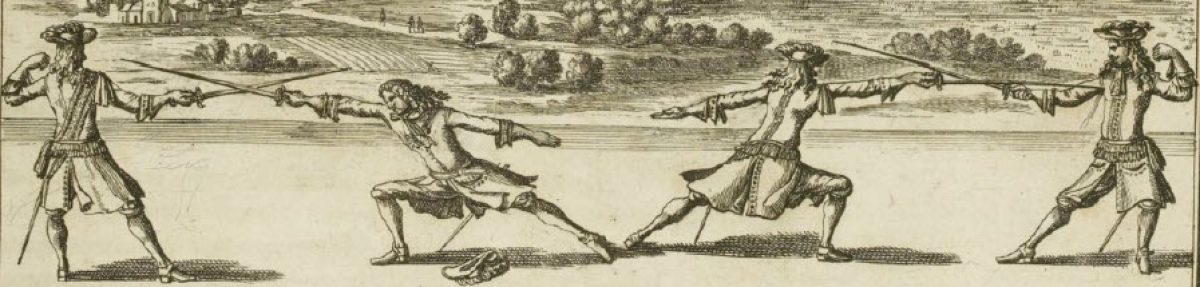


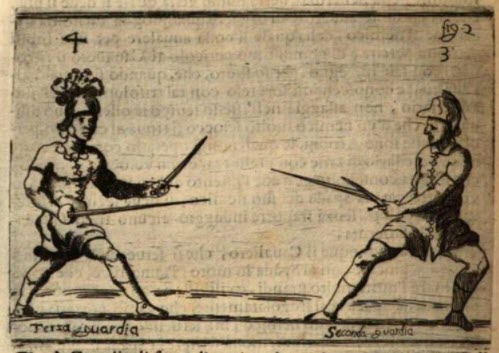





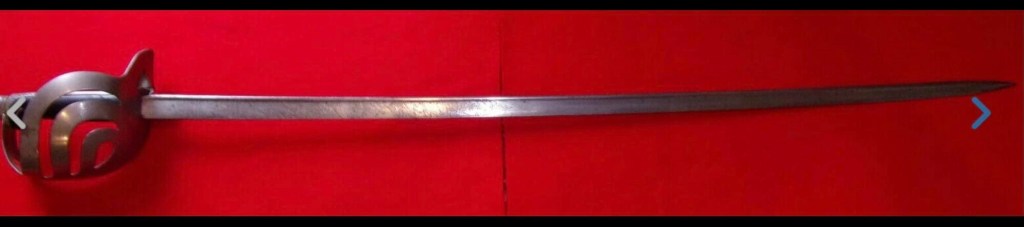


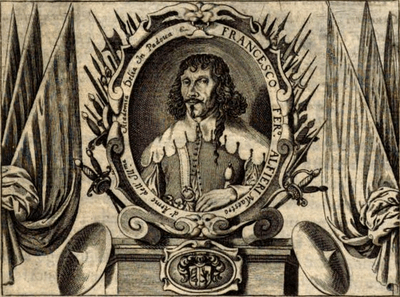



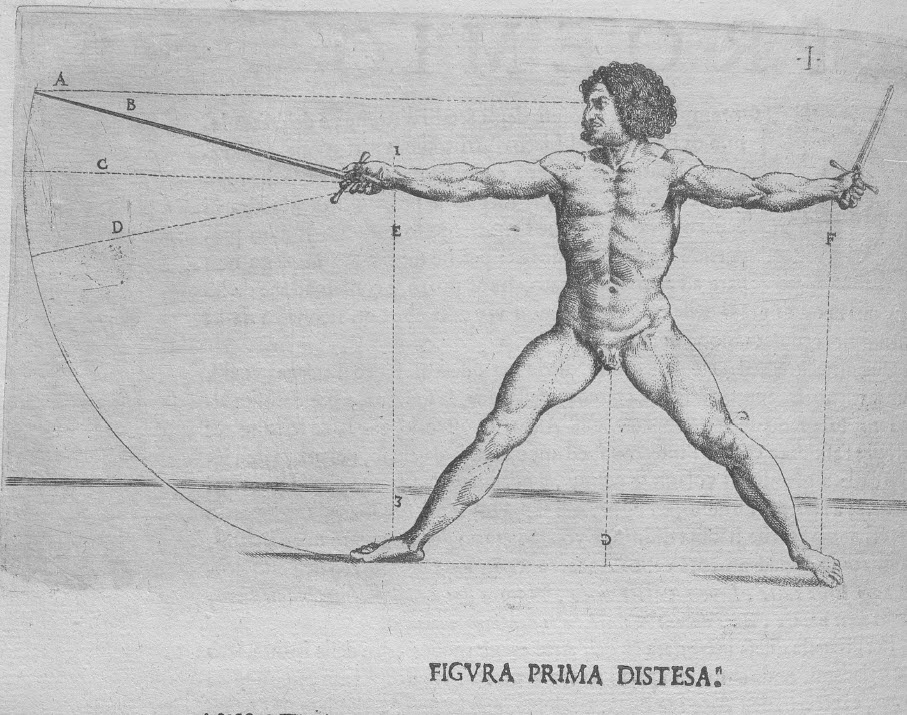
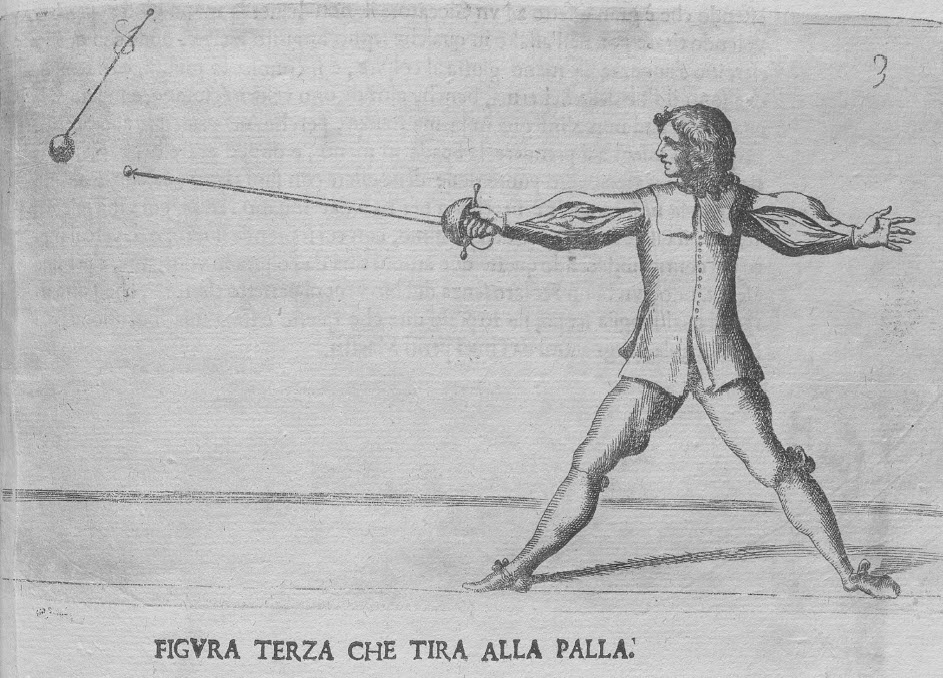


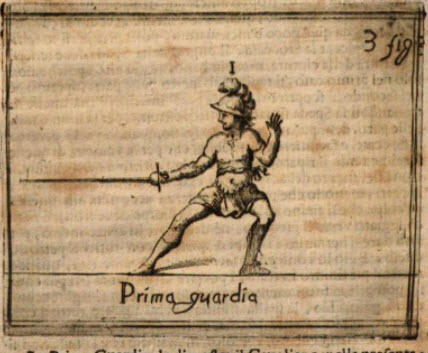


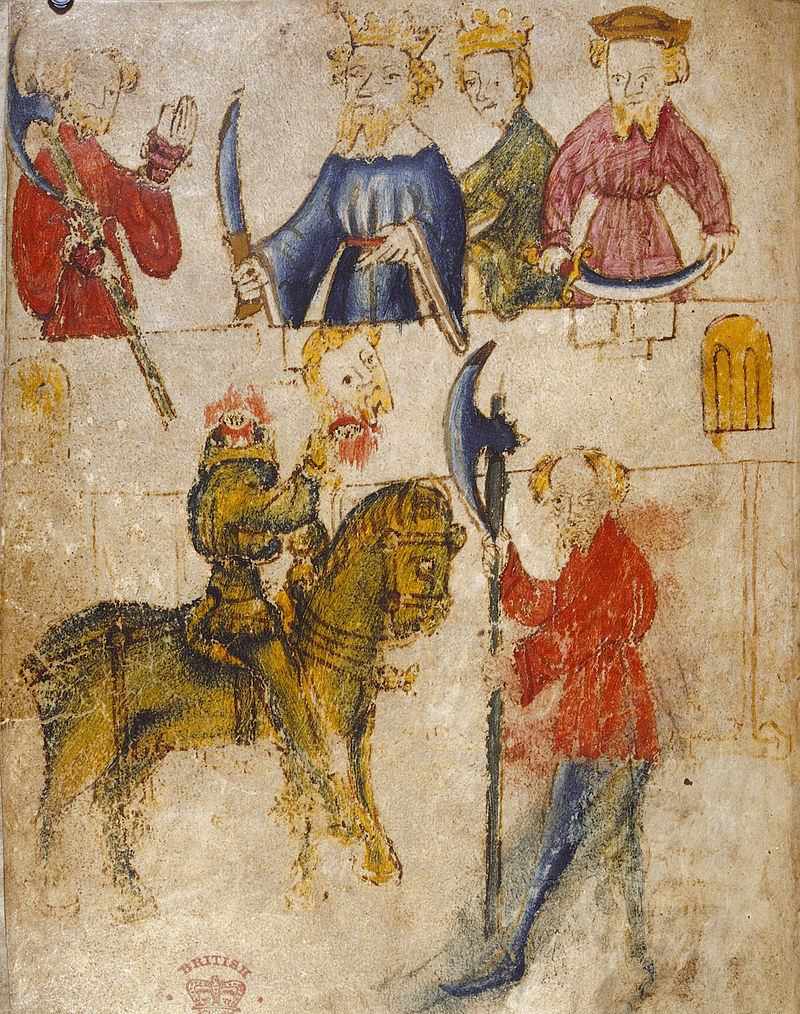

 Capitale Escrime Historical Fencing